 Sudden Valley Siding
 Decks Built for What Alger Actually Deals With
A deck in Alger doesn't fail the way a deck fails in a dry climate. It fails quietly, from the inside out — a ledger board that's been trapping water behind the siding for two winters, joists that never fully dry out between storms, fasteners that streak and weaken from salt-laden air off the water. By the time it shows up as a soft spot underfoot or a rust stain bleeding through the decking, the damage has usually been building for years. Building it right the first time matters more here than in almost any other part of the country.
We build custom decks for homes throughout the Sudden Valley and Alger area, and the design decisions we make are shaped directly by what this stretch of Western Washington throws at outdoor structures: long stretches of driving rain, a moss season that can run eight or nine months of the year, and salt air that speeds up corrosion on anything metal. A deck built with generic, catalog-spec details might look fine at the walkthrough. Whether it's still solid in year eight is a different question.
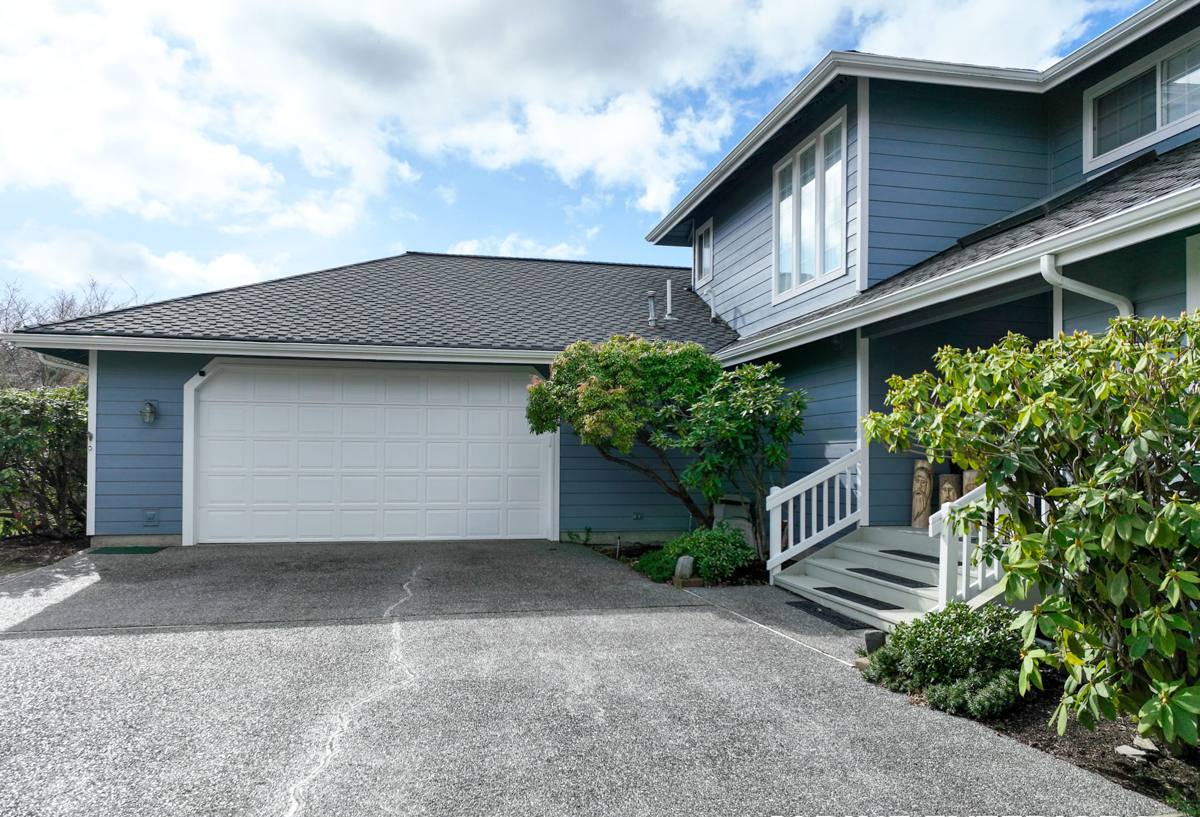
What Correct Construction Looks Like Here
The Ledger Connection
Most deck rot doesn't start in the decking boards — it starts where the deck attaches to the house. The ledger board is bolted directly into the rim joist, and if it's not flashed correctly, every rainstorm pushes water behind the siding at that exact seam. In a climate with this much annual rainfall, an improperly flashed ledger isn't a someday problem; it's usually a two-to-three-year problem. We flash this connection with a proper drip cap and membrane detail, not just caulk, because caulk is a maintenance item and flashing is a permanent fix.
Footings and Framing
Footings need to go below frost depth and bear on undisturbed, well-drained soil — not fill dirt, not topsoil that turns to mud every winter. In this area, soil that looks solid in August can behave very differently after a wet November, so we size and place footings based on what the ground actually does across a full season, not just how it looks on the day we dig. Joists get joist tape over the top edge to keep standing water out of the wood fiber where fasteners penetrate, which is one of the cheapest, most effective upgrades against long-term rot.
Fasteners and Hardware
Salt air corrodes standard hardware faster than most homeowners expect, especially on decks with any exposure toward open water or prevailing wind. We use fasteners and structural connectors rated for coastal or wet-climate exposure — coated or stainless where it counts, particularly at joist hangers, ledger bolts, and any hardware that can't be easily inspected once the decking is down. Cheaper hardware might save a small amount up front and cost far more in a hidden failure a decade in.
Choosing a Decking Material That Fits This Climate
There's no single "best" decking material — there's a best material for your budget, your maintenance appetite, and how much moisture and shade your specific site gets. Here's how the common options actually perform in a climate like Alger's:
| Material | Moisture Behavior | Moss/Algae Tendency | Maintenance |
|---|---|---|---|
| Pressure-treated wood | Resists rot with proper sealing; end cuts and fastener holes are vulnerable points | Moderate — textured grain holds moisture and spores | Re-seal or stain every 1-2 years |
| Cedar | Naturally rot-resistant heartwood, but sapwood and cut ends still need sealing | Moderate to high in shaded, damp spots | Annual cleaning, re-oil or stain every 2-3 years |
| Composite decking | Doesn't absorb water into the board itself; core and fastener details still need to shed water | Lower on textured/capped boards, but surface growth still happens in shade | Periodic wash; no sealing or staining required |
Composite decking has become the default choice for a lot of Alger homeowners simply because it removes staining and re-sealing from the maintenance list, which matters a great deal when the boards are wet more months than they're dry. Wood still has a place — it's often the right call on a budget, or when a homeowner specifically wants the look and is willing to keep up with sealing. What we won't do is install any material without the substructure detailing (ventilation, drainage gap, hidden fastener systems where applicable) that lets it perform the way it's supposed to in this climate. A great board over a poorly built frame still fails.
Fighting Moss, Algae, and Standing Water Long-Term
Moss on a deck isn't just cosmetic — it holds moisture against the board surface and makes stairs and landings slick, which is a real safety issue on a wet morning. The moss season here runs long, and shaded or north-facing decks get hit hardest. A few structural choices at build time cut down on it dramatically:
- Consistent gapping between boards so water drains through instead of pooling on the surface
- Framing pitched slightly away from the house so water sheds off the deck rather than sitting on it
- Keeping the deck surface clear of overhanging branches where possible, since shade and leaf litter are what feed moss growth
- Choosing a board profile (grooved vs. smooth) that matches how much shade and foot traffic the space actually gets
- An annual rinse with a stiff brush and a moss-safe cleaner before it builds up, rather than a heavy pressure-wash once it's established
Pressure washing can do real damage if it's aimed wrong — it can blow out the soft grain on wood decking or strip the cap layer on some composite boards. If you're not sure what your decking can handle, a lower-pressure wash with the right cleaner is almost always the safer call.
Permits, Codes, and Inspections
Most new decks and any deck attached to the house or built above a certain height require a permit, along with inspection at the footing stage and again at final. Code covers things homeowners don't always think about until it's flagged: guardrail height on any deck above a set elevation, baluster spacing that keeps small children from squeezing through, stair rise-and-run consistency, and proper ledger attachment to the structure. We handle the permit application and coordinate the inspections as part of the build — it's not an add-on service, it's just part of doing the job correctly. Skipping this step, or hiring someone who skips it, can turn into a real problem at resale when a buyer's inspector asks for permit records that don't exist.
Our Process, Start to Finish
- Site visit and design conversation. We look at sun exposure, drainage, grade, and how the deck connects to the house before talking materials.
- Material and layout selection. We walk through the honest trade-offs between wood and composite, board direction, and railing style for your budget.
- Permit and engineering. We prepare and submit what's needed for approval, including footing and framing details sized to your site's soil and load requirements.
- Footings and framing. This is where the climate-specific details go in — proper flashing, joist tape, corrosion-resistant hardware, and correct footing depth.
- Decking, railing, and finish work. Board installation, railing, stairs, and any trim or skirting to finish the look.
- Final walkthrough and inspection. We confirm everything passes and walk you through basic care specific to the material you chose.
Why a Crew That Already Works in Alger Matters
A deck built by a crew that's never worked in this climate tends to look like a deck built for a drier region — because that's the spec sheet they're used to pulling from. Working regularly around Sudden Valley and Alger means we already know how the soil behaves after a wet winter, which orientations collect moss the fastest, and what hardware actually holds up against the salt air common to this part of Whatcom County. It also means straightforward logistics: we're not routing a crew and a materials delivery in from a couple hours away, which keeps scheduling predictable and callbacks easy to handle if something needs attention after the build.
What Affects the Cost of a Deck in This Area
Every deck is priced around its own footprint, height, and material choice, but a few factors consistently move the number more than homeowners expect:
| Factor | Why It Matters Here |
|---|---|
| Deck height / need for railings | Taller decks require code-compliant guardrails and often more substantial footings |
| Ledger and flashing complexity | Siding type and wall assembly affect how much work goes into a proper flashing detail |
| Decking material | Composite typically costs more upfront than wood but removes ongoing sealing/staining costs |
| Site access and grade | Sloped or hard-to-access lots increase excavation and footing labor |
| Permit and engineering scope | Larger or elevated decks may need engineered plans, adding time to the permit stage |
We can give you a much more specific number once we've seen the site, but these are the levers that actually move a deck estimate up or down, and we'll walk through each one with you honestly rather than handing over a number with no explanation behind it.
A Deck That's Still Solid in Ten Years
The goal isn't just a deck that looks good at the final walkthrough — it's one that's still structurally sound, still draining properly, and still safe underfoot after a decade of Whatcom County winters. That comes down to the details most homeowners never see: the flashing behind the ledger, the coating on the hardware, the pitch of the framing. Get those right, and the material on top — wood or composite — has a real chance to last as long as it's supposed to.
If you're planning a new deck or replacing one that's past its prime, we're happy to come take a look and give you a straightforward, no-pressure estimate. There's a form below to get started.