 Sudden Valley Siding
 Window Installation Built for Yew Street's Weather, Not a Showroom
Most window ads are written for a house that doesn't exist — no wind-driven rain, no shaded north wall growing moss by January, no salt-laden air drifting in off the water for months at a time. Homes on Yew Street in Sudden Valley don't get that easy version of the Pacific Northwest. They get the real one: long wet stretches, moisture that doesn't fully dry between storms, and UV-starved siding and trim that stay damp longer than they should. A window that isn't installed with that in mind will look fine for a year or two and then start telling on itself — fogging between panes, soft trim, a draft you can't quite locate.
We install windows as a siding contractor first, which matters more than it sounds like it should. A window opening is part of the wall assembly, not a separate product bolted into a hole. Get the flashing, the water-shedding layers, and the seal wrong, and it doesn't matter how good the window itself is — water will find the gap. This page walks through what that means specifically for Yew Street and the rest of Sudden Valley, and what a correct installation actually looks like.
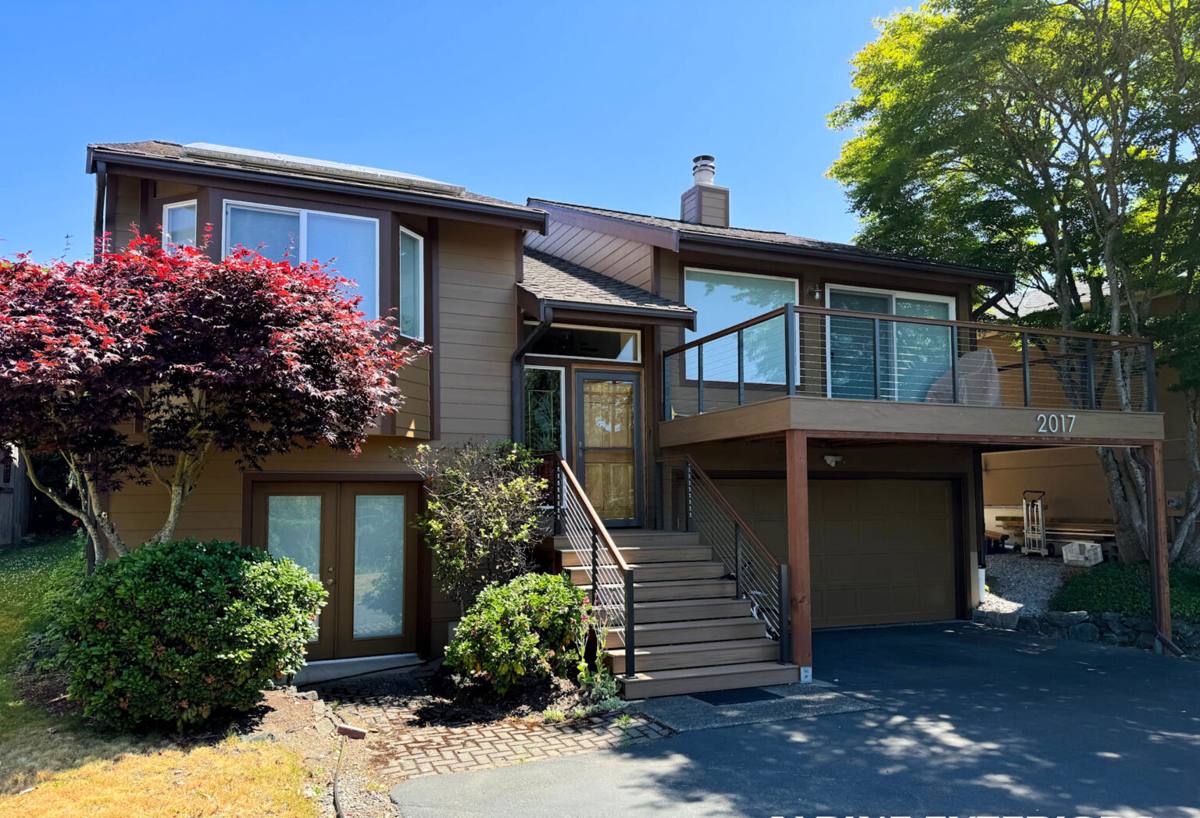
What Whatcom County's Climate Does to a Window Opening Over Time
Whatcom County weather is steady rather than dramatic, and that's exactly what makes it hard on windows. It's not one big storm doing the damage — it's years of small exposures that add up.
Driving rain
Wind-driven rain doesn't just fall on a window, it pushes against it, which means any weak point in the flashing or sealant becomes an entry path instead of a surface the water simply runs off of. Older installations that relied on caulk alone, with no proper flashing pan under the sill, are the ones we see failing first.
A long moss season
Shaded exterior walls and north-facing exposures around Sudden Valley stay damp for extended stretches, which is exactly what moss and algae need to take hold on sills, trim, and nearby siding. Beyond the appearance issue, moss holds moisture against wood trim and window frames far longer than open air would, which accelerates rot in materials that aren't rated for constant dampness.
Salt air
Homes with exposure to salt-carrying air see faster corrosion on hardware — hinges, locks, cranks, and screws — plus quicker breakdown of lower-grade seals and finishes. It's not usually the deciding factor in which window you buy, but it is a reason to pay attention to hardware quality and finish, not just glass performance.
Why Window Installation and Siding Work Are the Same Job
A window opening interrupts your home's water-management system — the house wrap, flashing, and drainage plane that are supposed to move water down and out before it reaches the sheathing. When a window is replaced without integrating it back into that system correctly, you get a house that looks finished but leaks slowly, inside the wall, where nobody sees it until there's a stain or soft spot.
This is where a lot of window-only installers fall short — not because they don't know windows, but because they aren't thinking about the wall as a whole assembly. We approach it the other way: the window is one component of the wall's water management, and it gets tied into the house wrap and flashing the same way we'd handle it during a full siding replacement.
What we check before the window ever comes out
- Condition of the existing sheathing and framing around the opening
- Signs of past water intrusion — staining, soft wood, or discoloration
- How the current flashing (or lack of it) ties into the house wrap
- Whether the rough opening is square, level, and the correct size for the replacement unit
- Condition of the sill and whether it slopes properly to shed water outward
What a Correct Window Installation Actually Involves
There's a right order of operations, and skipping steps is how a window ends up leaking within a few wet seasons. Here's the sequence we follow:
- Remove the old window and inspect the opening before anything else happens. If there's rot or water damage, it gets addressed now, not covered up.
- Install a sloped sill pan so any water that does get past the window is directed back outside instead of pooling at the sill.
- Integrate flashing tape and house wrap in the correct shingle-lap order — top piece overlapping the sides, sides overlapping the sill — so water always sheds downward and outward.
- Set the window level, plumb, and square, checking reveal gaps on all four sides before fastening.
- Insulate the gap between the frame and rough opening with a low-expansion foam or backer rod rated for windows — not standard construction foam, which can bow the frame.
- Seal and caulk the exterior with a sealant rated for this climate's temperature swings and constant moisture exposure.
- Reinstall or replace trim, matching it back into the surrounding siding so the whole wall reads as one finished surface, not a patch.
Every one of these steps is invisible once the job is done. That's exactly why it matters who does the work — you're trusting the installer's judgment on things you'll never be able to check yourself once the trim goes back on.
Choosing a Window Frame Material for This Climate
There's no single "best" window material — there's a right trade-off for your house, your budget, and how much upkeep you want to take on. Our standard is to steer clients toward materials that hold up with minimal maintenance in a wet, moss-prone climate, and to be upfront about what each option asks of you over time.
| Frame Material | How It Handles This Climate | Maintenance |
|---|---|---|
| Vinyl | Won't rot; performs well in constant moisture; can expand/contract more with temperature swings | Low — occasional cleaning |
| Fiberglass | Very stable in moisture and temperature; strong dimensional stability | Low — occasional cleaning |
| Wood-clad | Attractive interior wood look; exterior cladding protects against direct moisture exposure | Moderate — cladding and seams need periodic inspection |
| Aluminum | Durable but conducts cold and can condense in damp, cool conditions | Low, but condensation risk needs monitoring |
Glazing matters as much as the frame
In a climate with long stretches of damp, cool weather, double-pane windows with a low-E coating and argon or krypton gas fill are the practical baseline. Triple-pane adds further insulation and can help with condensation resistance on colder walls, at added upfront cost — worth discussing if a particular room runs cold or faces prevailing wind and rain.
A Homeowner's Checklist: Signs a Window Needs Attention
- Fog or moisture visible between the panes (failed seal — glass itself needs replacing)
- Visible gaps, soft spots, or discoloration in the trim or sill
- Moss or persistent green growth on the sill or nearby trim
- A draft you can feel near the frame on a windy day
- Window that's difficult to open, close, or lock — often a sign the frame has shifted
- Paint or finish peeling specifically around the window, not the rest of the wall
What a Window Installation Costs, and What Drives the Price
Every home and job is different, so exact numbers only come from an on-site look, but the factors that move the price are consistent from job to job.
| Factor | Why It Matters |
|---|---|
| Number of windows | Per-window cost typically drops slightly on larger multi-window jobs due to shared setup and access work |
| Frame material and glazing | Vinyl is generally the most budget-friendly; fiberglass and wood-clad cost more upfront |
| Condition of the existing opening | Rot or water damage found during removal adds repair time before the new window can go in |
| Access and window size | Second-story, oversized, or hard-to-reach windows take more time and equipment |
| Trim and siding tie-in | Matching new trim into existing siding adds labor beyond just swapping the window unit |
| Disposal | Hauling and disposing of old windows and trim is part of a complete job, not an add-on |
Be cautious of any quote that's dramatically lower than others — it's often a sign that flashing, sill pans, or proper insulation are being skipped to save time, which is exactly where the long-term problems in this climate start.
Mistakes We Find When We Inspect Past Installations
A fair amount of our window work in Sudden Valley isn't first-time installation — it's correcting a past job that didn't hold up. The patterns repeat:
- Caulk used as the only water barrier, with no flashing pan underneath
- House wrap cut but never taped or lapped back over the flashing
- Standard expansion foam used to fill the gap, which pushed the frame out of square
- Trim reinstalled without checking whether the sheathing underneath had already started to rot
- Sill not sloped, so water sits against the frame instead of running off
None of these show up on the day of installation. They show up two, three, or five wet seasons later — which is exactly why the installation itself deserves more attention than the finished look.
Our Process for Yew Street and Sudden Valley Jobs
We keep the process straightforward because window replacement shouldn't feel complicated from the homeowner's side:
- On-site visit — we look at every opening in person, check for existing damage, and take accurate measurements. Window sizing has to be precise; this isn't a step we shortcut with photos alone.
- Written quote — a clear breakdown of materials, labor, and any repair work the opening needs, so there are no surprises once the crew is on-site.
- Ordering and lead time — most windows are made to order, so we give you a realistic timeline rather than guessing.
- Install day — old windows out, openings inspected and repaired as needed, new units set, flashed, insulated, and trimmed to match.
- Walkthrough — we go over each window with you before we consider the job finished, including how to operate and maintain it.
Why Local Experience in Sudden Valley Matters
A crew that regularly works Yew Street and the surrounding Sudden Valley neighborhoods already knows how the local moisture pattern behaves on north-facing walls, which siding types are common on homes here, and what kind of trim and flashing tends to already be in place before we start. That's not a small thing — it means less time spent diagnosing the house and more time spent doing the work correctly the first time.
It also means we're not guessing at what "normal" looks like for this area. A moss line on a sill in Sudden Valley isn't a red flag by itself — it's what the climate does here. Knowing the difference between ordinary wear and an actual problem, without either over-selling or missing something real, comes from having done this work on homes like yours, in this specific pocket of Whatcom County, season after season.
If you're noticing drafts, moisture, or a window that's simply past its working life, we're happy to take a look. Fill out the form below for a free, no-pressure estimate — we'll walk the openings with you, tell you honestly what we find, and give you a clear quote before any work begins.