 Sudden Valley Siding
 Sunnyland homeowners tend to come to us with one of two problems: a power bill that keeps climbing even though nothing else about the house has changed, or windows that fog, stick, or feel drafty no matter what's done to seal them up for the season. Both usually trace back to the same root cause — windows that were never built or installed to handle Whatcom County's combination of salt air, driving rain, and a moss season that runs most of the year. Energy-efficient window replacement is one of the higher-return exterior projects a homeowner in this neighborhood can take on, but only when the product and the installation are matched to what this climate actually does to a window over time.
This page covers what that means in practice for Sunnyland homes specifically — not a generic rundown of window features, but what to look for, what a correct job involves, and why local installation experience matters as much as the window itself.
What This Climate Does to a Window Over Time
Salt Air and Hardware Corrosion
Airborne salt doesn't just affect homes sitting right on the waterfront — it travels, and over years it works on anything metal that isn't built to resist it. Window hardware, weep hole screens, and lower-grade frame fasteners are the first things to show it, usually as stiff locks, pitted hinges, or corrosion streaking down below the sill. Once hardware starts failing, a window stops sealing the way it was designed to, and an efficient window with a compromised lock or worn weatherstripping performs like an old one.
Driving Rain and Air and Water Infiltration
Whatcom County storms rarely arrive straight down. Wind pushes rain sideways into wall assemblies and window openings, which is exactly the condition that exposes a weak installation — a window that would pass inspection on a calm day can still leak or draft once wind-driven rain tests every seam and gap. Efficiency numbers on a window label assume a correctly sealed, correctly flashed installation. A great window installed loosely still lets air and moisture through around the frame, which shows up as both a draft and a slow rise in heating and cooling costs.
A Long Moss and Mildew Season
Shaded lots and mild, damp weather keep moisture sitting on exterior surfaces for extended stretches of the year in this part of Whatcom County. Sills, lower sashes, and trim that don't dry out fully between rain events are where moss, mildew, and eventual wood rot take hold first. A window frame that holds moisture instead of shedding it is a maintenance problem waiting to happen, regardless of how good its glass package is.
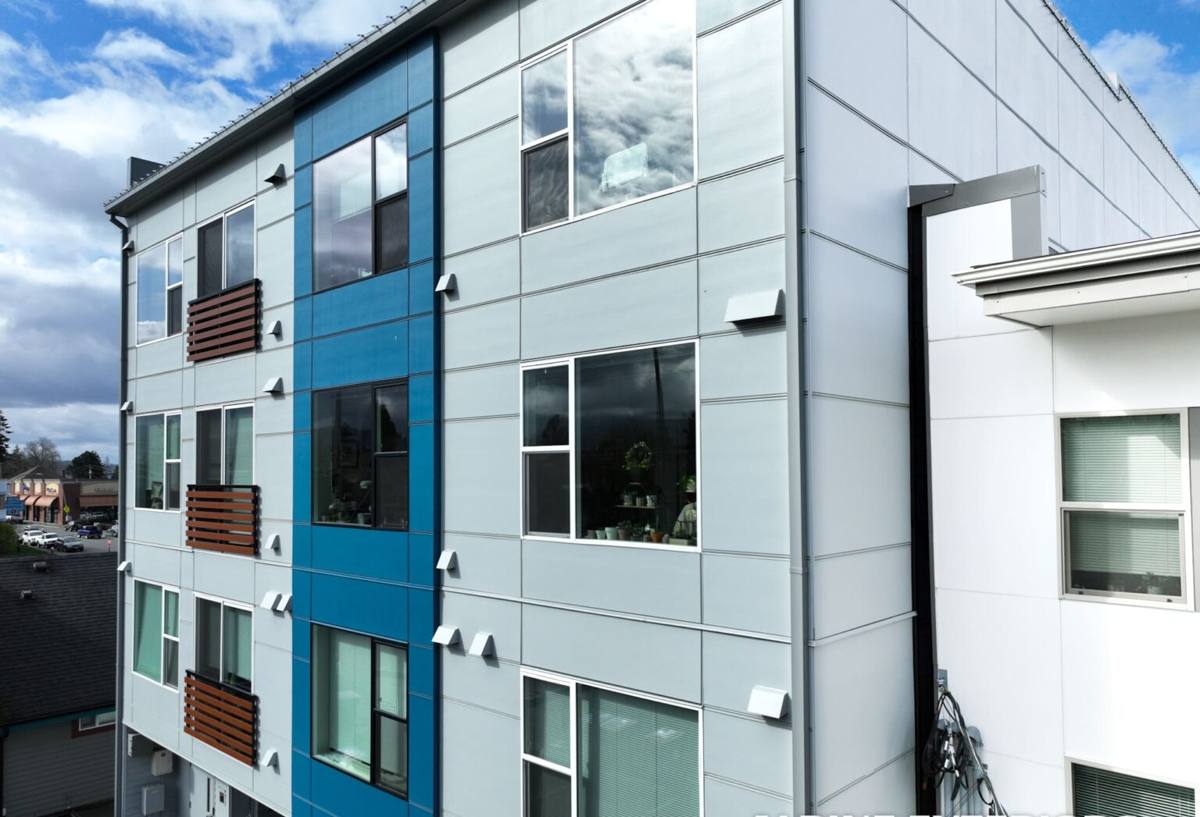
Signs Your Current Windows Are Costing You Money
- Noticeable draft near the frame even when the window is fully latched
- Condensation building up between panes, which usually means a failed seal on a double- or triple-pane unit
- Rooms near windows feeling colder in winter or hotter in summer than the rest of the house
- Visible corrosion on hinges, locks, or hardware
- Soft or discolored wood at the sill or lower frame corners
- Windows that are difficult to open, close, or lock properly
- A heating or cooling bill that's crept up without a clear reason
What "Energy-Efficient" Actually Means in a Window
Efficiency isn't one number — it's a combination of glass performance, frame material, and how tightly the whole assembly is sealed once it's installed. The figures that matter most are U-factor, which measures how much heat the window lets through (lower is better for our climate), and Solar Heat Gain Coefficient, which measures how much solar heat passes through the glass. Low-E coatings reflect heat back rather than letting it pass freely, and gas fills like argon between panes slow heat transfer further. All of that is printed on the NFRC label that comes with a legitimate window, and we'll walk through what those numbers mean for your specific orientation and exposure rather than just pointing at the lowest U-factor on the shelf.
Frame Material Matters as Much as the Glass
In a marine climate with salt air and sustained moisture, frame material has a direct effect on how long that efficiency actually lasts. A well-rated window in a frame that corrodes, warps, or holds moisture will lose performance years before a well-built frame with a modest glass package will. We walk homeowners through the honest trade-offs for their specific exposure rather than defaulting to whatever installs fastest.
| Frame Material | How It Holds Up Here | Maintenance |
|---|---|---|
| Vinyl | Resists salt corrosion well; won't rot; performance is consistent across most price points | Low — occasional cleaning |
| Fiberglass | Excellent dimensional stability and corrosion resistance; handles temperature swings with minimal expansion or contraction | Low |
| Wood (unclad) | Strong insulator but vulnerable to the moss-season moisture cycle without diligent upkeep | High — regular painting or sealing |
| Wood-clad | Interior wood look with a protective exterior cladding; performs well if the cladding and flashing are done correctly | Moderate |
| Aluminum | Durable but conducts heat and cold readily unless thermally broken; less common for full replacements in this climate | Low |
Vinyl and fiberglass are what we lead with on most Sunnyland replacements because they hold up to sustained coastal moisture with the least ongoing upkeep. Wood-clad remains a solid option when the interior wood look matters and the cladding and flashing are detailed correctly — it's a trade-off worth discussing against your home's specific exposure, not a one-size answer.
What a Correct Installation Involves
On-Site Measurement and Assessment
Every job starts with field measurement of the actual opening, not a catalog assumption. We check for square, level, and any signs of existing moisture damage around the frame before ordering anything, since that's often the first indicator of how the old window was originally installed.
Removal and Opening Prep
Old units come out carefully so we can inspect the framing and sheathing underneath. This is frequently where hidden moisture damage from a poorly flashed original installation turns up, and it needs to be addressed before a new window goes in — sealing a new window over a compromised opening just hides the problem for a while.
Flashing and Weatherproofing
This is the step that determines whether an efficient window actually performs efficiently once it's in the wall. Flashing has to be sequenced so water sheds outward and downward at every layer, with the sill pan, side flashing, and head flashing integrated correctly with the surrounding wall assembly rather than caulked over as an afterthought. In a climate where wind pushes rain sideways into these details, this is not a step to shortcut.
Sealing and Finish
Once the window is set, shimmed level, and flashed, the interior and exterior are sealed with materials rated for sustained moisture exposure, and trim is finished to match the rest of the exterior. A window that looks finished but wasn't sealed correctly at every gap will still draft and, eventually, let moisture in.
Our Process, Start to Finish
- On-site assessment — we measure each opening, check for existing moisture or hardware issues, and talk through what your household actually needs from the windows (efficiency, sound, sightlines, or all three)
- Honest recommendation — frame material, glass package, and where a stock size versus a custom order makes sense, explained plainly
- Written scope and timeline — what's included, what it costs, and a realistic lead time before anything is ordered
- Removal and opening prep — old units come out, and any hidden framing or flashing issues get addressed before installation
- Installation and flashing — each window is set, shimmed, and flashed to a sequence built for this climate's exposure
- Finish and walkthrough — trim is completed, hardware and operation are checked, and we walk the job with you before calling it done
Cost Factors for Energy-Efficient Window Replacement
| Factor | Lower Cost End | Higher Cost End |
|---|---|---|
| Frame material | Standard vinyl | Fiberglass or wood-clad |
| Glass package | Standard double-pane, low-E | Triple-pane, upgraded coatings and gas fill |
| Sizing | Standard stock sizes | Custom-order sizes or shapes |
| Opening condition | Sound framing, no repair needed | Rot or moisture damage requiring repair before install |
| Number of units | Whole-house or multi-window projects (per-unit savings) | Single window replacements |
We won't quote a number without seeing the openings in person, since the condition behind the old trim often matters as much as the window itself. But broadly, price moves with frame material, glass package, whether an opening needs repair before a new window can go in, and how many units are being replaced together — bundling windows into one project typically brings the per-unit cost down compared to replacing them one at a time.
Why a Local Sunnyland Crew Matters
Manufacturer installation instructions are written for average conditions in a moderate climate. Sunnyland's exposure to salt air, wind-driven rain, and a long wet season doesn't fit that description, and a crew that hasn't worked this specific stretch of Whatcom County can miss the details that matter most here — how much lap a flashing course needs given the local wind pattern, which hardware finishes actually hold up to salt exposure over years rather than months, and when a sill needs extra attention because a wall face rarely gets direct sun. Those decisions don't come up in a sales conversation, but they're the difference between a window that's still performing cleanly in fifteen years and one that's drafting and staining trim in five.
Experience with this specific climate also means fewer surprises mid-project. We generally know, before we even open the wall, what condition to expect behind an older window on a shaded, moisture-exposed Sunnyland home, and we build that into the estimate rather than treating it as a change order later.
What to Ask Before Hiring for Window Replacement
- Ask how they flash and seal windows specifically for wind-driven rain, not just a generic installation description
- Confirm current Washington contractor licensing and insurance
- Ask what happens if hidden moisture damage is found once the old window comes out
- Get a written scope of work, product specifications, and a realistic timeline before signing anything
- Ask how the window unit and the installation labor are each covered under warranty
If your Sunnyland home has windows that draft, fog, or just aren't pulling their weight on your energy bill anymore, it's worth having someone look at the actual openings before you start comparing quotes. We offer free, no-pressure estimates for energy-efficient window replacement in Sunnyland and the surrounding area — use the form below to get a time on the schedule.