 Sudden Valley Siding
 Deck Building for South Hill, Built for the Climate It Sits In
A deck in South Hill lives outside year-round, and that means it spends most of its life wet. Between the driving rain that comes off the water, the salt-tinged air moving through Whatcom County, and the long stretch of gray months when moss and algae get a real foothold, an outdoor structure here is under more sustained pressure than the same deck would face in a drier climate. A deck that's framed, fastened, and finished correctly can handle all of that for decades. One that cuts corners on flashing, fasteners, or drainage will show it within a season or two — soft spots, black staining, popped nails, and a green film on every horizontal surface. This page is about what a deck actually needs to hold up around Sudden Valley and South Hill specifically, not a generic rundown of decking options.
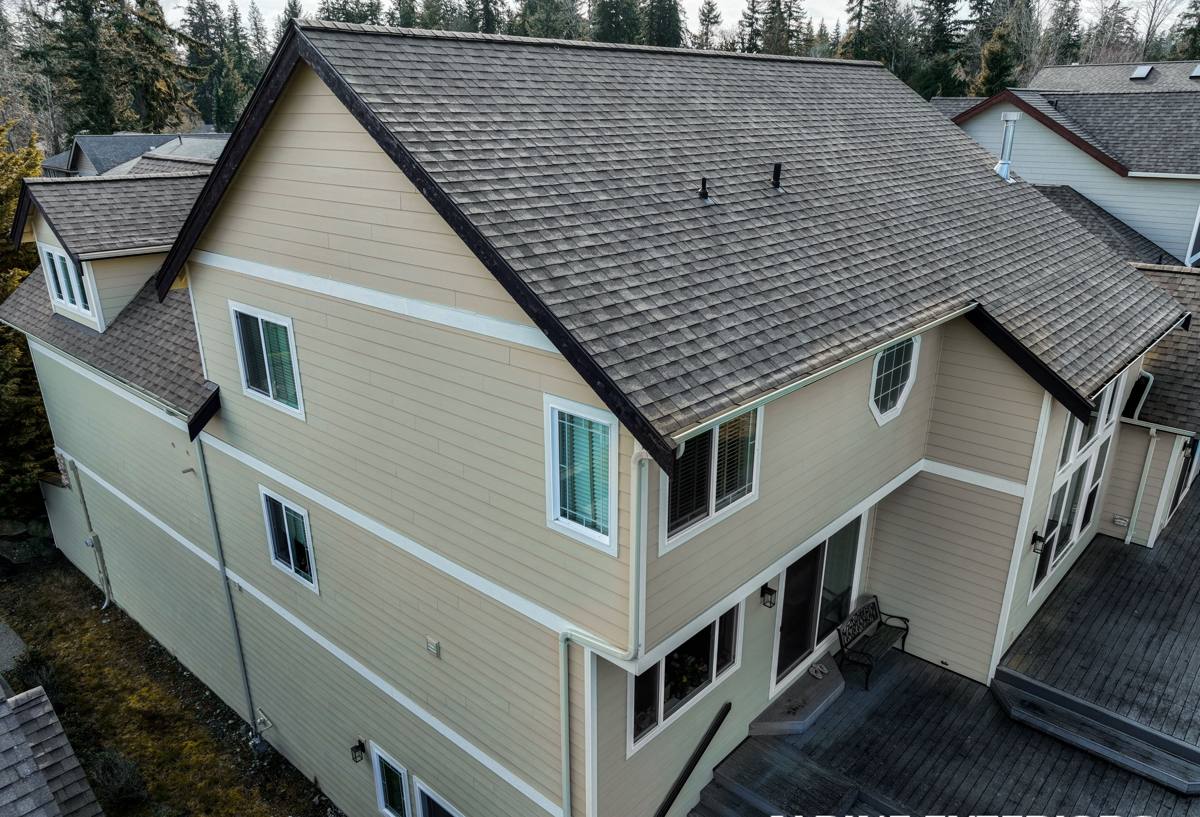
What South Hill Homes Actually Need From a Deck
Moisture Has to Have Somewhere to Go
The single biggest factor in deck longevity here isn't the decking material on top — it's what happens underneath and behind it. Ledger boards attached to the house need proper flashing so water sheds away from the wall framing instead of wicking into it. Joists need enough slope and airflow underneath to dry out between rain events, because in this climate "between rain events" can be a matter of hours, not days. Framing that's boxed in tight against the ground, with no ventilation, is exactly what turns a deck into a slow-motion rot problem.
Standing Up to Salt Air and Moss
Homes closer to the water pick up salt-laden air that accelerates corrosion on anything less than a quality fastener — screws, joist hangers, and structural connectors all need a coating rated for exterior and coastal-adjacent exposure, not a bargain-bin galvanized finish that starts rusting at the head within a year or two. Separately, the moss and algae that coat roofs and walkways all over Whatcom County during the wet months will happily colonize a deck surface too, especially in shaded corners that never fully dry. The material and finish choices below are as much about managing that biological growth as they are about looking good.
The Anatomy of a Deck Built to Last
Ledger Board and Flashing
Where the deck attaches to the house is the single most common failure point we see on older decks in this area. Correct practice means a flashing detail that integrates with the house's existing water-resistive barrier or siding, not just a ledger board lag-bolted to the rim joist with caulk as the only water management. Done wrong, this is the spot where water gets behind the siding and rots the band joist and sill plate — a repair that costs far more than doing the flashing right the first time.
Footings, Posts, and Framing
Footings need to be sized and set below frost depth per code, and posts need a base connection that keeps end-grain wood off standing water — a post sitting in a puddle after every storm is a post that fails from the bottom up. Framing lumber should be rated for ground contact where it's close to grade, and every cut end needs to be sealed, because a factory-treated board with an unsealed field cut is an open door for rot right at that joint.
Fasteners and Hardware
All structural hardware — joist hangers, hurricane ties, post bases, lag screws — should carry a coating rated for treated lumber and coastal-influenced exposure. Mixing incompatible metals (an ordinary zinc screw driven into ACQ-treated lumber, for example) sets up galvanic corrosion that can eat through a fastener years before the wood around it fails. This is a small line-item cost during construction and a major structural liability if it's skipped.
Decking Material Comparison for This Climate
There's no single "best" decking material — there's a best material for a given budget, maintenance appetite, and how much moss and moisture the site sees. Here's how the common options actually perform in a wet, moss-prone climate like ours.
| Material | Moisture Behavior | Moss/Algae Resistance | Maintenance | Typical Lifespan |
|---|---|---|---|---|
| Pressure-treated wood | Absorbs water; needs sealing | Low — needs regular cleaning | Annual cleaning + resealing | 10–15 years |
| Cedar | Naturally moisture-resistant, still needs finish | Moderate | Periodic cleaning + finish renewal | 15–20 years |
| Composite decking | Doesn't absorb water like wood | Moderate to good depending on capping | Occasional wash, no sealing/staining | 25–30 years |
| PVC decking | Fully moisture-resistant | Good — smooth, non-porous surface | Low — soap and water | 25–30+ years |
In a climate with this much rain and this long a moss season, we lean toward capped composite or PVC for surfaces that see shade and low airflow, because a non-porous, densely capped board simply gives moss and algae less to grip onto than raw wood grain. That said, plenty of homeowners want the look and feel of real wood, and a well-built cedar deck with a proper maintenance routine holds up fine here too — it just asks more of the owner over time. We'll walk through the honest trade-offs for your specific site rather than push one product across the board.
How We Approach a South Hill Deck Project
- Site walk and assessment — we look at grade, drainage, sun/shade exposure, and how the deck will tie into the house before anything is designed.
- Design and material selection — framing layout, decking material, railing style, and any features like stairs or built-ins, sized to your budget and how the space will actually be used.
- Permitting — we handle the paperwork with the local building department so the project is inspected and code-compliant from footings to guardrails.
- Demolition and site prep — removing any old structure and prepping footings, with attention to drainage around the work area given how much rain the site may see mid-project.
- Framing and flashing — footings, posts, ledger attachment with proper flashing, and joist layout built to span and load requirements.
- Decking, railing, and finish work — installation of the chosen decking material, railing system, stairs, and any fascia or trim details.
- Final inspection and walkthrough — confirming the work passes inspection and walking the finished deck with you before we call it done.
Why a Crew That Already Works South Hill Matters
A deck built by a crew that only occasionally works in Western Washington will often frame and flash a deck the same way they would in a drier climate — and it'll fail early for exactly that reason. Working regularly around Sudden Valley and the rest of Whatcom County means we already know which details matter most here: flashing that actually sheds water away from the house, fastener grades that hold up to salt-tinged air, and decking choices that don't turn into a moss farm by year three. It also means we're not learning the local permitting process on your project — we know what the local building department expects for footings, guardrails, and stair geometry, so inspections don't turn into delays.
Cost Factors on a South Hill Deck Project
Every deck is priced around its own site and design, but a few factors move the number more than anything else. Broad ranges below are meant to help you think through trade-offs, not to serve as a quote.
| Factor | Why It Matters |
|---|---|
| Decking material | Pressure-treated wood costs less up front; composite and PVC cost more initially but less over the deck's lifetime in maintenance |
| Deck height and footings | A deck well above grade needs more substantial framing, stairs, and guardrails than a low, ground-level deck |
| Site access and grade | Slopes, tight access, or existing landscaping can add labor and equipment time |
| Railing and stair details | Custom railing styles, cable rail, or multiple stair runs add both material and labor cost |
| Ledger and flashing complexity | Tying into existing siding or trim correctly sometimes requires more flashing and carpentry work than a straightforward attachment |
| Demolition of an existing deck | Removing and disposing of an old structure adds cost before the new build even starts |
Keeping a Deck Ahead of Moss and Moisture
However well a deck is built, it still needs some seasonal attention in a climate this wet. A little regular care goes a long way toward keeping surfaces safe and the structure sound for its full lifespan.
- Sweep leaves and debris off the deck surface regularly, especially in fall, so moisture doesn't sit trapped underneath organic matter
- Clean visible moss or algae with a deck-safe cleaner before it builds up enough to become slippery or start staining the surface
- Check that gaps between boards stay clear so water can drain through rather than pooling
- Inspect ledger flashing and any caulked joints once a year for cracking or gaps
- Look underneath the deck periodically for standing water, soft framing, or rust streaks around hardware
- Reseal or re-stain wood decking on the schedule the product calls for — don't wait until it's visibly gray and dry
- Keep gutters and downspouts near the deck clear so roof runoff isn't dumping directly onto or under the structure
Permits and Code Considerations
Most deck projects in Whatcom County require a building permit, and the specifics — footing depth, guardrail height, stair geometry, attachment method — are set by the adopted building code and reviewed by the local building department. We pull the permit and coordinate inspections as part of the process, so you're not left navigating that on your own. If you're unsure whether a repair or a smaller deck project needs a permit, that's a quick question we're happy to answer before any work starts.
Let's Talk About Your Deck
If you're planning a new deck in South Hill or need an honest look at whether an existing one is still sound, we're glad to come take a look. The estimate is free, there's no pressure attached to it, and you'll get a straight answer about what your site and budget can actually support. Use the form below to get started.