 Sudden Valley Siding
 Why Silver Beach Homes Take a Different Kind of Beating
Silver Beach sits close enough to the water that the weather never really lets up. Between the moisture rolling off Lake Whatcom, the salt-tinged air that drifts in from the Sound, and rain that comes in sideways more often than straight down, exterior siding here works harder than it does just a few miles inland. Add in Whatcom County's long, damp shoulder seasons — the kind where moss gets a six-month head start before anyone notices it creeping up a wall — and you have a climate that exposes every weak point in a siding system within a few years, not a few decades.
Most siding failures we see in this neighborhood aren't dramatic. They're slow: a soft spot at a butt joint, a paint film that's started chalking and peeling two years early, a bottom course that's gone punky because water sat against it all winter. By the time a homeowner notices, the damage is usually already behind the boards, not just on the surface.
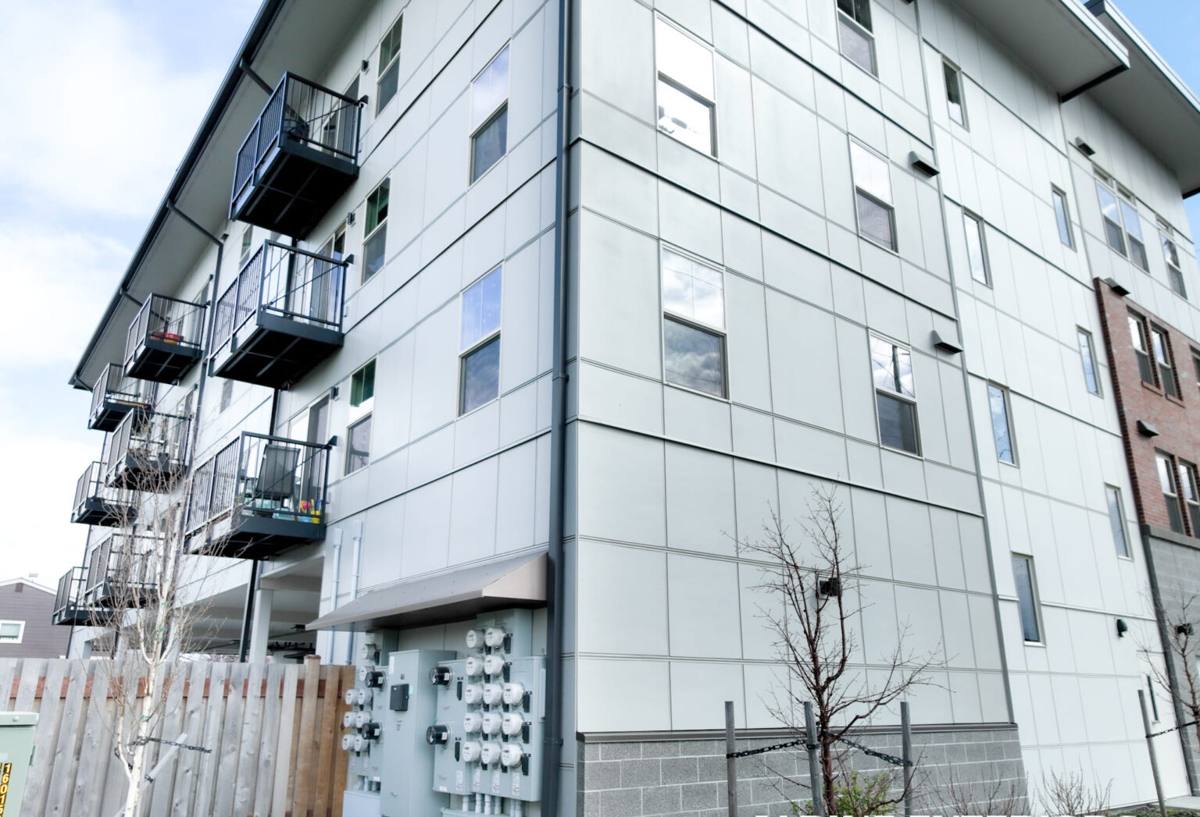
What This Climate Actually Does to Siding
It helps to understand the specific mechanisms at work, because they're what dictate whether a siding job holds up or falls apart early.
Constant Moisture Exposure
Lake-effect humidity keeps wall surfaces damp longer than in drier parts of the county. Any siding material that absorbs water, or any installation that traps water behind the cladding, is on a slow path to rot, delamination, or paint failure.
Driving Rain and Wind-Driven Water
Wind off the lake pushes rain into joints, seams, and fastener holes that would stay dry in a calmer setting. This is a water-management problem as much as a material problem — flashing details and gaps matter as much as the siding itself.
Moss and Organic Growth
A long, mild, wet season gives moss and algae plenty of time to establish on north-facing and shaded walls. Left alone, that growth holds moisture against the siding surface, which accelerates whatever other damage is already underway.
Why We Install Only James Hardie Fiber Cement
We made a decision early on to install one siding system on Silver Beach homes: James Hardie fiber cement. We don't install vinyl, LP SmartSide, Cemplank, Allura, or wood siding — cedar or primed spruce — and that's not a marketing position, it's a practical one based on what actually holds up here.
Fiber cement is cement, sand, and cellulose fiber pressed under high pressure. It doesn't absorb water the way wood-based products do, it doesn't soften or delaminate the way some engineered wood sidings can when a seam is compromised, and it's non-combustible, which matters in a region where wildfire smoke and ember exposure have become a bigger conversation than they used to be. James Hardie's HZ product lines are also engineered specifically for different climate zones, and the HZ5 and HZ10 lines are built with the freeze-thaw cycling and sustained moisture of the Pacific Northwest in mind — not a generic, one-size-fits-all spec.
We're not going to tell you every other product on the market is worthless. Vinyl is inexpensive and low-maintenance in mild climates. Engineered wood siding can look great when it's kept dry and maintained on schedule. But we've settled on the product system that gives Silver Beach homeowners the best odds of a siding job that still looks and performs well after fifteen or twenty years of this specific weather, and that's Hardie.
What a Correct Fiber Cement Installation Involves
Fiber cement siding is only as good as the installation behind it. A lot of the siding problems we get called out to inspect aren't material failures — they're installation shortcuts that a wet climate eventually exposes.
Water Management Comes First
Before a single piece of siding goes up, the wall needs a proper drainage plane: weather-resistant barrier, correctly lapped and taped seams, and flashing at every window, door, and horizontal transition. In a climate that pushes rain sideways into walls, this layer is what actually keeps water out — the siding is the second line of defense, not the first.
Clearances and Fastening
James Hardie specifies minimum clearances from grade, roof lines, decks, and other flat surfaces so water can't wick up into the bottom of the boards. Fasteners need to be the right type, spaced and set to the manufacturer's pattern, and driven correctly — not overdriven, not left proud. Skipping these details doesn't show up on day one; it shows up in year three or four as swelling, cracking, or paint failure at the fastener line.
ColorPlus Finish vs. Field-Painted Siding
James Hardie's ColorPlus finish is baked on at the factory under controlled conditions, which gives it a more consistent, longer-lasting bond than paint applied on-site after installation. In a climate where UV exposure and constant moisture cycling are both in play, that factory finish is one less variable working against the siding.
Installation Checklist We Hold Every Job To
- Weather-resistant barrier installed and lapped correctly before any siding goes up
- Flashing at every window, door, deck ledger, and roof-to-wall transition
- Manufacturer-specified clearance from grade, decks, patios, and roof surfaces
- Correct fastener type, spacing, and drive depth per James Hardie specifications
- Properly caulked and sealed joints only where the manufacturer calls for sealant, not as a substitute for flashing
- Butt joints staggered and backed to prevent water intrusion at seams
- Final walkthrough checking for exposed fasteners, gaps, and finish consistency
How Fiber Cement Compares to Other Siding Options Here
| Factor | James Hardie Fiber Cement | Vinyl Siding | Engineered Wood (LP SmartSide, etc.) |
|---|---|---|---|
| Moisture resistance | Does not absorb water; resists rot | Won't rot, but seams can let water behind panels | Vulnerable at cut edges and seams if moisture gets in |
| Combustibility | Non-combustible | Combustible, can warp near heat | Combustible |
| Finish durability | Factory-baked ColorPlus finish | Color molded in, but can fade or chalk | Field or factory paint, needs recoating over time |
| Installation sensitivity | Moderate — clearances and fastening matter | Low — but expansion/contraction needs slack in fasteners | High — edge sealing is critical |
| Typical lifespan when correctly installed | 30+ years | 20-30 years | 15-25 years, climate-dependent |
Our Process, Start to Finish
- On-site assessment. We look at your current siding, wall condition, and any moisture damage before quoting anything — not from a photo, in person.
- Written estimate and product selection. We walk you through James Hardie product lines, board profiles, and ColorPlus color options that fit your home and budget.
- Prep and tear-off. Old siding comes off, and we inspect sheathing and framing underneath for rot or damage before anything new goes up.
- Water management installation. Weather barrier, flashing, and drainage details go in first — this is the step that determines how the job performs in ten years, not just how it looks on day one.
- Siding installation. Fiber cement panels or lap boards go up to James Hardie's fastening, clearance, and joint specifications.
- Final inspection and walkthrough. We check every elevation with you before calling the job finished.
Signs Your Silver Beach Home's Siding Needs Attention
Because damage in this climate tends to develop slowly and quietly, it's worth checking your siding a couple of times a year rather than waiting for an obvious problem.
- Soft or spongy spots when you press on siding, especially near the bottom courses
- Paint that's peeling, bubbling, or chalking earlier than expected
- Persistent moss or algae staining on north- or shade-facing walls
- Visible gaps, cracks, or separation at butt joints and corners
- Staining or streaking below window sills or flashing lines
- A musty smell or visible moisture inside exterior walls
What Affects the Cost of a Fiber Cement Siding Project
| Cost Factor | Why It Matters |
|---|---|
| Home size and wall complexity | More corners, dormers, and trim details mean more cutting, flashing, and labor time |
| Current siding removal and sheathing repair | Rot or moisture damage found underneath the old siding adds material and labor before new siding can go up |
| Board profile and finish selection | Lap siding, panel siding, and shingle-style profiles carry different material and labor costs |
| Site access | Steep lots, limited staging area, or proximity to the lake can affect scaffolding and material handling |
| Trim and accessory work | Fascia, soffits, and trim boards done at the same time affect both cost and long-term water management |
We give exact numbers only after seeing the home in person — broad online estimates for siding jobs are usually off by enough to be misleading either direction.
Why Local Experience in Silver Beach Actually Matters
A crew that's worked this specific stretch of Whatcom County knows which walls take the worst of the wind-driven rain, which lots hold moss longer into the season, and where moisture problems tend to start first. That's not something you can fully learn from a spec sheet — it comes from having done the work here, on homes dealing with the same lake air and weather patterns as yours. It also means we're not guessing about clearances, drainage details, or product selection; we're applying what's already worked on homes nearby.
If your siding is showing early wear, or you're planning ahead before it becomes a bigger problem, we're happy to take a look and give you a straightforward, no-pressure estimate — just fill out the form below.