 Sudden Valley Siding
 Sehome's Siding Takes a Different Kind of Beating
Sehome sits close enough to Bellingham Bay that salt-laden air is part of daily life, and that air does quiet damage long before a homeowner notices anything wrong. Salt accelerates corrosion on fasteners, flashing, and any exposed metal trim, which means the failure often starts inside a wall assembly, not on the visible face of the siding. Add Whatcom County's long wet season — months of driving rain pushed sideways by wind off the water — and you get moisture finding every seam, nail hole, and hairline crack that ordinary siding can tolerate in a drier climate but not here.
Then there's moss. Sehome's tree cover and persistent shade on north-facing walls create a moss season that can run eight or nine months out of the year in a wet stretch. Moss holds water against the siding surface, and sustained damp contact is one of the fastest ways to break down old materials, whether that's cedar, primed wood, or an aging engineered product. None of this means Sehome homes need constant replacement — it means repairs have to be diagnosed correctly, or a homeowner ends up patching the same spot every year or two.
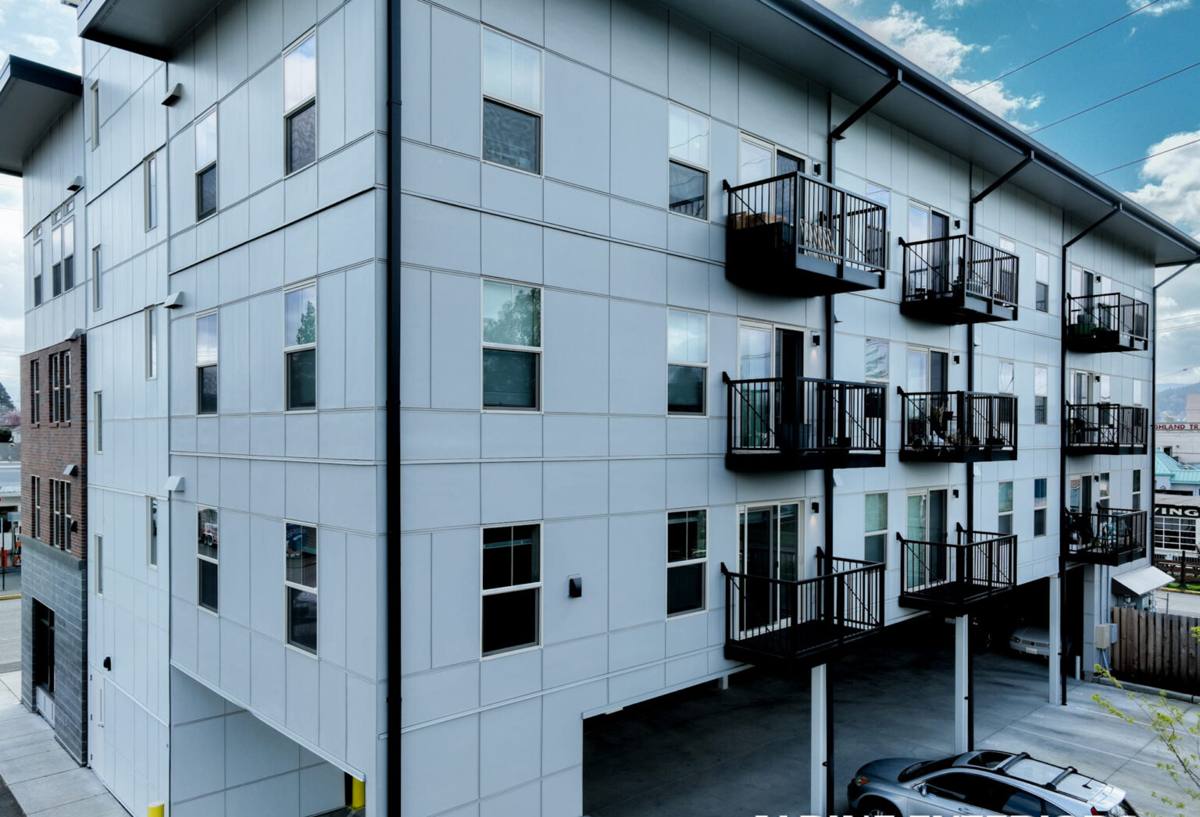
Signs Your Siding Needs Repair, Not Replacement
Most siding problems we see in this neighborhood are localized — a section of wall, a corner, an area under a downspout or behind a shrub line — rather than whole-house failure. Catching these early is what keeps a repair a repair instead of a full re-side.
- Soft or spongy spots when you press on the siding, especially near the bottom courses or window sills
- Visible staining, streaking, or a persistent dark line that reappears after cleaning
- Cracked, split, or bowed boards, particularly on walls that face prevailing wind and rain
- Paint or factory finish peeling in a way that traces back to moisture, not just age
- Gaps opening up at seams, corners, or trim where caulking has failed
- Persistent moss or algae growth that returns quickly after cleaning
- Rust streaks below nail heads or metal flashing — a sign fasteners are corroding
Why Localized Damage Spreads If Ignored
Siding is a system, not a shell. Water that gets behind one damaged board travels along the sheathing and can reach framing, insulation, and adjacent panels before it ever shows up as a visible stain. In a climate like this one, where the rainy season doesn't really let up for months, a small unaddressed gap in the fall can turn into a much larger repair by spring. That's the main argument for catching problems early rather than waiting until damage is obvious from the curb.
What a Correct Repair Job Actually Involves
A repair that just swaps a damaged board for a new one, without addressing why it failed, is a repair that fails again. We treat every job as a diagnostic exercise first and a materials job second.
Diagnosing the Moisture Path
Before any siding comes off, we look at where water is actually getting in — a failed flashing detail, a caulk joint that's given out, a butt joint with no drip cap, or grade and landscaping pushing splashback onto the lower courses. Replacing the board without fixing the entry point just resets the clock.
Checking What's Behind the Siding
Once we open up a damaged section, we check the water-resistive barrier, sheathing, and any framing in the area for rot or soft spots. If there's hidden damage, it gets addressed before anything new goes back on — patching over compromised sheathing is how a repair turns into a bigger problem two years later.
Matching Materials and Finish
A repair should blend in, not stand out as a patch. This means matching profile, reveal, and color as closely as the existing siding allows, and it's one of the reasons material choice matters even on a repair-only job — some products are far easier to source and color-match years after the original install than others.
Correcting Flashing and Water Management
Any repair is also a chance to fix the underlying detail that caused the failure — adding or correcting kick-out flashing, re-flashing a window head, or sealing a butt joint properly. Skipping this step is the single most common reason repairs don't last in a wet climate like Whatcom County's.
Common Causes of Siding Damage We See in Sehome
| Cause | How It Shows Up | Why It Happens Here |
|---|---|---|
| Salt air corrosion | Rust streaks at fasteners, corroded flashing edges | Proximity to Bellingham Bay keeps salt-bearing air moving through the neighborhood year-round |
| Moss and algae growth | Dark green or black staining, holding moisture at the surface | Shaded, tree-covered lots and a long damp season give moss months to establish |
| Wind-driven rain intrusion | Water stains behind trim, soft sheathing near seams | Storms off the water push rain sideways into joints not designed to shed it |
| Failed caulk and sealant | Gaps at corners, trim, and butt joints | UV exposure and repeated wet-dry cycles break down sealant faster than in drier climates |
| Splashback and grading issues | Damage concentrated at the bottom 2-3 courses | Heavy rainfall events overwhelm gutters and drainage on older lots |
Repair or Replace? How We Help You Decide
Not every damaged wall needs a full re-side, and not every homeowner wants to hear that a repair is a temporary fix. We try to give a straight answer based on how much of the house is affected and what's driving the damage.
| Factor | Favors Repair | Favors Replacement |
|---|---|---|
| Extent of damage | Isolated to one wall or section | Spread across multiple elevations |
| Age of existing siding | Well within expected service life | Nearing or past the end of its practical lifespan |
| Material availability | Matching material and color still obtainable | Discontinued profile or faded, unmatchable finish |
| Underlying moisture history | One-time or clearly identified cause, now correctable | Chronic, whole-house moisture intrusion |
| Homeowner's time horizon | Planning to sell or stay short-term | Long-term ownership, wants a longer-term fix |
Our Process for a Sehome Repair Call
1. On-Site Inspection
We walk the property, identify every area of concern (not just the spot the homeowner called about), and check for related issues like gutter overflow, grading, or shrubbery holding moisture against the wall.
2. Honest Diagnosis
We explain what we found, what's causing it, and whether repair or replacement makes more sense for that specific area — with the reasoning laid out, not just a recommendation.
3. Written Scope and Estimate
You get a clear scope of work covering what's being repaired, how the underlying cause is being addressed, and what materials will be used — no vague line items.
4. The Repair Itself
We remove only what needs to come off, inspect and repair anything hidden underneath, correct the water-management detail that caused the failure, and install matching material with proper flashing and sealing.
5. Final Walkthrough
We review the completed work with you and point out anything worth keeping an eye on going forward, particularly around moss control or drainage.
Why Material Choice Still Matters on a Repair
We install James Hardie fiber cement siding exclusively, and that standard carries into repair work too. When a damaged section needs replacing, fiber cement's dimensional stability means the patch stays flat and tight over time instead of cupping or shifting the way some wood-based and engineered products can once moisture gets involved. Hardie's factory ColorPlus finish also holds color consistency well, which matters when you're trying to match new material into an existing wall years after the original install. And because fiber cement is non-combustible and resists moisture-driven swelling, a properly executed repair tends to hold up rather than becoming an annual chore — which is the whole point of doing it right the first time in a climate that doesn't give siding much of a break.
Why Hire a Crew That Already Works Sehome
Siding repair in a coastal, moss-prone climate isn't generic handyman work — the failure patterns here are specific to salt exposure, shade, and driving rain, and a crew unfamiliar with the neighborhood can miss the underlying cause and just replace the visible board. A local crew has already seen how these houses fail and where.
- Ask whether they diagnose the moisture source or just swap materials
- Confirm they check sheathing and framing before closing the wall back up
- Ask how they match existing siding profile, reveal, and finish
- Get a written scope, not a verbal estimate
- Ask about their experience with the specific product installed on your home
- Confirm they carry proper insurance and can explain warranty coverage on the repair
Protecting the Repair Going Forward
Once a repair is done correctly, a little seasonal attention keeps it that way. Rinse siding to slow moss and algae buildup before it takes hold, keep gutters clear so water isn't overflowing onto walls below, trim back vegetation that's holding moisture against the siding, and re-check caulking at trim and corners every couple of years. None of this is complicated, but skipping it in a climate this wet is how a good repair ends up needing attention again sooner than it should.
If you're seeing staining, soft spots, or recurring moss on your Sehome home, we're happy to take a look and give you a straight assessment — repair or replacement — with no pressure either way. Reach out for a free estimate using the form below.