 Sudden Valley Siding
 Windows Built for the Acme Area's Weather, Not Just the Opening Size
Homes around Acme and the wider Sudden Valley area deal with a specific combination of weather that most window installers never have to think about: salt-laden air drifting in off the water, driving rain that comes in sideways during fall and winter storms, and a moss season that seems to stretch longer every year. None of that is dramatic on its own, but stacked together, year after year, it finds every weak point in a window installation. A window that's a perfect fit on a dry Tuesday afternoon can still leak two winters later if the flashing, sealant, or trim detailing wasn't done right the first time.
"Custom windows" doesn't mean fancy or oversized. It means the window is sized, shaped, and detailed to fit the actual opening in your actual wall — which, on older homes especially, is rarely a standard factory dimension. Getting that fit right, and getting the water management around it right, is most of what separates a window that lasts twenty-plus years from one that starts causing problems in five.
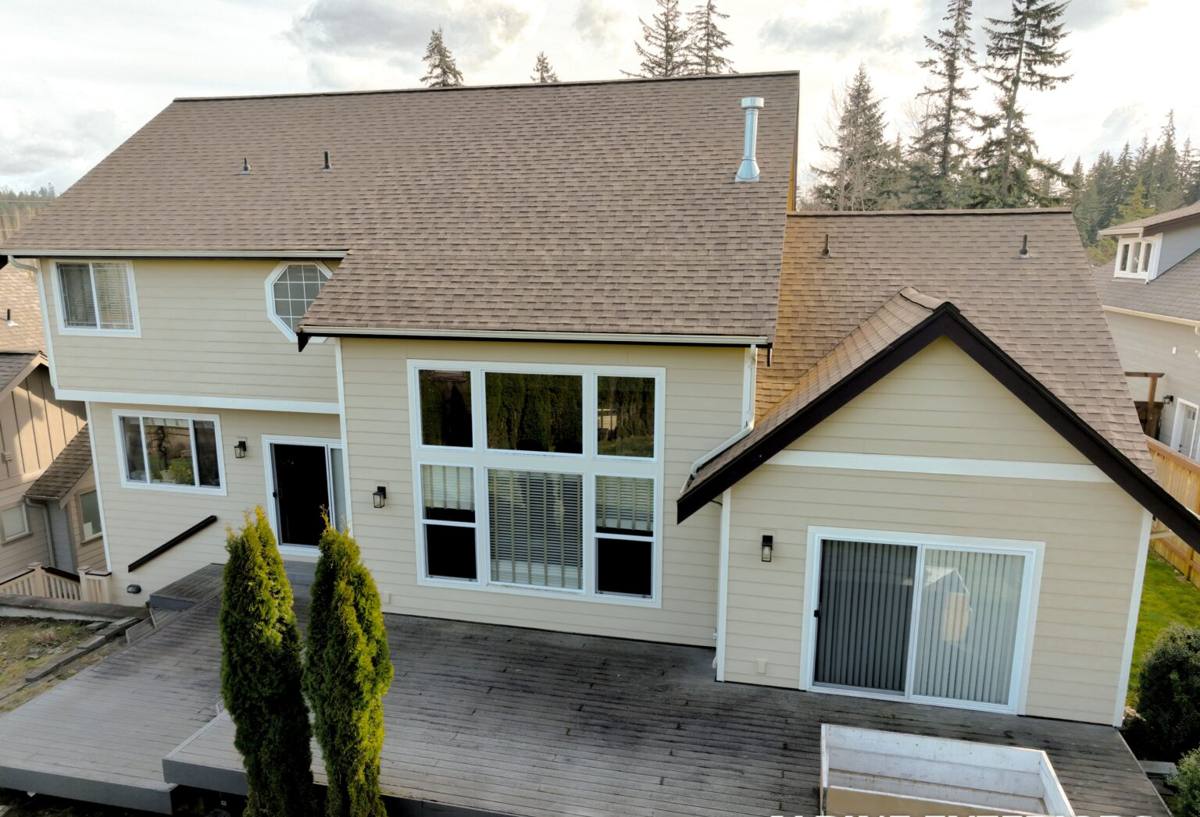
What "Custom" Actually Means for a Window Job
Most homes in and around Acme were built over a range of decades, which means openings vary — settled framing, older rough-openings that don't match today's standard sizes, and additions or remodels where the wall wasn't framed to a catalog spec. A true custom window job accounts for all of that:
- Exact field measurement of each opening, not a guess from the old window's label
- Custom width, height, or shape (arched, angled, or odd-proportioned openings)
- Matching sightlines and grid patterns across a wall or across the whole house
- Frame depth matched to your wall assembly, especially where siding thickness or trim depth is unusual
The alternative — forcing a close-enough stock size into an opening and packing the gaps with extra trim or foam — is how you end up with a window that looks fine from the driveway but leaks or drafts within a season or two.
New Construction vs. Retrofit Windows
There are two basic installation methods, and the right one depends on the condition of your existing wall, not just preference:
Retrofit (insert) windows go into the existing frame, leaving the exterior trim and siding largely undisturbed. This is faster and less invasive, and it's a reasonable choice when the surrounding frame, sheathing, and flashing are still sound.
Full-frame replacement removes the old window down to the rough opening, exposing the sheathing and flashing underneath. It costs more and takes longer, but it's the only way to actually inspect and fix what's happening behind the trim — which matters a lot in a climate that pushes moisture into every gap it can find.
The Window-to-Siding Connection: Why Integration Matters
Because we're a siding crew first, we look at window installation the way a siding contractor should: as part of the exterior wall's water management system, not as an isolated carpentry task. A window is really just a large, engineered hole in your weather barrier. If the flashing sequence around it doesn't tie correctly into the house wrap and the siding, water finds a way in — usually slowly, invisibly, and behind the wall where you won't see it until there's damage.
Flashing and Weather Barrier Layering
Correct integration follows a shingle-lap sequence, working from the bottom up, so every layer sheds water onto the layer below it:
- Sill pan flashing at the base of the opening, sloped to drain outward
- Side (jamb) flashing overlapping the sill pan
- The window unit itself, set in sealant at the correct points — not sealed on all four sides, which traps any water that does get in
- Head flashing overlapping the top of the window, tucked behind the house wrap above it
- House wrap and siding lapped over all of the above, in that order
Skip a step, or do them out of order, and the assembly looks identical from the outside while quietly failing on the inside.
Common Failure Points We See
On older homes and on rushed installs, the same handful of mistakes show up again and again: sealant used as a substitute for proper flashing instead of a supplement to it, house wrap taped over the window flange instead of lapped over it, sill pans that are flat or slope the wrong direction, and trim that traps water against the frame instead of letting it drain. Any one of these can sit quiet for a couple of dry summers before showing up as soft trim, staining, or a musty smell near the window in winter.
Frame Material Comparison
There's no single "best" window material — the right choice depends on your budget, the home's style, and how much upkeep you want to take on. Here's how the common options compare for a marine Pacific Northwest climate like Whatcom County's:
| Material | Moisture & Salt-Air Resistance | Maintenance | Typical Lifespan | Relative Cost |
|---|---|---|---|---|
| Vinyl | Good — won't rot or corrode | Low; occasional cleaning | 20–30 years | Lowest |
| Fiberglass | Very good; dimensionally stable in temperature swings | Low | 30–40+ years | Mid-to-high |
| Wood, clad exterior | Good if the cladding and seals stay intact; interior wood needs protection from condensation | Moderate — watch seams and finish | 25–35 years with upkeep | High |
| Aluminum | Fair; can corrode near salt air over time and conducts cold | Low | 20–30 years | Mid |
We lean toward vinyl and fiberglass for most Acme-area homes precisely because this region's air quality and rainfall are hard on materials that depend on a painted or clad finish to keep moisture out. That's a maintenance-and-durability call, not a knock on wood or aluminum windows done well — it just means fewer future headaches for most homeowners here.
Our Installation Process
The process is the same whether it's one window or a whole house, just scaled up:
- On-site measurement and inspection — we measure every opening individually and check the condition of the sheathing and existing flashing where accessible
- Custom order — windows are built to your exact openings, not pulled off a shelf
- Removal and opening prep — old units come out, and we inspect for hidden rot or water damage before anything new goes in
- Flashing repair or installation — sill pan, jamb, and head flashing installed or corrected as needed
- Window set and seal — unit is leveled, shimmed, and sealed at the correct points, not caulked shut on every side
- Trim and siding tie-in — exterior trim and siding are lapped back over the flashing so the whole wall sheds water correctly
- Final check — operation, seal, and weatherproofing are verified before we consider the job done
If we find soft or water-damaged sheathing behind an old window — which isn't rare on older homes in this area — we'll show you what we found and talk through repair options before closing the wall back up. That's not an upsell tactic; it's the only responsible way to install a new window over a wall that isn't sound.
Signs Your Current Windows Need Attention
You don't have to wait for a window to fail outright before it's worth a look. Watch for:
- Condensation or fogging between panes of a double- or triple-pane window (a sign the seal has failed)
- Noticeable drafts even when the window is fully latched
- Windows that are hard to open, close, or lock — often a sign the frame has shifted or swollen
- Soft, spongy, or discolored trim and sill areas
- Visible gaps between the frame and siding or trim
- Peeling paint or a musty smell near a window that doesn't show up elsewhere in the house
- A noticeable jump in heating costs with no other explanation
Any one of these on its own might just mean the window needs attention. Several at once, especially on the sides of the house that take the brunt of our weather, usually means it's time for a real evaluation.
Why a Crew That Already Works This Area Matters
A crew that regularly works homes around Acme and Sudden Valley has already seen how this area's specific mix of rain exposure, moss buildup, and salt-influenced air plays out on real houses over real years — not in a manufacturer's brochure. That shows up in small decisions: which flashing details actually hold up here, which trim profiles shed water instead of trapping it, and where on a given home's exposure the moss and moisture problems tend to start first. It also means we're not guessing at how our window work needs to integrate with the siding — since siding is our core trade, the two are never treated as separate jobs bolted together.
Keeping New Windows Performing Through Moss Season
A correctly installed window is largely maintenance-free, but a little seasonal attention keeps it that way. Clear debris and moss from nearby trim, sills, and gutters before the wet season sets in, so water has a clear path off the wall instead of pooling against the frame. Rinse salt-laden grime off glass and frames periodically rather than letting it sit. And take a look at exterior caulking once a year — sealant is a maintenance item everywhere, but especially in a climate that puts it through this many freeze-thaw and wet-dry cycles.
If you're noticing drafts, fogged glass, or trim trouble around your windows — or you're planning ahead for a siding project and want the windows tied in correctly from the start — we're happy to take a look. Reach out for a free, no-pressure estimate using the form below.