 Sudden Valley Siding
 Why Ferndale Roofs Wear Out Faster Than the Manufacturer's Warranty Suggests
Every asphalt shingle sold in the United States carries a warranty number that assumes a fairly forgiving climate. Ferndale doesn't offer one. Sitting close to Bellingham Bay and the open water of the Strait of Georgia, homes here take on a steady dose of salt-laden air, wind-driven rain that hits roof planes sideways instead of straight down, and a moss season that can run eight or nine months out of the year in shaded, north-facing sections of a roof. None of that is dramatic on its own. It's the combination, repeated year after year, that shortens the real-world lifespan of a roof well below what the shingle wrapper promises.
We work on roofs throughout Whatcom County, and the pattern in Ferndale is consistent: fastener corrosion shows up earlier on homes closer to the water, moss colonies take hold fastest under tree cover and on the north and east slopes, and flashing failures cluster around anything that interrupts a roof plane — chimneys, skylights, dormers — because that's where wind-driven rain finds the smallest gaps. A roof replacement done right here has to plan for those specific pressures, not just swap old shingles for new ones.
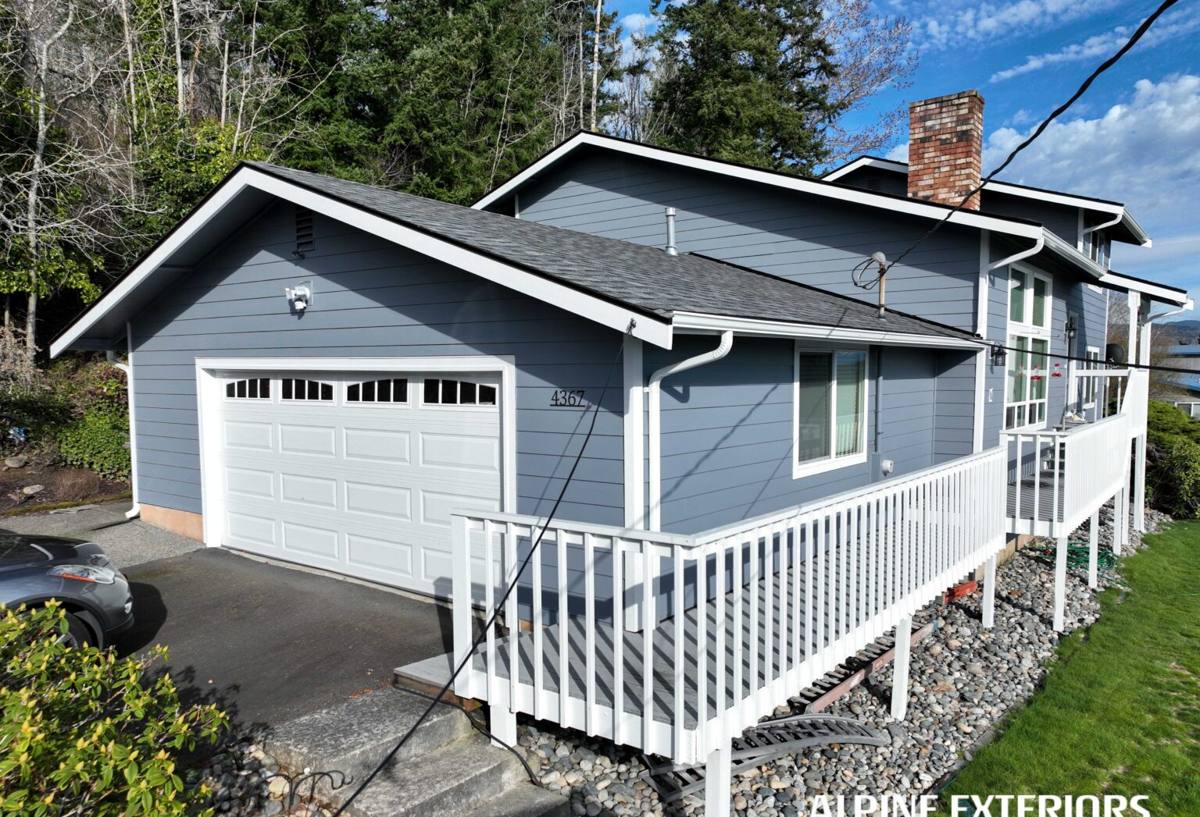
Signs a Ferndale Roof Has Moved Past Repair
Homeowners often ask us to patch a leak, and sometimes that's genuinely the right call. But a patch on a roof that's failing systemically just buys a season or two before the next leak shows up somewhere else. Here's what tells us a roof has crossed the line from repairable to due for replacement:
- Granule loss heavy enough that you can see bare, shiny patches on multiple slopes, not just one weathered section
- Shingles that are cupping, curling at the edges, or cracking when you press on them gently
- Moss growth thick enough to lift shingle edges, holding moisture against the roof deck instead of shedding it
- Soft spots or slight sponginess underfoot on the roof deck, a sign water has already reached the sheathing
- Rust streaking or corrosion around flashing, vents, or exposed fasteners
- Daylight visible through the roof deck from inside the attic, or water stains on attic framing
- A roof that's already 20-plus years old, regardless of how it looks from the ground, since underlayment and decking age even when shingles hold their color
If two or three of these apply, replacement is almost always the more honest recommendation — and usually the more affordable one over a five-year horizon, once you factor in repeated repair trips.
What a Correct Roof Replacement Actually Involves Here
Full Tear-Off, Not a Layover
Installing new shingles over old ones is faster and cheaper, and we don't do it. In a climate this wet, trapping moisture between two layers of roofing is exactly the wrong move. A full tear-off lets us inspect the deck itself, replace any sheathing that's soft or delaminated, and start the new roof on a dry, sound surface.
Underlayment Built for Wind-Driven Rain
Standard felt underlayment is not what we spec for Ferndale roofs. We use synthetic underlayment across the full roof and install self-adhering ice-and-water shield along eaves, valleys, and around every roof penetration — the spots where sideways rain and ice dams during a cold snap are most likely to force water backward under the shingles.
Ventilation That Actually Balances
A roof deck traps heat and moisture without balanced intake and exhaust ventilation, and in a marine climate that trapped moisture becomes mold, rot, and premature shingle failure from underneath. We check soffit intake and ridge or box-vent exhaust as part of every replacement, not as an upsell — an unbalanced system undercuts everything else we do.
Flashing Details, Done by Hand
Pre-formed flashing kits are fine for a simple gable roof. Ferndale homes with chimneys, skylights, and dormer intersections need step flashing and counter-flashing fabricated and fitted for that specific joint. This is the single most common point of failure we find on older roofs, and it's worth the extra time to get right the first time.
Choosing a Roofing Material for This Climate
There's no universally "best" roofing material — there's a best fit for your home's exposure, roof pitch, budget, and how long you plan to stay in the house. Here's how the common options actually perform under Whatcom County conditions:
| Material | Moss & Moisture Behavior | Typical Lifespan Here | Maintenance Burden |
|---|---|---|---|
| Architectural asphalt shingle (standard) | Prone to moss without treatment; algae streaking common on north slopes | 18–25 years | Periodic moss/moss-strip maintenance recommended |
| Architectural asphalt shingle (algae-resistant, copper-infused granules) | Resists algae staining significantly; still benefits from moss control on shaded slopes | 20–28 years | Low to moderate |
| Standing-seam metal | Sheds moisture fast, very little surface for moss to grip; performs well near salt air with proper coating | 40–50+ years | Low |
| Cedar shake | Attractive, but holds moisture and is genuinely high-maintenance in a climate this damp | 15–25 years with diligent upkeep | High |
Most Ferndale homeowners land on an algae-resistant architectural shingle — it balances upfront cost against realistic longevity in this climate. Metal roofing costs more to install but makes sense for homeowners planning to stay long-term or dealing with heavy tree cover where moss is a constant fight. We'll walk through the honest trade-offs for your specific roof rather than steering you toward whatever's easiest to install.
Our Replacement Process
1. On-Site Assessment
We walk the roof, check the attic from inside when accessible, and look at ventilation, flashing condition, and deck integrity before quoting anything. This tells us whether you're actually looking at a replacement or whether targeted repair still makes sense.
2. Written Scope and Material Selection
You get a clear, itemized scope — tear-off, deck repair allowance, underlayment type, flashing approach, material and color — so there's no ambiguity about what's included before work starts.
3. Tear-Off and Deck Inspection
Old roofing comes off down to the deck. Any damaged sheathing gets flagged and replaced before anything new goes down — this is where hidden problems from years of slow leaks usually surface.
4. Underlayment, Flashing, and Ventilation Install
Ice-and-water shield at vulnerable areas, synthetic underlayment across the field, hand-fitted flashing at every penetration, and ventilation components installed or corrected as needed.
5. Roofing Material Installation
Shingles or metal panels go on per manufacturer spec, with attention to nailing pattern and exposure — details that matter for warranty validity as much as performance.
6. Cleanup and Final Walkthrough
Magnetic sweep for stray fasteners, full site cleanup, and a walkthrough so you know what was done and what to watch for going forward.
Timing a Roof Replacement Around Whatcom County Weather
Roofing can be done here most of the year, but late spring through early fall gives the most predictable stretches of dry weather for tear-off and underlayment work. That said, waiting for "perfect" weather isn't always realistic — if your roof is actively leaking, we schedule around forecast windows and use tarping and sequencing to keep a torn-off section protected. We'd rather move a project a few days for a dry window than rush underlayment onto a wet deck.
Permits and Local Requirements
Roof replacements in Whatcom County typically require a permit, and requirements can differ depending on whether a property falls inside Ferndale city limits or unincorporated county land. We handle the permit process as part of the job — pulling the right permit, scheduling any required inspections, and making sure the finished work matches code for wind exposure and fire rating in this area. You shouldn't have to track that down yourself.
Why Hire a Crew That Already Works This Area
A roofing crew that mostly works inland or in drier parts of the state will default to standard specs — standard underlayment, standard flashing approach, minimal thought given to moss. That's not negligence, it's just a different set of habits built for a different climate. A crew that works Ferndale and the rest of Whatcom County regularly already knows which roof orientations grow moss fastest, which flashing details fail first near the water, and how to sequence a tear-off around a weather window instead of gambling on one. That local pattern-recognition shows up in fewer callbacks, not in anything you'd notice on a glossy brochure.
It also matters for warranty support. If a flashing detail or ventilation issue surfaces two years down the road, you want a crew that's still working nearby and stands behind its own installation — not one that quoted the job cheap and moved on to the next county.
Ready for a Straight Answer About Your Roof?
If your roof is showing granule loss, persistent moss, or you're just not sure whether repair or replacement makes more sense, we're glad to take a look. Fill out the form below for a free, no-pressure estimate — we'll give you an honest read on where your roof actually stands.