 Sudden Valley Siding
 Roof Repair for Yew Street Homes in Sudden Valley
Yew Street sits within the Sudden Valley community, tucked along Lake Whatcom in Whatcom County, where roofs deal with a specific combination of stress most drier climates never see. Homes here get a mix of moisture off the lake, wind-driven rain that pushes water sideways under shingles and flashing, and long stretches of gray, damp weather that never quite dry the roof deck out between storms. Add in tree cover common to the Sudden Valley area, and you get a moss season that can run most of the year instead of just a few weeks. A roof repair that works in a drier part of the state often fails here within a season or two because it wasn't built with that combination in mind.
This page focuses specifically on roof repair for Yew Street properties — not a full replacement, and not a generic overview of roofing in general. If your roof is basically sound but has a leak, damaged section, moss problem, or storm damage, this is what a correct repair looks like and what we do differently because we already work in this neighborhood.
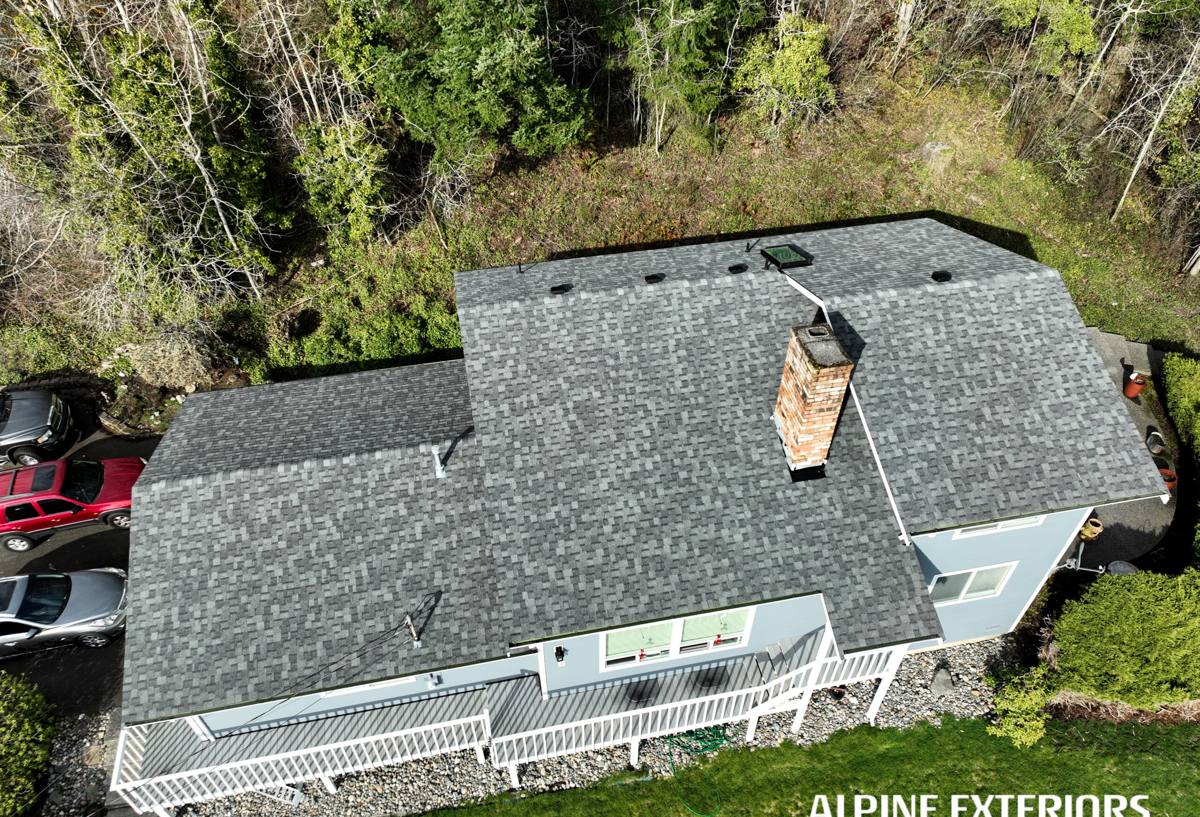
What Local Homes Need From a Roof Repair
Moisture Management Comes First
Any repair on a Sudden Valley roof has to assume the roof will stay damp for long periods. That changes how we handle underlayment, how tightly we seal penetrations, and how we treat any wood decking we expose during the repair. A patch that looks fine on a dry day can trap moisture underneath it if it isn't detailed correctly, and trapped moisture under a roof deck near the lake doesn't dry out quickly — it just sits there and does damage slowly.
Wind-Driven Rain, Not Just Rainfall Volume
The bigger issue for repairs in this area usually isn't how much rain falls, it's the direction it comes from. Storms off the water can drive rain sideways and upward under shingle edges, ridge caps, and flashing that would keep water out in a straight, gravity-fed rain. Repairs that only address the visible damage and ignore how wind pushes water around it tend to leak again at the first real storm.
Moss and Organic Growth
Shade, moisture, and moderate temperatures make Whatcom County an easy place for moss, algae, and lichen to take hold on a roof. Left alone, moss holds water against the roofing material, lifts shingle edges, and works its way into seams — turning a small leak point into a larger repair. Any repair we do accounts for what's growing on the roof, not just the hole or damage itself.
Signs a Yew Street Roof Needs Repair
- Moss or dark streaking concentrated on north-facing or shaded slopes
- Granules collecting in gutters or at downspout outlets
- Ceiling stains that appear or worsen after wind-driven storms specifically, rather than every rain
- Shingles that look curled, lifted at the edges, or cupped
- Soft spots or slight give when walking the roof (a sign moisture has reached the deck)
- Flashing around chimneys, vents, or skylights that looks rusted, cracked, or pulled away
- Visible daylight or gaps in the attic where the roof meets a wall or vent
Any one of these on its own might be minor. Several together usually mean the roof has been dealing with moisture longer than it looks like from the ground.
What a Proper Repair Involves
Diagnosis Before Patching
The most common mistake in roof repair — anywhere, but especially here — is patching the spot where water showed up inside the house instead of the spot where it actually got in. Wind-driven rain and roof-deck moisture can travel several feet from entry point to drip point. We trace the actual path before doing any repair work, usually from the attic side first, then confirm from the roof.
Matching Materials, Not Just Covering the Damage
A repair patch that doesn't match the existing shingle profile, granule color, or exposure creates a new weak seam and often looks obviously mismatched. Where an exact match isn't available (common on older roofs), we explain the honest trade-off up front rather than making promises about a perfect blend.
Flashing and Sealing Detail
Most repair failures we get called back to fix — from other companies' work — trace to flashing that was reused instead of replaced, or sealant used in place of proper flashing. Sealant breaks down under UV and temperature swings; it's a short-term fix, not a substitute for correctly formed metal flashing at valleys, walls, and penetrations.
Moss and Growth Treatment
If moss or organic growth contributed to the damage, the repair isn't complete until that growth is addressed — otherwise the same failure returns in the same spot. We handle removal carefully to avoid scraping granules off the shingle surface, which does more damage than the moss itself.
Common Repair Issues We See in the Sudden Valley Area
| Issue | Typical Cause Locally | What a Correct Repair Does |
|---|---|---|
| Leak at chimney or skylight | Old or reused step flashing, sealant used instead of metal flashing | Remove and rebuild flashing correctly, seal as backup only, not primary defense |
| Moss-related shingle lifting | Shade, moisture, slow drying between storms | Careful moss removal, treatment, and replacement of any lifted or damaged shingles |
| Leak that only shows in wind storms | Wind-driven rain pushed under shingle edges or ridge caps | Re-secure and re-seal edges and ridge with wind-rated detailing, not just surface patching |
| Soft or spongy roof deck section | Long-term hidden moisture intrusion | Cut back to sound decking, replace damaged plywood, then re-roof that section properly |
| Granule loss / accelerated aging | Sun exposure combined with damp cycling common to the region | Assess remaining shingle life honestly — repair the section or advise if replacement is closer |
Our Repair Process
- Inspection — We walk the roof and check the attic, tracing suspected leaks to their actual source rather than assuming.
- Honest assessment — We tell you whether this is a straightforward repair, a larger repair, or a case where repair isn't the better value versus replacement.
- Written scope — You get a clear description of what will be repaired, what materials are used, and why.
- The repair itself — Old, damaged, or failed materials are removed rather than covered over; flashing and underlayment are addressed as part of the same job when they're contributing to the problem.
- Cleanup and check — We clear debris, old granules, and moss material from gutters and the roof surface as part of the job, not as an afterthought.
Repair vs. Replacement — Being Honest About the Line
Not every roof problem in Sudden Valley needs a full replacement, and we won't sell one when a repair is the right call. At the same time, if a roof has multiple failure points, widespread granule loss, or deck damage in more than one area, patching individual spots stops being cost-effective and starts becoming a series of repeat visits. Part of doing this job honestly is telling you which situation you're actually in, with the reasoning behind it, rather than defaulting to whichever option is more profitable for us.
When Repair Makes Sense
The roof is generally sound, damage is localized, and the surrounding material still has useful life left in it.
When Replacement Is the Better Value
Multiple sections are failing, the deck has moisture damage in more than one spot, or the shingles are old enough that matching repairs is no longer realistic.
A Homeowner's Roof Repair Checklist
- Check the attic (not just the ceiling) for staining, especially after a windy storm
- Look at gutters for accumulated granules after heavy rain
- Note whether leaks correlate with wind direction or just rainfall in general
- Check shaded, north-facing slopes for moss buildup at least once a year
- Get flashing around chimneys, skylights, and vents inspected every few years, not just when a leak appears
- Ask any contractor for a written scope before work starts, not just a verbal quote
Why Working With a Crew That Knows Yew Street Matters
A repair crew that regularly works in Sudden Valley already understands how wind comes off the lake, which slopes tend to hold moss longest, and what a house in this specific microclimate needs from its flashing and underlayment. That's different from general roofing knowledge — it's local pattern recognition built from doing this work in this neighborhood, not just in Whatcom County broadly. It means fewer surprises, fewer callbacks, and a repair that's built for the storms this area actually gets rather than a generic playbook.
If you're dealing with a leak, storm damage, or a moss problem on your Yew Street roof, we're glad to take a look and give you a straight answer about what it needs. Reach out for a free, no-pressure estimate using the form below.