 Sudden Valley Siding
 New-Construction Windows in Acme: Why This Job Is Different
Acme sits back from the water in the foothills east of Bellingham, but it shares the same weather system that soaks the rest of Whatcom County — long wet winters, driving rain that comes in sideways during a southwest blow, and enough shade and moisture from the surrounding tree cover to keep moss and algae growing on north-facing surfaces for most of the year. When you're putting windows into a new build or a full-tear-off addition out here, the install has to account for that from the first cut, not patched around later.
New-construction window work is a different job than swapping out an old window in an existing wall. There's no old frame to work around, no compromises forced by what's already there. That's an advantage — it means the flashing, the water management, and the fit can all be done correctly the first time. But it also means there's no room for shortcuts, because everything about how that window performs for the next 20-30 years gets built into the wall during this one install.
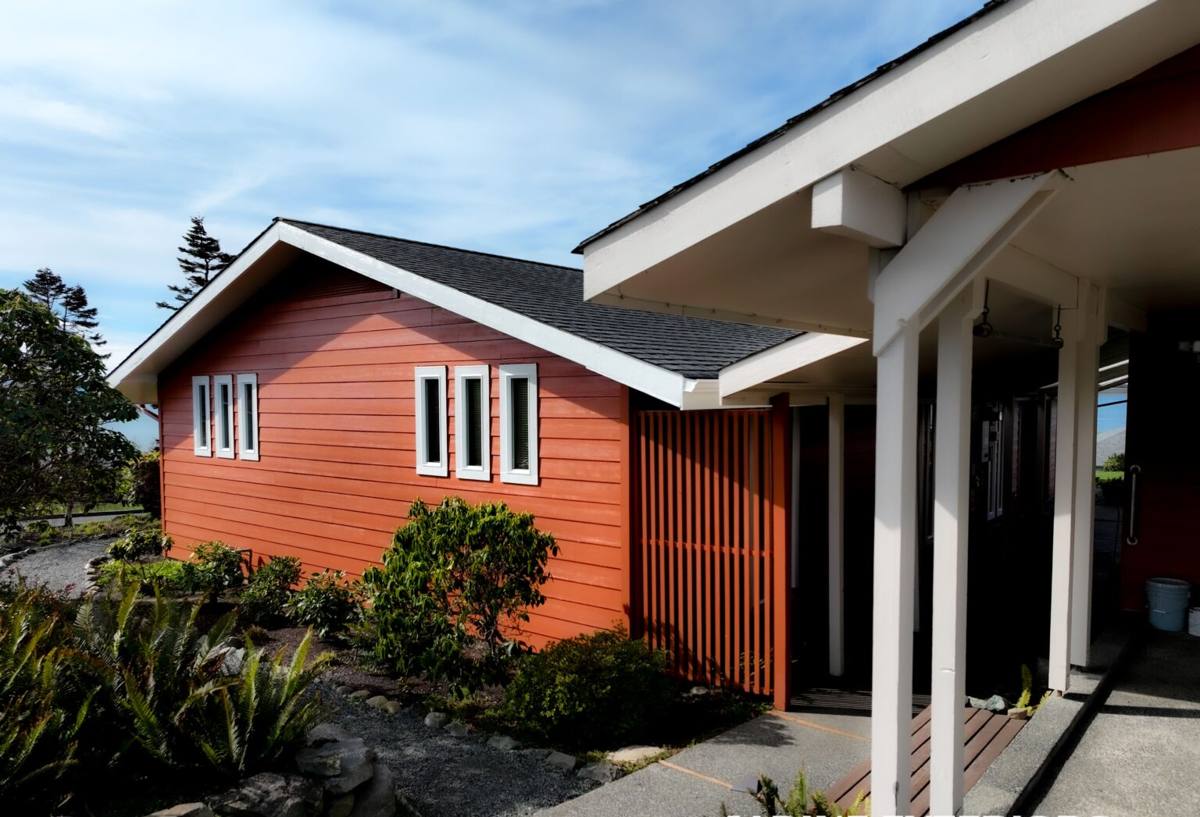
New-Construction vs. Replacement Windows: The Real Difference
These terms get used loosely, so it's worth being precise. A new-construction window has a nailing fin (sometimes called a flange) around the perimeter of the frame. That fin gets fastened to the sheathing and integrated into the house wrap and flashing before siding goes on. A replacement (or "pocket") window, by contrast, is built to slide into an existing frame with no fin, relying on the old frame and trim to stay in place.
For new builds, additions, and any project where we're opening the wall down to the studs, new-construction windows are the right call almost every time. They give us a continuous, lapped drainage plane from the roof down to the foundation — house wrap over the head flashing, over the fin, over the sill pan — which is exactly what a high-rainfall area like this needs. Trying to force a pocket-style replacement window into new framing skips that layered protection and isn't something we'll do on new construction.
When the Distinction Actually Matters
On a remodel where siding is coming off anyway and studs are exposed, we treat it as new construction even if the house itself is decades old. The deciding factor isn't the age of the home — it's whether the wall is open enough to flash the window properly from the outside in.
What Acme's Climate Actually Demands From a Window Install
Three things drive most of the water and moisture problems we see in this part of Whatcom County, and all three shape how we detail a window opening:
Driving Rain
Wind-driven rain doesn't just fall on a window, it pushes against it and finds any gap in the sealant or flashing. A correctly lapped flashing sequence sheds that water down and out regardless of wind direction; a caulk-only seal eventually fails under that kind of repeated pressure.
Long Moss and Algae Season
Shaded, tree-lined lots like the ones common around Acme stay damp for months at a stretch. Moss and algae don't just grow on roofs — they'll colonize window sills, trim, and any horizontal surface that holds moisture. That's a cosmetic issue on its own, but it becomes a real problem when trapped moisture behind moss-covered trim starts feeding rot in the wood underneath.
Marine-Influenced Air
Whatcom County's proximity to Puget Sound and Bellingham Bay means even inland communities get a fair amount of salt-tinged, moisture-laden air moving through on weather systems. It's not the same direct salt exposure as a beachfront property, but it's another reason we don't cut corners on fasteners, flashing metal, and sealant compatibility.
The Anatomy of a Correct New-Construction Install
There's a specific order of operations that makes a window opening watertight, and skipping or reversing a step is how leaks happen — often not until a year or two later, once the damage is already inside the wall.
- Rough opening checked for correct size, square, and level before the window ever arrives on site
- Sill pan flashing installed first, sloped to drain outward, so any water that gets past the window has somewhere to go besides the framing
- Window set into the opening, shimmed level and plumb, fastened through the nailing fin per the manufacturer's schedule
- Jamb flashing lapped over the sides of the nailing fin
- Head flashing installed last at the top, lapped over the jamb flashing and tucked behind the house wrap above
- House wrap integrated in shingle fashion — each layer overlapping the one below it, so water always moves downward and outward
- Interior and exterior sealant applied at the correct points only — sealing the wrong gap can trap moisture instead of releasing it
- Final check for square, smooth operation, and a clean weather seal before trim goes on
That sill pan step is the one we see skipped most often on lower-bid jobs, because it takes extra time and material. It's also the single detail most likely to prevent a slow, hidden leak at the bottom corners of a window — historically the most common failure point in any wall.
Choosing Frame Materials for a New Build
Frame material affects how a window handles years of damp, shaded exposure. There's no universally "best" option — it depends on budget, maintenance appetite, and how the home is trimmed out.
| Frame Material | Moisture Behavior | Maintenance | Typical Cost Position |
|---|---|---|---|
| Vinyl | Won't rot or corrode; performs well in wet climates | Low — occasional cleaning | Most affordable |
| Fiberglass | Very stable in moisture and temperature swings; minimal expansion/contraction | Low | Mid to upper range |
| Wood with vinyl or aluminum cladding | Good if cladding and flashing details are done right; the wood core is protected, not eliminated | Moderate — cladding needs to stay sealed at joints | Upper range |
| Bare wood | Requires diligent upkeep to resist the rot and moss growth common in this climate | High — regular painting/sealing | Varies |
For most new builds in this area, we steer homeowners toward vinyl or fiberglass because they hold up with the least ongoing attention in a climate that stays damp for much of the year. Clad-wood windows are a legitimate choice for a specific look, but we're upfront that they carry more long-term maintenance than a homeowner might expect from the showroom sample.
Our Process on an Acme New-Construction Job
- Site visit and measure — we confirm rough openings against the window order specs before anything is cut or ordered, catching sizing problems while they're still cheap to fix.
- Material selection — we walk through frame material, glass package, and grille options based on the home's exposure and the owner's budget.
- Opening prep — sill pan and flashing materials staged and prepped before the window arrives, so install day isn't held up waiting on supplies.
- Install and flash — the sequence described above, done in order, with each layer inspected before the next goes on.
- Weatherproofing check — operation, seal, and square are verified before we call the opening finished.
- Trim and siding integration — exterior trim and siding are tied back into the flashing so the whole envelope works as one system, not a window install and a siding job that happen to be next to each other.
Coordinating With Builders and GCs
On new builds we're often one trade among several on site. We coordinate our flashing sequence with the framer and the siding schedule so nothing gets covered up before it's inspected, and so the house wrap timeline doesn't force us to rush a step that needs to be done in order.
Mistakes We See on Lower-Quality Installs
Most of the water damage we get called out to repair traces back to a handful of recurring shortcuts: no sill pan, reversed flashing laps that direct water inward instead of outward, sealant used in place of proper flashing, or fasteners that don't match what the window manufacturer specifies for the wind and moisture exposure of this region. None of these show up as a problem on install day — they show up as soft trim or a stained interior wall a year or two later, once moisture has had time to work into the framing.
This is also where moss becomes more than cosmetic. Once trim or sill material stays damp under a moss mat through a wet Whatcom County winter, the wood underneath is at real risk even if the window itself is fine. Correct flashing and drainage keep water moving out and away, so moss on the surface doesn't turn into rot underneath.
Why Hire a Crew That Already Works in Acme
A window is only as good as the wall it's set into. Crews unfamiliar with this specific climate sometimes detail flashing the way they would in a drier region — less lap, lighter sealant use, no sill pan — and it holds up fine somewhere with less rain, but not here. Working regularly in and around Sudden Valley and Acme means we already know how much water this area sees, how long moss season runs, and what level of detail actually holds up through it, instead of learning that on your house.
It also means fewer surprises with permitting and inspection timing for new construction in unincorporated Whatcom County, since we're already familiar with how that process typically moves for a residential window package.
If you're planning a new build, addition, or a full siding tear-off in Acme and want windows installed the way this climate actually requires, we're glad to walk the site and put together a straightforward, no-pressure estimate. Use the form below to get started.