 Sudden Valley Siding
 Lake Whatcom's Climate Is Harder on Siding Than It Looks
Homes around Lake Whatcom sit in one of the wetter, shadier microclimates in Whatcom County. Tree cover along the shoreline keeps siding damp longer after every rain, the marine air that moves through this part of Western Washington carries persistent moisture even on days without measurable rainfall, and driving rain off the lake finds its way onto wall surfaces that a drier neighborhood might not have to worry about. Add in a moss season that can stretch from fall through spring in the shaded, north-facing sections of a lot, and you have exterior conditions that punish siding materials not built for sustained dampness.
This isn't a reason to panic about your home's exterior — it's a reason to be deliberate about what goes on the walls and how it's installed. Siding that performs fine in a drier inland climate can fail early here if it wasn't designed for constant moisture exposure or if the installation didn't account for how water actually moves around a lake-adjacent home.
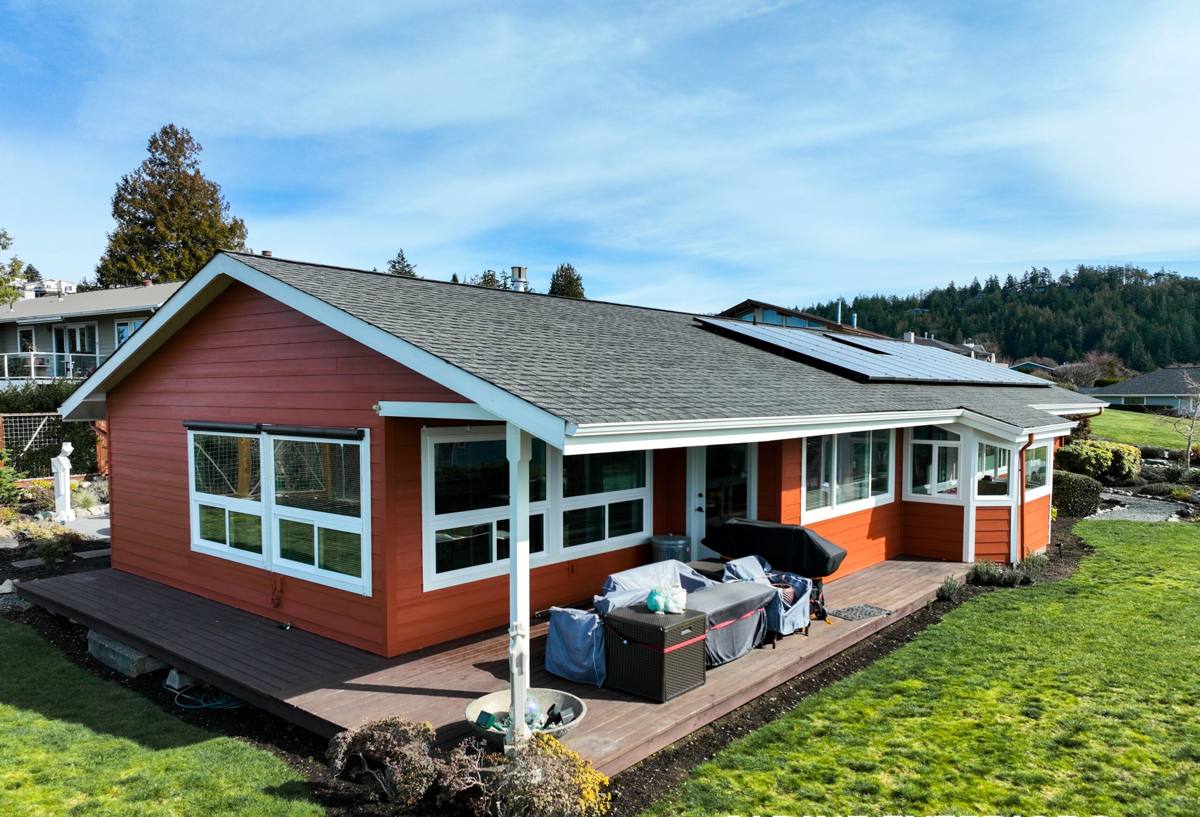
What Lake Whatcom Homes Actually Need From Their Siding
Before talking about products, it helps to define the job the siding has to do in this specific setting:
- Resist moisture absorption at butt joints, corners, and anywhere siding meets trim
- Hold paint and factory finish through repeated wet-dry cycling without cracking or peeling
- Shed water away from the wall assembly instead of trapping it behind the cladding
- Stand up to moss and algae growth on shaded elevations without the material itself breaking down
- Tolerate the temperature swings of a maritime climate — damp and mild most of the year, with occasional hard freezes
A siding job that checks these boxes is doing more than making the house look good. It's protecting the sheathing, framing, and insulation behind it — the expensive parts of the house that you don't see until moisture damage forces you to.
Why Water Management Matters More Here Than in a Dry Climate
Siding is not a waterproof membrane — it's a water-shedding layer that works with a weather-resistant barrier (WRB), proper flashing, and drainage gaps behind it. In a climate that gets occasional rain, a mediocre install might go years before a problem shows up. Around Lake Whatcom, where humidity and rainfall are near-constant for much of the year, gaps in that system get exploited fast. Poor flashing at windows, missing kick-out flashing at roof-wall intersections, and siding installed tight to the ground or a deck are the details that turn into rot within a few wet seasons here.
Why We Install Only James Hardie Fiber Cement
We standardized our company on James Hardie fiber cement siding, and we don't install vinyl, LP SmartSide, cedar, primed spruce, or other fiber cement brands. That's a deliberate call, not a sales pitch, and it comes down to how these materials hold up in exactly the conditions Lake Whatcom homes deal with:
- Vinyl can warp or become brittle with temperature swings and doesn't stop moisture from getting behind it at seams — it also can't be painted a darker color without risking heat warping, which limits design options for shaded lake lots.
- Wood-based products (cedar, primed spruce, engineered wood) are organic materials in a climate built for moss, algae, and fungal growth. Keeping them protected means an ongoing maintenance commitment most homeowners don't want to sign up for indefinitely.
- Other fiber cement brands vary in how they're engineered for moisture and how consistent their factory finish is — details that matter a lot over 20-plus years in a wet climate.
James Hardie's HZ5 product line is engineered specifically for climates like ours — freeze-thaw cycling combined with high moisture exposure. The ColorPlus factory finish is baked on under controlled conditions, which holds color and resists the peeling and cracking that field-applied paint is prone to once it's exposed to years of damp weather. It's non-combustible, which matters given wildfire smoke seasons are now a fact of life in the Pacific Northwest, and it carries a strong transferable warranty that reflects the manufacturer's confidence in how the product performs long-term when installed to spec.
We're not saying other products can't work anywhere — we're saying that for the specific conditions around Lake Whatcom, Hardie fiber cement is the material we're willing to put our name behind.
What Correct Installation Looks Like
The product is only half the equation. Fiber cement siding installed without following manufacturer spec can still fail — trapped moisture doesn't care what the siding is made of if it can't get out. Correct installation on a Lake Whatcom home includes:
- A weather-resistant barrier installed and lapped correctly, with all penetrations sealed
- Proper flashing at every window, door, and roof-wall intersection, including kick-out flashing where a roofline meets a wall
- A minimum clearance between the bottom of the siding and grade, decks, or roof surfaces so water can't wick upward
- Correct fastener type, spacing, and depth per Hardie's installation instructions — over- or under-driven nails are a common cause of early cracking
- Factory-cut and factory-primed edges used wherever possible, with any field cuts properly sealed
- Rainscreen or drainage gap detailing on elevations that see the most direct weather exposure
These aren't optional extras — they're the difference between siding that lasts its full service life and siding that needs repair in year eight.
Our Process for a Lake Whatcom Siding Installation
Every home is different, but the sequence of a proper install stays consistent:
- On-site assessment — we look at the existing siding, sheathing condition, moisture history, and how water currently moves around the house before quoting anything.
- Tear-off and sheathing inspection — we don't cover up problems. Soft or rotted sheathing gets flagged and addressed before new siding goes on.
- WRB and flashing installation — this stage determines how the house performs for the next 30 years, and we don't rush it.
- Hardie siding installation to manufacturer spec — correct fastening, spacing, and clearances throughout.
- Trim, caulking, and final detail work — the finishing details that keep water out of joints and corners.
- Walkthrough — we go over the finished work with you before calling the job done.
Signs Your Current Siding Is Already Struggling
If your home is on or near Lake Whatcom, watch for these signs that your siding is losing the fight against local moisture:
| Sign | What It Usually Means |
|---|---|
| Persistent moss or algae streaking on shaded walls | Surface is staying wet longer than it should between rain events |
| Soft spots or visible warping in wood-based siding | Moisture has gotten into the material itself |
| Peeling or bubbling paint | Trapped moisture pushing out from behind the finish coat |
| Cracking at butt joints or corners | Often a sign of improper fastening or lack of expansion clearance |
| Rising utility bills or drafts near walls | Can indicate the water-resistant barrier or insulation behind the siding has been compromised |
Catching these early usually means a more affordable repair. Waiting can mean sheathing replacement, which adds significantly to the scope of the job.
What Drives Cost on a Lake Whatcom Project
| Factor | Why It Matters |
|---|---|
| Sheathing condition | Existing rot or moisture damage found during tear-off adds repair scope before new siding can go on |
| Home size and wall complexity | Dormers, multiple stories, and cut-up rooflines add labor and material waste |
| Access and site conditions | Steep lake-adjacent lots, limited driveway access, or heavy tree cover can affect staging and timeline |
| Siding profile and color selection | Board width and factory-finish color affect material cost per square |
| Trim and detail work | Window and door trim, corner boards, and fascia detailing add labor beyond the flat wall area |
We give straightforward, itemized quotes so you can see exactly what you're paying for and why, rather than a single lump number.
Why a Crew That Already Works Lake Whatcom Matters
Installing siding correctly requires understanding the specific conditions a home faces — not just following a generic spec sheet. A crew that already works in and around Sudden Valley and Lake Whatcom knows which elevations on a typical lot take the worst weather, how tree cover affects drying time on a job site, and what moisture patterns to expect before they show up as a problem. That familiarity shows up in better flashing decisions, better sequencing around wet weather, and fewer surprises once tear-off starts. It's also easier to stand behind a warranty and follow-up service when the crew that installed your siding is local and not traveling in from out of the area for one job.
Keeping Your Siding Performing After Installation
Hardie fiber cement is low-maintenance, not zero-maintenance. A few habits go a long way in a lake climate:
- Rinse siding annually to remove moss, algae, and pollen buildup, especially on shaded elevations
- Trim back vegetation and tree limbs that keep siding shaded and damp
- Check and re-caulk trim joints every few years as part of routine upkeep
- Keep gutters clean so overflow doesn't run down the wall surface
- Have flashing and caulking inspected after any major windstorm
If you're weighing a siding replacement for a home on or near Lake Whatcom, we're happy to take a look and give you a straightforward, no-pressure estimate — including an honest read on what your current siding and sheathing are telling us before any work begins.