 Sudden Valley Siding
 Custom Decks Built for Lake Whatcom's Terrain and Climate
Homes around Lake Whatcom sit in one of the more demanding spots in Whatcom County for an outdoor structure. Between the tree cover, the humidity that settles over the water, and a moss season that can stretch from October well into spring, a deck here works harder than one built on a dry, open lot across town. A deck that would hold up fine in a sunny subdivision can start showing rot, slick moss growth, or failing fasteners within a few years if it wasn't designed with this specific setting in mind.
We build custom decks for homes in and around Sudden Valley and the Lake Whatcom shoreline, and the "custom" part isn't marketing language — it means the framing, drainage, fastener selection, and decking material are chosen for your lot's sun exposure, slope, and distance from the water, not pulled from a generic plan. This page covers what actually goes into a deck that's built to last out here, and what our process looks like from first visit to final walkthrough.
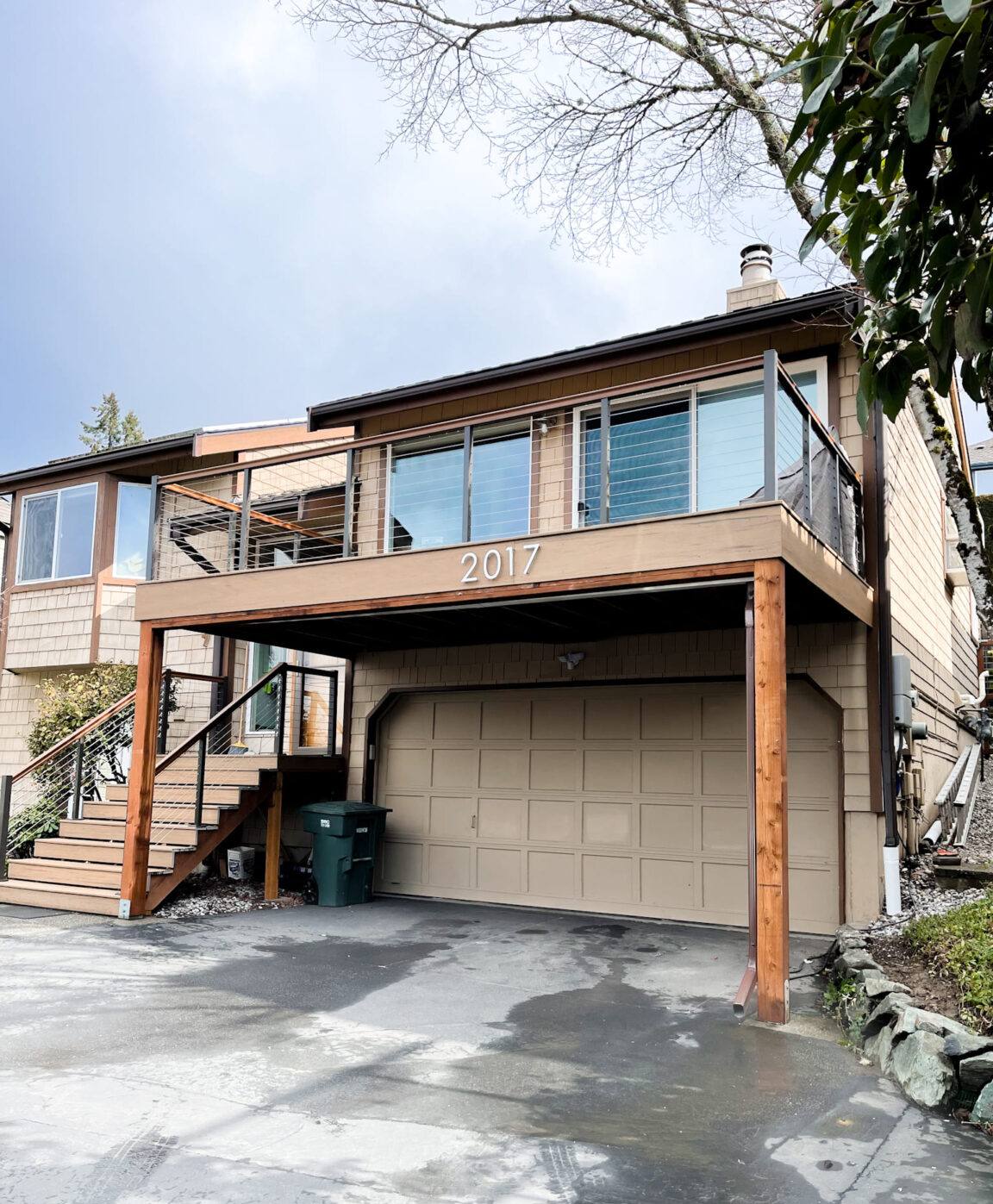
What Local Homes Actually Need From a Deck
Lake Whatcom properties tend to share a few traits that shape how we approach a build:
- Sloped or terraced lots leading down toward the water, which changes footing depth and post height
- Heavy tree canopy nearby, meaning shaded, damp decking surfaces for much of the year
- Views worth building for — layout and railing choice matter as much as the structure underneath
- Marine-influenced, moisture-heavy air common through this part of Whatcom County, which accelerates wood movement and corrosion on the wrong fasteners
- Long stretches of driving rain in fall and winter that test flashing, ledger connections, and drainage details most contractors don't think about until something fails
A deck built without accounting for these conditions might look fine on installation day. The problems show up in year two or three — soft spots near the house, moss that won't scrub off, hardware bleeding rust streaks down the boards. Our job is to design that out from the start.
Design Considerations Specific to This Area
Shade, Moisture, and Airflow
Under heavy tree cover, a deck surface can stay damp for days after a rain even when the rest of the yard has dried out. That changes two things about how we build: joist spacing and gap width between boards to promote airflow underneath, and decking material selection, since some products handle standing shade-moisture far better than others. We also look at whether trimming sightlines or adjusting deck orientation slightly can buy the surface a few more hours of sun exposure a day — often enough to make a real difference in moss growth.
Slope and Elevation
Many lots near the lake step down toward the water, which means taller posts, engineered footings, and sometimes multi-level deck designs rather than a single flat platform. Taller structures need more attention to bracing and lateral support — this isn't a place to cut corners on post size or footing depth to save a little on materials.
Views and Layout
Custom also means the layout is actually custom. We talk through how you use the space — morning coffee, evening entertaining, grilling, direct lake views versus filtered tree views — before we finalize dimensions or railing style. A deck that maximizes view but ignores prevailing wind and afternoon shade patterns ends up underused.
Decking Material Comparison for This Climate
There's no single "best" decking material — there's a best material for a given lot, budget, and maintenance appetite. Here's how the main options actually perform in Lake Whatcom's shaded, damp conditions:
| Material | Moss/Moisture Resistance | Maintenance | Typical Lifespan |
|---|---|---|---|
| Pressure-treated wood | Fair — needs regular sealing to resist moss and checking | Annual cleaning and re-sealing recommended | 15-20 years with upkeep |
| Cedar | Good natural resistance, but greys and softens faster in constant shade | Periodic cleaning, occasional oiling for appearance | 15-25 years |
| Composite decking | Very good — resists moisture absorption, but surface film needs periodic washing | Low — occasional wash to prevent surface algae film | 25-30+ years |
| PVC/capped polymer | Excellent — essentially non-porous | Lowest — soap and water wash | 25-30+ years |
In heavily shaded, lake-adjacent yards, we steer most homeowners toward composite or capped polymer decking for the field surface, simply because wood in constant damp shade is fighting an uphill battle no matter how well it's sealed. That said, some homeowners want the look and feel of real wood and are willing to keep up with sealing — that's a legitimate choice too, as long as it's made with clear eyes about the maintenance commitment. We'll walk you through the honest trade-offs rather than push one product line.
The Moss, Mildew, and Moisture Problem
Moss on a deck isn't just cosmetic — on stair treads and walking surfaces it's a real slip hazard, and moss roots hold moisture against the board surface, which accelerates rot in wood decking and can dull or stain composite surfaces over time if left unaddressed. A few build details reduce how bad this gets:
Substructure Airflow
Joists and framing that sit too close to grade, or that don't have enough clearance and ventilation underneath, stay wet longer and grow moss and mildew faster. We size the substructure height and spacing to keep air moving underneath the deck, not just under the boards.
Board Gapping and Drainage
Correct gap spacing between boards lets water shed instead of pooling, and it matters more in shaded, low-sun locations than in open, dry ones. We also grade and flash the ledger connection at the house so water isn't tracking back toward your siding or foundation — a detail that's easy to get wrong and expensive to fix later.
Fastener and Hardware Choice
Standard hardware corrodes faster in the humid, moisture-heavy air common around the lake. We use fasteners and structural connectors rated for wet-use and coastal-type exposure, not the cheapest hardware that happens to fit — rust streaks and failing screws are one of the most common complaints we hear about decks built by out-of-area crews unfamiliar with local conditions.
Structural Considerations for Lakeside and Sloped Lots
Because so many Lake Whatcom lots aren't flat, structural planning matters more here than on a typical suburban build:
- Footing depth is set to local frost line and soil conditions, not a generic minimum
- Taller post runs get additional bracing to handle wind and lateral load
- Ledger attachment to the house is engineered and flashed correctly — this is the single most common failure point on older decks we're asked to inspect or replace
- Stairs and landings on sloped approaches are built to code for rise, run, and railing height, which matters both for safety and for resale/insurance purposes
None of this is exotic work, but it does require a crew that actually surveys the slope and soil rather than building to a flat-lot template and hoping it holds.
Our Custom Deck Process
1. On-Site Assessment
We walk the actual lot — slope, tree cover, sun exposure, drainage patterns, and how the space connects to your house — before we talk materials or design. This is also when we check the condition of anything we might be tying into, like an existing ledger board or foundation wall.
2. Design and Material Selection
We put together a layout based on how you'll actually use the space, then go through material options honestly, including cost, maintenance, and how each performs in your specific shade and moisture conditions.
3. Permitting
Deck permits in Whatcom County depend on size, height, and attachment to the structure. We handle the permitting process so you're not left guessing about what's required for your project.
4. Construction
Footings and framing go in first, built to the elevation and soil conditions of your specific lot, followed by decking, railing, and stairs. We don't shortcut fastener or flashing choices to save time — those are the details that determine whether the deck is still solid in ten years.
5. Final Walkthrough
We walk the finished deck with you, cover basic care for whatever material you chose, and make sure everything meets code and matches what we discussed at the start.
What a Custom Deck Runs — Cost Factors
Every lot and design is different, so a real number only comes from a site visit, but these are the main factors that move the price up or down:
| Factor | Impact on Cost |
|---|---|
| Decking material (wood vs. composite vs. PVC) | Composite and PVC cost more up front, less over the deck's life |
| Height and number of levels | Taller, multi-level decks need more framing, bracing, and stairs |
| Slope and soil conditions | Steeper lots or poor soil can require deeper or additional footings |
| Railing style | Cable, glass, and custom metal railings cost more than standard wood or composite balusters |
| Ledger and tie-in condition | Older homes may need repair to the attachment point before a new deck can tie in |
| Size and layout complexity | Curves, multiple stair runs, and built-in features add labor |
Maintenance Checklist for Lake Whatcom Conditions
Whatever material you choose, a little seasonal upkeep goes a long way in this climate:
- Sweep leaves and debris off the surface regularly in fall — trapped organic matter is what feeds moss growth
- Rinse or wash the deck surface at least once or twice a year to clear surface film before it takes hold
- Check and clear gaps between boards so water keeps draining as designed
- Inspect stair treads and any shaded walking areas for slickness going into wet months
- For wood decking, re-seal on the manufacturer's recommended schedule, not just when it looks dry
- Have the ledger connection and under-deck framing checked periodically for any signs of moisture intrusion at the house
Why Hire a Crew That Already Works Lake Whatcom
A lot of the problems we get called to fix on other builders' decks aren't design failures — they're the result of a crew building the same way they would on a flat, dry lot somewhere else, without adjusting for slope, shade, or moisture. We work in Sudden Valley and around Lake Whatcom regularly, so footing depth, drainage detailing, and hardware selection for this specific environment aren't a guess — they're standard practice for us. That familiarity is also why we can give you a straight answer on material trade-offs instead of a one-size-fits-all pitch.
If you're planning a new deck or replacing one that's showing its age, we're happy to come take a look and talk through what makes sense for your lot. Fill out the form below for a free, no-pressure estimate.