 Sudden Valley Siding
 Composite Decking Built for Happy Valley's Wet Climate
Happy Valley sits inside the Sudden Valley community in Whatcom County, and like the rest of this corner of Washington, it gets a long, wet fall and winter followed by a mossy, shaded spring. That combination is hard on outdoor wood. A deck here spends more months of the year damp than dry, and the tree cover that makes these lots so pleasant also means shade, falling debris, and slow-drying surfaces. Composite decking was designed for exactly this kind of environment — it doesn't absorb water the way wood does, it doesn't need annual staining, and it resists the rot and splintering that shorten the life of a lot of wood decks around here.
That said, "composite" isn't a single product, and a composite deck is only as good as the framing, drainage, and fastening underneath it. We install composite decking as a full system, not just a set of boards, because in this climate the parts you don't see are what determine whether the deck looks good in year one and still looks good in year twelve.
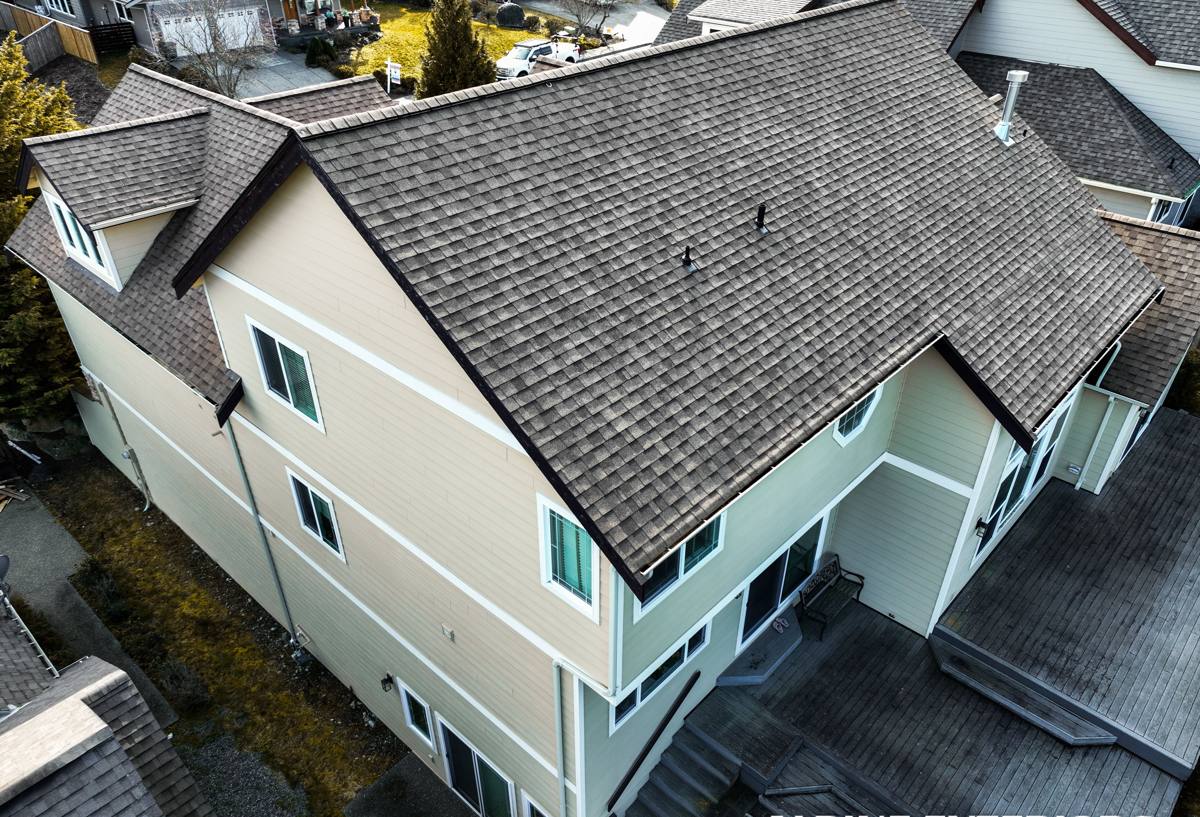
What We See on Older Decks Around Sudden Valley
When we're called out to look at a failing deck in this area, the problems are rarely random. They follow a pattern shaped by the local climate:
- Moss and algae buildup on boards that stay shaded and damp most of the day, especially on the north or tree-covered side of a house.
- Soft or rotted joists under old wood decking, usually where ledger boards or framing weren't properly flashed against the house.
- Fastener corrosion from years of moisture cycling — screws that have rusted, backed out, or split the wood around them.
- Poor drainage under the deck, where water pools instead of running off, keeping the substructure wet long after a storm has passed.
- Cupped or checked boards from repeated wet-dry cycles, which is a wood problem specifically — it's one of the main reasons homeowners switch to composite.
None of this means every deck needs to be composite — some homeowners are happy maintaining wood and know what that involves. But if you're tired of re-staining, scrubbing moss, or replacing boards every few years, composite addresses the actual mechanism of failure rather than just delaying it.
What a Correct Composite Decking Installation Involves
Framing and Structure
Composite boards are heavier than most wood decking, and manufacturers specify tighter joist spacing than old wood-deck framing was often built to. Before we install a single board, we check the existing substructure — or build new framing to spec if it's a new deck. Undersized or rotted framing gets replaced, not built around. This is the step that's easiest to skip and the most expensive to fix later.
Drainage and Ventilation
Composite decking doesn't rot the way wood does, but the framing underneath it still can if it stays wet. In a climate with this much annual rainfall, we pay close attention to slope, gaps for airflow, and keeping water moving away from the house rather than pooling under the deck. A deck that's ventilated properly underneath will simply hold up longer here, regardless of what's on top of it.
Flashing at the House
Where the deck meets the siding or ledger board, proper flashing keeps water from working its way behind the house's exterior. This is one of the most common points of hidden water damage on older decks, and it's not visible once the deck is finished — which is exactly why it has to be done right the first time.
Hidden Fasteners and Board Layout
Most composite systems use a hidden fastener and clip system rather than face-screwing each board. Done correctly, this gives a clean surface with no screw heads to catch water or corrode, and it allows boards to expand and contract with temperature changes without splitting or popping loose. Board layout also matters for drainage — we run boards to shed water off the deck surface, not toward the house.
Composite vs. Wood vs. PVC Decking
Homeowners in Happy Valley usually narrow their decision down to one of three materials. Here's how they compare for this specific climate:
| Material | Moisture Behavior Here | Maintenance | Typical Lifespan |
|---|---|---|---|
| Pressure-treated wood | Absorbs moisture; prone to cupping, splintering, and rot in shaded, damp areas | Annual cleaning and re-staining/sealing | 10–15 years before major repairs |
| Composite | Doesn't absorb water; resists moss staining better than wood but still needs periodic cleaning | Occasional washing; no staining or sealing | 25–30 years, often with a manufacturer warranty |
| PVC (cellular) | Fully moisture-resistant; performs well in shaded, wet spots | Lowest maintenance; occasional washing | 25–30+ years |
PVC has an edge in pure moisture resistance, but it can look and feel more synthetic, and it's generally the most expensive option. Composite is the middle ground most Happy Valley homeowners land on — it handles this climate well, looks closer to natural wood grain, and comes in a range of price points depending on the manufacturer and board tier.
Our Process, Start to Finish
- Site visit and assessment — We look at the existing deck or build site, check drainage, sun exposure, and how the area handles moisture through the seasons.
- Structural evaluation — For replacements, we inspect the framing, ledger attachment, and footings before quoting the job, so the number we give you reflects what the deck actually needs.
- Material selection — We walk through board tiers, colors, and railing options based on your budget and how the deck will be used.
- Demolition and framing — Old decking and any compromised framing come out; new or repaired framing goes in to current spacing standards.
- Installation — Boards, hidden fasteners, and railing go in with attention to drainage slope and expansion gaps.
- Final walkthrough — We go over the finished deck with you, including basic care, before we consider the job done.
What Affects the Cost of a Composite Deck
Every deck is different, but the same handful of factors drive most of the cost variation we see on jobs in this area:
| Factor | Why It Matters |
|---|---|
| Board tier | Entry-level composite costs less than premium capped or PVC-blend boards; grain, fade resistance, and warranty length scale with price. |
| Deck size and shape | More linear footage of cuts, curves, or multiple levels adds labor time beyond simple square footage. |
| Existing framing condition | A deck with sound framing costs less to convert than one where joists or ledger board need replacement. |
| Railing and stairs | Composite or metal railing systems, plus any stair runs, are priced separately from the decking itself. |
| Site access | Sloped lots, tree cover, or tight access common around Sudden Valley can add time for material staging and equipment. |
We give a firm, itemized quote after the site visit rather than a rough phone estimate — with this much variation in framing condition and site access, a number given sight-unseen isn't a real number.
Maintaining a Composite Deck in This Climate
Composite decking is low-maintenance, not no-maintenance. In a climate with this much shade and rainfall, a little seasonal upkeep goes a long way:
- Sweep off leaves, needles, and debris regularly — trapped organic matter is what feeds moss and algae growth on any surface, composite included.
- Wash the deck once or twice a year with a mild soap and soft-bristle brush; avoid pressure washers on close settings, which can damage the board surface.
- Keep gutters and downspouts clear so water isn't dumping directly onto or under the deck.
- Check that furniture and planters aren't sitting in standing water on the deck surface after storms.
- Inspect railing posts and stair connections once a year for looseness, since hardware is still exposed to the weather even when the boards themselves aren't.
Why a Crew That Already Works Happy Valley Matters
Decking work here isn't identical to decking work in a drier part of the state. Framing decisions, drainage details, and even board color choices behave differently under this much shade and rainfall than they would somewhere with a shorter wet season. A crew that already works Sudden Valley and the surrounding Whatcom County neighborhoods has seen how decks in this specific setting actually hold up over time — which framing details matter, where water tends to collect, and which shortcuts show up as problems a few winters later.
That local track record also means we're not learning the area on your job. We know what permitting and inspection typically involve locally, what site conditions to expect on wooded or sloped lots, and how to plan a project around this region's rainy stretches instead of fighting them.
Get a Straight Answer for Your Deck
If you're weighing a wood deck repair against a full composite replacement, or planning a new deck from scratch, we're happy to take a look and give you an honest read on what your home actually needs. There's no pressure and no obligation — just a straightforward assessment and a written estimate you can use to make the decision on your own timeline. Fill out the form below to get started.