 Sudden Valley Siding
 Why Ferndale Roofs Take a Different Kind of Beating
Ferndale sits close enough to the water that homes here deal with a combination most inland Whatcom County towns don't: salt-laden air off the Strait, wind-driven rain that comes in sideways during winter storms, and a wet season long enough to grow a healthy crop of moss on almost any north-facing roof plane. None of these things alone is unusual for the Pacific Northwest. Together, over years, they add up to a specific pattern of roof failure — and that pattern is what we look for when we inspect a storm-damaged roof out here.
A roof repair that works fine in a dry inland climate can fail fast in Ferndale if it doesn't account for how much moisture this roof will see, how often, and for how long. That's the difference between a patch that lasts a season and a repair that actually holds.
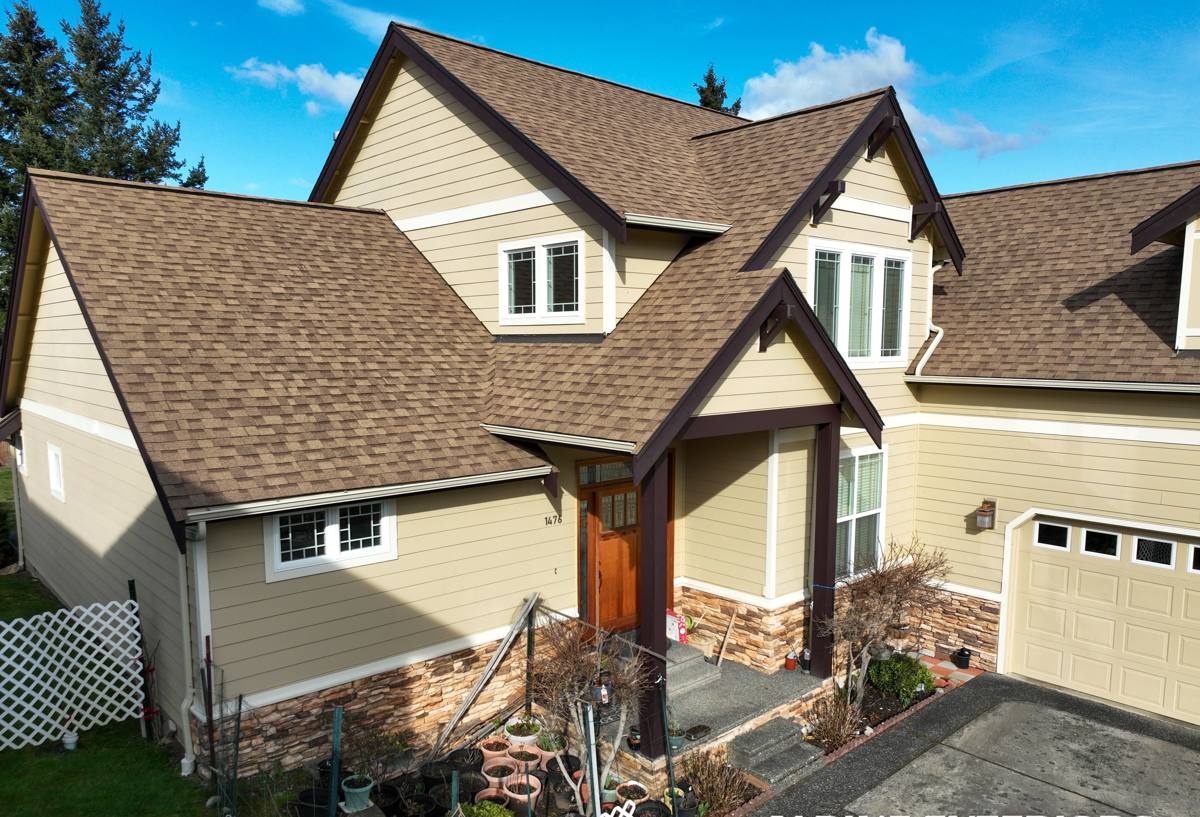
What Storm Damage Actually Looks Like Here
Wind-Driven Rain and Uplift
Whatcom County storms rarely bring the straight-line, sustained hurricane winds you'd see elsewhere, but the gusty, shifting wind that comes with a Pacific frontal system is very good at finding the weak edge of a shingle, a loose ridge cap, or a flashing detail that was never quite sealed right. Wind doesn't usually tear a roof off in one event — it works a weak spot loose, water gets under it during the next rain, and by the third or fourth storm you've got a leak that seems to have "appeared out of nowhere."
Moss, Debris, and Trapped Moisture
Ferndale's tree cover means gutters and valleys collect needles, leaves, and moss spores constantly. After a storm, that debris often shifts, damming water against shingles or shakes and holding it there. Moss itself lifts shingle edges as it grows, which is exactly where wind and rain exploit the damage further. A storm that wouldn't have caused a leak on a clean roof can cause one on a roof that already had moss working against it.
Salt Air Corrosion
Proximity to the water means metal components — flashing, fasteners, gutter hardware, vent caps — corrode faster here than they would twenty or thirty miles inland. A storm can expose or worsen corrosion damage that was already quietly progressing, turning a small rust spot into an active leak point once wind or hail knocks a compromised piece loose.
Repair or Replace: How We Make That Call
Not every storm-damaged roof needs a full replacement, and not every roof can be safely patched. The right call depends on the roof's age, the extent of the damage, and whether the underlying decking and underlayment are still sound. Here's how we generally think through it:
| Factor | Leans Toward Repair | Leans Toward Replacement |
|---|---|---|
| Roof age | Under 10-12 years, otherwise healthy | Near or past its material's expected service life |
| Damage extent | Isolated area, one or two planes | Widespread across multiple slopes |
| Decking condition | Dry, solid when probed | Soft spots, rot, or delamination found |
| Prior moss/moisture history | Minimal, roof was well maintained | Chronic moss, long-standing trapped moisture |
| Storm damage type | A few displaced or cracked shingles, minor flashing separation | Widespread lifted or missing shingles, damaged sheathing |
We'll tell you honestly which category your roof falls into. If a targeted repair will genuinely hold, that's what we'll recommend — a full replacement isn't the right answer just because it's a bigger job.
Our Ferndale Storm Repair Process
- Inspection. We walk the roof (or use a ladder and binoculars if conditions are unsafe to walk) and check every plane, not just the area you noticed the leak on. Storm damage is often worse, or in a different spot, than the visible symptom inside the house.
- Temporary protection. If there's active or likely water intrusion, we get a tarp or temporary seal in place the same visit so the situation doesn't get worse while repairs are scheduled.
- Written scope and estimate. You get a clear explanation of what's damaged, what needs to happen, and a real cost range before any work starts — no surprise add-ons partway through.
- Repair or replacement work. Damaged shingles, shakes, flashing, or decking are removed and replaced to match the surrounding roof as closely as possible, with attention to how the repaired section will shed water in the next storm, not just look fine on a dry day.
- Flashing and seal check. Since flashing failure is such a common root cause of storm leaks here, we check every flashing point near the repair — chimneys, vents, valleys, wall intersections — even if it wasn't the original complaint.
- Final walkthrough. We show you what was done and what to watch for, and we photograph the completed work for your records.
Materials and Methods We Use
What goes into a storm repair matters as much as the labor. In a climate like this, we lean toward materials and details that are forgiving of repeated wetting and drying rather than the cheapest option that technically covers the hole.
| Component | Our Standard Approach | Why It Matters Here |
|---|---|---|
| Underlayment | Synthetic or self-adhered membrane at vulnerable spots | Better resistance to prolonged moisture exposure than older felt products |
| Flashing | Corrosion-resistant metal, properly lapped and sealed | Salt air accelerates corrosion on lower-grade or improperly installed flashing |
| Fasteners | Matched to material and rated for coastal exposure | Standard fasteners can corrode and back out over time in this environment |
| Shingle/shake matching | Closest available match in profile and color | A mismatched patch is often a sign of a rushed repair, not just a cosmetic issue |
| Valley and ridge details | Sealed and reinforced, not just re-nailed | These are the highest-water-volume areas on any roof during a heavy storm |
Insurance and Documentation
Many storm repairs in this area involve a homeowner's insurance claim. We photograph damage before we touch anything, keep a written record of what we find and what we do, and can walk an adjuster through the roof if that's helpful. We're not a public adjuster and we won't promise a claim outcome — that's between you and your insurer — but we make sure the documentation on our end is thorough enough to support your claim rather than leave gaps in it.
Why a Crew That Already Works Ferndale Matters
A roofer who works this stretch of Whatcom County regularly has already seen how local roofs age — which flashing details tend to fail first, which roof orientations hold moss longest, which older repairs in the area were done right and which weren't. That's not something you can fully replicate by driving in from out of the area for a single job. It also means we're realistically available when a storm hits multiple properties at once, rather than booked out for weeks because our whole territory is somewhere else.
What to Do in the First 24-48 Hours After a Storm
- Note and photograph any visible interior water stains, drips, or damp spots on ceilings and walls
- From the ground, look for missing, curled, or displaced shingles — don't get on the roof yourself, especially in wet or icy conditions
- Check gutters and downspouts for debris blockages that could be forcing water back under roofing material
- Move furniture or belongings away from any active leak and place a container to catch dripping water
- Avoid running attic fans or HVAC systems that could spread moisture if there's active water intrusion
- Call for an inspection promptly — a small, addressed leak is a repair; the same leak left for weeks is often a decking replacement
Living With Moss Season Between Storms
Storm damage and moss problems feed each other in this climate. A roof that goes into moss season already compromised from a prior storm will trap moisture more readily, and a roof that's been neglected during a long moss season is more vulnerable when the next storm rolls through. Periodic moss removal, keeping gutters clear, and addressing minor storm damage promptly rather than letting it sit through a wet winter are the simplest ways to break that cycle. We're happy to point out early moss or drainage issues during any storm repair visit, even if that wasn't the original reason for the call.
If a recent storm has left you with a leak, missing shingles, or just a nagging feeling that something on the roof isn't right, we'll come take an honest look. Estimates are free and there's no pressure to move forward — you can request one using the form below.