 Sudden Valley Siding
 Why Deming's Climate Is Hard on Windows
Deming sits in the Nooksack River valley, tucked under heavy tree cover on the way toward Mount Baker. That setting is beautiful, but it's rough on a house's windows. Whatcom County stretches from the salt air off Bellingham Bay inland through river-bottom communities like Deming, and along the way the moisture doesn't let up — it just changes form. Near the water it's salt-laden marine air working on hardware and finishes. Inland, it's driving rain funneled up the valley, deep shade from conifers that keeps siding and window frames damp for days after a storm, and a moss season that can run eight or nine months out of the year on north-facing walls.
Old windows don't fail all at once in this kind of climate. They fail slowly — a soft spot in a sill, a seal that starts fogging, a frame corner that never quite dries out between rains. By the time a homeowner notices drafts or a spike in the winter heating bill, the damage underneath the frame is often already a season or two old. Windows sized and sealed for a drier climate simply don't hold up here the way they might somewhere with less rain and more sun exposure.
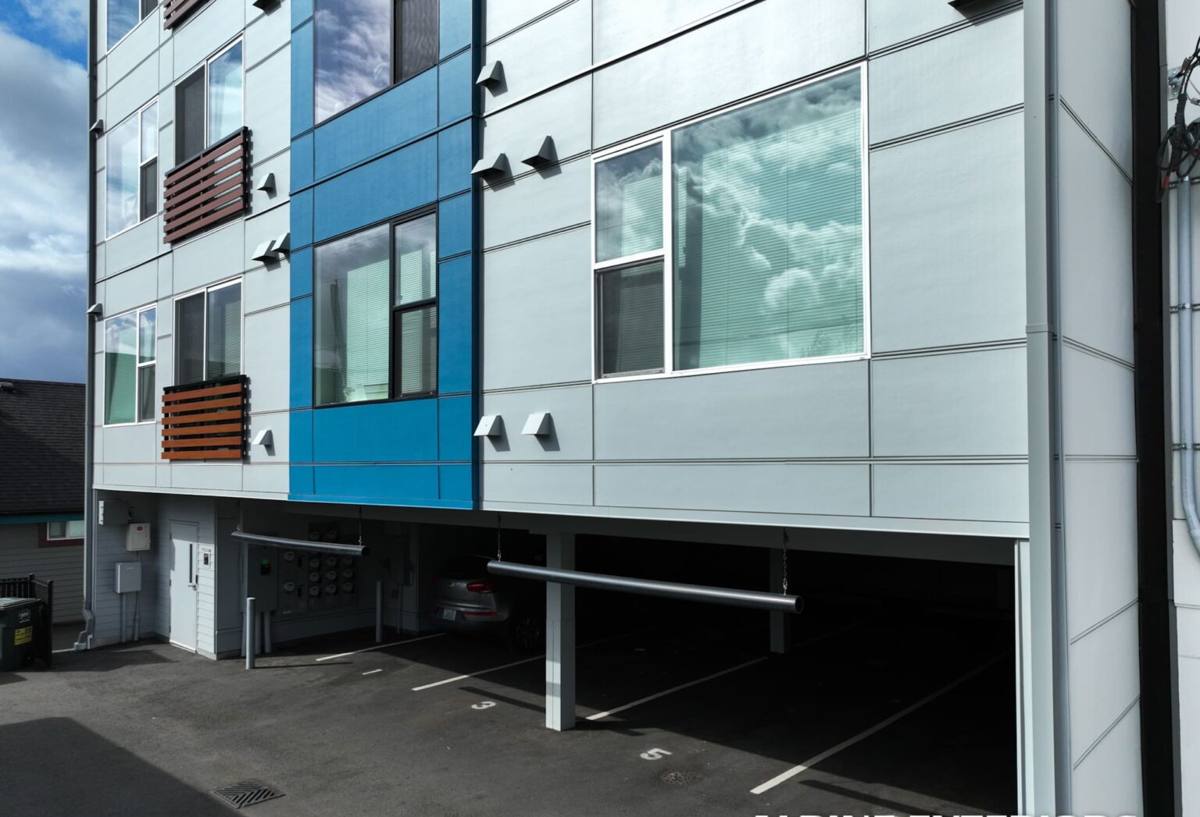
What "Energy-Efficient" Actually Means
It's a term that gets used loosely, so it's worth being specific about what it actually covers on a window label:
- U-factor — how much heat escapes through the window. Lower is better for our winters.
- Solar Heat Gain Coefficient (SHGC) — how much solar heat passes through the glass. In a shaded, wet climate like Deming's, this matters less for cooling than it would in a sunnier region, but it still affects how a room feels in the brief stretches of summer sun.
- Low-E coatings — a microscopically thin metallic layer that reflects heat back into the room in winter and blocks some of it in summer, without noticeably changing how clear the glass looks.
- Gas fills — argon or krypton gas sealed between panes insulates better than plain air. Krypton costs more but works well in narrower gaps.
- Warm-edge spacers — the material separating the panes at the edge of the glass unit. Cheaper spacers conduct cold straight through and are usually where condensation starts first.
Every legitimate window sold in the U.S. carries an NFRC label listing these numbers. Don't take a salesperson's word for "energy-efficient" — ask to see the label and compare it against what your current windows are rated (or, if they predate labeling, against a modern baseline).
Frame Material Matters As Much As the Glass
A high-performance glass package installed in a frame that isn't sealing or insulating well doesn't get you very far. In a climate this wet, the frame's ability to shed water and resist rot matters just as much as its insulating value.
Signs Your Current Windows Are Working Against You
Most homeowners don't replace windows on a schedule — they replace them when something tells them to. Here's what that "something" usually looks like in a home around Deming:
- Fogging or a cloudy haze between the panes (the seal has failed and the gas fill is gone)
- Visible daylight or a draft you can feel at the corners of the frame
- Paint or caulk cracking and peeling around the exterior trim
- A sill that feels soft, spongy, or slightly springy underfoot when you press on it
- Windows that stick, won't stay open, or take real effort to latch
- Mold or mildew forming on the frame or sill in shaded, less-used rooms
- Cold spots near the window even when the heat is running
- A noticeable jump in winter heating costs with no other explanation
Any one of these on its own might just mean a caulking touch-up. Two or three together, especially soft wood or interior mold, usually mean water has been getting past the frame for a while and it's worth having someone actually look at what's happening at the sill and framing, not just the glass.
What a Correct Installation Actually Involves
This is where a lot of window jobs go wrong — not in the window itself, but in how it's tied into the wall. Windows and siding share the same job: keeping water out of the wall assembly. A window installed without proper flashing can leak for years behind perfectly good siding, and nobody notices until there's rot or a stain on the interior wall.
A correct installation, whether it's a retrofit into an existing opening or a full-frame replacement, should include:
- A sloped sill pan so any water that does get past the window drains back outside instead of pooling on the sill
- Flashing tape or building paper integrated with the house's existing weather-resistive barrier, lapped correctly so water always sheds outward and downward
- Backer rod and a quality exterior sealant at the perimeter — not just a bead of caulk smeared over a gap
- Shimming the unit square and plumb before fastening, so the window operates smoothly and the seals compress evenly for years
- Low-expansion foam or fiberglass insulation in the gap between frame and rough opening — packed too tight, foam can actually bow the frame and cause operating problems
- Exterior trim and siding tie-in that matches the surrounding wall so there's no obvious seam or mismatched material inviting water in
Because we do siding work as our core trade, this is territory we're in constantly — we're not learning wall flashing and moisture management on the fly. A window installer who only ever touches windows can do a fine job on the unit itself and still get the wall integration wrong, because that's the siding contractor's specialty, not theirs.
Choosing a Frame Material
There's no single "best" frame material — it depends on budget, the home's style, and how much upkeep you want to take on. Here's how the common options stack up for a climate like Deming's:
| Frame Material | Moisture Tolerance | Maintenance | Relative Cost | Typical Lifespan |
|---|---|---|---|---|
| Vinyl | Good — won't rot, but seams and welds need checking over time | Low | $ | 20–30 years |
| Fiberglass | Excellent — very stable in wet, swinging temperatures | Low | $$$ | 30–40+ years |
| Wood, clad exterior | Good on the clad side; interior wood still needs care | Moderate | $$$ | 25–35 years |
| Aluminum | Fair — conducts cold and can corrode near salt air over time | Low | $$ | 20–25 years |
In our experience, vinyl and fiberglass tend to be the more forgiving choices for the amount of rain and shade this area gets — they don't give moisture anything to work on the way exposed wood grain can. Wood-clad windows still have a place, especially where a homeowner wants a traditional interior look, but they come with an honest maintenance commitment.
What Drives the Cost of a Window Project
Every home is different, so we won't quote a number sight unseen — but these are the factors that actually move the price up or down:
| Factor | Why It Matters |
|---|---|
| Number of openings | Straightforward — more windows, more labor and material |
| Frame material and glass package | Fiberglass and triple-pane cost more upfront than vinyl double-pane |
| Retrofit vs. full-frame replacement | Full-frame costs more but is often necessary when there's rot or the opening needs correction |
| Condition of the framing underneath | Hidden rot found once the old window is out adds carpentry time before the new unit can go in |
| Access | Second-story or hard-to-reach windows take longer and may need staging |
| Trim and siding tie-in | Matching or repairing exterior trim and siding around the new opening |
| Disposal | Hauling away old windows and job debris |
Broadly speaking, most quality replacement windows for a typical home run somewhere in the low thousands per opening once labor, materials, and disposal are included — but the real number depends entirely on the factors above. Anyone quoting a firm price before seeing the openings and checking the framing is guessing. Get a written, itemized estimate before you sign anything.
Our Process, Start to Finish
- Site visit — we measure each opening, check the condition of the sill and surrounding framing, and look for signs of past water intrusion.
- Options and quote — we walk through frame material, glass package, and cost trade-offs based on what makes sense for that specific house, then provide a written, itemized quote.
- Install day — we protect the surrounding landscaping and interior, remove the old units, and inspect the framing before the new window ever goes in. If there's rot at the sill, which isn't uncommon on older homes in this kind of climate, we'll flag it before proceeding rather than sealing a problem behind a new window.
- Flashing and sealing — sill pan, flashing, shimming, and sealant done in the sequence that actually sheds water, not just what looks finished.
- Trim-out and cleanup — interior and exterior trim finished, glass cleaned, old windows and debris hauled away.
- Final walkthrough — we check operation on every window with you before we call the job done.
Why Local Experience in Deming Matters
A crew that already works in and around Deming and the rest of Whatcom County has usually seen the specific problems that show up on homes here — sills that rot from the inside out under moss-covered north walls, older aluminum windows that have gone stiff and corroded from decades of damp air, framing that was never properly flashed the first time around. That's the kind of thing you learn from being on these houses repeatedly, not from a general window course.
There's also a practical benefit to hiring a contractor who handles both siding and windows: the two systems have to work together to keep water out of the wall. When one contractor is responsible for both, there's no gap where the window installer assumes the siding contractor handled the flashing and vice versa — and no finger-pointing later if something does leak. It's one crew, one standard, and one point of accountability for how the whole exterior sheds water.
Maintaining Your Investment
New windows are only energy-efficient for as long as their seals and drainage keep working. A little upkeep goes a long way in this climate:
- Clear debris and moss buildup from tracks and weep holes at least once a year
- Check exterior caulking annually, especially after a hard winter, and touch up any cracking before water gets behind it
- Keep gutters and nearby roof areas clear of moss so runoff isn't dumping extra water directly onto window heads and sills
- Repaint or restain wood-clad exterior trim on schedule rather than waiting until it's visibly failing
- Avoid pointing a pressure washer directly into weep holes or seals when cleaning siding nearby
None of this takes much time, but skipping it is how a twenty-year window turns into a twelve-year window.
If your windows are drafty, fogged, or just past their prime, we're happy to take a look and give you an honest read on what's going on — no pressure, no obligation. Use the form below to request a free estimate for your Deming home.