 Sudden Valley Siding
 Why Edgemoor Decks Wear Differently Than Decks Inland
Edgemoor sits close enough to open water and heavy tree cover that decks here take on a specific combination of stresses: salt-laden air moving off the water, long stretches of driving rain through the fall and winter, and a moss season that can run for months when temperatures stay cool and surfaces stay damp. A deck built with generic assumptions — the kind of spec sheet that works fine in a dry inland subdivision — often struggles here within a few years. Fastener corrosion shows up early, boards stay damp longer than they should between rain events, and moss gets a foothold in shaded corners and under railings before anyone notices.
None of that means composite decking is a bad fit for this area. It means the substructure, fastener selection, drainage detailing, and board choice all need to be treated as decisions specific to this climate, not defaults carried over from a warmer, drier install.
The Three Conditions That Matter Most
- Salt air: accelerates corrosion on unprotected metal — screws, joist hangers, brackets, and railing hardware are all exposed to it continuously, not just during storms.
- Driving rain: Whatcom County's wet-season rain often comes sideways, which pushes moisture into gaps, ledger connections, and railing posts that a straight-down rain would never reach.
- Moss season: shaded, north-facing, or tree-covered deck areas can stay damp for weeks at a time, giving moss and algae time to establish on board surfaces and in seams.
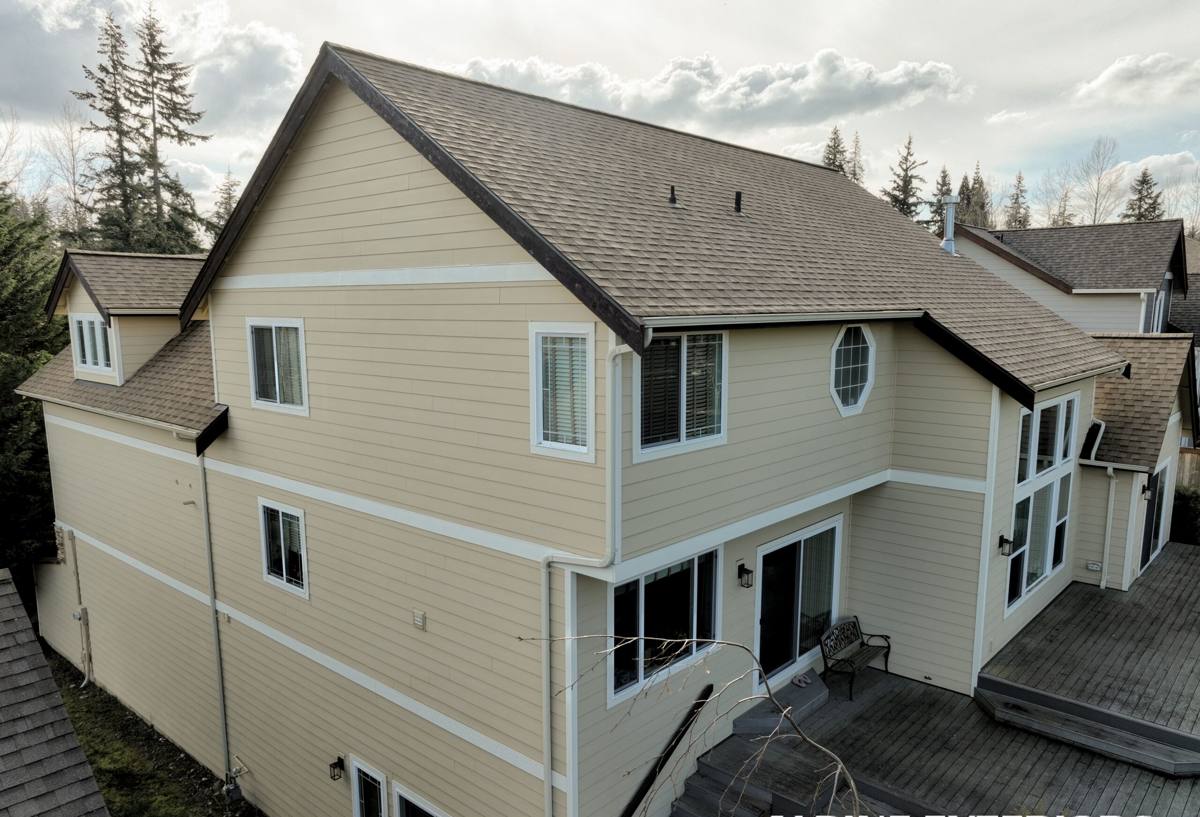
What a Correctly Built Composite Deck Requires in This Climate
Composite decking itself is engineered to resist rot and moisture absorption better than wood, but the board is only one part of a deck system. The parts most likely to fail first in a marine, high-rain climate are the ones underneath and around the boards — and those are exactly the parts that get shortcut on a rushed install.
Substructure and Ventilation
Composite boards need consistent airflow underneath to shed the moisture that collects during long rain stretches. A deck built low to the ground, or with joists spaced too tightly against a foundation wall, traps humid air underneath and slows drying — which is exactly the environment moss, mildew, and eventually joist rot prefer. We frame for real ventilation clearance, not just code minimums, especially on lower decks and decks close to grade.
Fasteners and Hardware
In a salt-air environment, the hardware holding a deck together matters as much as the decking on top of it. We use corrosion-resistant fasteners and connectors rated for coastal and treated-lumber exposure, and we pay particular attention to joist hangers, ledger bolts, and post bases — the connections that are hardest to inspect once the deck is finished and the ones most likely to be quietly corroding if the wrong hardware went in.
Drainage and Flashing
Where a deck ties into the house, proper flashing keeps driving rain from working its way behind siding or into the rim joist. This is one of the most common places we find water damage on older Edgemoor decks — not from the decking surface itself, but from a ledger board that was never properly flashed against wind-driven rain.
Composite Decking Options and How They Compare
Not all composite decking performs the same way in wet, shaded, salt-exposed conditions. The main practical differences homeowners should weigh are moisture behavior, surface maintenance, and long-term appearance in a climate that stays damp for a large part of the year.
| Decking Type | Moisture Behavior | Moss/Algae Resistance | Typical Maintenance |
|---|---|---|---|
| Capped composite | Low water absorption; cap layer resists staining | Good — smooth cap sheds moisture, still needs periodic cleaning in shaded areas | Occasional wash, no sealing or staining |
| Uncapped composite | More prone to surface moisture absorption over time | Fair — more texture for moss and mildew to grip | Regular cleaning, may need surface treatment |
| Pressure-treated wood | Absorbs moisture readily; prone to cupping and checking | Poor in shaded, damp areas without upkeep | Annual sealing/staining, more frequent board replacement |
For most Edgemoor homes, especially those with shaded yards or proximity to the water, capped composite is the more sensible long-term choice specifically because of how little surface maintenance it demands through a wet, mossy winter. We're honest with clients about the trade-off: capped composite costs more up front than the alternatives, but it's the option that best matches what this specific climate does to a deck surface year after year.
Our Installation Process
- On-site assessment: we look at drainage, shade patterns, existing moss or moisture staining, and how the deck will tie into the house before recommending a board or structural approach.
- Structural plan: framing, ventilation clearance, and ledger flashing are specified for this site's exposure, not a generic template.
- Substructure build: joists, hangers, and posts go in with corrosion-resistant hardware suited to a marine-influenced environment.
- Decking installation: boards are installed with manufacturer-specified gapping to allow for seasonal movement and proper drainage between boards.
- Railings and finish work: railing posts, fascia, and trim are detailed to shed water rather than trap it at joints and end grain.
- Final walkthrough: we go over basic care with the homeowner, including what to expect during the first moss season.
Moss, Mildew, and Salt Air: What Ongoing Care Actually Looks Like
Even a well-built composite deck in this climate benefits from a little seasonal attention. Composite boards don't need staining or sealing, but they aren't maintenance-free in a Whatcom County winter.
- Sweep leaves and debris off the deck surface before they sit through a wet stretch and start growing moss underneath them.
- Rinse shaded and low-airflow areas periodically during the wet months — these spots dry slower and are where moss establishes first.
- Check railing posts and fascia boards each fall for any early staining or discoloration around fasteners, which can signal a hardware issue worth catching early.
- Keep gutters and downspouts clear so roof runoff isn't dumping extra water directly onto or near the deck surface.
- Avoid pressure-washing at close range or high pressure — it can force water into board seams and railing connections rather than just cleaning the surface.
Railings, Fascia, and the Details That Get Skipped
A composite deck lives or dies on its finish details as much as its decking material. Railing post bases, stair stringers, and fascia trim are all places where water collects if they're not detailed with drainage in mind. In a climate with sustained driving rain, we pay particular attention to how water moves off the deck at these edges rather than pooling against them — a detail that's easy to overlook and expensive to fix once trim is installed and finished.
Why It Matters That We Already Work This Area
A crew that mostly builds decks in drier parts of the state will make reasonable, code-compliant choices that still aren't matched to Edgemoor's actual conditions — because they haven't seen what a full wet season and moss cycle does to a deck here. We work siding and exterior projects throughout Sudden Valley and the surrounding Whatcom County communities, so the fastener corrosion patterns, drainage failure points, and moss buildup spots we look for on an Edgemoor deck aren't theoretical — they're what we see and fix on decks in this area every season.
What Drives the Cost of a Composite Deck Project
| Factor | How It Affects the Project |
|---|---|
| Deck size and shape | Larger decks and complex shapes (angles, multi-level) increase both material and labor |
| Board tier | Capped composite costs more upfront than uncapped composite or wood, but reduces long-term upkeep |
| Substructure condition | Replacing or upgrading joists, hardware, and ledger flashing adds cost but is often necessary on older decks |
| Railing style | Composite, metal, or cable railing systems vary significantly in material cost |
| Site access | Sloped yards, limited access, or height above grade can affect labor time |
We give straightforward, itemized estimates so homeowners can see exactly where the cost is going — there's no reason to be vague about it, and we don't pad estimates with unnecessary upgrades.
Signs Your Existing Deck Needs Attention
- Persistent green or black staining on boards that returns quickly after cleaning
- Soft spots or noticeable flex when walking on the deck surface
- Rust staining around fasteners or railing hardware
- Gaps or separation where the deck ledger meets the house siding
- Boards that stay visibly damp long after the rest of the yard has dried
If any of these sound familiar, it's worth having the deck looked at before the next wet season rather than after a problem has spread into the substructure.
If you're weighing a new composite deck or replacing one that's showing its age, we're happy to take a look and give you a straightforward, no-pressure estimate — just fill out the form below.