 Sudden Valley Siding
 Window Installation Built for Deming's Climate
Deming sits in the Nooksack River valley, tucked against the foothills that lead up toward Mount Baker. Homes out here deal with a version of the same marine-influenced weather that hits the rest of Whatcom County: long stretches of driving rain, heavy humidity, and a moss season that can run most of the year on shaded north walls. Closer to the water, salt-laden air adds another layer of wear to exterior materials; even where Deming sits further inland, the same wet, low-light conditions that grow moss on a roofline will find every gap in a window installation and turn it into a slow leak.
Windows are one of the highest-risk penetrations in any wall system. A roof sheds water by design. A window has to be cut into the wall, flashed correctly, and sealed against water that will hit it from the side and get driven upward by wind — which is exactly what happens during a Whatcom County storm system moving up the valley. Get the flashing sequence wrong and you won't see it for a year or two. By the time it shows up as a soft spot on the interior sill or a stain below the window, water has usually been getting into the wall cavity for a while.
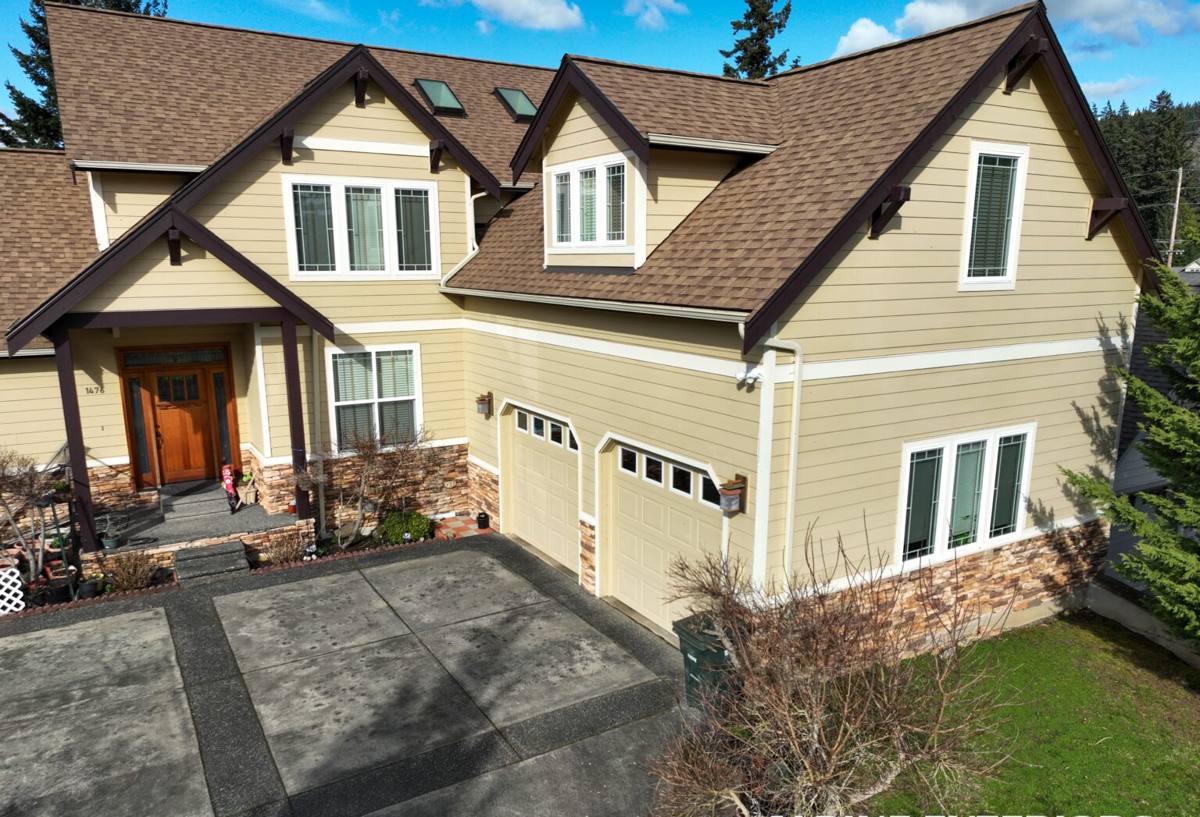
What a Correct Window Installation Actually Involves
"Window installation" sounds simple — pull the old one, set the new one, caulk it. That's how a lot of leaks get built into a house. A correct install is really a sequence, and every step matters more in a wet climate than a dry one.
The core sequence
- Remove the old window and inspect the rough opening — sill, jack studs, and header — for rot or soft wood before anything new goes in
- Install a sloped sill pan so any water that gets past the window has somewhere to drain besides your framing
- Integrate window flashing tape with the house's water-resistive barrier in the correct shingle-lap order (sides first, then top, over the head flashing) so water sheds outward at every layer
- Set the window level, plumb, and square, then fasten per the manufacturer's schedule — not just "however many screws fit"
- Insulate the gap between the window frame and rough opening without overpacking it, which can bow the frame and cause the sash to bind
- Seal and trim the interior and exterior with materials rated for the exposure, not just whatever caulk is on the truck
Skip the sill pan or get the flashing lap order backwards and the window can look perfect for years while water quietly works its way into the wall behind it. That's the failure we get called out to fix most often — not a bad window, a bad installation.
Choosing the Right Window for a Whatcom County Home
Material choice matters more here than in a dry climate, because whatever you choose has to hold up to sustained moisture exposure and temperature swings, not just look good on install day.
| Material | How it handles PNW moisture | Maintenance | Typical fit |
|---|---|---|---|
| Vinyl | Won't rot; performs well as long as installation and drainage are correct | Low — occasional cleaning | Most Deming homes; best value for the climate |
| Fiberglass | Very stable through wet-dry and hot-cold cycles; minimal expansion/contraction | Low | Homes wanting a higher-end frame with long-term dimensional stability |
| Wood (clad or unclad) | Attractive but the wettest choice — needs a well-maintained exterior cladding or coating to keep moisture out of the core | High — regular inspection and refinishing | Homeowners who specifically want a wood interior look and are willing to maintain it |
| Aluminum | Conducts cold and can condense/sweat heavily in a damp climate unless thermally broken | Moderate | Limited use residentially here; more common in commercial applications |
We don't push wood-frame windows on homes here unless a homeowner specifically wants that look and understands the upkeep. It's not that wood windows are bad — it's that in a valley with this much annual rainfall and humidity, an unmaintained wood frame is the first thing to show wear, and the maintenance burden falls on the homeowner for the life of the window. That's a fair trade-off for some people and not for others; we'd rather tell you that upfront than sell you a product that fights the climate.
Glass and energy performance
Whatcom County winters aren't brutally cold, but they're long, damp, and gray, which makes low-e coated, double-pane (or triple-pane) glass worth the upgrade — it cuts heat loss and reduces the interior condensation that shows up on cold mornings when warm, humid indoor air meets a cold single-pane window. If you've had fogging between the panes on an existing window, that's a failed seal, not something that can be fixed — the whole sash needs replacing.
Our Installation Process
- On-site assessment. We look at your existing windows, the condition of the rough openings, and how your walls are currently flashed before we quote anything.
- Product selection. We walk through material, glass package, and grille/style options that fit your home and budget — no pressure toward a particular brand.
- Scheduling around weather. Window installation opens up your wall to the outside air, so we plan install days around forecasted dry windows whenever the schedule allows it.
- Removal and opening inspection. Every opening gets checked for hidden rot or moisture damage before the new window goes in — this is where problems from old installs usually surface.
- Sill pan, flashing, and set. The window goes in following the correct drainage and flashing sequence, not shortcuts.
- Interior and exterior finish. Trim, seal, and cleanup, with a walkthrough so you know how the new windows operate and lock.
Signs a Deming Home Needs New Windows
- Visible moss or dark staining building up on the trim or siding directly around a window
- Fogging or a permanent haze between the panes of double-pane glass
- Drafts you can feel near the frame even when the window is fully latched
- Wood trim or sills that feel soft, spongy, or show paint bubbling
- Windows that are difficult to open, close, or lock — often a sign the frame has shifted
- Noticeably higher heating costs with no other explanation
- Condensation forming on the inside of the glass regularly through fall and winter
What Window Installation Typically Costs
Every home is different, but these are the factors that move the price up or down. We'll give you an exact number after walking the job — this table is just to help you think through the variables before we get there.
| Factor | Why it matters |
|---|---|
| Number of windows | Per-unit cost typically drops on larger jobs due to shared setup and labor efficiency |
| Window size and type | Standard double-hung costs less than large picture windows, bays, or custom shapes |
| Frame material | Vinyl is generally the most budget-friendly; fiberglass and clad-wood run higher |
| Condition of the rough opening | Hidden rot or framing repair adds labor and material beyond the window itself |
| Full-frame vs. insert replacement | Full-frame replaces down to the framing and flashing; insert replacement reuses the existing frame and is faster but only appropriate when that frame is still sound |
| Access and story height | Second-story or hard-to-reach windows take more time and equipment |
Window Installation and Siding: Why Timing Matters
If you're also planning siding work, doing windows first — or at the same time — makes a real difference. Window flashing needs to integrate with the house's water-resistive barrier and siding in a specific order: flashing tape laps under the siding above and over the siding below, so water always sheds outward and down. Replacing windows after new siding is already up means cutting back into finished work to get that lap order right, which is more labor and more risk of a compromised seal. If your Sudden Valley or Deming home needs both, we'll talk through sequencing so the two jobs work together instead of against each other.
Why a Crew That Already Works Deming and Sudden Valley Matters
We're not driving in from out of the area to quote your job. Working Sudden Valley and the surrounding Whatcom County communities regularly means we already know how local homes are built, what the common trouble spots are on older window installs in this area, and how the valley's rain and moss patterns actually behave through the seasons — not from a manual, but from being on these roofs and walls repeatedly. That translates into a more accurate quote up front and fewer surprises once we open up a wall.
It also means straightforward scheduling and follow-up. If a question comes up after the install, you're calling a crew that's still working in your area next month, not chasing down a company that did one job and left.
Permits and Code Basics
Window replacement in Whatcom County can require a permit depending on scope — particularly if the rough opening size is changing or the work affects egress requirements for bedroom windows. Egress windows have minimum size and sill height rules that exist for safety, and if you're resizing an opening or converting a room's use, that's worth confirming before work starts. We handle this conversation as part of quoting so there are no surprises with inspections later.
If you're weighing new windows for a Deming or Sudden Valley home, we're happy to take a look and give you a straight answer on what your home actually needs — no pressure, no upsell. Use the form below to request a free estimate.