 Sudden Valley Siding
 Why Decks in Sunnyland Wear Out Faster Than the Brochures Suggest
A deck built to a national average lifespan rarely makes it that long here. Sunnyland and the surrounding Sudden Valley area sit inside a Whatcom County climate that is tough on exposed wood and fasteners in a specific way: long stretches of low-intensity rain, short winter freeze-thaw cycles, and a moss and algae season that can run from October through May. None of those things destroy a deck overnight. They work slowly, at the joints, under the boards, and inside fastener holes, until a deck that looks fine from the yard is quietly failing where you can't see it.
Add in the salt-tinged air that drifts through this part of the county and you get accelerated corrosion on any fastener, bracket, or hanger that isn't rated for it. We've replaced decks that were only 10-12 years old structurally, not because the decking boards wore out, but because the ledger board or joist hangers underneath had corroded past the point of being trustworthy. That's the real story behind most "my deck feels spongy" calls we get from this neighborhood.
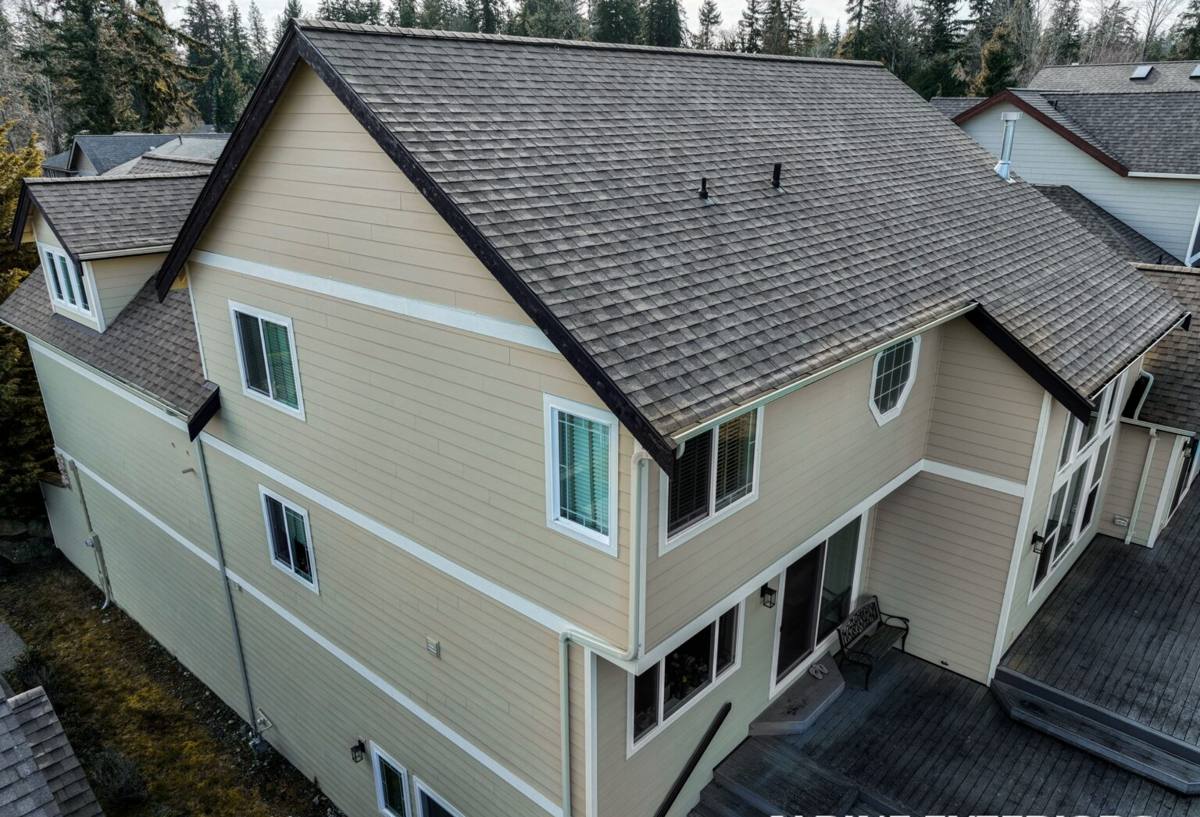
Signs a Deck Needs Replacement, Not Just a Repair
Not every tired-looking deck needs to come out. But there's a difference between cosmetic wear and structural failure, and it's worth knowing which one you're looking at before you spend money on either.
- Soft, spongy, or bouncy spots when you walk across the deck, especially near the house
- Visible gaps, rot, or staining where the deck meets the house (the ledger board area)
- Rust streaks below joist hangers or around fastener heads
- Posts that wobble or show soft wood when probed with a screwdriver at ground level
- Persistent moss or dark staining that returns within weeks of cleaning
- Railings that flex more than an inch or two under moderate push
- Boards that have cupped, split lengthwise, or pulled away from fasteners
If what you're seeing is limited to a handful of surface boards and the framing underneath is solid, a board-level repair or resurfacing can make sense. Once the ledger, joists, or posts are compromised, patching the surface just hides the problem for another season or two. We'll tell you honestly which category your deck falls into before we ever talk about replacement.
What a Correct Deck Replacement Actually Involves
A deck replacement done right is a structural project first and a finish project second. The parts nobody sees are the parts that determine whether the new deck lasts 25 years or 8.
The Ledger Connection
This is where the deck attaches to the house, and in this climate it's the single most important detail on the whole project. It needs proper flashing that sheds water away from the house sill and wall sheathing, not just caulk and a bolt pattern. A poorly flashed ledger is the number one cause of hidden rot we find when we pull an old deck apart.
Footings and Posts
Footings need to sit below frost depth and bear on undisturbed or properly compacted soil. On sloped Sudden Valley lots, that sometimes means deeper or additional footings than a flat-lot deck of the same size would need. Post bases should hold the post above the concrete and above standing water, never buried or set directly in wet soil.
Joists, Hangers, and Fasteners
Every hanger, screw, and bolt in contact with treated lumber needs to be rated for it — standard zinc-coated fasteners corrode quickly against modern treated wood chemicals, and that corrosion accelerates further with the salt-tinged, damp air common here. We use fasteners and hardware matched to the lumber and the exposure, not whatever is cheapest at the yard.
Drainage and Airflow
Water needs somewhere to go, both off the surface and out from underneath. Decking gaps, joist tape over the top of joists, and clearance under low decks all matter more here than in a drier climate, because trapped moisture combined with mild temperatures is exactly what moss and rot need to establish themselves.
Decking Material Options for a Sunnyland Climate
There's no single "best" decking material — there's a best fit for your budget, how much upkeep you want to do, and how the deck sits relative to sun, shade, and moisture. Here's how the common options actually perform in this climate, not just on paper.
| Material | Moisture/Moss Behavior | Maintenance | Typical Lifespan Here |
|---|---|---|---|
| Pressure-treated wood | Absorbs moisture, prone to moss/algae in shaded or low-airflow areas | Annual cleaning, re-stain or seal every 2-3 years | 12-18 years |
| Cedar | Naturally decay-resistant but still needs sealing; grays and can develop moss if untreated | Seal or oil every 1-2 years | 15-20 years |
| Composite decking | Doesn't absorb water like wood, but surface can still host algae film if never cleaned | Occasional wash, no staining/sealing | 25-30 years |
| PVC/capped polymer | Best moisture resistance of the group, sheds water and resists staining | Occasional wash | 25-30+ years |
In shaded, north-facing, or tree-covered yards — common in parts of Sudden Valley — we lean harder toward composite or capped polymer boards, simply because wood in constant shade never fully dries between rain events. In open, sunnier spots, a well-maintained cedar or treated deck can still be the right call, especially if you like the ability to refinish and change the look over time.
Our Deck Replacement Process
We keep the process straightforward and communicate at every stage, since a deck tear-out and rebuild is disruptive to your yard for a few days no matter how it's handled.
- On-site evaluation: We inspect the existing deck's framing, footings, and ledger connection, and test for soft or rotted structure, not just look at the surface.
- Honest scope conversation: We tell you what genuinely needs replacing versus what could be salvaged, and walk through material options against your budget.
- Permit and code check: We confirm what Whatcom County requires for your specific deck height, size, and guardrail configuration before work starts.
- Demo and disposal: Old decking, framing, and any compromised posts or footings are removed and hauled off.
- Structural rebuild: New footings, posts, ledger flashing, and framing go in to current code, sized for your deck's actual span and loads.
- Decking and railing install: Boards, fasteners, and railings go in per your chosen material's manufacturer specs, since warranty coverage depends on correct installation.
- Final walkthrough: We check the deck with you, point out any care items specific to the material you chose, and answer questions before we call it done.
Permits, Code, and Guardrails in Whatcom County
Most deck replacements that involve new footings or structural framing require a permit through Whatcom County, even if the footprint stays the same as the old deck. Guardrail height, baluster spacing, and stair rail requirements are governed by current building code and get checked at inspection — this isn't optional detail work, it's what keeps a deck from being reworked (or worse, becoming a liability) later. We handle the permit process as part of the job so you're not the one tracking down inspection windows.
What Drives the Cost of a Deck Replacement
Every deck is different, so we won't quote a number without seeing the site, but these are the factors that actually move the price up or down:
| Factor | Why It Matters |
|---|---|
| Deck size and height | Larger and taller decks need more footings, framing, and railing to code |
| Decking material chosen | Composite and PVC cost more upfront than wood but less in upkeep over time |
| Condition of existing structure | Rotted framing or failed footings add rebuild scope beyond a simple resurface |
| Site access and slope | Sloped Sudden Valley lots can require deeper footings or more complex post layouts |
| Railing and stair complexity | Custom railings, multiple stair runs, or built-in features add labor and material |
Living With Your New Deck: A Maintenance Checklist
Whatever material you choose, a little seasonal attention goes a long way in this climate. Here's what we recommend to every Sunnyland homeowner after a replacement:
- Sweep leaves and debris off the deck regularly, especially in fall — trapped organic matter is what feeds moss
- Rinse or wash the surface once or twice a year to remove algae film before it takes hold
- Check that gaps between boards stay clear so water keeps draining properly
- Inspect the ledger flashing area annually for any staining or gaps in caulk
- For wood decks, re-seal or re-stain on schedule rather than waiting until it looks bad
- Test railings and stair connections yearly for looseness
- Trim back overhanging branches to improve sun exposure and airflow across the deck
Why Hiring a Crew That Already Works in Sunnyland Matters
A deck built by a crew that only works in drier inland climates will often make reasonable-sounding choices that don't hold up here — standard fasteners instead of corrosion-rated hardware, minimal flashing at the ledger, or decking laid without enough attention to drainage and airflow. We work throughout Sudden Valley and the surrounding Whatcom County communities, so the moss cycle, the rain pattern, and the way salt-tinged air treats hardware aren't unknowns to us — they're the baseline we design around on every deck we build. That local familiarity is what keeps a deck from becoming a repeat repair job five years down the road.
If your deck is showing soft spots, persistent moss, or just isn't safe to stand on with confidence anymore, we're happy to take a look and give you a straight answer about repair versus replacement. Reach out for a free, no-pressure estimate using the form below.