 Sudden Valley Siding
 Deck Repair Built for Columbia's Climate
Decks in the Columbia area take a different kind of punishment than decks in drier parts of the country. Whatcom County sees long stretches of driving rain, salt-laden air moving in off the water, and a moss season that can stretch from fall through spring. That combination doesn't just make a deck look dirty — it actively works its way into wood fibers, fastener heads, and the joints where boards meet framing. A deck that would last two decades in a dry climate can develop real structural problems here in half that time if it isn't maintained or repaired correctly.
We repair decks in and around Columbia and the broader Sudden Valley area regularly, which means we're not guessing at what's failing when we show up — we've usually seen the same failure pattern on a house down the street.
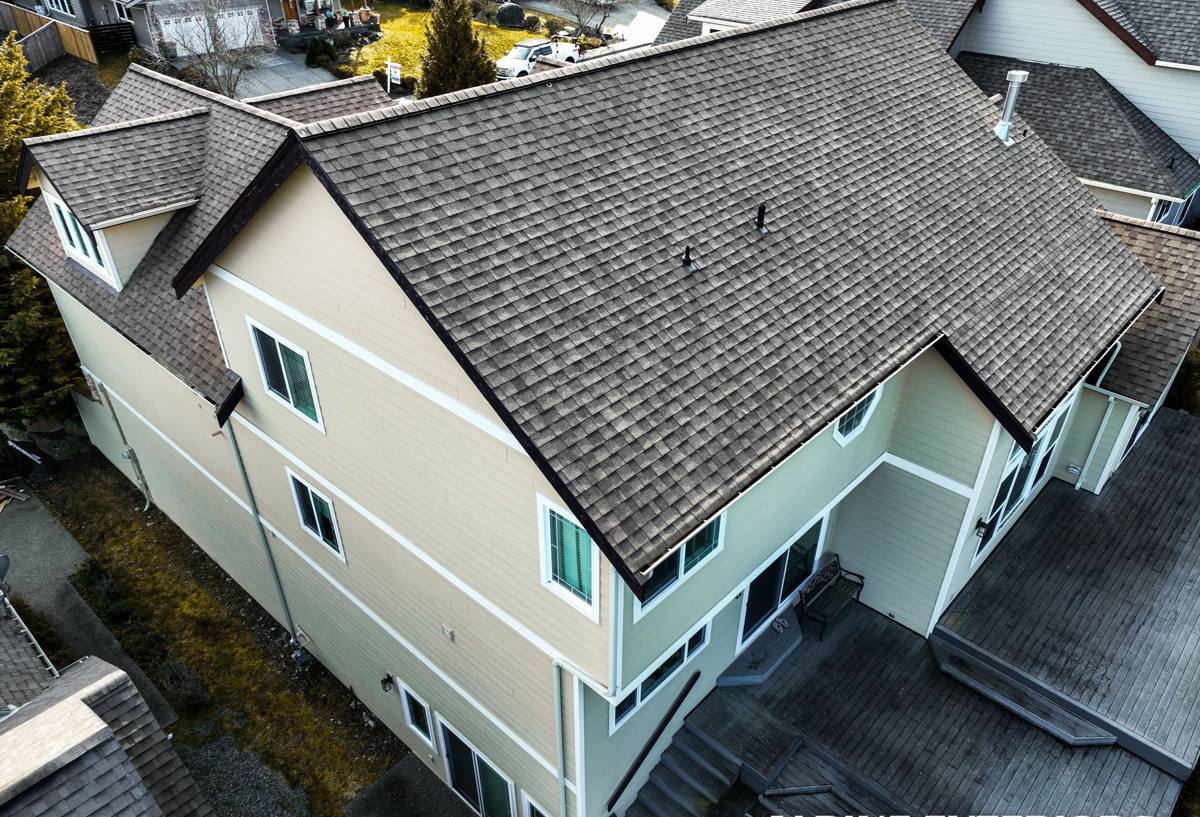
Why Local Decks Fail Faster Here
Moisture Intrusion
Rain that falls sideways for days at a time finds its way under flashing, into end-grain cuts, and around fasteners that were never properly sealed. Once moisture gets past the surface of a board, it doesn't dry out quickly in our climate — decks here often stay damp for weeks at a stretch, which is exactly the condition wood rot and fungal decay need to take hold.
Moss and Algae
A long moss season means organic growth isn't just a cosmetic issue. Moss holds moisture against the decking surface, keeps boards from drying between rains, and makes stairs and walking surfaces genuinely slippery. Left alone, it accelerates rot underneath and can stain or etch composite surfaces over time.
Salt Air and Corrosion
Salt-carrying air corrodes fasteners, joist hangers, and structural hardware faster than an inland climate would. Corroded fasteners lose their grip strength long before they look obviously rusted, which is part of why deck failures can seem sudden even though the damage built up gradually.
Signs a Columbia Deck Needs Repair, Not Just Cleaning
Homeowners often assume a deck just needs a pressure wash and a new coat of stain. Sometimes that's true. Other times, cleaning masks a problem that's already structural. Before you plan a simple refresh, check for these:
- Soft, spongy, or springy spots when you walk across the decking boards
- Visible gaps, splitting, or cupping in individual boards
- Rust streaks or corrosion around fastener heads
- A railing that wiggles or flexes when leaned on
- Dark staining or a musty smell near the ledger board where the deck meets the house
- Gaps opening up between the deck and the house wall (a sign the ledger connection is moving)
- Persistent moss or algae that returns within weeks of cleaning
- Stair stringers that feel less solid underfoot than the rest of the deck
Any one of these on its own might be minor. Several together usually mean the structure needs a closer look, not just a surface treatment.
What a Correct Deck Repair Actually Involves
Structural Inspection First
Before we replace a single board, we check the framing underneath — joists, beams, posts, and especially the ledger board connection to the house. This is the single most safety-critical part of most decks, and it's also the part most likely to be hidden from view under decking boards. A repair that only addresses the visible surface while leaving a compromised ledger or joist in place isn't a real repair.
Fastener and Hardware Condition
We check joist hangers, structural screws, and connector hardware for corrosion, not just the decking screws you can see from the top. In a salt-air, high-moisture climate, hardware below the surface often corrodes faster than what's exposed to sun and airflow above.
Board-Level Repair vs. Full Resurfacing
Depending on what we find, repair can mean replacing individual damaged boards, resurfacing the whole deck with new decking over sound framing, or a combination — some sections replaced board by board, others left alone because they're still solid. We tell you honestly which situation you're in rather than defaulting to the most expensive option.
Railings and Guardrails
Loose or rotted railing posts are a common repair on their own, separate from the decking surface. Railings take constant lateral stress and are frequently the first thing to fail on an otherwise sound deck, especially where posts were undersized or under-fastened during original construction.
Repair vs. Replacement: How We Help You Decide
| Factor | Favors Repair | Favors Replacement |
|---|---|---|
| Framing condition | Joists and ledger are solid, damage is limited to surface boards | Rot or corrosion has reached the structural framing |
| Age of deck | Under 12-15 years, built to a reasonable standard | Original construction is decades old or below current code |
| Extent of damage | Isolated boards or a single railing section | Damage spread across most of the deck surface or multiple structural points |
| Moss/moisture history | First real signs of trouble, caught early | Recurring rot in the same areas after prior repairs |
| Budget goals | Lower upfront cost, extends usable life | Higher upfront cost, resets the maintenance clock |
We won't push a full rebuild when a targeted repair will genuinely hold up — but we also won't patch a structural problem just to keep the initial cost low. We'll walk you through exactly what we found and why we're recommending one path over the other.
Our Process for Deck Repair Jobs in Columbia
- On-site inspection. We check the deck surface, framing, ledger connection, railings, and stairs, and take note of any moisture or moss patterns specific to how your property sits and drains.
- Written scope and estimate. You get a clear explanation of what's failing, what needs to be replaced, and what's still sound — no vague "while we're in there" surprises.
- Repair work. Damaged boards, framing members, or hardware are replaced with materials matched to the rest of the structure where possible, or upgraded where the original approach was clearly undersized for our climate.
- Sealing and finishing. Cut ends, fastener penetrations, and exposed framing get properly sealed — a step that's often skipped in the original build and is a major reason decks here fail early.
- Final walkthrough. We check railings for solid attachment, confirm the deck surface is even and secure, and point out any maintenance steps that will extend the repair's life.
Material Choices That Make Sense for This Climate
Wood decking is more affordable up front and can be repaired board by board, but it demands regular sealing and cleaning to hold up against our rain and moss season — skip a season of maintenance here and you'll feel it. Composite decking costs more initially and resists rot in the boards themselves, but it isn't maintenance-free: it still needs cleaning to prevent moss buildup, and the framing underneath is still wood, still vulnerable, and still needs the same structural attention.
For repairs, we typically match the existing material unless the homeowner wants to use the repair as an opportunity to upgrade a specific problem area — railings are a common example, where a homeowner replaces wood balusters with a lower-maintenance option while keeping the rest of the deck as-is.
Permits, Railings, and Local Code
Railing height, baluster spacing, and guardrail requirements are governed by building code, and repairs that touch structural railing components can require permitting depending on scope. This isn't a place to cut corners — a railing that looks fine but doesn't meet spacing or load requirements is a real safety issue, not a paperwork technicality. We handle the permit questions so you're not left guessing what's required for a repair versus a full rebuild.
Why It Matters to Hire a Crew That Already Works This Area
Deck problems in Whatcom County aren't generic — a crew unfamiliar with the local moisture and moss patterns can miss where rot is likely hiding, or under-spec a repair that won't hold up through another wet season. We work on homes throughout Sudden Valley and the surrounding communities, including Columbia, and we see the same handful of failure points repeat from property to property: ledger connections, north-facing sections that never fully dry out, and railing posts that were undersized to begin with. That pattern recognition is what keeps a repair from turning into a repeat visit.
After Your Repair: Keeping It That Way
- Sweep or blow off leaves and debris regularly, especially in fall, so moisture and moss don't get a foothold
- Clean moss and algae off decking and stairs before it has a chance to hold moisture against the surface
- Reseal wood decking on a regular schedule rather than waiting until it visibly needs it
- Check railings periodically for looseness, especially after storms with high wind
- Keep gutters and downspouts near the deck clear so runoff isn't draining directly onto or under it
If your deck in Columbia has soft spots, a wobbly railing, or moss that keeps coming back no matter how often you clean it, it's worth having it looked at before those problems reach the framing. We offer free, no-pressure estimates — fill out the form below and we'll take a look and tell you honestly what it needs.