 Sudden Valley Siding
 Building a Deck That Actually Holds Up in Happy Valley
A deck in Happy Valley has a harder job than most people realize. It's not just outdoor furniture on posts — it's a structure that sits exposed to whatever Whatcom County's weather sends at it, month after month, year after year. Between the driving rain that blows in off the water, the marine-influenced air that carries moisture and salt further inland than people expect, and a moss season that can stretch from fall through spring, a deck built without those conditions in mind starts showing problems fast: soft boards, rusted fasteners, slick surfaces, and framing that rots from the inside before anyone notices from the top. We build decks for this specific area, which means every material choice and every structural detail is picked with this climate in mind, not a generic build sheet.
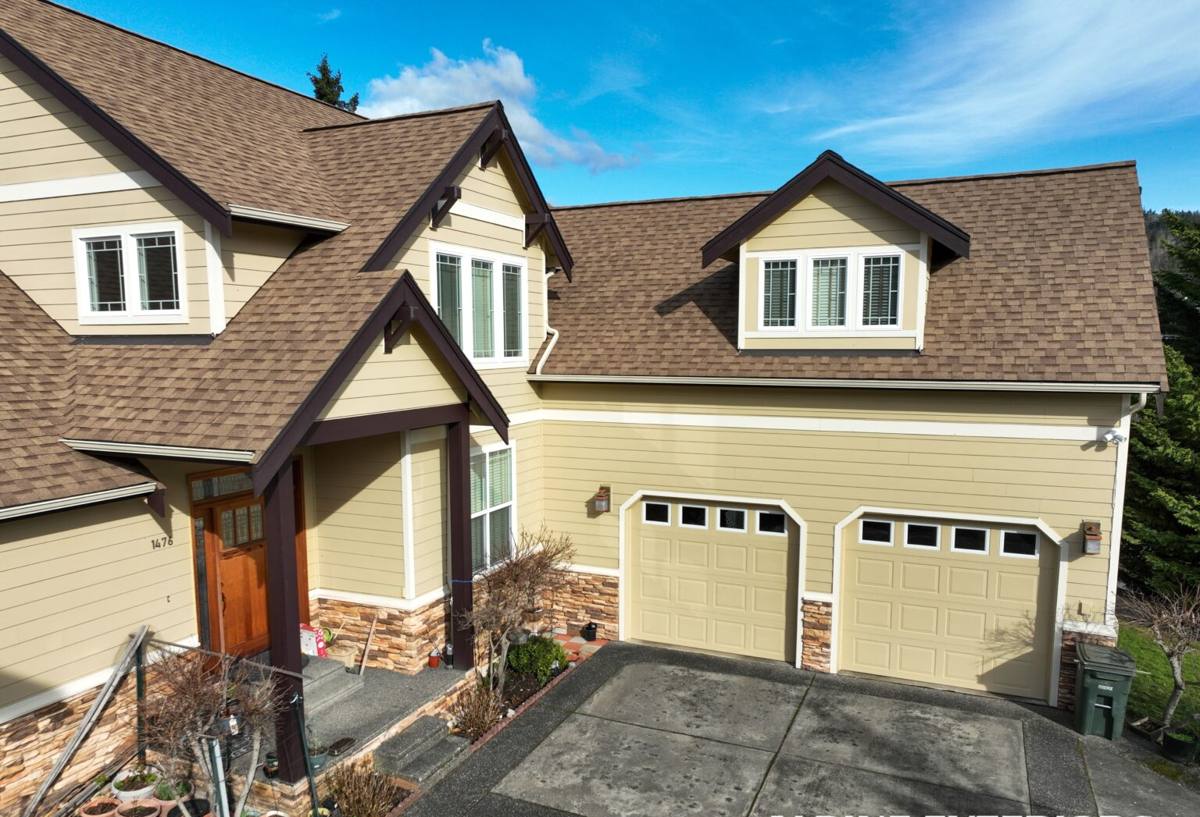
What Sudden Valley's Climate Does to an Outdoor Deck
Moss, Shade, and Standing Moisture
Many Happy Valley lots sit under mature tree cover or slope toward the lake, which means shade and airflow patterns that keep decking damp long after the rain stops. That's exactly what moss and algae need to take hold. Once moss establishes on a deck surface, it holds moisture against the wood or composite cap, and on stairs and ramps it turns into a real slip hazard. A deck built without attention to drainage, board spacing, and sun exposure will grow moss faster than one that was designed with those factors in mind from the start.
Driving Rain and Wind-Driven Water
Rain in this part of Whatcom County doesn't always fall straight down. Wind-driven rain gets pushed sideways into ledger connections, under railings, and into any gap where flashing was skipped or done poorly. The ledger board — where the deck attaches to the house — is the single most common failure point we see on older decks in this area, because water finds its way behind it and rots the rim joist or sheathing behind the siding. It's a problem that's invisible until it's expensive.
Decking Material Options for This Climate
There's no single "best" decking material — there's a best material for this climate and this budget. Here's how the common options actually perform in a wet, moss-prone, marine-influenced environment like Sudden Valley:
| Material | Moisture Behavior | Moss/Mildew Resistance | Maintenance |
|---|---|---|---|
| Pressure-treated lumber | Absorbs and releases moisture; can cup or warp if not properly dried and installed | Needs regular cleaning to resist moss buildup | Annual cleaning and periodic sealing/staining |
| Cedar | Naturally moisture-resistant, but still an organic material that will weather | Better than pressure-treated, still needs upkeep in shaded areas | Periodic cleaning and refinishing to hold color and protection |
| Capped composite | Won't absorb water into the core; dimensionally stable | Resists moss and mildew much better than wood; surface still needs washing | Occasional washing, no sealing or staining |
| PVC decking | Fully moisture-resistant, no organic material to break down | Best resistance to moss and algae staining of the common options | Lowest ongoing maintenance |
Our honest take: pressure-treated lumber still makes sense on a budget or for a rustic look, but it demands consistent maintenance to keep moss and rot at bay in this climate. Capped composite and PVC cost more up front but trade that for far less upkeep over the life of the deck — which matters more here than in a drier climate, because a neglected wood deck in a shaded, damp Happy Valley lot ages faster than the same deck would somewhere drier.
The Structural Work Most Homeowners Never See
The decking boards are what you notice. The framing underneath is what determines whether the deck is still standing — and safe — in fifteen years. In this climate, we treat the following as non-negotiable, not upgrades:
- Ledger flashing that actually sheds water away from the house, not just a bead of caulk behind the board
- Footings set below frost depth and sized for the soil conditions on the specific lot, since Sudden Valley's terrain varies from flat to steeply sloped
- Joist tape or equivalent protection on top of framing lumber to keep standing water from sitting in cut and drilled areas where rot starts first
- Stainless or coated fasteners rated for the moisture and mild salt exposure common in this part of Whatcom County — the wrong hardware rusts and stains long before the structure itself fails
- Airflow underneath the deck so the framing can dry out between rain events instead of staying damp for weeks
None of this shows up in a photo of a finished deck. All of it shows up in whether that deck is still solid a decade from now.
Permits, Setbacks, and Community Guidelines
Most new deck construction and many major deck rebuilds in unincorporated Whatcom County require a building permit, and setback rules apply depending on lot lines and, in some cases, proximity to the lake or steep slopes. Sudden Valley is also a community with its own association, so beyond the county's requirements, it's worth checking whether your property falls under any additional architectural or building guidelines before plans are finalized. We handle the permitting process as part of the job and won't start framing until the paperwork is squared away — it's a lot cheaper to get this right up front than to deal with a stop-work order or a required teardown later.
Our Deck Building Process in Happy Valley
- On-site assessment. We look at the slope, drainage, tree cover, and existing structure (if replacing a deck) specific to your lot.
- Design and material selection. We walk through decking, railing, and fastener options with honest trade-offs for this climate and your budget.
- Permitting. We prepare and submit what's required for your project and confirm any additional local guidelines that apply.
- Demolition (if applicable). Old decking, framing, and any hidden rot get removed and the condition of the ledger and rim joist gets inspected before anything new goes up.
- Framing and structural work. Footings, ledger flashing, joist protection, and framing are built to hold up under this area's rain and moisture load, not just to pass a minimum code check.
- Decking, railing, and finish work. Boards, railings, stairs, and any lighting or fascia details are installed and finished.
- Final walkthrough and inspection. We review the completed deck with you and make sure any required final inspection is scheduled and passed.
Keeping a Happy Valley Deck Healthy Year After Year
A well-built deck still needs some seasonal attention in this climate — the goal is to keep moss and moisture from getting a foothold rather than dealing with damage after the fact.
- Sweep leaves and debris off the deck surface and out of gaps between boards regularly through fall
- Wash the deck at least once a year with a cleaner appropriate to the material to remove early moss and algae growth before it spreads
- Check stairs and any shaded sections more often — these areas stay damp longest and grow moss first
- Inspect fasteners and railing connections annually for rust staining or looseness
- Keep gutters and downspouts near the deck clear so runoff isn't dumping extra water onto or under the structure
- For wood decking, plan on resealing or restaining on the schedule the product calls for — skipping a cycle in this climate lets moisture in fast
Cost Factors to Expect
Every deck project is different, but the same handful of factors drive the price up or down. This isn't a quote — it's what to think about before you ask for one:
| Factor | Why It Matters |
|---|---|
| Size and shape | Larger decks and multi-level or angled designs need more framing and material |
| Decking material tier | Pressure-treated is the lowest cost to start; composite and PVC cost more upfront but less over time |
| Site access and slope | Steep or hard-to-access lots, common around Sudden Valley, can add labor and equipment cost |
| Framing height and footings | Taller decks and difficult soil conditions require more substantial footings and support |
| Railing and stair complexity | Custom railing systems, multiple stair sets, and built-in features add both material and labor |
| Demolition and repair | Replacing an old deck that has hidden rot in the ledger or framing adds scope once it's opened up |
We'll always tell you honestly if we find something worse than expected once demolition starts, rather than quietly cutting a corner to stay on budget.
Why Work With a Crew That Already Knows Happy Valley
A deck built to a generic national spec sheet will meet code. A deck built for this specific pocket of Whatcom County — accounting for the moss, the driving rain, the shaded lots, and the terrain around Sudden Valley — holds up better and needs less babying to stay that way. We already know which details matter here: where moss tends to take over first, which fastener choices hold up against the marine-influenced air, and what the permitting process actually looks like for this area. That local familiarity is the difference between a deck that looks good for one season and one that's still solid a decade from now.
If you're planning a new deck or need to replace one that's showing its age, we're happy to take a look and give you an honest, no-pressure estimate. Use the form below to get started.