 Sudden Valley Siding
 Decks Built for Cordata's Wet-Side Climate
Cordata sits in that stretch of Whatcom County where the weather does most of the talking. You get long stretches of steady rain from fall through spring, humid air off the Salish Sea, and just enough freeze-thaw cycling in the cold snaps to punish anything built with shortcuts. A deck out here isn't a summer accessory — it's an outdoor structure that has to survive nine or ten months of damp exposure every year. That changes what "good" actually means when it comes to design, materials, and framing.
We build and replace decks for homeowners in Cordata and the surrounding Sudden Valley area, and the jobs that fail early almost always fail for the same reasons: wrong fastener choice, no real drainage plan, framing that traps water instead of shedding it, or decking material picked on looks alone without asking how it handles this specific climate. A deck built right for Cordata looks almost identical to a deck built right anywhere else in the Pacific Northwest — the difference is in details most people never think to check.
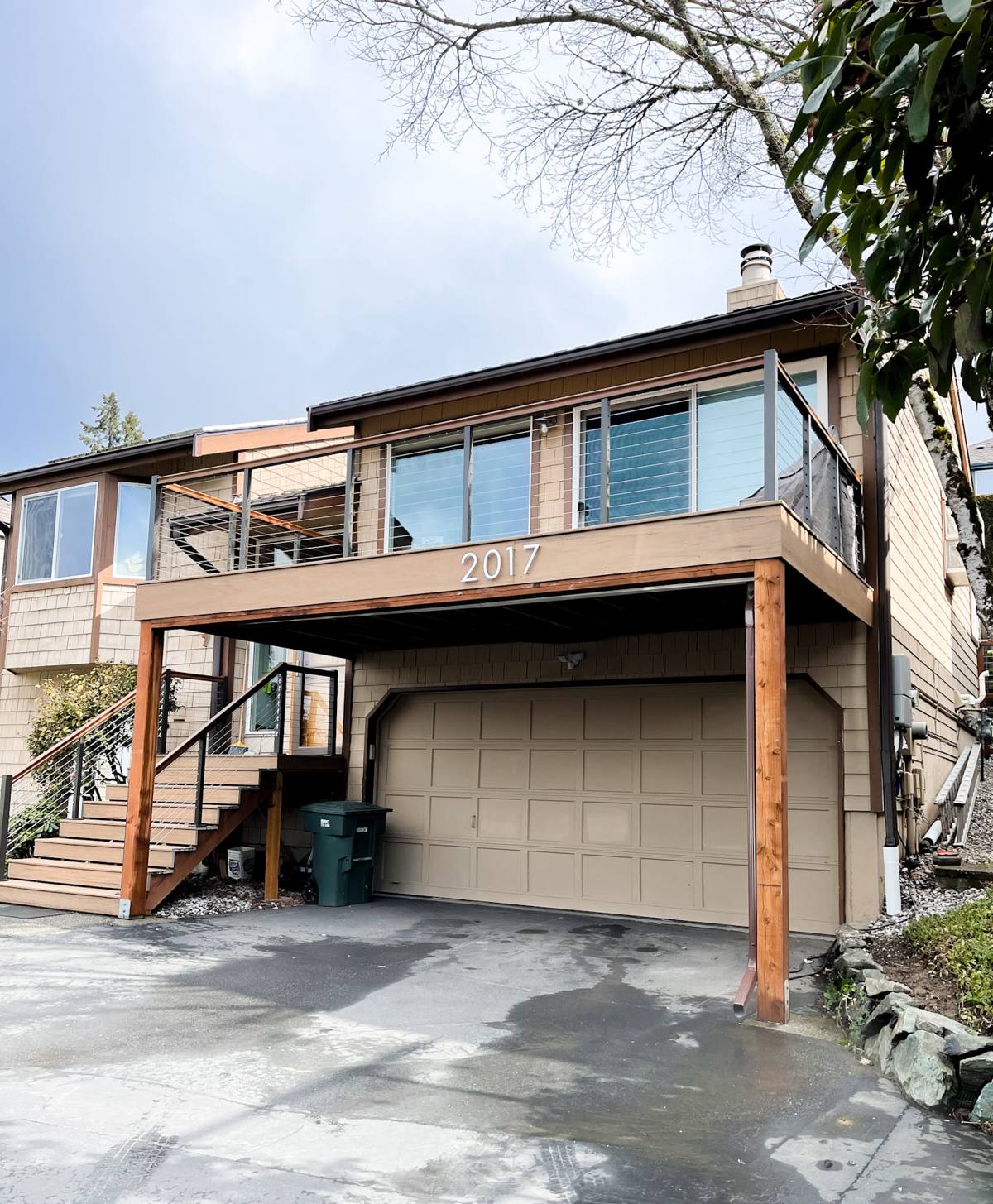
What This Climate Actually Does to a Deck
Three things drive almost every deck problem we see in this part of Whatcom County:
Driving Rain
Rain here doesn't just fall — wind pushes it sideways into ledger connections, under flashing, and into any gap that wasn't sealed correctly. Over time, that moisture finds its way into end grain, fastener holes, and the joint where the deck meets the house. That last one is the most common failure point we run into: a ledger board attached without proper flashing will let water track straight into the house's rim joist and wall framing, sometimes for years before anyone notices.
A Long Moss Season
Between the shade cover common in this area and the near-constant moisture, moss and algae get a long runway to establish themselves on horizontal surfaces — decking boards, stair treads, and railing caps especially. Moss holds water against wood and composite surfaces alike, and it turns a deck surface slick and dangerous well before it becomes an aesthetic problem. Board spacing, surface texture, and drainage underneath the deck all affect how fast moss takes hold.
Salt Air
Cordata and Sudden Valley aren't oceanfront, but this part of Whatcom County still gets enough marine air influence to accelerate corrosion on lower-grade fasteners and hardware over time. Galvanized hardware that would hold up fine in a dry inland climate can start showing rust streaks and weakening within a handful of years here. It's a slow problem, which is exactly why it gets ignored until a railing post or joist hanger fails.
What a Deck Built for This Area Needs
- Stainless steel or heavy-duty coated fasteners rated for the corrosion exposure this area actually sees, not the minimum code fastener
- Proper ledger flashing where the deck attaches to the house, with counter-flashing that directs water away from the wall assembly
- A framing layout with real slope and drainage so water doesn't pond on joists or under decking
- Joist tape or a comparable protective barrier on top of framing lumber to slow moisture absorption at the most vulnerable point
- Decking material chosen for how it performs wet — grip, drainage between boards, and resistance to moss and mildew staining
- Railing hardware and post connections that won't corrode or loosen as the wood around them swells and shrinks seasonally
- Adequate ventilation underneath the deck so trapped moisture has somewhere to go
Decking Material: What Actually Holds Up Here
| Material | How It Handles This Climate | Maintenance | Typical Lifespan Here |
|---|---|---|---|
| Pressure-treated wood | Affordable, but needs consistent sealing to resist moss staining and moisture cupping | Annual cleaning, re-sealing every 1-2 years | 10-15 years with upkeep |
| Cedar | Naturally rot-resistant and handles the wet climate well, but still needs periodic finish maintenance to keep its color and grip | Cleaning and refinishing every 1-2 years | 15-20 years with upkeep |
| Capped composite | Strong resistance to moisture absorption and moss staining; performs consistently through the wet season with little upkeep | Occasional washing, no sealing or staining | 25-30+ years |
| PVC decking | Fully moisture-resistant, holds up well against algae and moss buildup, though surface texture varies by product | Occasional washing | 25-30+ years |
We don't push one product over another as a blanket rule — the right call depends on your budget, how much upkeep you actually want to do, and how much sun or shade your specific lot gets. What we won't do is install decking rated for a drier climate and tell you it'll perform the same way here. It won't, and pretending otherwise just sets you up for an early replacement.
Framing and Structure: Where Most Problems Actually Start
Nearly every deck failure we've been called out to inspect traces back to the framing, not the decking boards on top. The visible surface can look fine while the structure underneath is already compromised. A few structural points that matter more in this climate than in drier regions:
Ledger Attachment
This is the single highest-risk connection on any attached deck. It needs proper flashing, correct fastener spacing, and a clear path for water to run off rather than collect behind the board. A poorly flashed ledger is the most common cause of hidden rot we find on older decks in this area.
Post Bases and Footings
Posts sitting directly on or near grade in constantly damp soil are prone to base rot years before the rest of the structure shows wear. Elevated post bases and correctly sized footings matter more here than in a dry climate where that mistake might go unnoticed for decades.
Joist Protection
Bare framing lumber left exposed to this much seasonal moisture will absorb water at every cut end and fastener hole. Protective tape or flashing over joists is a small upfront cost that meaningfully extends the life of the whole structure.
Our Process for Cordata Deck Projects
- On-site assessment. We look at drainage, sun/shade exposure, existing structure if it's a replacement, and how the deck connects to your home.
- Design and material walkthrough. We go over decking options, railing styles, and layout based on your budget and how you actually plan to use the space.
- Permitting. Deck projects in this area typically require a permit depending on size and height — we handle that process rather than leaving it on you.
- Demolition (for replacements). Old decking, railing, and any compromised framing get removed and inspected before we build back.
- Framing and flashing. This is the stage that determines how long the deck actually lasts — ledger flashing, joist protection, and proper drainage slope all happen here.
- Decking, railing, and finish work. Surface material goes down, railings are installed and secured, and stairs are finished to code.
- Final walkthrough. We go over the finished deck with you, including basic care and what to watch for as the seasons change.
Why Local Experience on This Kind of Project Matters
A deck built by a crew that's only worked in drier climates will often miss the details that matter most here — under-flashing a ledger, skipping joist protection, or choosing hardware that looks fine on day one but starts corroding within a few wet seasons. We work regularly in Cordata and the Sudden Valley area, which means we're not guessing at how Whatcom County's rain, moss, and marine air will treat a given material or connection over time — we've already seen how it plays out on decks built five, ten, and fifteen years ago in this same climate.
That local pattern recognition is also what lets us catch problems on replacement jobs before they become expensive surprises. If we open up an old deck and find rot creeping into the house's rim joist, that's not a hypothetical risk — it's something we've dealt with before and know how to address correctly the first time.
Maintaining a Deck Once It's Built
Even a well-built deck needs some seasonal attention in this climate. A simple annual routine goes a long way:
- Clear debris and standing water off the surface before the wet season sets in
- Wash off moss and algae buildup at least once a year, more often in shaded areas
- Check railing posts and stair connections for looseness as wood expands and contracts seasonally
- Inspect the ledger board area where the deck meets the house for any staining or soft spots
- Re-seal or re-stain wood decking on the manufacturer's recommended schedule, not "when it looks bad"
Get a Straight Answer on Your Deck Project
Whether you're planning a new deck or replacing one that's showing its age, we're happy to take a look and give you a straightforward assessment — no pressure, no upsell. Fill out the form below for a free estimate on your Cordata or Sudden Valley deck project.