 Sudden Valley Siding
 Deck Repair Built for Cordata's Climate
A deck in Cordata takes a different kind of beating than one in a dry inland climate. Whatcom County's long wet season, the moisture-laden air that drifts in off Bellingham Bay, and the tree cover common to Cordata's older residential streets all combine to attack a deck from multiple directions at once. We've repaired decks throughout this neighborhood long enough to know the failure patterns aren't random — they show up in the same spots, for the same reasons, on nearly every job.
This page covers what deck repair actually means for a Cordata home: what typically fails first, what a correct repair involves structurally (not just cosmetically), and how we decide between repairing and replacing. If you're standing on a deck right now wondering whether it's still safe, this should help you understand what you're looking at before we ever show up with a truck.
The Cordata Microclimate for Decks
Three things drive most of the deck damage we see in this part of Whatcom County. First, driving rain — storms here often come in sideways rather than straight down, which pushes water into joints, fastener holes, and ledger connections that a deck built for a drier climate was never detailed to handle. Second, a moss season that can run from early fall through late spring, especially on decks with any shade from mature trees or a north-facing exposure. Moss holds moisture against wood and fasteners far longer than open air would, which accelerates rot even when the deck looks fine from a distance. Third, salt-tinged coastal air moving inland from Bellingham Bay contributes to faster corrosion on unprotected metal — hinges, nails, and older fasteners in particular — even a few miles from the water.
None of this means a deck in Cordata can't last decades. It means the repair has to account for these conditions, not just patch what's visibly broken.
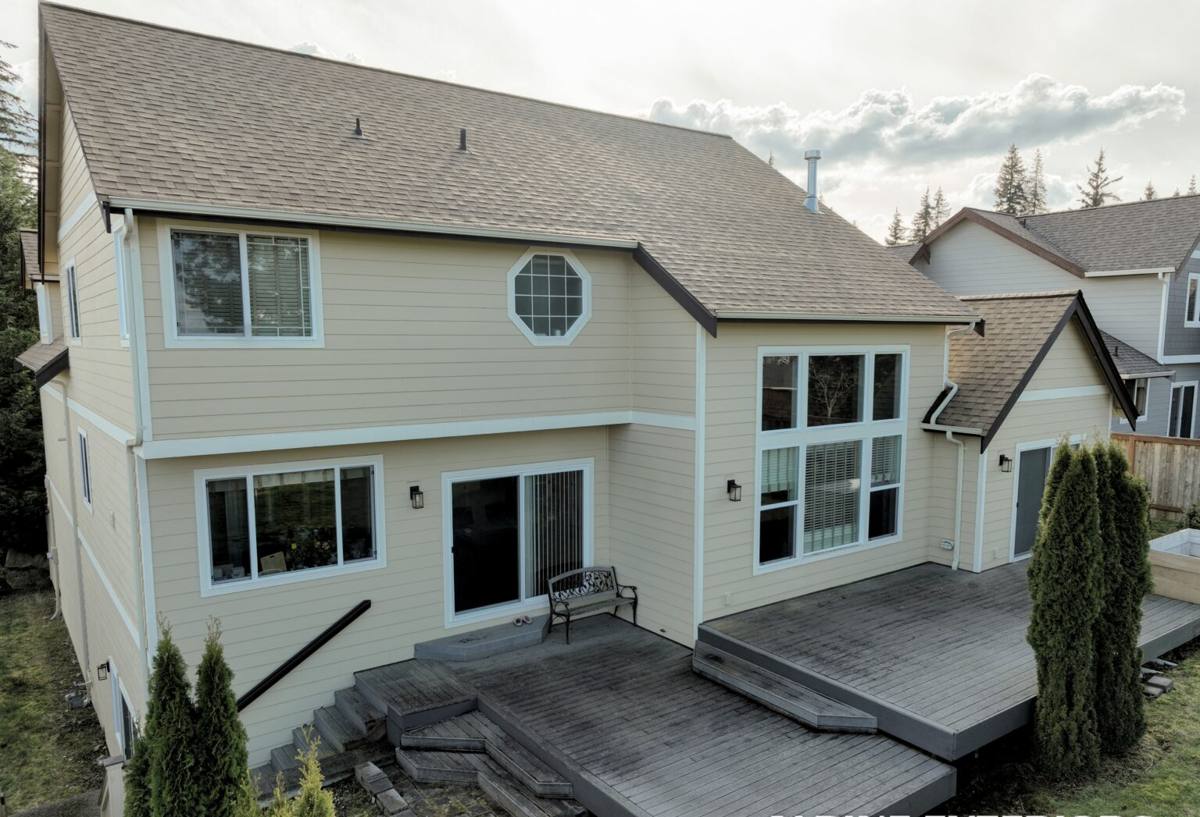
Signs Your Deck Needs Repair, Not Replacement
Most decks we're called out for don't need to be torn out — they need targeted repair of the parts that are actually failing. Here's what to check before assuming the worst:
- Soft or spongy spots underfoot, especially near the house or along board edges
- Visible moss or black-green staining on decking, especially in shaded corners
- Rust streaks running down from fastener heads or metal connectors
- Gaps or movement where the deck meets the house (the ledger board connection)
- Railing posts that wiggle or flex when pushed
- Stair stringers that feel bouncy or uneven
- Visible daylight or gaps where joists meet beams
- A grey, weathered look with splintering, even if the wood still feels solid
The first six items on that list are structural warning signs and worth a professional look sooner rather than later. The last two are usually cosmetic or surface-level and often resolve with cleaning, sanding, and refinishing rather than rebuilding.
What a Correct Deck Repair Actually Involves
A repair that only replaces the boards you can see is a temporary fix if the structure underneath is compromised. We evaluate a deck in layers, from the ground up:
Framing and Structure
Posts, beams, and joists carry the actual load. We check these for rot at ground contact points, at joist hangers, and anywhere water has been sitting rather than shedding. Wood that's soft to a screwdriver test gets replaced — no exceptions, because this is the layer that determines whether the deck is safe.
The Ledger Board Connection
This is where the deck attaches to the house, and in our experience it's the single most common source of hidden rot in this climate. Driving rain pushes water behind poorly flashed ledger boards, and because it's hidden behind the decking, the damage can go unnoticed for years. Correct repair means pulling back decking at the connection, inspecting the ledger and rim joist, and installing proper flashing before anything gets closed back up.
Fasteners and Hardware
Given the coastal air and moisture exposure, we replace corroded fasteners with corrosion-resistant hardware rated for exterior, ground-contact, or wet-climate use rather than reusing what's there or matching to standard interior-grade hardware.
Decking and Railings
Once the structure is sound, decking boards, railings, and stairs get repaired or replaced based on their actual condition — board by board where that makes sense, rather than a wholesale tear-off when it isn't needed.
Repair vs. Full Replacement: How We Decide
Homeowners often assume any deck problem means a full rebuild. That's rarely true. The table below outlines the factors that actually drive the decision.
| Factor | Leans Toward Repair | Leans Toward Replacement |
|---|---|---|
| Framing condition | Solid wood, isolated soft spots | Widespread rot in posts, beams, or joists |
| Ledger board | Sound with minor flashing issues | Rotted connection to the house |
| Age of structure | Under 15-20 years, decent original build | Older than the typical service life of the materials used |
| Decking surface | Weathered but structurally intact | Split, delaminating, or failing across most boards |
| Moss/moisture damage | Surface staining, recent onset | Long-term moisture intrusion into structural members |
| Code compliance | Meets current railing/spacing requirements | Outdated construction that doesn't meet current standards |
We'll always tell you honestly which side of this table your deck falls on. A repair that only delays an inevitable rebuild by a year or two isn't a good use of your money, and we won't sell you one.
Our Deck Repair Process
- Inspection. We check framing, ledger, fasteners, and decking, including areas hidden under boards where rot most often starts.
- Written scope. You get a clear explanation of what's failing, what's sound, and what we recommend — with repair and replacement options laid out separately if both are reasonable.
- Structural repair first. Any compromised framing, ledger flashing, or hardware gets addressed before cosmetic work begins.
- Decking and railing repair. Damaged boards, railings, and stairs are replaced or repaired to match the rest of the structure.
- Finish and protect. Cleaning, sanding, and finishing (stain, sealant, or paint as appropriate) to protect the repaired areas against Whatcom County's wet season going forward.
- Walkthrough. We show you what was done and what to watch for going forward, including moss-prevention steps specific to your deck's exposure.
Materials We Use and Why
Material choice matters more here than in drier climates, because the wrong choice accelerates the exact problems this region causes.
Pressure-Treated Lumber
Our standard for structural framing repairs — posts, beams, and joists — because it's rated for ground contact and outdoor exposure and holds up well against the moisture cycle typical of this area, provided it's properly sealed at cut ends and connections.
Composite and Wood Decking
Both have a place. Composite decking resists moss staining and doesn't need refinishing, which some homeowners prefer given how long moss season runs here — but it comes at a higher upfront cost and requires attention to proper ventilation underneath to avoid trapping moisture. Cedar and other natural wood decking cost less upfront and can look excellent, but they need more regular maintenance — cleaning and refinishing on a cycle — to keep moss and graying in check. We'll walk you through the real maintenance trade-off for your situation rather than pushing one material as universally "better."
Hardware and Fasteners
We use corrosion-resistant, exterior-rated fasteners and connectors as a baseline standard on every repair, given the coastal air exposure common across this part of Whatcom County. It costs a bit more than standard hardware, but replacing rusted fasteners twice is more expensive than doing it right once.
Maintenance After Repair: Keeping Moss and Rot from Coming Back
A good repair buys you years, but a few habits extend that further, especially in a moss-prone, tree-covered neighborhood like Cordata:
- Sweep debris and leaves off the deck regularly, especially in fall — trapped organic matter holds moisture and feeds moss
- Clean moss and algae off the surface at the start of the wet season, before it establishes
- Check and re-seal any exposed cut ends or fastener points every couple of years
- Keep gutters and downspouts clear so runoff isn't draining directly onto or under the deck
- Trim back overhanging branches where practical to reduce shade and improve airflow
- Inspect the ledger board connection annually for any signs of gapping or staining
Why a Crew That Already Works Cordata Matters
Deck repair done by someone unfamiliar with this climate tends to treat every deck the same way, regardless of exposure, tree cover, or how the rain actually moves through this part of Whatcom County. We've worked on decks throughout Cordata and the surrounding Bellingham area long enough to recognize the difference between a deck that's failing because of age versus one that's failing because of a specific, fixable moisture pathway — and that distinction changes what we recommend and what we charge you for.
Local experience also means we're not guessing at permitting or code requirements for this jurisdiction, and we're not learning on your project how driving rain behaves against a north-facing ledger board in this specific climate. That's knowledge that only comes from doing this work here, repeatedly, and seeing which repairs actually hold up through a full Whatcom County winter.
If you're dealing with a soft spot, moss buildup, rusted hardware, or just want an honest read on your deck's condition, we're glad to take a look. Fill out the form below for a free, no-pressure estimate — we'll tell you plainly what's needed and what isn't.