 Sudden Valley Siding
 Windows Built for the Cordata Climate, Not a National Average
Cordata sits in a part of Whatcom County where the weather doesn't do extremes — it does persistence. Long stretches of driving rain, low winter sun, salt-tinged marine air moving in off the water, and a moss season that can run half the year. None of that is dramatic on any single day, but it adds up on a window that wasn't built or installed with this climate in mind. Frames swell and stick. Seals give out early. Sills stay damp long enough for moss and mildew to take hold. A window that would be perfectly fine in a dry inland climate can underperform here within a few seasons.
Custom windows done right for a Cordata home account for that reality from the start — frame material, glazing package, flashing detail, and drainage path all chosen for a house that spends more of the year wet than dry.
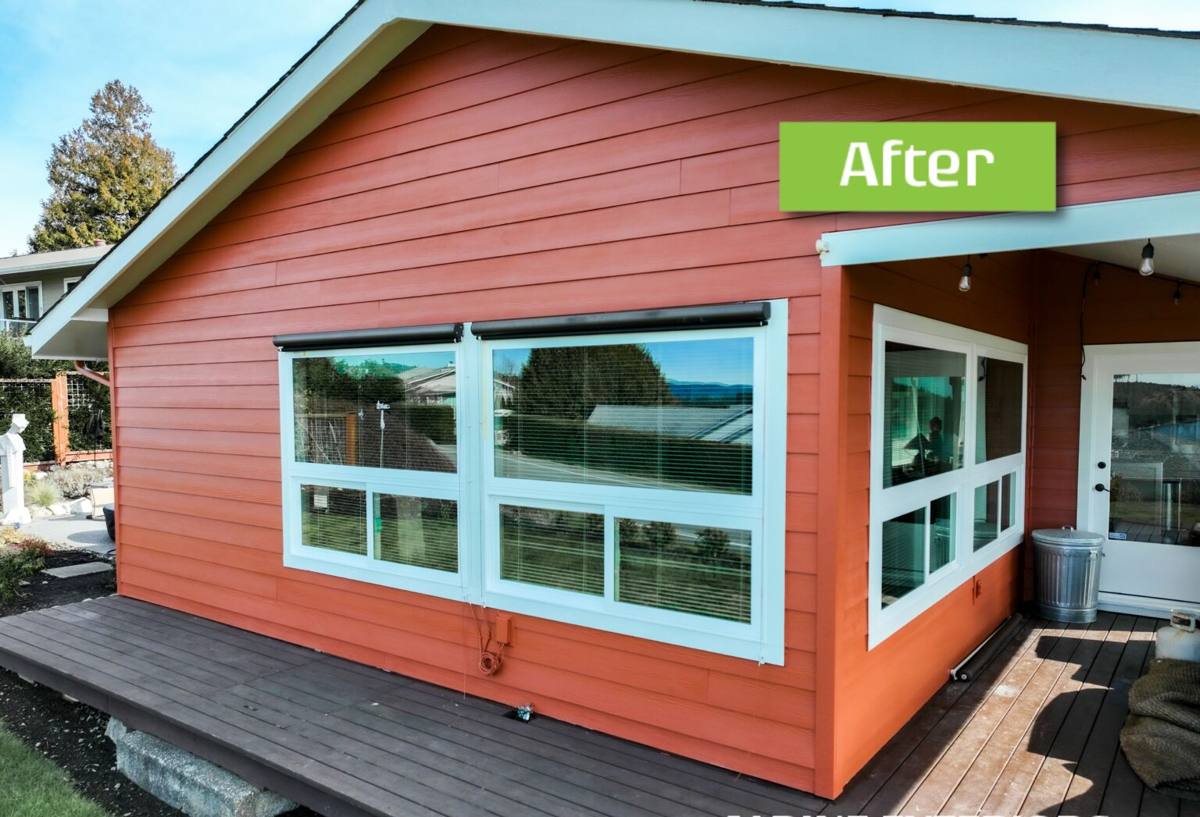
What "Custom" Actually Means Here
Custom doesn't necessarily mean unusual shapes or high-end architectural glass, though we do that work too. Most often it means a window built to fit an opening that isn't standard — common in older Cordata-area homes where framing has settled slightly over the decades, or where a previous remodel left an opening a few sixteenths off true. Ordering an off-the-shelf window for an out-of-square opening leads to shims, gaps, and caulk doing the job that a properly sized frame should be doing.
Situations that call for a custom order
- Openings that are out of square or out of level from age or settling
- Non-standard sizes left over from additions, remodels, or older construction methods
- Matching a specific sightline or grid pattern across a home's front elevation
- Bay, bow, or angled openings that don't match stock dimensions
- Replacing a single odd-sized window without re-framing the whole opening
Frame Materials: What Holds Up in Sustained Wet Weather
In a climate where wood siding and trim already need regular attention, the window frame material matters more than the brand name on the sticker. We look at long-term moisture behavior first, appearance second.
| Frame Material | Moisture Behavior | Maintenance | Best Fit |
|---|---|---|---|
| Vinyl | Won't rot; can flex slightly with temperature swings | Low — occasional cleaning | Most Cordata homes, best value |
| Fiberglass | Very stable in wet/dry cycling, minimal expansion | Low | Larger openings, longer-term ownership |
| Wood-clad | Exterior clad protects wood, but any cladding breach lets moisture reach the core | Moderate — cladding seams need monitoring | Historic look with interior wood warmth |
| Solid wood | Attractive but most vulnerable to our rain/moss cycle without diligent upkeep | High | Restoration projects with a maintenance plan already in place |
We'll walk through the honest trade-offs for your specific home rather than steering you toward whatever happens to be easiest to install. If you want a wood-clad or solid-wood look, we'll tell you upfront what kind of upkeep that commitment requires in this climate.
Vinyl and Fiberglass: Why They Handle Whatcom County Weather Well
Neither material gives moisture a food source, which matters when a window sees rain more months than not. Fiberglass in particular expands and contracts at close to the same rate as glass, which keeps seals under less stress over time — a small detail that matters after a decade of freeze-thaw and wet-dry cycling.
Glass and Glazing: Built for Low Light and Wet Air
Whatcom County doesn't get intense summer heat, but it does get long stretches of overcast, moisture-laden air and cool interior/exterior temperature differences for much of the year. That combination is exactly what causes interior condensation on underperforming glass.
What we specify and why
- Low-E coatings tuned for heat retention rather than heat rejection — we're keeping warmth in more often than keeping it out
- Argon or krypton-filled double glazing as standard, which reduces the interior surface temperature swing that causes condensation and fogging
- Warm-edge spacers instead of older metal spacers, which cuts down on cold spots at the glass edge where condensation forms first
- Tempered or laminated glass where code requires it — near doors, low sills, and large panes
Fogging or moisture between panes on an existing window is a sign the seal has already failed — at that point, repair isn't really an option, and replacement of that unit is the only fix.
Flashing and Drainage: Where Most Window Failures Actually Start
Most window problems we get called out for in this area aren't glass problems — they're water management problems. A window can be top quality and still leak if the flashing, sill pan, and drainage path around it weren't detailed correctly, and that's a bigger risk here than in drier climates simply because of how much water passes over these details every year.
What a correct installation includes
- A sloped sill pan that directs any incidental water back outside, not into the wall cavity
- Head flashing integrated with the water-resistive barrier in the correct shingle-lap order — never caulked on as an afterthought
- Side flashing tied properly into the wall's drainage plane
- Backer rod and quality exterior sealant at the trim joint, sized and installed to move with the building, not crack out in a season or two
- Weep paths kept clear so any water that does get behind the exterior cladding has somewhere to go
This is also where a window job overlaps directly with siding work. If we're already on a wall replacing siding, integrating window flashing into that same water-resistive barrier is far more reliable than flashing a window in isolation and hoping it ties in cleanly with existing siding around it.
Moss, Mold, and Sill Maintenance
A long moss season means anything horizontal that stays damp — window sills, exterior trim, mullions on multi-lite units — is a candidate for moss and mildew growth if it doesn't drain and dry properly. Custom sill design can reduce this: a sill with real slope, a drip edge that throws water clear of the wall below, and trim details that don't create flat, shaded ledges where debris and moisture sit. None of this eliminates cleaning entirely, but it reduces how often it's needed and how much damage accumulates between cleanings.
Our Process for a Cordata Window Project
- On-site assessment — we check each opening for square, level, existing rot or water staining, and current flashing condition before quoting anything
- Measurement and ordering — custom sizes and configurations are measured and confirmed before the order is placed, since remakes on custom units cost real time
- Removal and opening prep — we inspect framing and sheathing once the old unit is out, and address any hidden rot or water damage before the new window goes in, not after
- Flashing and sill pan installation — done to the sequence above, every time, regardless of whether it's one window or a whole-house replacement
- Window installation and shimming — set plumb, level, and square, with proper insulation in the gap, not just spray foam alone
- Exterior trim, sealant, and final inspection — including a water test on critical openings where past leaks were a concern
Why Hire a Crew That Already Works in This Area
A contractor who mainly works drier inland regions can install a technically correct window and still get water management wrong for our conditions, simply because the failure modes look different here. A crew that regularly works Cordata and the surrounding Whatcom County communities has already seen how flashing details fail under sustained coastal rain, how moss builds on north-facing sills, and which frame materials actually hold up after several wet seasons rather than just on install day. That local pattern recognition is worth more than a lower bid from a crew that's guessing.
We also coordinate window work with siding, trim, and general exterior maintenance, so if your window project uncovers a related issue — a soft spot in sheathing, aging trim, siding that's due for replacement nearby — you get one honest assessment instead of being sent to find a second contractor.
Cost Factors Worth Understanding Before You Get Quotes
| Factor | Why It Affects Price |
|---|---|
| Standard vs. custom size | Custom units cost more to manufacture and take longer to order |
| Frame material | Vinyl is typically the most affordable; fiberglass and wood-clad cost more upfront |
| Glazing package | Upgraded Low-E coatings and gas fills add cost but reduce long-term condensation and energy loss |
| Condition of the existing opening | Hidden rot or water damage found during removal adds repair time before the new window can go in |
| Number of openings and access | Second-story or hard-to-access windows take more labor time per unit |
We give straightforward, itemized quotes so you can see what you're paying for — not a single lump number with no breakdown.
Ready to Talk About Your Windows?
If you're dealing with foggy glass, drafty frames, visible moss or staining around your sills, or you're just planning ahead for a home in Cordata, we're happy to take a look. Fill out the form below for a free, no-pressure estimate — we'll assess your actual openings and give you honest options, not a one-size answer.