 Sudden Valley Siding
 Composite Decking for South Hill's Wet, Mossy Climate
South Hill sits in a part of Whatcom County that gets more than its share of driving rain, damp air, and long stretches of gray, low-sun weather where nothing on a deck ever fully dries out for days at a time. That combination is hard on outdoor living spaces. Wood decks cup, splinter, and grow moss in the shaded corners. Fasteners rust and streak the boards. Railings loosen as the wood around them swells and shrinks with every wet-dry cycle. Composite decking was built to handle exactly this kind of weather, but only if it's installed the right way for local conditions — not just bolted down the same way it would be in a dry climate.
We install composite decking for homeowners in South Hill and the surrounding Sudden Valley area with that climate in mind first, not as an afterthought. That means the structure underneath the boards, the flashing where the deck meets the house, and the fastening system all get built to shed water and resist the moss and algae growth that this region's damp, shaded conditions almost guarantee over time.
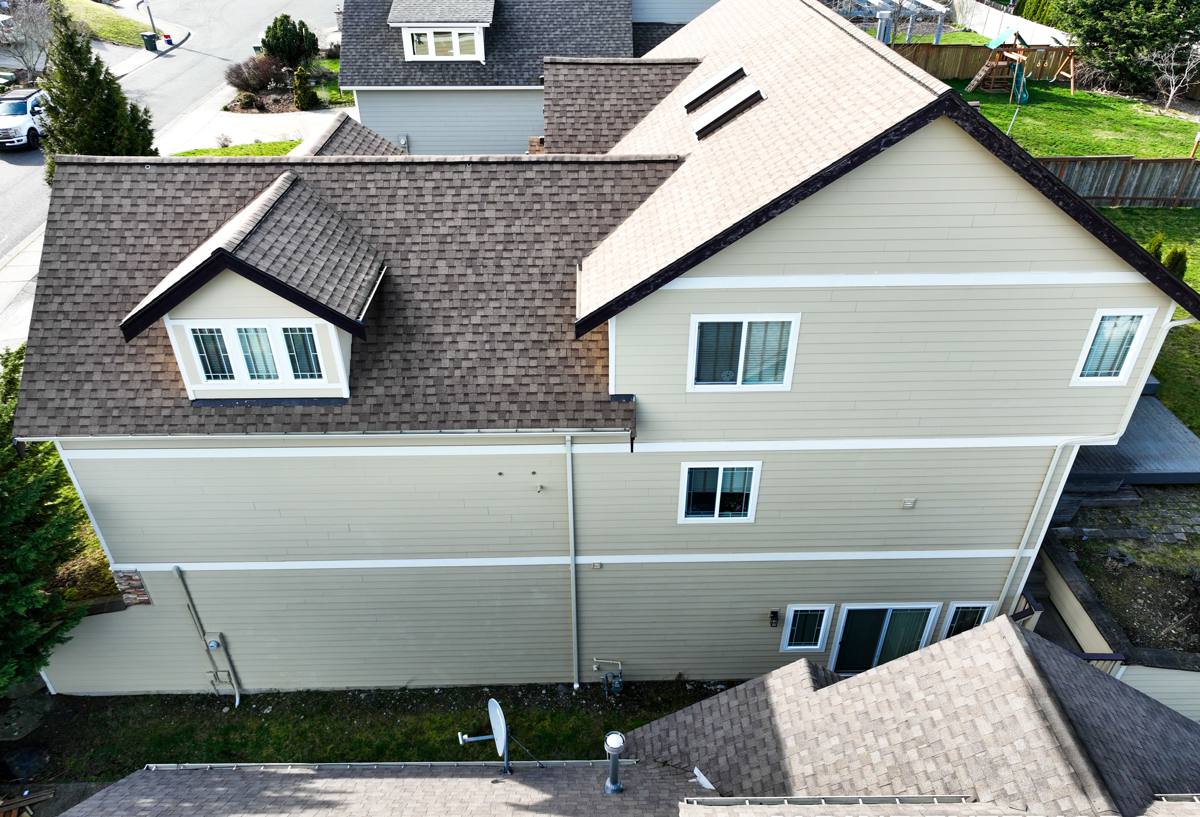
What Whatcom County Weather Does to a Deck Over Time
It helps to understand what's actually working against a deck here before talking about the fix.
Salt Air and Driving Rain
Homes closer to the water deal with salt-laden air that accelerates corrosion on fasteners, brackets, and railing hardware. Combine that with wind-driven rain that gets pushed sideways under railings and into ledger connections, and you have two forces working together to find every weak point in a deck's construction — especially anywhere water can sit against wood or metal instead of draining away.
A Long Moss Season
Whatcom County's moss season isn't a few weeks — it's most of the year. Any deck surface that stays shaded and damp will start growing moss and algae, and once that biofilm takes hold it makes the surface slick and starts staining boards, whether they're wood or composite. The difference is how each material responds: wood absorbs moisture and stays wet longer, feeding the growth and eventually softening the fibers underneath. Composite doesn't absorb water the same way, but it still needs airflow and drainage underneath it, or moss and mildew will build up on the surface and in the gaps between boards regardless of what the boards are made of.
Freeze-Thaw Cycling
South Hill doesn't get the deep freezes some regions do, but it gets enough freeze-thaw swings each winter to work water into any gap it can find — around fasteners, at board ends, at the ledger connection — and expand it. Over several seasons that's what turns a small installation shortcut into a real structural or cosmetic problem.
Why Composite Decking Makes Sense in This Climate
Composite isn't the right material for every homeowner or every budget, but for the conditions around South Hill it solves several of the problems wood struggles with. It doesn't absorb water into the board itself, so it isn't prone to the rot, splintering, and cupping that wood decking develops here after a few wet winters. It doesn't need annual staining or sealing, which matters in a climate where a dry, workable weekend for that kind of maintenance can be hard to find. And modern capped composite boards resist the surface staining that moss, tannins, and mildew leave behind far better than bare wood does.
It isn't maintenance-free, and we tell every homeowner that upfront — it still needs to be kept clean and the structure underneath still needs to drain properly, or you can grow moss on composite just as easily as on wood. What composite buys you here is a material that tolerates this climate's moisture instead of fighting it.
| Factor | Wood Decking | Capped Composite |
|---|---|---|
| Moisture absorption | Absorbs water, prone to cupping/warping | Doesn't absorb water into the board |
| Moss/algae staining | Stains into the grain, hard to fully clean | Sits on the cap layer, cleans off more easily |
| Annual maintenance | Staining/sealing needed, ideally yearly | Periodic washing, no staining or sealing |
| Splintering/surface wear | Common as boards age and dry out | Not an issue with capped products |
| Upfront cost | Lower material cost | Higher material cost, lower lifetime upkeep |
| Fastener corrosion risk | Higher near salt air without upgraded hardware | Same risk — hardware choice matters either way |
What a Correct Composite Deck Installation Actually Involves
The boards get most of the attention, but in this climate the parts you don't see are what determine whether the deck holds up. We treat these as non-negotiable on every composite deck we build here.
Ledger Flashing Done Right
Where the deck attaches to the house is the single most common source of hidden water damage on any deck in Western Washington. Flashing has to be integrated with the house's water-resistive barrier or siding — not just caulked over the top — so that water is directed out and away from the band board instead of behind it. Since we're a siding company first, this is a detail we take seriously: a poorly flashed ledger doesn't just risk the deck, it can rot the wall structure behind your siding.
Joist Protection and Drainage
We wrap or tape the tops of the joists so fastener penetrations don't become water entry points, and we make sure the framing has room to breathe underneath — proper ground clearance, no dead-air pockets where moisture collects. This is what actually prevents the hidden rot and mold growth that shows up years later as a soft spot or a bad smell, long after the composite boards on top still look fine.
Fastening System
Hidden fastener clip systems are the standard for a clean composite deck surface, but the clips and screws need to be rated for coastal/marine-grade exposure given the salt air in parts of Whatcom County. Cutting corners on hardware grade is one of the most common ways a composite deck ends up with rust streaks within a few years.
Board Spacing and Airflow
Composite boards need consistent gapping for drainage and for the material's natural expansion and contraction with temperature. Too tight, and water sits between boards and feeds moss growth; the wrong spacing can also cause buckling as the boards expand in warm weather.
Railings and Structural Connections
Railing posts need to be through-bolted to solid blocking, not just screwed to the rim joist — this matters for both code compliance and long-term stability, especially with wind loads coming off open areas near the water.
Our Process, Start to Finish
- On-site assessment — we look at existing framing (if replacing an old deck), ledger condition, drainage, and sun/shade exposure to flag moss-prone areas before we start.
- Material selection — we walk through composite board and color options based on your budget and how much sun the deck actually gets, since darker boards in shaded, damp spots hold moisture-related grime differently than lighter colors.
- Flashing and framing — ledger flashing, joist protection, and structural connections get done before a single deck board goes down.
- Installation — hidden fastener systems, correct spacing, and clean board layout.
- Final walkthrough — we go over basic care and answer questions before we consider the job done.
Keeping Moss and Algae Off a Composite Deck
Composite resists a lot, but it isn't self-cleaning. A little seasonal upkeep — especially heading into and out of the wet months — keeps a deck looking good and keeps the surface from getting slick.
- Sweep off leaves, needles, and debris regularly, especially from shaded corners where moisture sits longest
- Wash the deck at least once or twice a year with a soft-bristle brush and a composite-safe cleaner — avoid pressure washers on high settings, which can damage the cap layer
- Check that gaps between boards stay clear of trapped debris so water keeps draining through
- Keep gutters and downspouts near the deck clear so runoff isn't dumping extra water onto or under the deck
- Trim back overhanging branches or shrubs that keep sections of the deck in constant shade
- Inspect railings and ledger flashing yearly for any signs of loosening or water staining
Cost Factors for a South Hill Composite Deck
Every deck is different, but these are the main variables that move the price up or down. We'll give you exact numbers for your project, but this is generally what drives the range.
| Factor | Effect on Cost |
|---|---|
| Deck size and shape | Larger and multi-level decks cost more; simple rectangles are more efficient |
| Board tier | Entry-level capped composite vs. premium composite lines varies the material cost significantly |
| Existing structure condition | Reusing sound framing costs less than a full tear-out and rebuild |
| Height and railing requirements | Elevated decks need more substantial railing and structural work |
| Site access | Difficult access for equipment and material delivery can add labor time |
| Ledger/flashing condition | Existing water damage at the house connection adds repair scope |
Why Hire a Crew That Already Works South Hill
A deck built by someone unfamiliar with this specific climate can look perfect the day it's finished and still have problems within a few years — moss creeping in where drainage was overlooked, rust bleeding through around fasteners, or rot starting at a ledger connection that wasn't flashed for the amount of wind-driven rain this area actually gets. We work on homes throughout Sudden Valley and South Hill regularly, so we're not guessing at how the local weather behaves — we're building for the conditions we see on jobs here every season. As a siding contractor first, we also pay close attention to how a new deck interacts with your home's existing siding and water management, which is easy to overlook if decking is all a crew does.
If you're planning a new composite deck or replacing an aging wood one, we're happy to take a look and talk through what your specific site needs — sun exposure, drainage, existing structure — before recommending anything. Reach out for a free, no-pressure estimate using the form below.