 Sudden Valley Siding
 Building Decks That Actually Hold Up in Columbia's Marine Climate
A deck in the Columbia area has to earn its keep. Between the salt-laden air coming off the water, the driving rain that blows in sideways during fall and winter storms, and the long stretch of the year when moss and algae have every reason to take hold, a deck here is doing a lot more work than a deck built inland or in a dry climate. We build and repair decks for homes in this area, and almost every callback we get on someone else's work traces back to the same handful of mistakes: the wrong fastener, a missed flashing detail, or decking chosen for looks instead of how it behaves when it's wet for six months straight.
This page is about doing it right the first time — the material choices, structural details, and maintenance habits that make the difference between a deck that looks good for two seasons and one that holds up for twenty years in Whatcom County weather.
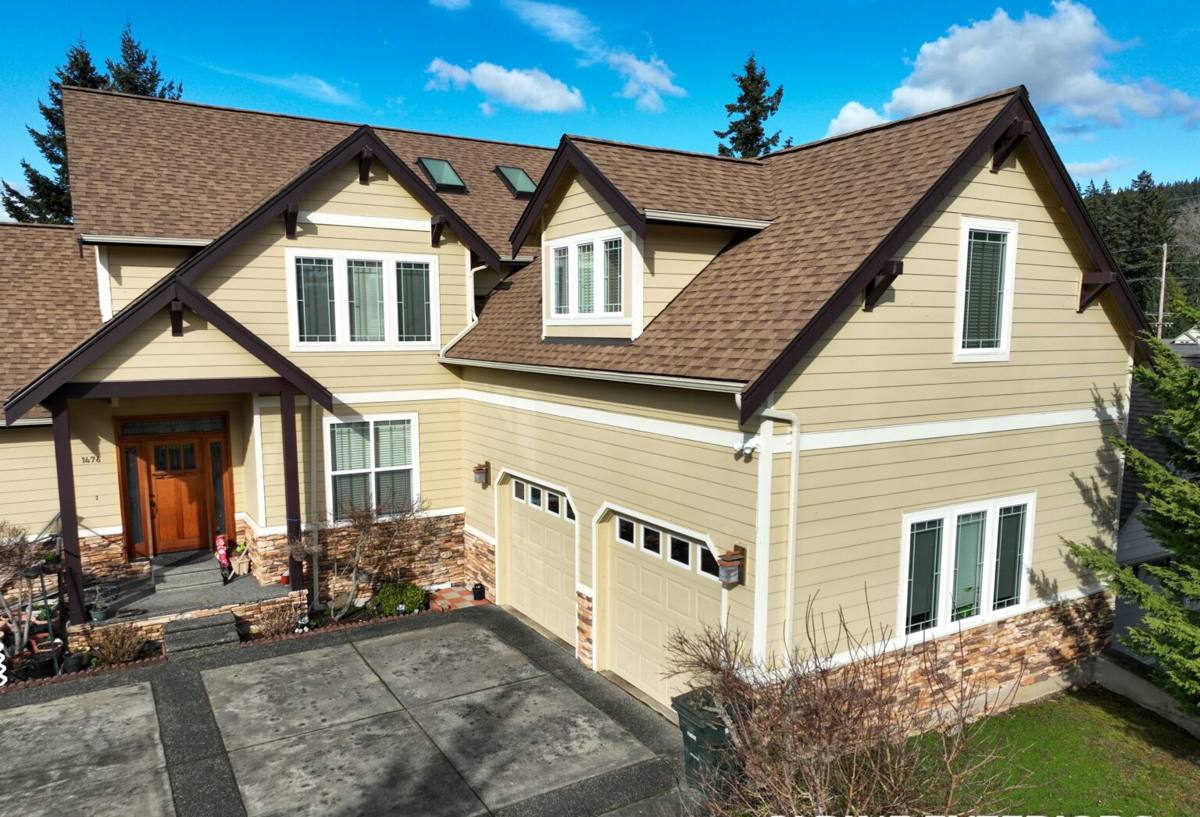
What Salt Air, Driving Rain, and Moss Season Mean for Your Deck
Salt Air and Fastener Corrosion
Homes closer to open water deal with airborne salt that accelerates corrosion on anything metal — screws, joist hangers, railing brackets, even the heads of nails if the wrong grade was used. A deck that looks fine on the surface can have hardware quietly rusting underneath, which is exactly the kind of failure you don't see until a railing post wiggles or a board pops loose. This is a materials decision, not an afterthought, and it needs to be made before the first piece of lumber goes up.
Driving Rain and Water Management
Rain that comes in at an angle, rather than straight down, gets pushed into places a lot of deck designs never account for — behind ledger boards, under railing base plates, into end-grain cuts on decking. Over time that's how rot starts, usually from the inside out, so it's often invisible until a board is already soft. Good water management on a deck isn't one product, it's a sequence of overlapping details done in the right order.
Moss, Algae, and Surface Traction
The long wet season here means moss and algae growth on any horizontal wood or composite surface that doesn't get much sun or airflow. Beyond the cosmetic issue, a mossy deck surface gets slick and genuinely dangerous underfoot, especially on stairs. Deck orientation, gap spacing between boards, and surface texture all affect how much of a moss problem you'll actually have to deal with year to year.
Decking Material Options for Columbia-Area Homes
There's no single "best" decking material — there's a best material for your specific site, sun exposure, budget, and how much upkeep you're willing to do. Here's how the common options actually compare once you factor in this climate:
| Material | Moisture Behavior | Moss/Algae Resistance | Maintenance | Relative Cost |
|---|---|---|---|---|
| Pressure-treated wood | Absorbs and releases moisture; needs sealed cuts and good drainage | Low without regular cleaning/sealing | Annual cleaning, periodic sealing | Lower |
| Cedar | Naturally moisture-resistant but still moves seasonally | Moderate; still needs cleaning in shaded areas | Periodic oiling/sealing to hold color and resist checking | Mid |
| Composite decking | Doesn't absorb water like wood; won't rot | Moderate to good depending on capping and surface texture | Occasional washing, no sealing | Mid to higher |
| PVC/capped composite | Fully moisture-resistant board | Good; smooth cap sheds algae more easily | Low; occasional washing | Higher |
Composite and PVC products have gotten a lot better over the years, but installation sensitivity matters more with these materials, not less — gapping, fastening pattern, and substructure ventilation all have to match the manufacturer's spec exactly to keep the warranty valid and to avoid the buckling or discoloration that shows up when those details are skipped. We'll walk you through the real trade-offs for your yard's sun and shade pattern rather than pushing one product across every job.
The Structural Details That Actually Matter
The decking surface is the part everyone sees, but the framing underneath is what determines whether the deck is still solid in fifteen years. For this climate specifically, we pay close attention to:
- Ledger board flashing — where the deck attaches to the house is the single most common source of hidden rot; proper flashing and a water-resistant barrier behind it are non-negotiable.
- Footings sized and set for local soil and frost conditions — undersized or shallow footings are a common shortcut that shows up years later as a spongy, uneven deck.
- Joist protection — capping joists with a protective tape before decking goes down keeps rain from soaking into the top edge of the framing, which is where a lot of structural rot starts.
- Corrosion-resistant fasteners and hardware — hot-dip galvanized or stainless hardware throughout, matched to the decking manufacturer's requirements, given the salt air in this area.
- Proper board spacing and airflow underneath — enough gap between boards and clearance below the frame lets things dry out between rains instead of staying damp.
Our Deck-Building Process
1. On-Site Consultation and Design
We start by walking the site with you — sun exposure, drainage patterns, how the deck will actually be used, and what's realistic for the lot. This is where we talk honestly about material trade-offs for your specific spot rather than a one-size answer.
2. Permitting and Planning
Deck projects typically require permitting depending on size, height, and attachment to the house. We handle that process and design to code rather than treating it as an obstacle to work around.
3. Footings and Framing
This is the part that matters most and shows the least once the project is done. We set footings appropriate to the site, frame with corrosion-resistant hardware, and flash every connection point before it's covered up.
4. Decking, Railing, and Stairs
Decking goes down per manufacturer spec — spacing, fastening pattern, and expansion allowances included. Railing systems are chosen and installed with the same corrosion-resistant hardware standard as the frame, since a railing failure is a safety issue, not just a cosmetic one.
5. Final Walkthrough
We walk the finished deck with you, cover basic care for whatever material you chose, and make sure every question is answered before we call it done.
Railings, Fasteners, and Hardware in a Marine Environment
It's worth calling out railings and hardware separately because they're where corner-cutting shows up fastest in a salty, wet climate. A railing post base or bracket rated for general use inland can start showing rust streaks within a couple of seasons out here, while a hot-dip galvanized or stainless-rated version handles the same exposure for the life of the deck. The cost difference on hardware is small relative to the whole project; the difference in how the deck ages is not small at all. We spec hardware for the environment the deck is actually going into, not the cheapest option that meets a minimum code requirement.
Maintenance Checklist for a Long-Lasting Deck
Whatever material you choose, a little seasonal attention goes a long way in this climate. A practical yearly routine:
- Sweep debris out from between boards before it traps moisture and feeds moss growth
- Wash the deck surface at least once a year to remove algae and organic buildup, more often in shaded areas
- Check and re-seal wood decking on the manufacturer's recommended schedule, not just when it looks faded
- Inspect railing posts and hardware for movement or corrosion, especially after winter storms
- Keep gutters and downspouts clear so roof runoff isn't dumping extra water onto or near the deck
- Trim back vegetation that's shading the deck and keeping it from drying out between rains
Why Hiring a Crew That Already Works in Columbia and Sudden Valley Matters
A lot of deck problems we get called to fix started with a design or material choice that would've been fine in a drier climate but wasn't right for this one. Crews who haven't worked this specific stretch of Whatcom County tend to build to a generic standard rather than accounting for the salt exposure, rain direction, and moss pressure that are just normal facts of life around Sudden Valley. Working locally also means we're not guessing at permitting requirements or showing up once and disappearing if a warranty question comes up later — we're already in this area doing this work.
Get a Straight Answer on What Your Deck Project Needs
Every yard and every home is a little different, and the right deck for your place depends on sun exposure, how it'll be used, and what level of upkeep makes sense for you. If you're planning a new deck or replacing one that's showing its age, we're happy to come take a look and give you a straightforward, no-pressure estimate — just fill out the form below to get started.