 Sudden Valley Siding
 Why Siding Replacement Looks Different Around Sudden Valley and Bellingham
Homes around Lake Whatcom and in the Bellingham area sit in a climate that's harder on exterior siding than most homeowners realize. You've got moisture coming from several directions at once: driving rain off the water, salt-tinged air moving in from the coast, and long stretches of gray, damp weather that keep siding wet for days at a time. Add tree cover — a defining feature of the Sudden Valley area — and you get shade, standing humidity, and a moss and algae season that can run most of the year. Siding here doesn't just need to look good. It needs to shed water fast, resist swelling and rot, and hold its finish without constant upkeep.
That combination is exactly why so many replacement jobs in this area turn up the same failure patterns: swollen seams on wood-based products, cupped or delaminating panels, paint that's chalking or peeling years ahead of schedule, and moss taking hold in shaded, north-facing sections. A correct siding replacement in Bellingham and Sudden Valley has to be planned around these conditions from the start — not treated as a generic install.
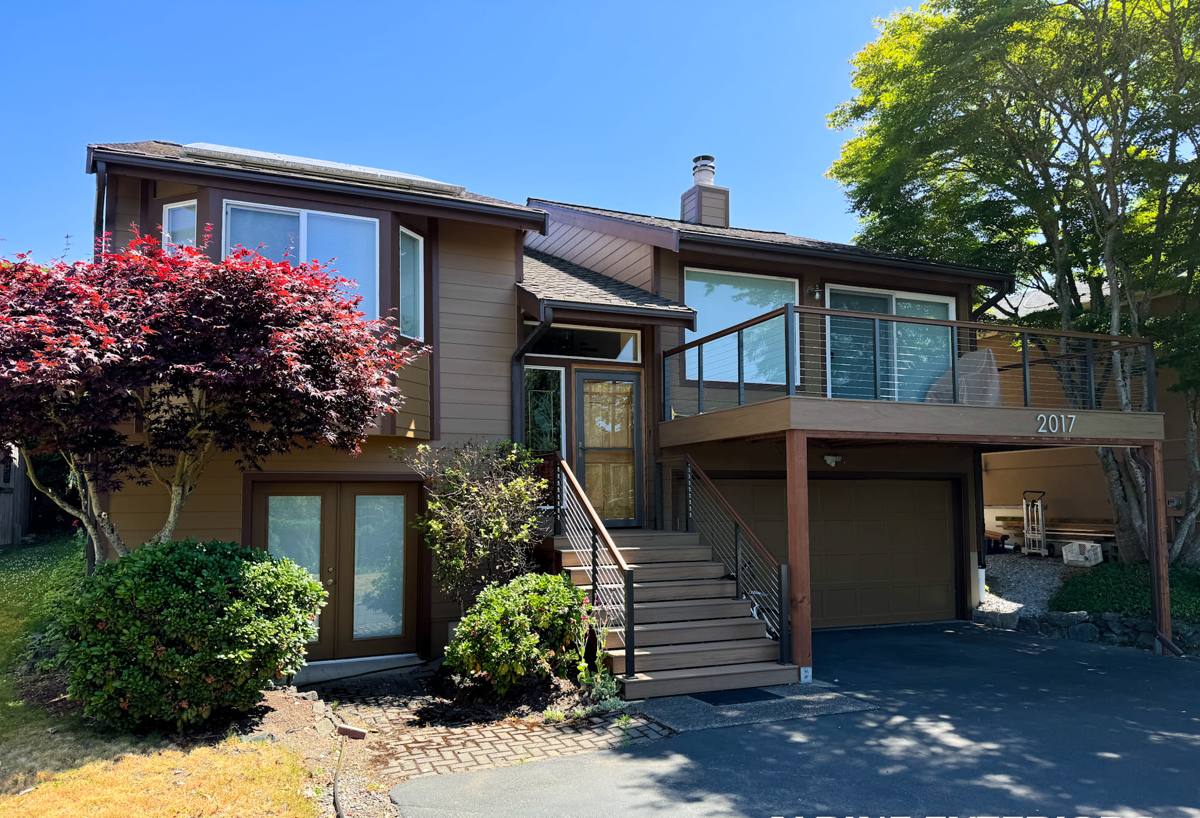
Signs Your Siding Has Reached the End of Its Useful Life
Not every siding problem means a full replacement, but in Whatcom County's climate, small issues tend to compound quickly once water gets behind the cladding. Here's what we look for during an inspection:
- Soft or spongy spots when you press on the siding, especially near the bottom courses and around windows
- Visible cupping, warping, or separated seams on wood-based or composite panels
- Persistent moss or algae growth that returns within weeks of cleaning
- Paint that's peeling, bubbling, or chalking well before its expected repaint interval
- Soft trim boards or discoloration around window and door casings
- Rising energy bills that suggest the wall assembly behind the siding is no longer doing its job
- Visible daylight, drafts, or pest entry points at siding seams
If you're seeing two or more of these, it's worth having someone look at the wall assembly itself, not just the surface — because in this climate, surface symptoms are often a few years behind what's actually happening underneath.
What a Correct Siding Replacement Actually Involves
Tear-Off and What's Underneath
Replacing siding isn't just swapping old panels for new ones. Once the old siding comes off, we inspect the sheathing, framing, and existing water-resistive barrier for rot, mold, or moisture damage — problems that are common on homes that have been dealing with trapped moisture for years. Any compromised sheathing or framing gets addressed before anything new goes up. Skipping this step is the single most common reason a "new" siding job fails early.
Water Management Comes First
In an area with this much driving rain and humidity, the water-resistive barrier and flashing details matter as much as the siding itself. That means a properly lapped weather-resistant barrier, correctly integrated flashing at every window, door, and roofline intersection, and a drainage plane that lets any moisture that does get behind the cladding find its way back out instead of sitting against the wall. This is where a lot of lower-cost installs cut corners, and it's where problems show up first — usually a few years down the road, after the warranty conversation has already happened.
Installation to Manufacturer Spec
Fiber cement siding is unforgiving of shortcuts. Fastener placement, panel gaps, caulking at butt joints, and clearance from grade, roofing, and decks all have to be done to spec — not just for appearance, but because getting them wrong is what causes moisture intrusion and premature failure. We install to James Hardie's published specifications on every job, which is also what keeps the manufacturer's warranty valid.
Why This Company Installs Only James Hardie Fiber Cement
We get asked fairly often why we don't offer vinyl, LP SmartSide, or other fiber cement brands. The honest answer is that we made a standard for ourselves based on what actually holds up in Whatcom County conditions, and Hardie is what we're willing to put our name behind.
Vinyl siding is inexpensive and low-maintenance in mild climates, but it's a petroleum-based product that expands and contracts with temperature swings, can crack in impact or cold, and isn't fire-rated the way fiber cement is. Engineered wood products like LP SmartSide use wood strand technology that performs well when installation and maintenance are perfect, but wood-based products are inherently more vulnerable to the kind of sustained moisture exposure this region delivers — and any breach in the factory coating opens the door to swelling. Other fiber cement brands exist and some are reasonable products, but we've standardized on Hardie because of its factory-applied ColorPlus finish, its HZ5 formulation engineered for climates like ours, and the depth of its installer network and warranty support in the Pacific Northwest.
James Hardie fiber cement is non-combustible, doesn't support the kind of moisture-driven swelling that plagues wood-based sidings, and holds its factory finish far longer than field-applied paint on wood or composite products. For a climate defined by rain, humidity, and moss, that combination is why we don't offer alternatives — we'd rather do one thing right than offer a menu of products we don't fully stand behind.
Comparing Siding Options for This Climate
| Factor | James Hardie Fiber Cement | Vinyl | Engineered Wood (LP SmartSide) |
|---|---|---|---|
| Moisture resistance | Strong — cement composition doesn't swell or rot | Good surface resistance, but seams can allow water behind panels | Depends heavily on intact coating and caulking; vulnerable if breached |
| Fire resistance | Non-combustible | Melts/deforms under heat | Combustible (wood-based core) |
| Finish longevity | Factory ColorPlus finish, long repaint intervals | Color molded in, but can fade/chalk over time | Field or factory-primed; repainting needed on a shorter cycle |
| Performance in moss/shade-prone areas | Holds up well; surface is inhospitable to organic growth compared to wood | Can trap moisture behind panels in shaded areas | More susceptible to organic growth if moisture gets in |
| Typical lifespan when installed to spec | Multiple decades | 15–25 years | 15–30 years, install-dependent |
This isn't a knock on every alternative product — it's simply why our crews only carry Hardie material onto a job site.
How Our Process Works
- Free on-site estimate. We walk the exterior, check for rot or moisture damage, and talk through your goals and budget.
- Product and color selection. We help you choose the right Hardie plank, panel, or shingle profile and ColorPlus finish for your home's style.
- Tear-off and structural inspection. Old siding comes off, sheathing and framing get inspected, and any repairs are scoped and discussed before we proceed.
- Water-resistive barrier and flashing installation. This is the step that protects everything underneath for the life of the siding.
- Hardie installation to manufacturer spec. Proper fastening, gapping, and sealing at every joint, window, and trim detail.
- Final walkthrough. We review the finished work with you and make sure everything meets our standard and yours.
What Drives the Cost of a Siding Replacement
Every home is different, but the same handful of factors move the price up or down on most Bellingham and Sudden Valley jobs:
| Cost Factor | Why It Matters |
|---|---|
| Home size and wall complexity | More square footage, corners, and dormers mean more material and labor |
| Sheathing or framing repair | Hidden rot found during tear-off adds material and time to fix properly |
| Siding profile and finish | Lap siding, shingle-style panels, and trim boards vary in material cost |
| Access and site conditions | Steep lots, tree cover, and limited staging space (common around Lake Whatcom) can affect labor time |
| Trim, fascia, and detail work | Full replacement of trim and water-management details adds scope but reduces future callbacks |
We give you honest numbers during the estimate, including what we find once we can see the wall assembly underneath — not just a rough exterior guess.
Why Local Experience in This Area Matters
A siding crew that regularly works in Sudden Valley and around Bellingham already understands the patterns this climate creates: which elevations take the worst of the driving rain, where moss tends to establish first, and how tree cover changes drying time after a storm. That local knowledge shapes real decisions on the job — flashing details around shaded window heads, drainage planning on north-facing walls, and material choices that hold up to salt-influenced air near the water. A crew unfamiliar with Whatcom County conditions can install siding correctly on paper and still miss the details that matter here.
Keeping Your New Siding Performing Through the Seasons
James Hardie siding is low-maintenance, but "low-maintenance" isn't "no-maintenance" in a climate like this. A few habits go a long way:
- Rinse siding annually, especially shaded or tree-covered sections prone to moss and algae
- Keep gutters clear so overflow doesn't run down the wall face
- Trim back vegetation and tree limbs that keep siding shaded and damp
- Check and refresh caulking at trim and penetrations every few years
- Address any impact damage or exposed edges promptly to keep the factory finish intact
Done consistently, this keeps a Hardie installation performing at its best for decades rather than years.
If your siding is showing wear, or you just want a straight answer on whether replacement makes sense for your home, we're happy to take a look. The estimate is free, there's no pressure, and you'll get a clear picture of what your home actually needs.