 Sudden Valley Siding
 Bellingham Roofs Work Harder Than the Brochure Suggests
An asphalt shingle roof in most of the country just has to shed rain and block sun. A roof in Bellingham and the Sudden Valley area has a longer job description. It has to handle salt-laden air blowing in off the water, months of driving rain that never really stops long enough for a roof to fully dry out, and a moss season that can run from fall through spring. None of that means asphalt shingles are the wrong choice here — they're still one of the most practical, cost-effective roofing materials available. It means the installation details that get skipped elsewhere can't get skipped here.
We install and replace asphalt shingle roofs for homes throughout Whatcom County, and Bellingham's mix of older neighborhoods and newer construction means we see roofs at every stage of wear. The pattern is consistent: roofs that were installed correctly for this climate hold up. Roofs that were installed to a generic standard start showing problems years before their shingles are actually worn out.
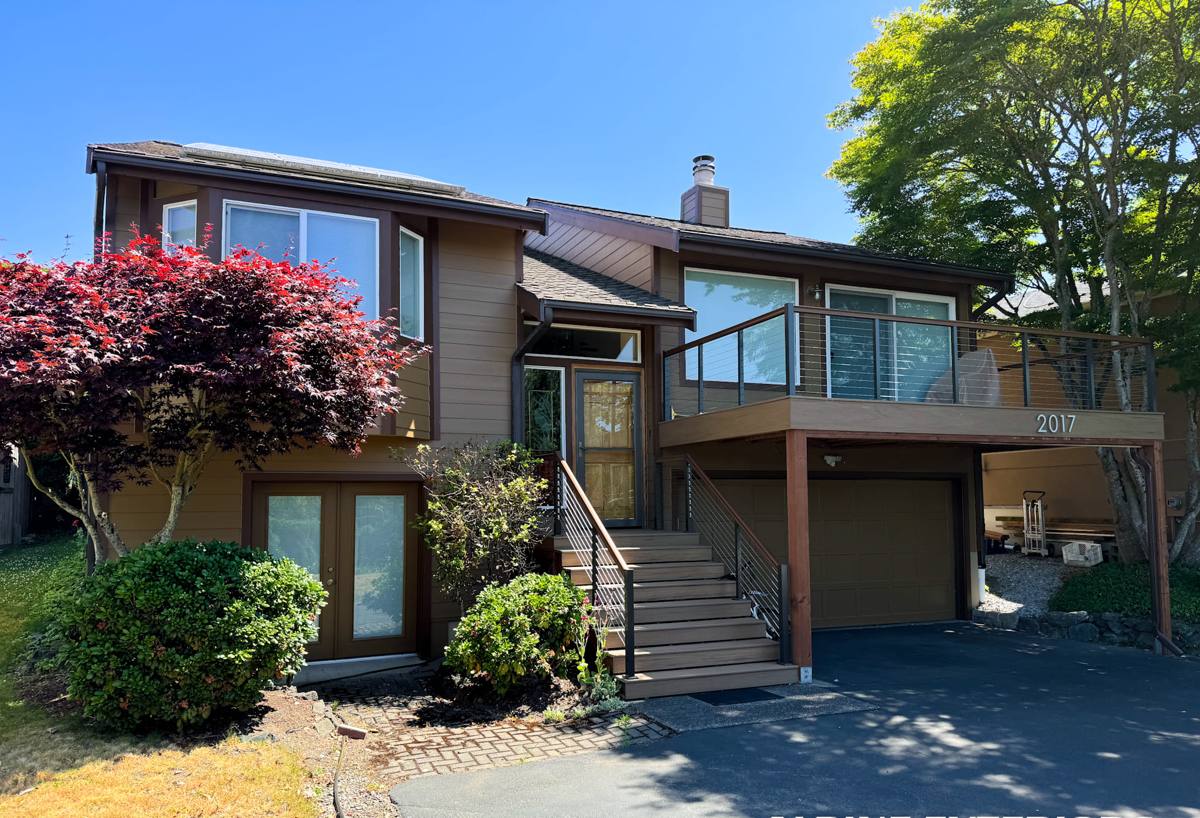
What "Correct" Actually Means in This Climate
Moisture Protection Starts Underneath the Shingles
The shingles themselves get the attention, but the underlayment and flashing underneath do most of the real work in a wet climate. We install a synthetic or self-adhered underlayment across the full roof deck, with self-adhered ice-and-water membrane at eaves, valleys, and around any roof penetration. In a region that gets sustained, wind-driven rain rather than short bursts, water can travel further under a shingle edge than people expect. Skipping or shortchanging this layer is one of the most common reasons a roof leaks years before the shingles wear out.
Ventilation Isn't Optional
A roof that can't breathe traps moisture in the attic, which shortens the life of the decking and the shingles from underneath — invisibly, until it isn't. We check intake ventilation (soffit vents) and exhaust ventilation (ridge or roof vents) as part of every shingle roofing job, not as an upsell. In a climate this wet, balanced ventilation is part of what makes a shingle roof last its full expected lifespan instead of failing early from the inside.
Flashing Details Around Valleys, Chimneys, and Skylights
Most shingle roof leaks don't come from the flat field of shingles — they come from where the roof changes plane or something penetrates it. Valleys, chimneys, skylights, and vent pipes all need properly formed and sequenced flashing, not just a bead of sealant. Sealant alone breaks down faster in a climate with this much sustained rain, so we treat it as a backup, not the primary defense.
Moss and Algae: The Slow Damage Homeowners Underestimate
Moss on a roof isn't just a cosmetic issue. As it spreads, it holds moisture against the shingle surface, lifts shingle edges as it grows, and can work its way under tabs over time. In a region with a moss season this long, a shingle roof with no moss strategy will need moss removal and possibly early repairs well before its rated lifespan is up.
We address this at installation, not just after the fact:
- Zinc or copper control strips installed near the ridge, which release trace metal ions that discourage moss and algae growth on the shingle field below as rain washes over them
- Algae-resistant shingle products where appropriate, which include granules formulated to resist the algae staining common in wet, shaded climates
- Guidance on tree trim-back and gutter clearing, since shade and trapped debris are what let moss get a foothold in the first place
- Straightforward advice on safe moss removal timing and frequency for your specific roof, rather than a one-size-fits-all schedule
Choosing the Right Shingle for a Wet, Coastal-Influenced Climate
Not every asphalt shingle product performs the same way once it's dealing with sustained rain and salt-influenced air. Here's how the common options generally compare for this climate:
| Shingle Type | Wind Resistance | Algae/Moss Resistance | Typical Lifespan | Best Fit |
|---|---|---|---|---|
| 3-Tab Shingles | Moderate | Lower unless algae-resistant granules specified | 15–20 years | Budget-conscious projects, secondary structures |
| Architectural (Laminate) Shingles | Good to high, depending on product | Better; commonly available with algae-resistant granules | 25–30 years | Most primary residences in this climate |
| Impact-Resistant / Premium Laminate | High | Best available in shingle-grade options | 30+ years | Homes with more tree exposure or higher wind exposure |
For most homes in Bellingham and the Sudden Valley area, we steer people toward architectural shingles with algae-resistant granules as the practical middle ground — the added upfront cost over 3-tab is modest relative to the extra years of service and the reduced moss-driven maintenance.
Our Process, Start to Finish
- On-site inspection — We look at the existing roof, decking condition, ventilation, and any signs of past moisture problems before quoting anything.
- Honest scope and written estimate — You get a clear breakdown of what's included: tear-off, underlayment, flashing, ventilation work, and shingle selection.
- Tear-off and deck inspection — Old roofing comes off down to the deck so we can actually see and repair any soft or water-damaged sheathing, rather than roofing over a problem.
- Underlayment, ice-and-water membrane, and flashing installed — This is the layer that determines whether the roof stays dry in driving rain, done before a single shingle goes down.
- Shingle installation to manufacturer spec — Correct nailing pattern, exposure, and sealing for the specific product and local wind exposure.
- Ventilation check and correction — Intake and exhaust balanced so the attic and roof deck can dry properly between wet stretches.
- Cleanup and final walkthrough — Site cleared, magnetic sweep for stray nails, and a walkthrough so you know what was done and why.
What Drives the Cost of a Shingle Roof Replacement
We don't post fake "starting at" numbers because roof pricing genuinely depends on the specifics of the house. What we can tell you is what actually moves the price up or down:
| Factor | Why It Matters |
|---|---|
| Roof size and number of planes | More square footage and more valleys/hips mean more material and labor time |
| Roof pitch | Steeper roofs are slower and require more safety setup, which affects labor cost |
| Number of existing layers | Tear-off of multiple old layers takes longer than a single-layer removal |
| Decking condition | Rotted or soft sheathing found during tear-off needs replacement before shingles go down |
| Ventilation upgrades | Adding or correcting intake/exhaust ventilation adds material and labor but pays off in roof lifespan |
| Shingle tier selected | 3-tab, standard architectural, and premium impact-resistant products carry different material costs |
| Access and site conditions | Steep driveways, limited staging area, or difficult roof access can add setup time |
Signs Your Bellingham Roof May Need Attention
Because moisture and moss damage build slowly here, it's worth knowing what to watch for between inspections:
- Granules collecting in gutters or at downspout outlets
- Visible moss or dark algae streaking on shingle surfaces
- Shingle edges curling, cupping, or lifting
- Water stains or discoloration on interior ceilings, especially after a stretch of heavy rain
- Daylight visible through the roof deck from inside the attic
- Missing or torn shingles after a windstorm
- A roof at or past 20–25 years old that has never been fully inspected
Any one of these on its own isn't necessarily an emergency, but it's worth a professional look before the next wet season adds to the problem.
Why Local Experience Matters for This Specific Job
Asphalt shingle installation isn't fundamentally different from one region to another, but the judgment calls around it are. Knowing how much ice-and-water membrane a given roof actually needs, how aggressive moss control should be for a shaded Sudden Valley lot versus a more open Bellingham property, and how to sequence a tear-off around a stretch of unreliable weather all come from having done this work here repeatedly — not from a generic installation manual.
A crew that already works in this area also understands the practical side: permitting expectations for Whatcom County jurisdictions, realistic weather windows for tear-off scheduling, and how to protect landscaping and siding during the work in neighborhoods with mature trees and tight lots. That local familiarity shows up in fewer surprises during the project and a roof that's actually built for the conditions it has to survive.
After Installation: Keeping a Shingle Roof Performing
A correctly installed shingle roof still benefits from basic upkeep in this climate. Keep gutters and downspouts clear so water isn't backing up under eave shingles. Have moss addressed while it's still light rather than letting it establish. Trim back branches that keep a section of roof shaded and damp longer than the rest. And have the roof looked at after any major windstorm, since even a well-installed roof can lose a shingle or two in a bad blow. None of this is intensive maintenance — it's the difference between a roof that reaches its full rated lifespan and one that starts needing repairs early.
If you're weighing a shingle roof replacement or just want an honest read on where your current roof stands, we're happy to take a look. Use the form below to request a free, no-pressure estimate for your Bellingham or Sudden Valley home.