 Sudden Valley Siding
 Barkley's Climate Puts Real Stress on Exterior Siding
Homes in Barkley sit in one of the wetter, greener corners of Whatcom County, shaded by mature conifers near Lake Whatcom and close enough to Bellingham Bay and the Sound to pick up salt-laden air on a west wind. That's a tougher combination for exterior cladding than most siding products are built around. Constant tree cover keeps walls damp longer after a storm, salt air accelerates corrosion on fasteners and trim, and a moss season that can stretch eight months or more adds a layer of organic growth that holds moisture right up against the wall.
None of that is a defect in a home — it's just what this part of Whatcom County does to a house. The siding has to be chosen and installed with that reality in mind, not treated as an afterthought once the framing is dried in. A product that performs fine in a dry inland climate can struggle here, and an installation detail that's forgivable in Arizona can cause real problems in Barkley within a few winters.
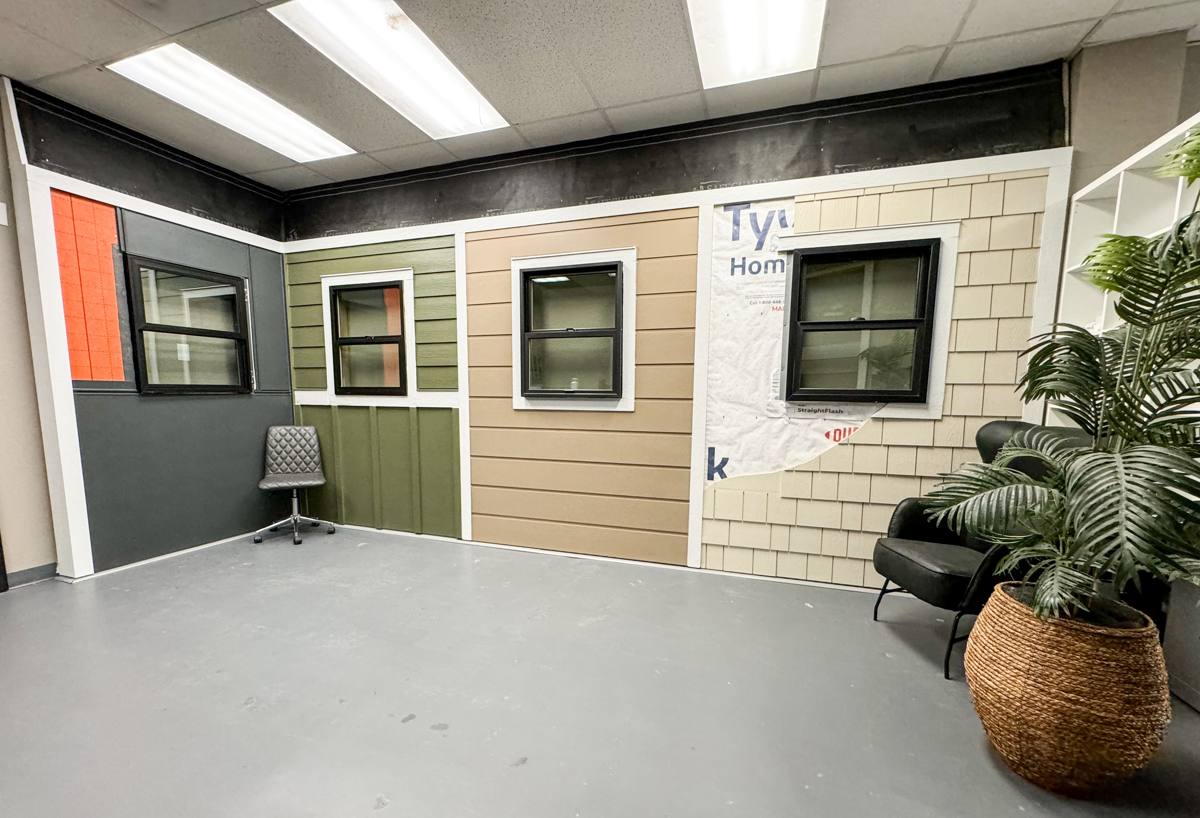
Why We Only Install James Hardie in Barkley
We install James Hardie fiber cement siding exclusively. We don't install vinyl, LP SmartSide, Cemplank, Allura, primed spruce, or cedar, and that's a deliberate standard, not a lack of options. Fiber cement doesn't absorb water the way wood-based products can, it won't warp or delaminate under sustained dampness, and it's non-combustible — which matters in Whatcom County during dry summer stretches even though our winters are wet. James Hardie's HZ5 product line is engineered specifically for climates like ours, with formulations meant to resist moisture and freeze-thaw cycling rather than a one-size-fits-all national spec.
The factory-applied ColorPlus finish is a big part of why we've standardized on Hardie for homes exposed to salt air and long damp seasons. It's baked on under controlled conditions rather than rolled or sprayed on-site, so the color and the moisture-resistant topcoat go on evenly, adhere better, and hold up longer against UV and salt exposure than field-applied paint typically does on other substrates.
What We Don't Install, and Why
Vinyl siding is inexpensive and easy to install, but it expands and contracts significantly with temperature swings, can crack in cold snaps, and doesn't hold paint if a homeowner ever wants to change the color. Wood-based engineered siding like LP SmartSide performs reasonably in drier regions, but in a climate with Barkley's sustained moisture and moss pressure, any breach in the factory coating creates an entry point for water into a wood-strand core — and that's a maintenance burden we're not willing to put on a homeowner's wall long-term. Cedar is a beautiful, honest material, but it demands ongoing staining or sealing to hold up against this much rain and shade, and most homeowners underestimate that upkeep once the newness wears off. We'd rather put one product on every home we work on and stand fully behind it than juggle trade-offs across five different systems.
What a Correct Hardie Installation Involves
The siding itself is only part of the system. Most of the failures we get called out to inspect on older homes in this area trace back to installation details, not the cladding material.
Weather Barrier and Flashing Come First
Before a single piece of siding goes up, the wall needs a continuous weather-resistive barrier and properly lapped flashing at every window, door, and horizontal transition. In a climate with as much wind-driven rain as Barkley sees, water will find any gap in that barrier eventually. Flashing has to be installed so water sheds outward at every layer, not just tucked in and caulked over.
Fastening to Manufacturer Spec
James Hardie publishes exact fastener spacing, penetration depth, and placement requirements, and they vary by product line and exposure category. Over-driven or under-driven fasteners, or fasteners placed too close to a panel edge, are one of the most common causes of premature cracking and water intrusion we see on improperly installed fiber cement. We fasten to spec every time, not to whatever's fastest.
Field Cuts and Exposed Edges Get Sealed
Any cut edge made on-site exposes raw fiber cement that isn't factory-coated. Those cuts need to be sealed with a manufacturer-approved product before installation, especially at butt joints and around penetrations. Skipping this step is invisible on install day and shows up as staining or edge deterioration two or three winters later — which is exactly the kind of shortcut that doesn't survive a Barkley winter.
Clearance and Drainage Behind the Cladding
Proper installation leaves clearance at the bottom of the wall, at grade, and at roof-to-wall intersections so water has somewhere to go and siding isn't sitting in standing moisture. With this much shade and rainfall, that drainage gap is what keeps the backside of the siding drying out between storms instead of staying perpetually damp.
Choosing the Right Hardie Product for Barkley's Exposure
James Hardie makes several siding profiles, and the right one for a given home in Barkley depends on sun exposure, tree cover, and how much of the wall faces prevailing weather.
| Product | Best Suited For | Consideration in This Climate |
|---|---|---|
| HardiePlank lap siding | Most homes, all exposures | Most common choice locally; handles driving rain well with correct lap and flashing detail |
| HardieShingle | Accent areas, gables, dormers | Adds texture but has more butt joints to seal correctly under heavy tree cover |
| HardiePanel | Modern facades, accent walls | Vertical seams need careful batten and flashing work to shed moss-holding moisture |
| HardieTrim | Corners, fascia, window trim | Pairs with any of the above; keeps end grain and cut edges protected |
On heavily shaded Barkley lots where moss pressure is highest, we also pay close attention to color selection. Darker ColorPlus finishes hide moss staining less forgivingly than lighter, mid-tone colors, so we talk through that trade-off with homeowners rather than letting it be a surprise a year in.
Our Process, Start to Finish
- On-site inspection of existing siding, sheathing, and any moisture or moss damage already present
- Measurement and product selection, including profile, color, and trim details specific to the home's exposure
- Tear-off of existing siding and inspection of the sheathing underneath for rot or prior water damage
- Repair of any damaged sheathing or framing found once the wall is opened up
- Installation of a continuous weather-resistive barrier and flashing at every penetration and transition
- Installation of James Hardie siding, trim, and soffit components to manufacturer fastening and clearance specs
- Sealing of all field cuts and final caulking at manufacturer-approved joints only
- Site cleanup and a final walkthrough, including warranty registration paperwork
Cost Factors on a Barkley Siding Project
Every home is different, so we don't quote off a flat rate — but these are the factors that consistently move a project up or down in scope and cost.
| Factor | Why It Matters | Typical Cost Impact |
|---|---|---|
| Sheathing condition underneath old siding | Hidden rot or water damage isn't visible until tear-off | Medium to High |
| Home height and roofline complexity | Multi-story walls and steep gables take more time and staging | Medium |
| Trim and detail level | Corner boards, window casings, and shingle accents add labor | Low to Medium |
| Access and site conditions | Tree-lined or tight lots common in Barkley can slow staging | Low to Medium |
| Product line and color | HZ5 formulations and premium ColorPlus colors vary in cost | Low |
The one factor homeowners underestimate most often is what's found once old siding comes off. On a home with a history of moisture intrusion, we'd rather find and fix that now than cover it back up with new siding and let it keep working underneath.
Living With Hardie Siding in a Moss-Prone, Salt-Air Environment
Correctly installed Hardie siding is low-maintenance, but "low" isn't "none." A few habits go a long way toward getting the full lifespan out of the product in this climate:
- Rinse siding with a garden hose once or twice a year to clear pollen, salt residue, and early moss spores before they take hold
- Keep gutters clear so overflow doesn't run down the wall face and stay concentrated in one area
- Trim back tree limbs and shrubs that keep a section of wall in constant shade and slow drying
- Inspect caulking at trim joints and penetrations annually and have it renewed before it fails, not after
- Address moss on roofs promptly, since roof runoff carries spores directly onto the siding below
- Avoid pressure washing directly at the ColorPlus finish at close range or high pressure, which can strip the factory topcoat over time
Signs Your Barkley Home May Need Siding Attention
A few warning signs are worth a call before they turn into a bigger repair:
- Soft spots or visible swelling on existing wood-based siding, especially near the ground or under downspouts
- Persistent moss or algae growth that returns within weeks of cleaning
- Peeling or bubbling paint, which often points to moisture trapped behind the surface rather than just an old paint job
- Visible gaps or separation at trim and corner boards
- Musty smell or staining on interior walls that back up to exterior siding
Why a Crew That Already Works in Barkley Matters
A siding crew that already works this part of Whatcom County knows the local weather windows for installation, understands how Sudden Valley's tree cover and lake proximity affect drying time between coats and steps, and has already worked through the permitting and inspection process locally. That familiarity shows up in small decisions — where to add extra flashing, which wall faces need the most attention to drainage, how to sequence the job around a wet forecast — that a crew unfamiliar with the area might not think to make. It also means we're not guessing at what "normal" looks like for a Barkley home; we've already seen what holds up here and what doesn't.
If you're weighing new siding or replacing something that's struggling with moisture or moss, we're happy to take a look and talk through what your home actually needs. The estimate is free, there's no pressure, and you'll get a straight answer about what correct installation looks like for your property.