 Sudden Valley Siding
 Storm Damage Roof Repair Built for Yew Street
Yew Street sits inside the Sudden Valley community, which means most homes here share the same roofing challenges: tree cover close to the house, a mix of older cedar-shake originals and newer composition roofs, and weather that moves through fast off the lake and the Cascades foothills. When a windstorm or heavy rain event comes through, the damage isn't always obvious from the ground. A few lifted shingle tabs, a cracked pipe boot, or a seam of flashing that pulled loose can sit quietly for weeks before they show up as a stain on a ceiling. We work storm damage repairs in this neighborhood regularly, and the pattern we see is consistent enough that we can tell you what to expect before we ever get on your roof.
This page is specifically about storm damage repair for Yew Street roofs — not a general roofing overview. If you had wind, rain, or falling debris damage recently, or you're trying to figure out whether last winter's storms left something behind, this is the service and the process that applies to your situation.
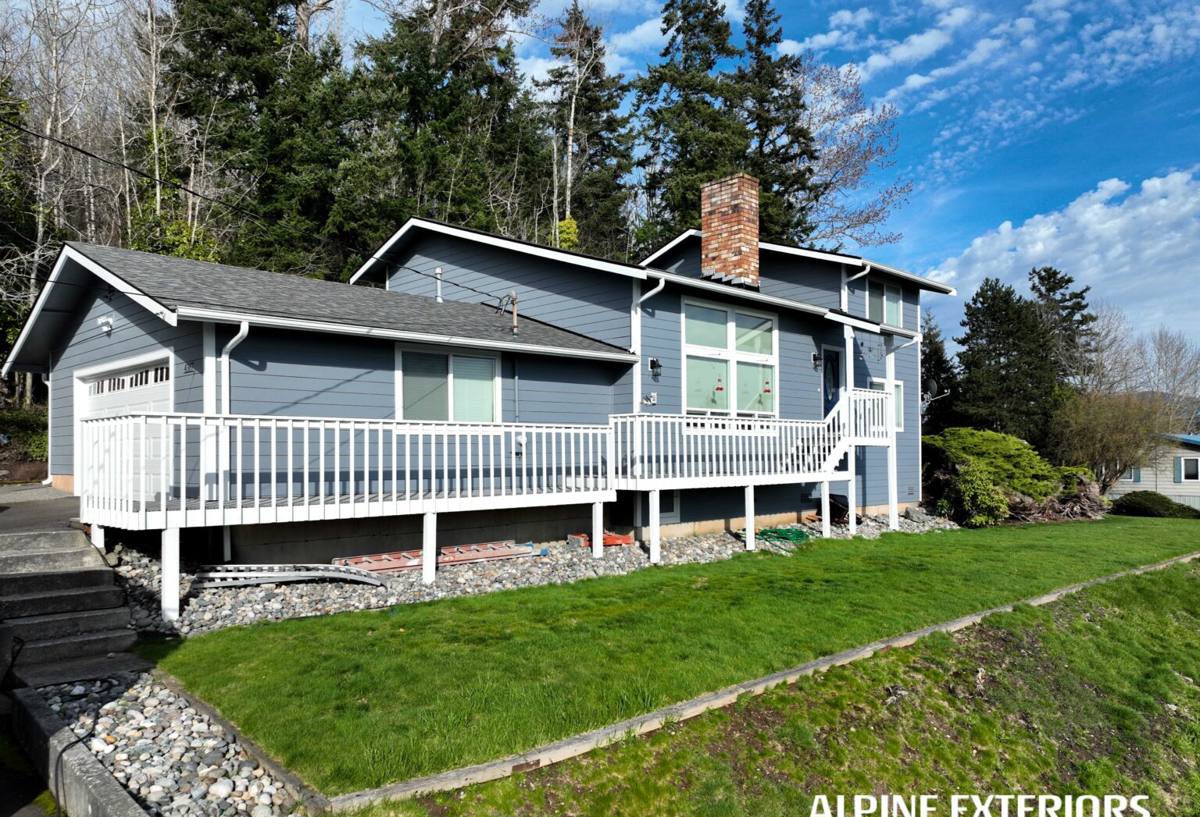
Why Whatcom County Weather Is Hard on This Particular Roof Type
Sudden Valley's location means roofs here take on a specific combination of stress that doesn't match what you'd see on a roof twenty miles inland. Three factors matter most for storm damage specifically:
Salt Air and Metal Fatigue
Proximity to Bellingham Bay and the Puget Sound air corridor means a slow, steady dose of salt-laden moisture settles on exposed metal — flashing, drip edge, nail heads, and gutter hardware. Salt air accelerates corrosion on fasteners and thin-gauge metal long before the roofing material itself is due for replacement. A storm that would barely stress a healthy fastener can pull a corroded one right out.
Driving Rain, Not Just Rain Volume
Whatcom County doesn't just get a lot of rain — storm systems here frequently bring wind-driven rain that hits roof planes at an angle instead of falling straight down. That matters because it pushes water sideways under shingle tabs, around chimney and skylight flashing, and into any gap that a calm-weather rain would never find. Storm damage repair in this climate has to account for wind-driven intrusion points, not just obvious missing material.
A Long Moss Season
The combination of shade, moisture, and mild temperatures gives moss a long growing window on Sudden Valley roofs, especially on north-facing slopes and anywhere tree cover blocks afternoon sun. Moss holds moisture against the roofing surface, and a wind event can tear loose mats of moss along with the shingle granules and, sometimes, the shingle tabs underneath. What looks like simple storm damage is often storm damage on top of moss-weakened material — which changes how the repair needs to be done.
What Actually Counts as Storm Damage on This Roof
Homeowners often assume storm damage means a missing shingle or a visible hole. In practice, most of what we repair after a storm is less dramatic and easier to miss:
- Lifted or creased shingle tabs where the seal strip has broken but the shingle hasn't blown off yet
- Flashing pulled away from chimneys, skylights, or wall-to-roof intersections
- Cracked or torn pipe boots (the rubber collar around plumbing vents), which are one of the most common leak sources after wind
- Granule loss on composition shingles from wind-thrown debris or moss removal, which shortens the shingle's remaining service life even without an active leak
- Gutter and downspout separation, which redirects water back toward the fascia and roof edge instead of away from the house
- Bruised or punctured roofing from branch impact, common where trees overhang the roofline
How We Approach a Storm Repair Correctly
Step 1: Full-Slope Inspection, Not a Spot Check
We walk the entire roof, not just the area you flagged. Wind damage rarely announces itself in one tidy spot — a gust that lifted shingles on the south slope may have also stressed flashing on the opposite side. We check every penetration (vents, chimneys, skylights), all valleys, and the full perimeter for lifted or missing material.
Step 2: Document Before We Touch Anything
If you're planning to file an insurance claim, we photograph and note the damage before repair work starts. This documentation matters — insurers want to see the storm-caused condition, not just an invoice for finished work.
Step 3: Repair to Match, Not Just Patch
A storm repair should blend into the surrounding roof, both structurally and visually where possible. That means matching shingle type and, when we can source it, color and age-tone rather than dropping in a mismatched patch that stands out and ages differently than the rest of the field.
Step 4: Address the Underlying Cause
If moss buildup contributed to the damage, we won't just replace the torn shingles and leave the moss problem in place for the next storm to repeat. We'll flag it and talk through options — moss removal, zinc or copper strips, or a maintenance schedule — as part of the same conversation, not a separate upsell.
Repair vs. Replacement: What Determines the Right Call
| Factor | Leans Toward Repair | Leans Toward Replacement |
|---|---|---|
| Age of existing roof | Under 12-15 years, still within expected service life | Near or past manufacturer's expected lifespan |
| Extent of damage | Isolated to one slope or a handful of penetrations | Multiple slopes, widespread granule loss, or repeated storm hits |
| Underlying decking condition | Solid, no soft spots or rot found on inspection | Soft decking, staining, or rot discovered under damaged shingles |
| Moss/organic buildup | Minor, manageable with cleaning and repair | Heavy, longstanding buildup that's compromised the shingle mat broadly |
| Material availability | Matching shingles still obtainable | Discontinued product, mismatch would be highly visible |
Most storm calls we get in this area end up being straightforward repairs. Full replacement only makes sense when the storm exposed a problem that was already there — old age, rot, or damage from a previous, unaddressed event.
Insurance Claims: What Helps and What Slows Things Down
If you're going through homeowner's insurance for storm damage, a few things make the process smoother:
- Report the damage and get an inspection soon after the storm — delays can raise questions about whether the damage happened during the claimed event
- Get a written scope of repair with photos, not just a verbal estimate
- Keep any correspondence with your adjuster, and ask us to be present or available by phone during the adjuster's roof inspection if possible
- Understand that adjusters sometimes underscope hidden damage — like a compromised pipe boot next to an obviously torn shingle — so a thorough contractor inspection protects you from a claim that's approved too narrowly
We're not a public adjuster and we don't negotiate your policy for you, but we'll give you an honest, documented scope of what the storm actually did, which is the foundation for a fair claim either way.
After a Storm: A Practical Homeowner Checklist
- Check the attic or top-floor ceilings for new water stains, especially near chimneys, skylights, and where roof planes meet walls
- Look at the ground and gutters for shingle granules, torn shingle pieces, or pieces of flashing
- Check gutters and downspouts for separation or sagging after wind loading
- Note any large branches that came down near or on the roofline, even if you can't see damage from the ground
- Avoid climbing onto the roof yourself after a storm — wet, moss-covered surfaces are especially slick, and hidden soft spots aren't safe to walk on
- Call for an inspection promptly rather than waiting to see if a leak shows up — early repair is almost always cheaper than water-damage repair later
Why It Matters That We Already Work This Neighborhood
Sudden Valley's roofs have a fairly narrow set of common issues, and Yew Street is no exception — tree-shaded slopes, salt-air corrosion on older flashing, and wind-driven rain finding the same weak points storm after storm. A crew that already knows this neighborhood's roofing patterns can move faster on inspection, knows which penetration types tend to fail first in this climate, and isn't guessing at what "normal" looks like for a Sudden Valley roof versus a roof in a different microclimate. That local familiarity translates into a more accurate scope on the first visit, which matters both for getting the repair right and for supporting an insurance claim if you're filing one.
If you've got storm damage on a Yew Street roof — or you just want a professional set of eyes on it after a rough weather stretch — we're glad to take a look and give you a straight answer about what's actually needed. Reach out for a free, no-pressure estimate using the form below.