 Sudden Valley Siding
 Why Yew Street Decks Take More Abuse Than a Standard Build Accounts For
Homes along Yew Street, in the Sudden Valley area of Whatcom County, sit in a climate that punishes an ordinary deck build faster than most homeowners expect. Salt-tinged air moving through the corridor works into every joint and fastener hole on an exposed structure. Driving rain during fall and winter storms drives moisture sideways into places a flat roof deck would never see it. And a moss season that can run from early fall well into spring, under the tree cover common to this part of the county, keeps everything damp long after the rain itself has stopped. None of these factors are dramatic on their own, but stacked together over a few seasons they find every shortcut in a deck's construction.
We're not raising this to scare anyone into an unnecessary rebuild. Most deck problems in this area are preventable when the material choices, structural details, and finish work are matched to the actual conditions instead of a generic, one-size-fits-all build. That difference is what separates a deck that needs real work by year five from one that's still tight and solid at year twenty.
What the moisture actually does
Standing moisture rarely rots decking boards from the top down as fast as it rots framing from underneath. Water works into end grain, fastener holes, and the underside of boards that don't get airflow, then sits there because moss and needle debris collecting in the gaps holds it in place. Over a wet Whatcom County winter, that's weeks of sustained dampness against wood and hardware that were only ever rated for occasional wetting.
What the salt air does
Salt-laden air speeds up corrosion on anything metal — screws, joist hangers, bolts, and railing brackets. A fastener rated for general outdoor use further inland can start showing rust streaks and losing grip within a few seasons here. Corrosion weakens a fastener's holding strength well before it looks bad enough to notice just by looking at the deck surface.
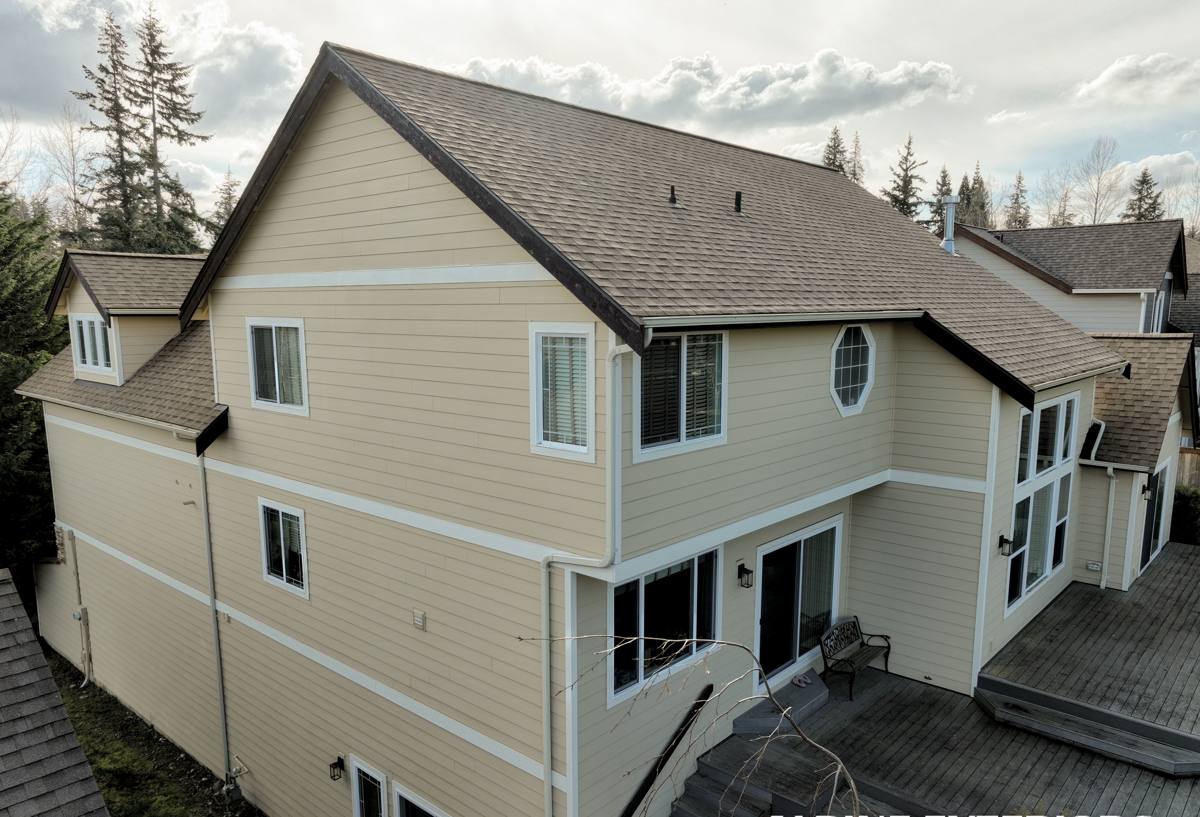
What a Deck Built for This Climate Actually Needs
A deck that holds up in the Yew Street area isn't built differently everywhere — it's built more carefully in the handful of places where water and salt do the most damage.
Decking that sheds water and resists moss
Board profile matters as much as species. Grooved or heavily textured boards trap moisture and organic debris; a smoother, well-ventilated profile sheds water and dries faster between storms. Gap spacing between boards needs to be generous enough for drainage without becoming a tripping hazard or a spot where debris jams and holds water anyway.
A substructure that can actually dry out
Joists and beams need consistent airflow underneath the deck, not just around the edges. Decks built low to the ground or against a slope, which is common on Sudden Valley lots, need extra attention to clearance and drainage so the framing gets a real chance to dry between wet spells instead of staying damp for weeks at a stretch.
Hardware rated for the exposure
This is where a lot of decks quietly fail early. Fasteners, joist hangers, and structural connectors need a corrosion-resistant rating suited to coastal-influenced air, not the baseline hardware sold for general framing. It costs more up front and makes no visible difference on installation day — but it's the single biggest factor in whether the structure is still sound in fifteen years.
Decking Material Comparison for This Climate
| Material | Moisture / moss behavior | Maintenance | Typical lifespan |
|---|---|---|---|
| Pressure-treated lumber | Absorbs water at cut ends and fastener holes; needs sealed cuts and a breathable finish to resist moss buildup | Annual cleaning, periodic re-staining or sealing | 15-25 years with upkeep |
| Cedar or other naturally durable wood | Naturally moisture- and insect-resistant, but still needs cleaning to prevent moss and graying | Regular cleaning, occasional oiling for appearance | 20-25 years with upkeep |
| Capped composite decking | Won't absorb water into the board itself; still needs surface cleaning where moss and algae settle | Periodic washing, no sealing or staining required | 25-30+ years, manufacturer-warrantied |
| PVC decking | Fully moisture-resistant board; surface still needs cleaning in shaded, damp areas | Low — washing only | 25-30+ years, manufacturer-warrantied |
There isn't a single "correct" material for every Yew Street lot — a sun-exposed deck and a heavily shaded one under mature trees have different moss and moisture pressures, and budget and appearance preferences matter too. What matters is that whichever material is chosen, the structure underneath and the fasteners holding it together are treated with the same care regardless of what's on top.
Framing, Footings, and the Parts You Never See
Footings suited to the local ground
Sloped and uneven lots are common around Sudden Valley, and footing depth and placement need to account for both the slope and how water moves across the site during heavy rain. A footing set too shallow or in a spot where runoff collects will move over time, which shows up later as a deck that feels slightly springy or a railing that's gone out of plumb.
Ledger board attachment and flashing
Where a deck attaches to the house is the single most common source of hidden rot on any deck in a wet climate. Proper flashing at the ledger board keeps water from wicking behind the siding and into the house's own framing — not just the deck's. This detail is invisible once the deck is finished, which is exactly why it's worth asking about before work starts, not after.
Joist protection
Joist tape or an equivalent protective barrier over the top of each joist keeps fastener penetrations from becoming a direct path for water into the wood grain. It's a small material cost relative to the whole project and one of the cheapest ways to add years to the substructure's life in a climate this wet.
Railings, Stairs, and Code Basics
Permitting in Whatcom County
Most deck projects above a certain height or attached to the home require a permit, and inspection requirements exist for a reason — they catch the structural details that are hardest to fix after the fact, like footing depth and ledger attachment. We handle the permit process as part of the job rather than leaving homeowners to sort it out separately.
Railing materials for a moss-prone site
Wood railings need the same moisture and moss management as decking. Metal or composite railing systems reduce that maintenance load but come with their own installation details — especially around post attachment — that need to be done correctly to meet code and hold up structurally over time.
Our Process for a Yew Street Deck Project
- On-site assessment. We walk the lot, check slope and drainage, note sun and shade exposure, and look at how the deck will tie into the house.
- Material and layout discussion. We go over decking, framing, and hardware options with honest trade-offs for this climate, not a one-size-fits-all recommendation.
- Written estimate. A clear scope and price before any work begins, including what's specified for fasteners and flashing — not just what's on top.
- Permitting. We prepare and submit what's needed for the local jurisdiction and schedule required inspections.
- Footings and framing. Built to the site's actual slope and soil conditions, with corrosion-resistant hardware throughout.
- Decking, railing, and finish work. Installed with the drainage and airflow details that matter most in a wet, moss-prone climate.
- Final walkthrough. We go over care and maintenance specific to the material installed before we consider the job done.
Living With the Deck: Maintenance in a Moss and Salt-Air Climate
No deck in this climate is maintenance-free, even the low-maintenance materials. What changes by material is how much and how often. A simple seasonal routine keeps most decks looking and performing the way they should:
- Sweep debris and needles out of board gaps regularly, especially under tree cover — trapped debris is what actually holds moisture against the wood.
- Wash the deck surface at least once or twice a year to remove moss and algae before it gets a foothold, more often in heavily shaded areas.
- Check and clear any gaps or drains that let water off the deck surface rather than pool on it.
- Inspect fasteners and hardware periodically for rust streaks or looseness, particularly near the ledger board and stair stringers.
- Re-seal or re-stain wood decking on the manufacturer's or a professional's recommended schedule — don't wait until it's visibly graying.
- Trim back overhanging branches where practical to cut down on shade, debris, and moss pressure on the deck surface.
Cost Factors That Actually Move the Price
| Factor | How it affects the project |
|---|---|
| Deck size and footprint | Larger square footage means more material and labor, straightforwardly |
| Site slope and access | Sloped lots common around Sudden Valley often need deeper or additional footings and more site prep |
| Decking material | Composite and PVC cost more up front than wood but reduce long-term maintenance |
| Height and stairs | Elevated decks need more structural framing and code-compliant stair and railing work |
| Railing style | Material choice (wood, metal, composite) changes both cost and long-term upkeep |
| Hardware and flashing spec | Corrosion-resistant hardware and proper ledger flashing add modest cost but protect the whole structure |
We give a broad range up front based on a phone conversation, then a firm number after seeing the site — sight-unseen quotes on decks are rarely accurate once slope, access, and existing structure come into play.
Why Hire a Crew That Already Works This Neighborhood
A crew that's already built and repaired decks around Sudden Valley and the wider Whatcom County area isn't guessing about which corners of a build matter most here — we've seen which decking profiles hold up under heavy tree cover, which fastener grades actually last against the salt air, and how the local slope and drainage patterns tend to behave on lots like the ones along Yew Street. That local track record shows up in fewer callbacks, not in anything flashy on the surface.
If you're planning a new deck or need an honest look at one that's showing its age, we're happy to come out, walk the site, and give you a straightforward, no-pressure estimate. There's a form below to get started.