 Sudden Valley Siding
 Asphalt Shingle Roofing Built for the Yew Street Microclimate
Yew Street sits inside Sudden Valley, tucked against the timber and slopes that ring Lake Whatcom in Whatcom County. That setting is part of what makes the area beautiful, and part of what makes roofs work harder here than they do in a lot of other Western Washington neighborhoods. Tree cover holds shade and moisture on the roof deck long after a storm has passed, marine-influenced air off the Sound region keeps humidity elevated for much of the year, and driving rain off the lake and surrounding hills tests every lap, nail, and flashing detail a roofer puts down. Asphalt shingle roofing is still the right material for most Yew Street homes — it's cost-effective, repairable, and available in styles that suit the wooded, low-key character of the neighborhood — but only when it's specified and installed with this exact climate in mind.
This page covers what a shingle roof needs to hold up on Yew Street specifically: the moss and moisture pressure, the ventilation and underlayment choices that matter most, what a correct installation actually involves, and why a crew that already works this street brings something a one-time visiting contractor can't.
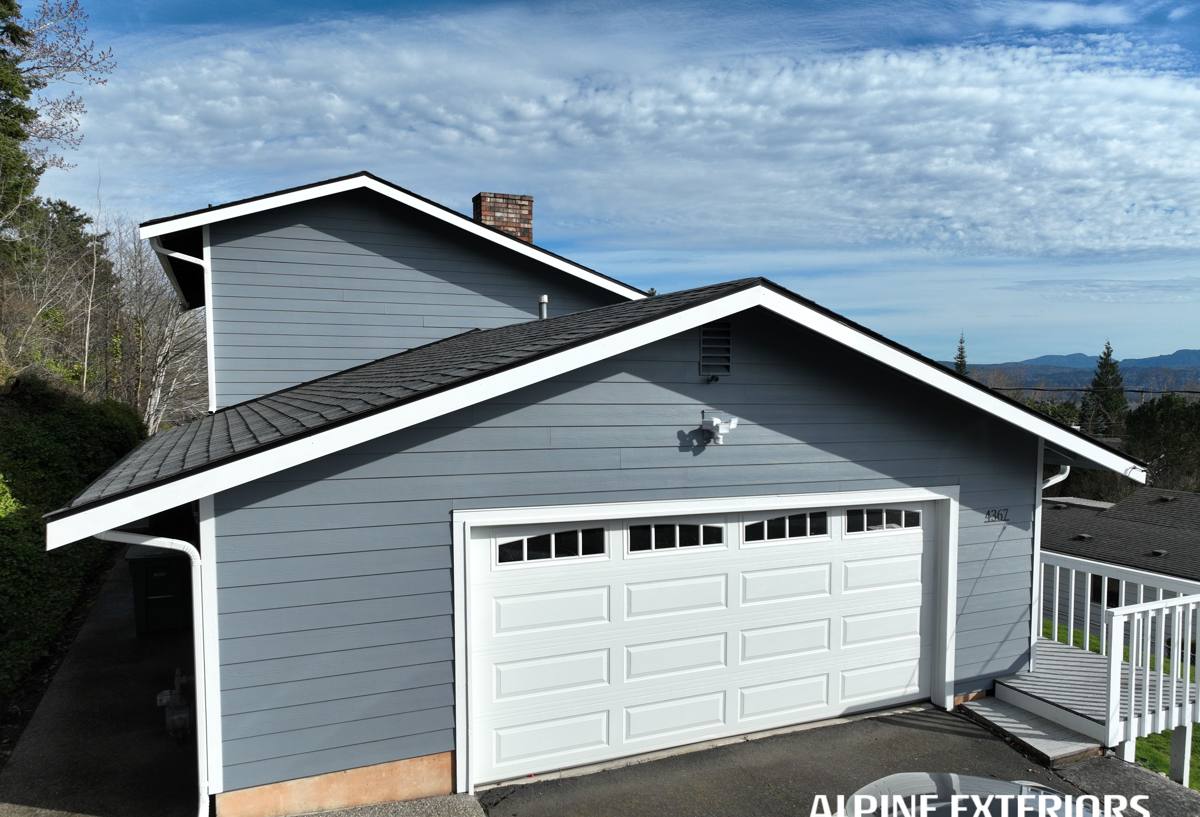
What Sudden Valley's Climate Does to a Shingle Roof
Moss and Organic Growth
The long, damp season around Lake Whatcom is close to ideal moss habitat. Moss doesn't just look bad — it holds water against the shingle surface, works into the granule layer, and over years lifts shingle tabs enough to let wind-driven rain underneath. On tree-shaded lots, which describes a good share of Yew Street, moss pressure is heavier on north-facing and shaded slopes than on a roof out in the open. A shingle roof here needs a plan for moss from day one, not a scramble once it's already established.
Driving Rain and Wind-Driven Moisture
Storms that come across the lake or funnel through the valley don't always fall straight down. Wind-driven rain pushes water sideways and upward under shingle tabs, into nail lines, and against flashing edges that would stay dry in a calmer storm pattern. That's why fastening pattern, shingle sealant strip performance, and flashing detail work carry more weight on a Yew Street roof than they would on a roof in a drier, more sheltered part of the county.
Persistent Humidity and Marine Air
Even between storms, the air here stays heavier and slower to dry than it does further inland. Roof decks and the underside of shingles get less of a chance to fully dry out between rain events, which is exactly the condition that lets moss, algae staining, and slow deck rot get a foothold. It's also why ventilation choices matter as much as the shingle brand.
What a Correct Shingle Roof Includes Here
Ventilation That Matches the Site
A shingle roof is a system, and on a shaded, damp lot the ventilation half of that system does a lot of the work. Balanced intake at the eaves and exhaust at the ridge keeps the underside of the deck drying between storms instead of holding moisture. Skipping or shorting ventilation to save a line item is one of the most common reasons a shingle roof underperforms its expected lifespan on lots like these — the shingles look fine from the ground while the deck underneath is staying wetter than it should.
Underlayment and Ice/Water Protection
Given the rain volume and the shaded, slower-drying roof planes common in Sudden Valley, we don't treat underlayment as a formality. Synthetic underlayment across the field, with self-adhering ice-and-water membrane at eaves, valleys, and any low-slope transitions, gives the roof a real second line of defense if wind-driven rain or ice-dam-style backup gets past the shingle layer.
Flashing Detail Work
Chimneys, skylights, valleys, and wall-to-roof transitions are where shingle roofs actually fail — the field shingles rarely leak on their own. Step flashing, counter-flashing, and valley metal need to be installed (not just caulked over) correctly the first time, because driving rain here will find any shortcut in that work eventually.
Shingle Selection
Standard three-tab shingles are the lowest-cost option but have the thinnest margin for error in wind and moss resistance. Architectural (laminate) shingles cost more up front but hold up better against wind uplift and give algae-resistant granule options that matter on shaded lots. We'll walk through the honest trade-offs for your specific roof rather than defaulting to one tier.
Comparing Your Options
| Factor | 3-Tab Asphalt | Architectural (Laminate) |
|---|---|---|
| Typical lifespan in this climate | Shorter end of the range, especially on shaded slopes | Longer, with better wind and moss resistance |
| Wind/uplift resistance | Lower | Higher — matters in valley wind funnels |
| Algae/moss-resistant granule options | Limited | Widely available, worth it on shaded lots |
| Upfront cost | Lower | Moderate premium |
| Warranty structure | Basic manufacturer coverage | Stronger coverage, often longer wind warranty |
| Appearance | Flat, uniform | Dimensional, closer to a shake or slate look |
Neither option is wrong — a lot depends on your budget, how long you plan to stay in the home, and how much shade and moss pressure your particular roof plane sees. We'll give you a straight read on which makes sense for your roof rather than pushing the higher-margin choice.
How We Approach a Yew Street Roof
1. On-Site Assessment
We walk the roof and the attic, not just the ground view. That means checking deck condition, existing ventilation, moss extent and pattern, flashing condition at every penetration, and any signs of past leaks that were patched rather than fixed.
2. Honest Scope
You get a clear picture of what's actually needed — full replacement, partial repair, or a targeted flashing and ventilation fix — before any work starts. If moss and moisture damage are limited to one slope, we'll say so rather than selling a full re-roof.
3. Deck Repair Before Cover-Up
Any soft, delaminated, or rotted decking gets replaced before new underlayment or shingles go down. Covering a compromised deck just hides the problem and shortens the life of the new roof on top of it.
4. Installation to Manufacturer Spec — Not Just to Code
Nailing pattern, starter strip placement, and sealant strip activation all affect wind performance, and all matter more here than in calmer, drier parts of the state. We install to the manufacturer's spec so your warranty is actually valid, not just to the minimum code requirement.
5. Cleanup and Walkthrough
Magnetic sweep for nails, full debris removal, and a walkthrough where we show you the completed flashing and ventilation work before we consider the job done.
Maintenance That Actually Extends Roof Life Here
- Have moss treated (not scraped) before it visibly spreads — scraping damages granules and shortens shingle life
- Keep overhanging branches trimmed back to cut down shade and debris buildup on the roof
- Clear gutters and valleys at least twice a year, more often on heavily treed lots
- Check attic ventilation isn't blocked by insulation, especially after any attic work
- Have flashing around chimneys, skylights, and vents inspected every few years, not just when a leak shows up
- Address small leaks immediately — a small deck repair is inexpensive compared to a delayed one that spreads to rot
Repair vs. Full Replacement
Not every roof issue on Yew Street means starting over. If the deck is sound and damage is limited to a section of shingles, flashing, or ventilation, a targeted repair is the honest answer and usually the right one. Full replacement makes sense when moss and moisture have gotten into the deck over a wide area, when the roof is past its practical service life, or when repeated patch repairs are no longer cost-effective compared to doing it once, correctly. We'll tell you which situation you're actually in.
Why a Crew That Already Works Yew Street Matters
Roofing crews that only pass through Whatcom County occasionally tend to install to a generic spec — fine for a drier climate, less fine for a shaded lakeside lot with heavy moss pressure and driving rain. A crew that regularly works Yew Street and the rest of Sudden Valley has already seen which slopes hold moisture longest, which flashing details tend to fail first on homes in this setting, and what ventilation setup actually keeps a deck dry between storms here. That local pattern recognition shows up in fewer callbacks and a roof that's built for the conditions it will actually face, not the conditions a general spec sheet assumes.
If you're dealing with moss buildup, a slow leak, or simply need a straight answer on whether your roof needs repair or replacement, we're glad to take a look. Use the form below to request a free, no-pressure estimate for your Yew Street home.