 Sudden Valley Siding
 Why Siding Installation in Sunnyland Isn't a One-Size-Fits-All Job
Sunnyland homes sit in a part of Whatcom County that gets hit from two directions at once. Marine air moving in off the Sound carries salt and moisture that settles on exterior surfaces year-round, and the lake-influenced humidity around Sudden Valley keeps everything a little damper, a little longer, than homes just a few miles inland. Add the tree cover that shades so many lots in this area and you get long stretches where siding simply doesn't dry out between rain events. That combination — salt-tinged air, driving rain off the water, and a moss season that can run eight or nine months — is exactly the environment that separates siding installed correctly from siding installed "good enough."
None of this is exotic weather. It's the normal cost of living in one of the prettiest parts of Washington. But it does mean that generic installation practices that work fine in a dry inland climate will fail faster here, and homeowners in Sunnyland often don't find out until the damage is already behind the cladding.
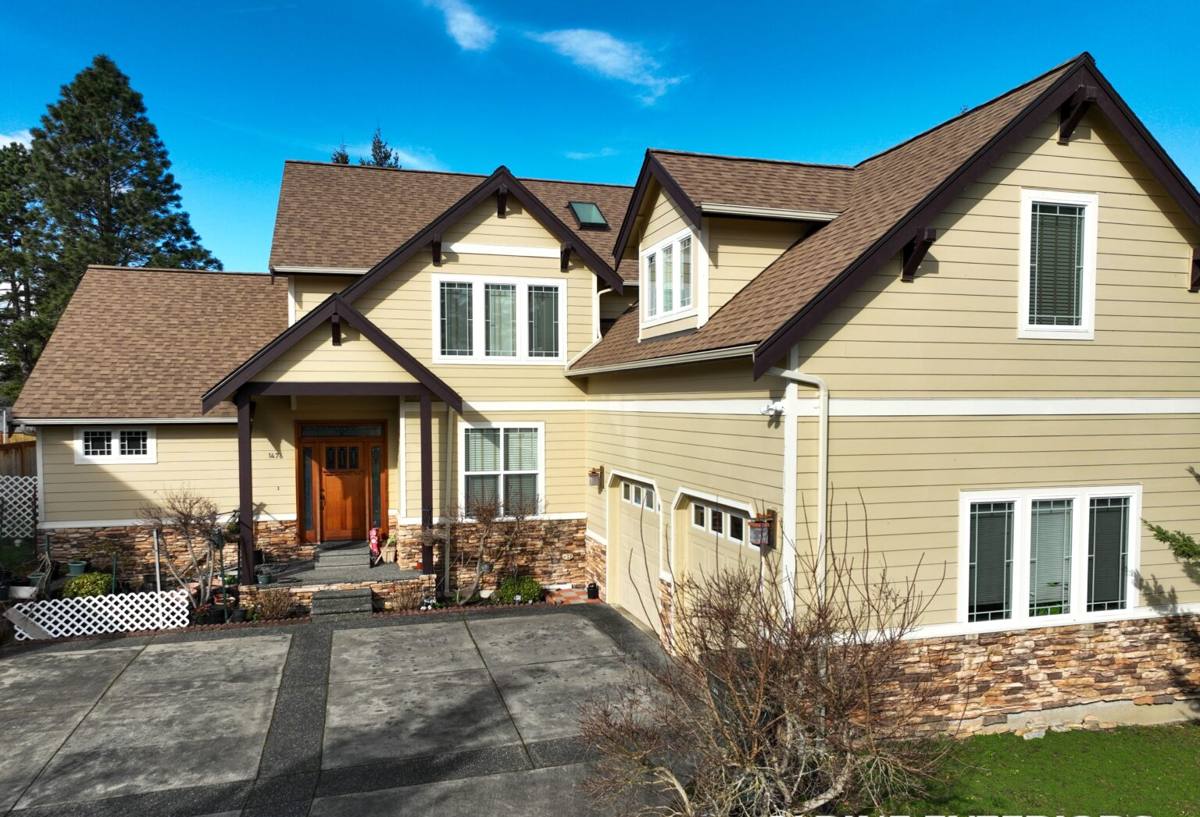
What Local Homes Actually Need From a Siding System
Moisture Management, Not Just a Pretty Face
Siding's main job isn't looks — it's managing water. In Sunnyland, that means a water-resistive barrier installed correctly behind the cladding, properly lapped and taped seams, and flashing at every window, door, and roofline intersection that directs water out and away from the wall assembly rather than trapping it. A beautiful siding job with sloppy flashing behind it is a moisture problem waiting to surface, usually two or three winters later when it's expensive to fix.
Standing Up to Repeated Wet-Dry Cycling
The Pacific Northwest doesn't get one hard freeze and done — it gets months of repeated saturation and partial drying. Materials that swell when wet and don't fully recover their shape develop soft spots, warping, and joint failure over time. That's a material-selection issue as much as an installation issue, and it's a big part of why we standardized on one product.
Resisting Moss, Algae, and Organic Growth
Shaded lots near the lake stay damp longer, which is ideal for moss and algae growth on exterior surfaces. Siding that absorbs moisture gives organic growth something to root into over time; siding that sheds water and dries quickly gives it far less to work with. Surface finish and installation clearances both matter here — siding installed too close to grade, decks, or landscaping beds stays wet longer and greens up faster.
Why We Only Install James Hardie Fiber Cement
We don't install vinyl, LP SmartSide, Cemplank, Allura, or primed wood siding, and we're upfront about why: in a climate like Sudden Valley's, those products ask homeowners to accept trade-offs we don't think are worth it. Vinyl can warp and fade under UV and temperature swings and simply isn't built to the same fire and impact standards. Engineered wood products depend heavily on caulking and edge sealing staying intact to keep moisture out of the wood substrate — a maintenance schedule that's easy to fall behind on. Other fiber cement brands vary in formulation, factory finish, and warranty structure, and we've made our choice based on what we've seen hold up.
James Hardie fiber cement is non-combustible, dimensionally stable when wet, and manufactured with regional climate in mind. For the Pacific Northwest, Hardie's HZ5 product line is engineered specifically for wet, freeze-thaw-prone climates like ours — it's a meaningfully different formulation than the HZ10 line built for hot, dry regions. That's not marketing language; it's why we spec it for every Sunnyland job.
ColorPlus Factory Finish
Rather than field-painting siding after installation, Hardie's ColorPlus finish is baked on at the factory under controlled conditions, giving better UV and moisture resistance than most job-site paint jobs and a longer stretch before the home needs repainting. In an area where ladder access and weather windows for painting are both limited, that matters.
A Warranty Worth Reading
Hardie backs its siding with a long, transferable limited warranty — a real consideration for Sunnyland homeowners thinking about resale, since the coverage moves to the next owner rather than expiring with the sale.
Our Installation Process for Sunnyland Homes
- Site and substrate assessment — checking for existing moisture damage, rot, or failed flashing behind the current siding before anything new goes up.
- Removal and substrate repair — old siding comes off, sheathing and framing get inspected, and any compromised wood is replaced, not covered over.
- Water-resistive barrier installation — a continuous, properly lapped barrier installed shingle-style so water sheds outward at every seam.
- Flashing at every penetration — windows, doors, vents, hose bibs, and roof-to-wall intersections all get dedicated flashing, not just caulk.
- Hardie panel or plank installation — fastened per manufacturer spec, with correct nail placement, spacing, and clearance from grade, decks, and roof lines.
- Joint and seam treatment — factory-finished edges and joints sealed according to Hardie's published details, not generic best guesses.
- Final inspection and cleanup — a walk-through that checks clearances, fastening, and finish before we call the job done.
Every one of those steps matters more in a climate that stays wet as long as Sudden Valley's does. Skipping the barrier detail or rushing flashing doesn't show up on day one — it shows up in year three or four, usually as staining, soft trim, or a moisture reading behind the wall that nobody wanted to find.
What We Commonly Find When We Replace Older Siding in This Area
- Missing or improperly lapped flashing above windows and doors, letting water track behind the cladding for years before it's noticed
- Siding installed with no gap at grade or at deck ledgers, wicking moisture straight up into the material
- Caulk used as a substitute for proper flashing details, which fails long before the siding itself does
- Moss and algae buildup on north-facing and shaded walls where the old siding never got a chance to dry out
- Soft or delaminated sheathing behind failed seams, discovered only once the old siding comes off
None of this is unusual for the area — it's the predictable result of standard-grade materials and shortcut installation meeting Whatcom County's weather over ten or fifteen years.
Cost Factors for a Sunnyland Siding Installation
Every home is different, but the same handful of variables drive most of the cost difference between jobs in this neighborhood:
| Factor | Why It Matters Here |
|---|---|
| Extent of substrate repair | Homes with hidden moisture damage from prior siding need sheathing or framing repair before new siding can go on |
| Home size and wall complexity | Dormers, bump-outs, and multiple roof-to-wall intersections all add flashing detail and labor time |
| Siding profile chosen | Lap, shingle, and panel profiles differ in material and installation labor |
| Access and site conditions | Tree cover, slope, and lake-adjacent lot layouts can affect staging and equipment access |
| Trim and finish detail | Corner boards, fascia, and trim replacement alongside siding affects overall scope |
We walk every home before quoting so the estimate reflects the actual condition of what's underneath the current siding, not just the square footage on the outside.
Keeping Sunnyland Siding Performing After Installation
A correctly installed Hardie system is low-maintenance, not no-maintenance. A short annual routine keeps it performing the way it's designed to:
- Rinse siding annually to clear salt residue, pollen, and organic buildup before it can take hold
- Keep gutters clear so overflow doesn't run down the wall face repeatedly
- Trim back vegetation and tree limbs that keep wall sections shaded and slow to dry
- Check caulking at trim and penetrations every year or two and touch up as needed
- Watch for any staining or soft spots near grade, decks, or roof intersections and address them early
Why It Matters That We Already Work in Sudden Valley
Installation details that are optional in a mild climate are non-negotiable here, and that's only obvious to a crew that's spent real time working this specific area. We know which orientations in Sunnyland stay shaded and wet longest, which lots see the most direct exposure to driving rain, and how the lake's humidity changes the moss and algae timeline compared to homes further from the water. That local pattern recognition shows up in small decisions — extra attention to a north wall, a slightly wider clearance at grade on a shaded lot — that a crew unfamiliar with the neighborhood might not think to make.
It also means we're not guessing at permitting or typical construction in the area — we know what these homes are built like and what's usually hiding behind the existing siding before we ever pull the first piece off.
If your Sunnyland home needs new siding or you're not sure whether what's on the wall now is doing its job, we're happy to take a look. Use the form below to request a free, no-pressure estimate.