 Sudden Valley Siding
 Why Sunnyland's Climate Is Hard on Siding
Homes in Sunnyland sit in one of the more demanding stretches of Whatcom County's marine climate. You've got salt-laden air drifting in off the bay, driving rain that comes sideways more often than straight down, and a moss season that can run eight or nine months out of the year under the tree cover common to this part of the county. Any one of those factors will shorten the life of the wrong siding material. Together, they're a stress test that a lot of siding products simply weren't built to pass.
Salt air is corrosive to metal fasteners and trim, and it accelerates the breakdown of paint films and caulk joints. Driving rain doesn't just wet the surface of a wall — wind-driven moisture finds every gap in flashing, every under-caulked seam, and every place where siding wasn't held off the ground or trim the way it should be. And moss doesn't just look bad; it holds moisture against the wall assembly for months at a time, which is exactly the condition that causes rot, paint failure, and swelling in materials that aren't dimensionally stable when wet.
This is the environment we're installing into every time we work a Sunnyland job, and it's why the product and the installation details matter more here than they would in a drier climate.
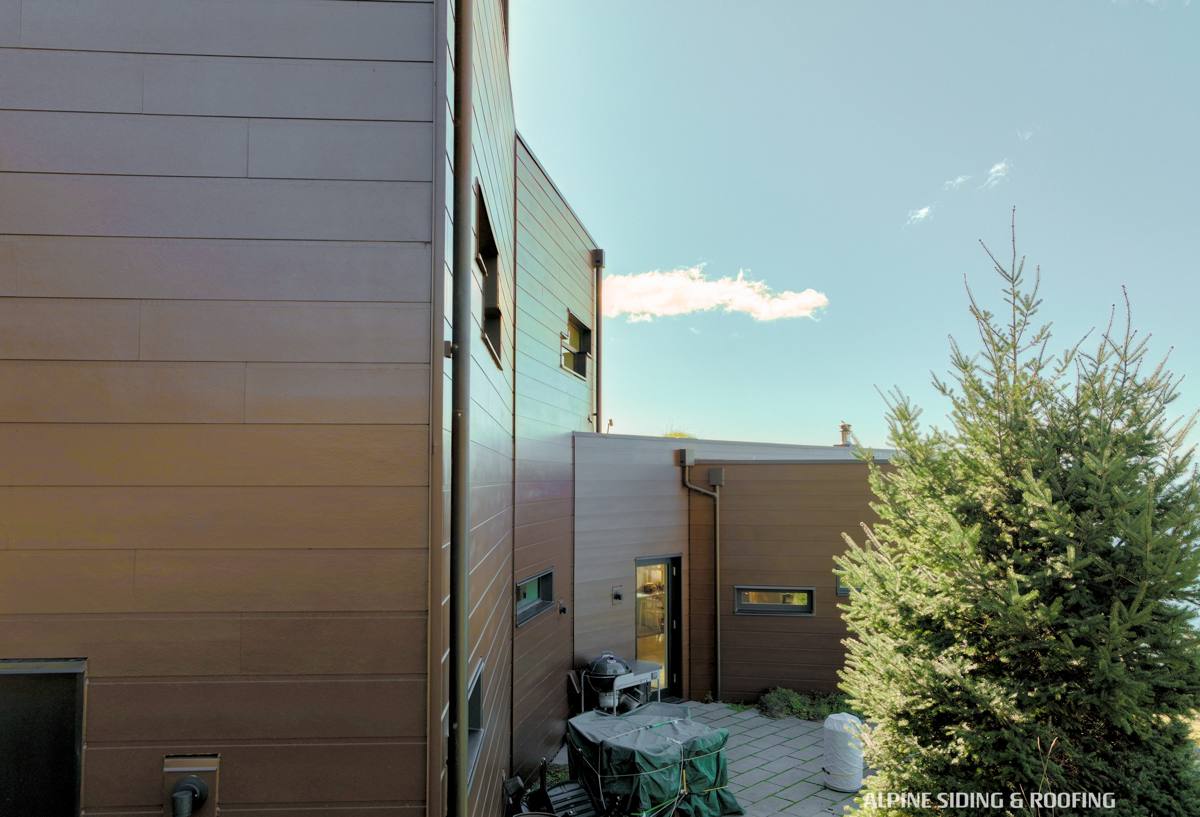
What James Hardie Siding Brings to a Home Like This
We install James Hardie fiber cement siding exclusively — not as a marketing angle, but because it's the product we trust to hold up under exactly the conditions Sunnyland deals with every year.
Non-Combustible, Dimensionally Stable
Fiber cement doesn't swell, cup, or delaminate the way wood-based products can when they take on repeated moisture. That matters directly here: a siding board that expands and contracts every time it gets soaked by driving rain and then dries out is a board that will eventually crack its paint film, open its joints, and start letting water behind it.
Climate-Engineered HZ Product Lines
James Hardie makes region-specific formulations (their HZ5 line is engineered for wetter, freeze-thaw-prone climates like the Pacific Northwest) rather than one generic product sold everywhere. That's a meaningful difference from siding lines that don't vary by climate zone at all.
ColorPlus Factory Finish
Most of the siding failures we get called out to inspect in this region trace back to a paint or caulk problem, not the substrate itself. Hardie's ColorPlus finish is baked on in a factory-controlled process rather than field-applied, which gives it better adhesion and UV resistance than a job-site paint job — a real advantage when the siding is going to spend most of the year damp.
Warranty Backing
Hardie backs its siding with a substantial, transferable limited warranty on the product itself, plus a separate finish warranty on ColorPlus color. That's worth asking about specifics on for your project, but the structure of it — manufacturer-backed, transferable to the next owner — is part of why we standardized on this product line instead of alternatives with thinner or non-transferable coverage.
What a Correct Installation Actually Involves
Fiber cement siding is only as good as the installation underneath it. This is the part homeowners rarely see discussed, and it's where most long-term problems actually start.
- Weather-resistive barrier installed and lapped correctly before any siding goes up
- Proper flashing at every window, door, and roof-to-wall transition
- Correct fastener type, spacing, and penetration depth per Hardie's published specs
- Minimum clearance maintained between the bottom of the siding and grade, decks, and roof lines
- Butt joints and trim seams caulked with a high-quality, paintable, flexible sealant rated for the exposure
- Field-cut edges sealed or back-primed as required to protect the cut edge of the board
- Proper overlap and shingling of house wrap or building paper at all penetrations
Skip any one of these steps and you can end up with a wall that looks fine for a year or two but is quietly taking on moisture behind the cladding — which, in a climate with this much sustained dampness, tends to surface as a problem sooner rather than later.
How Our Process Works
1. On-Site Assessment
We walk the exterior, check the condition of the existing siding, trim, and sheathing where accessible, and look for signs of past moisture intrusion — soft spots, staining, or failed caulk joints are all things we flag before any quote is written.
2. Moisture and Substrate Check
Before we commit to a scope of work, we want to know what's underneath the old siding. In a climate like this, hidden rot at window sills or bottom plates isn't unusual, and it needs to be addressed as part of the job, not discovered mid-install.
3. Detailed, Written Estimate
You get a clear scope: product line, color, trim details, flashing plan, and what's included versus what would be a separate line item if hidden damage turns up.
4. Installation to Manufacturer Spec
We install to James Hardie's published installation requirements for this climate zone — not a generic national standard. That includes the fastening, clearance, and flashing details above.
5. Final Walkthrough
We go over the finished work with you, including caulk lines, trim details, and touch-up paint from the same ColorPlus batch where needed.
James Hardie vs. Other Siding Options
Homeowners in Sunnyland comparing quotes will often see other materials proposed. Here's how they stack up on the factors that matter most in this specific climate.
| Material | Moisture Behavior | Salt Air Durability | Maintenance | Typical Warranty |
|---|---|---|---|---|
| James Hardie fiber cement | Dimensionally stable, doesn't swell or rot | Strong; non-corrosive substrate | Occasional wash; repaint interval longer than wood | Long-term, transferable |
| Vinyl | Won't rot but can warp/buckle with heat and impact | Fasteners and trim can corrode over time | Low, but color fades and can't be repainted easily | Varies widely by manufacturer |
| LP SmartSide (engineered wood) | Wood-based; more sensitive to sustained moisture exposure | Moderate; finish and edge sealing are critical | Field-applied finish needs monitoring over time | Manufacturer-specific, often shorter |
| Cedar | Natural material; absorbs and releases moisture seasonally | Requires diligent sealing/staining near salt air | High; regular refinishing needed | No manufacturer warranty (natural product) |
We don't install vinyl, LP SmartSide, or cedar on the homes we work on, and this table is why: given what Sunnyland's climate does to a wall assembly over ten or twenty years, we'd rather stand behind one product we know performs than offer several and let the trade-offs become the homeowner's problem later.
What Affects the Cost of a Sunnyland Siding Job
| Factor | Why It Matters |
|---|---|
| Home size and wall complexity | More corners, gables, and dormers mean more cutting, trim work, and flashing detail |
| Current siding condition | Hidden rot or sheathing damage found during tear-off adds scope |
| Product line and profile | Lap width, texture (smooth vs. cedar-look), and trim style all affect material cost |
| Color selection | Factory ColorPlus finishes vs. field-primed-for-paint options price differently |
| Access and site conditions | Steep grades, tight lot lines, or limited equipment access affect labor time |
We don't publish a flat per-square-foot number because these variables genuinely move the price from one home to the next — but we'll walk you through exactly what's driving your number line by line.
Maintaining Hardie Siding in a Moss and Salt Air Climate
Even the right product benefits from basic upkeep in this environment:
- Rinse the exterior annually to clear salt residue and organic buildup before moss gets a foothold
- Keep gutters clear so overflow doesn't run down the face of the siding
- Trim back vegetation and tree limbs that keep siding shaded and damp longer than necessary
- Inspect caulk joints at trim and penetrations every year or two and re-caulk as needed
- Address any small paint chips or impact damage promptly so moisture can't get behind the board
None of this is heavy maintenance — it's the kind of upkeep any exterior in Whatcom County benefits from — but staying on top of it is what lets a correctly installed Hardie exterior go the distance in a climate that doesn't give siding many breaks.
Why Local Experience in Sunnyland Matters
A crew that already works this area knows the specific pressure points before they start: which orientations catch the worst of the driving rain, where moss builds up fastest under tree cover, and how much clearance to leave given the amount of rainfall this part of the county sees in a typical year. That's the difference between a general installation and one that's actually built for the site. It also means faster turnaround on questions, warranty follow-up, and touch-up work down the road, because we're not driving in from out of the area to handle it.
Questions Worth Asking Before You Hire
- Are you a certified or preferred James Hardie installer, and can you explain why you install this product exclusively?
- What's your fastening and flashing detail for this specific climate zone?
- Will you check for hidden moisture damage before finalizing the scope, not just after tear-off starts?
- What does the written warranty actually cover, and is it transferable if I sell the home?
- Can you provide a detailed, line-item estimate rather than a single lump-sum number?
If you're weighing a siding replacement for a Sunnyland home, we're happy to walk the exterior with you, point out what we see, and put together a clear, no-pressure estimate — just fill out the form below to get started.