 Sudden Valley Siding
 Why Deming Roofs Take a Different Kind of Beating
Homes out toward Deming sit in a stretch of Whatcom County where the weather doesn't do things halfway. You've got the Nooksack River valley funneling wind and moisture, tall stands of fir and cedar dropping needles and limbs onto roofs, and a rain pattern that can run for days without a real break. Add in the humidity that never fully lifts under all that tree cover, and you get roofs that age differently than the ones in town. A roof that would be fine for twenty years on a dry, open lot can start showing real wear in twelve or fifteen out here if it wasn't built and maintained for the conditions.
Storm damage repair in this area isn't just about patching whatever got torn loose in the last windstorm. It's about understanding why that spot failed first, and making sure the repair holds up against the next round of driving rain, the next moss season, and the salt-tinged air that rolls in off the Sound and works its way up the valley on a west wind. We've built our repair process around those specifics instead of treating every roof the same.
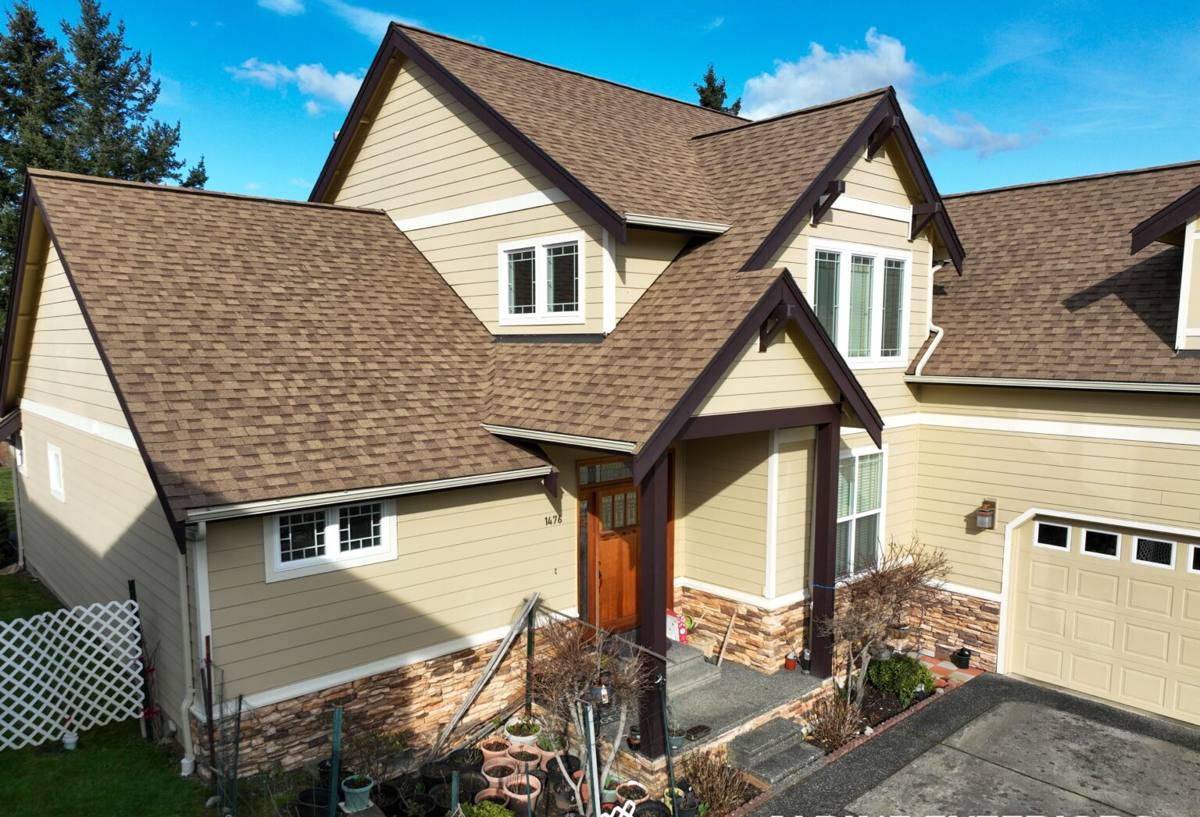
What Whatcom County Weather Actually Does to a Roof
Wind-Driven Rain
Straight-down rain is easy on a roof — it sheds off shingles and runs into the gutters the way the system was designed. Wind-driven rain is a different problem. When storms push rain sideways or at a sharp angle, water gets forced up under shingle tabs, into nail holes, and along flashing edges that were never meant to hold back pressurized water. This is where most of the leaks we find actually start — not from missing shingles, but from water finding a gap that only opens up under wind pressure.
Moss and Trapped Moisture
The long, wet stretch from fall through spring gives moss plenty of time to establish itself on north-facing slopes and shaded sections under tree cover. Moss holds moisture against the roofing material far longer than open air would, which softens shingles, breaks down granule adhesion, and can lift edges enough for wind to get underneath. Left alone through a couple of seasons, moss growth turns a cosmetic issue into a structural one.
Salt Air's Slow Corrosion
Whatcom County sits close enough to the water that salt-laden air reaches well inland on the right weather pattern, and it doesn't take much exposure to start working on unprotected metal. Nail heads, flashing seams, and vent boots are the parts of a roof most likely to corrode first, and once a nail head rusts through or a flashing seam pits, that's a direct path for water. It's a slow process, which is exactly why it tends to go unnoticed until a storm exploits the weak point.
Signs Your Deming Home May Have Storm Damage
Storm damage isn't always obvious from the ground. Some of it hides until the next hard rain, and some of it shows up inside the house before it's visible on the roof at all. Worth checking after any significant wind or rain event:
- Granules collecting in gutters or at the base of downspouts — a sign of shingle wear or hail impact
- Shingles that look lifted, curled, or slightly out of line with their neighbors
- Bent, missing, or visibly rusted flashing around chimneys, vents, or roof valleys
- Dark streaking or thick moss patches, especially on shaded or north-facing slopes
- Water stains on interior ceilings or upper walls, even faint ones
- A musty smell in the attic or upper floor that wasn't there before
- Debris, limbs, or branch scrape marks on the roof surface after a windstorm
- Sagging or uneven rooflines, which can point to deck damage under the surface
Any one of these on its own might be minor. A few together, especially after a named storm or a stretch of high wind, is worth a proper look before the next rain finds the gap.
What a Correct Storm Damage Repair Actually Involves
Inspection Before Anything Else
We don't quote a repair off a ground-level look or a photo. Storm damage is often worse — or sometimes less serious — than it appears from the yard. A real inspection means getting on the roof, checking the deck underneath damaged sections for soft spots or rot, and tracing water stains back to their actual entry point, which is frequently several feet from where the stain shows up inside.
Matching Materials, Not Just Covering the Hole
A patch that doesn't match the surrounding shingles in type, weight, and often age is a repair that stands out and can fail at the seams where old and new material meet. When we can match existing shingles closely, we do. When a roof is old enough or the damage widespread enough that a clean match isn't realistic, we say so up front rather than installing a mismatched patch and calling it done.
Flashing and Underlayment Get the Same Attention as Shingles
Most of the leaks we trace back to storm damage involve flashing or underlayment failure, not just shingle loss. A repair that replaces shingles but leaves compromised flashing underneath is a repair that will leak again on the next hard rain. We treat flashing, valleys, and underlayment as part of the repair scope, not an afterthought.
Repair or Replace? How We Make That Call
Not every storm-damaged roof needs a full replacement, and not every roof is a good candidate for another round of patching. The decision usually comes down to a handful of factors:
| Factor | Favors Repair | Favors Replacement |
|---|---|---|
| Roof age | Under 12–15 years, otherwise sound | Nearing or past expected lifespan |
| Extent of damage | Localized to one section or slope | Spread across multiple areas or slopes |
| Deck condition | Solid, dry sheathing under damage | Soft spots, rot, or repeated water intrusion |
| Repair history | First real issue on this roof | Third or fourth repair in a few years |
| Material availability | Shingles still made or close match exists | Discontinued product, no reasonable match |
Costs for a targeted storm repair — say, a section of flashing and a run of shingles — often land in the low hundreds to a couple thousand dollars depending on access and material. Larger sections or repeated deck repair push toward the higher end of that range, and at some point the math starts favoring a full replacement instead of chasing damage roof to roof. We'll walk you through where your roof actually sits before you commit to either path.
Our Process, Start to Finish
- Call or request an estimate. Tell us what you're seeing — a leak, storm damage, missing shingles — and roughly when it started.
- On-site inspection. We get on the roof and in the attic if needed, not just a look from the driveway.
- Written scope and estimate. You get a clear explanation of what's damaged, why, and what fixing it correctly involves — repair or replacement, with reasoning either way.
- Scheduling around the weather. Storm repairs sometimes need temporary protection first if more rain is coming before the permanent fix can go on.
- The repair itself. Deck check, flashing and underlayment work, matched materials, clean tie-in to the existing roof.
- Final walkthrough. We show you what was done and what to keep an eye on going forward.
Working With Insurance on Storm Damage Claims
A lot of storm damage repair around here ends up going through a homeowner's insurance claim, especially after a significant wind event. We're not a public adjuster and we don't handle the claim for you, but we can document what we find with photos and a written description of the damage that you can hand to your adjuster. Good documentation early — before a repair covers up the evidence — tends to make the claims process smoother, so it's worth having a professional look at the roof as soon as reasonably possible after a storm rather than waiting.
Why It Matters That We Already Work in Deming
A crew that only shows up in this area occasionally has to relearn the local conditions every time — which slopes hold moss longest, how the wind tends to move through the valley, which flashing details actually hold up against wind-driven rain here versus somewhere drier. A crew that already works Deming and the wider Sudden Valley area on a regular basis isn't guessing. We know what tends to fail first on roofs out here and we build repairs to hold up against those specific conditions, not generic storm damage in the abstract.
There's also a practical side to it: local response time matters when you've got an active leak. A crew based nearby can get eyes on storm damage faster than one dispatching a truck from across the county, which matters when the difference is a tarp going up before or after the next rain.
Get a Straight Answer on Your Roof
If your Deming-area home took a hit in the last storm — or you're just not sure whether that moss-covered slope is fine or a problem waiting to happen — we're glad to take a look. Reach out for a free, no-pressure estimate using the form below and we'll give you an honest read on what's actually going on with your roof.