 Sudden Valley Siding
 What Whatcom County Weather Does to Siding on South Hill
Homes on South Hill and throughout Sudden Valley sit under a lot of tree cover and take on more shade and standing moisture than homes out in the open. Combine that with the driving rain that rolls through Whatcom County most of the year, the salt-tinged marine air that moves inland off the Sound, and a moss season that can run eight months or longer, and you have a siding environment that punishes weak materials and sloppy installation. Siding here doesn't just get wet — it stays wet, cycles through freeze and thaw, and sits under moss and algae growth that traps moisture right against the wall.
That combination is exactly what breaks down wood-based and moisture-sensitive siding products years before their rated lifespan. It's also why the specific product and the specific installation details matter more here than they would in a drier climate. A siding job that would hold up fine in eastern Washington can fail in ten years on South Hill if it isn't built for this kind of exposure.
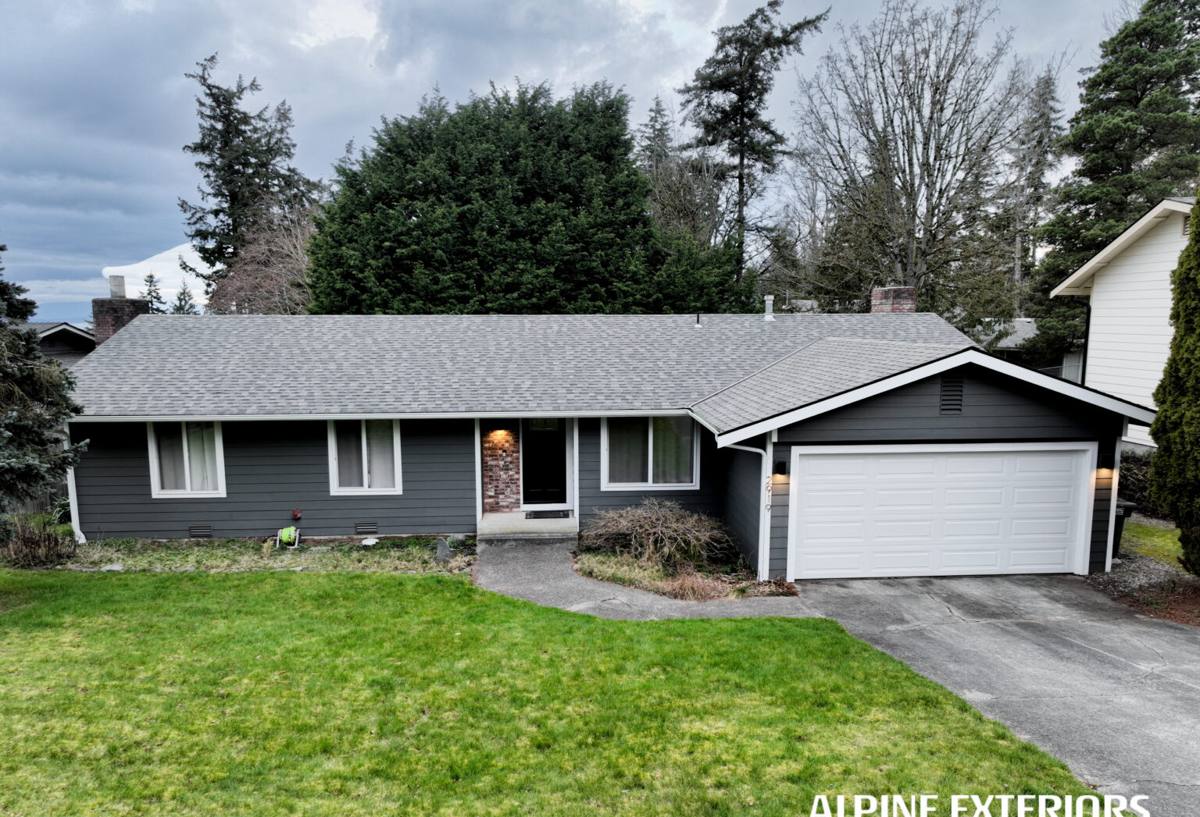
Signs Your South Hill Home Needs Siding Replacement
Siding failure in this climate is usually gradual, and homeowners often don't notice it until paint is peeling every year or a soft spot gives way under a light push. Here's what we look for during an inspection, and what you can check yourself:
- Soft, spongy, or crumbling spots when you press on the siding, especially near the bottom courses and around window sills
- Paint that won't hold — repeated peeling, bubbling, or chalking within just a few years of repainting
- Visible warping, buckling, or cupping boards, particularly on north- and west-facing walls that stay shaded and wet longer
- Persistent moss or dark algae streaking that comes back within a season of cleaning
- Cracks at butt joints, corners, or around trim where caulk has failed and water has been getting behind the siding
- Gaps opening up between boards or at seams as material shrinks, swells, or delaminates with repeated moisture cycles
- A musty smell or visible staining on interior walls that share an exterior wall with damaged siding
Any one of these on its own might just need a repair. Several of them together, especially on a home that's fifteen to twenty-five years old, usually means the underlying material and water management have reached the end of their useful life.
What a Correct Siding Replacement Actually Involves
Siding replacement is easy to do poorly and easy to sell short. The material on the wall gets all the attention, but most of the siding failures we see on South Hill trace back to what's underneath it, not the boards themselves. A correct job addresses the whole wall assembly.
Tear-Off and Sheathing Inspection
Old siding comes off completely so the sheathing underneath can actually be inspected, not just siding installed over it. Any rot, soft sheathing, or water-damaged framing gets found and repaired at this stage — covering it up with new siding just seals the problem inside the wall.
Weather-Resistive Barrier and Flashing
A new weather-resistive barrier goes on correctly lapped, and flashing gets installed at every window, door, and horizontal trim transition — the places where the vast majority of water intrusion actually happens. This is the step that determines whether driving rain stays out of the wall assembly for the next several decades.
Fastening and Installation to Spec
Fiber cement siding has a manufacturer installation spec for a reason — fastener type, placement, spacing, and clearance from the ground and roofline all affect how the siding performs in wet, humid conditions. Installing off-spec is one of the most common ways a good product ends up with an early failure and a voided warranty.
Trim, Caulking, and Finish Details
Caulk should be used sparingly and correctly — sealing every joint on a fiber cement installation actually traps moisture rather than shedding it. Trim, corners, and transitions get finished to shed water outward and down, not to look tidy at the expense of drainage.
Our Process, Start to Finish
- Inspection and estimate: We walk the exterior, check for soft spots and existing water damage, and give you a straightforward, itemized estimate — no pressure, no inflated first number to negotiate down from.
- Scope and material selection: We help you choose the right James Hardie product line, profile, and color for your home and your budget, and confirm exact measurements and material needs.
- Tear-off and sheathing check: Old siding comes off, sheathing is inspected, and any rot or damage is addressed and documented before anything new goes on.
- Weather barrier and flashing: New house wrap and flashing go in correctly at every penetration and transition before the first piece of siding is hung.
- Installation to manufacturer spec: Siding is installed following James Hardie's fastening and clearance requirements, which is also what keeps your warranty valid.
- Trim, cleanup, and walkthrough: Trim and caulking are finished, the site is cleaned up, and we walk the job with you before calling it done.
Comparing Siding Options for This Climate
Homeowners on South Hill are usually choosing between fiber cement, engineered wood siding like LP SmartSide, vinyl, and traditional cedar. Here's an honest look at how each holds up in a wet, mossy, marine climate:
| Material | Moisture Resistance | Maintenance | Typical Lifespan |
|---|---|---|---|
| James Hardie fiber cement | Engineered for high-moisture climates; won't rot or absorb water like wood-based products | Low — factory finish holds color, occasional wash for moss/algae | 30+ years with correct install |
| LP SmartSide (engineered wood) | Wood-based; vulnerable to swelling and edge damage if water gets in | Moderate — repainting and edge sealing over time | Shorter than fiber cement in wet climates |
| Vinyl | Doesn't rot, but can warp, crack in cold, and fade; seams allow water behind panels | Low, but limited repair options if damaged | Varies widely by product quality |
| Cedar | Natural but absorbs moisture; prone to rot, splitting, and moss growth without diligent upkeep | High — regular staining/sealing required | Depends heavily on maintenance |
Every one of these products has a place somewhere. What we've found on homes in this specific climate — heavy rain, shade, moss, and marine air — is that the wood-based and moisture-sensitive options simply demand more upkeep and fail sooner than homeowners expect, especially on the shaded, north-facing walls that never fully dry out between storms.
Why We Install Only James Hardie
We made a deliberate decision to install one siding system rather than offer a menu of products, and it comes down to what actually holds up on homes in this climate. James Hardie fiber cement is non-combustible, dimensionally stable, and engineered specifically for high-moisture regions through its HZ5 product line — it doesn't swell, delaminate, or feed moss the way wood-based products can when they stay damp for long stretches.
The ColorPlus factory finish is baked on under controlled conditions rather than field-painted, which is a meaningful difference in a climate where field-applied paint on other products tends to fail early from constant moisture exposure. Hardie also backs the product with a strong, transferable warranty — but that warranty only means something if the installation follows spec, which is why our crews install to the manufacturer's requirements on every job, not just the visible parts.
We're not going to tell you vinyl, engineered wood, or cedar are bad products — they all have legitimate uses. We simply won't put our name on an installation using a product we don't think holds up to what South Hill weather does to a wall over twenty or thirty years. That's a standard we hold ourselves to, not a claim about anyone else's work.
What Drives the Cost of a South Hill Siding Job
Every home is different, but the same handful of factors move the price up or down on most jobs we quote in this area:
| Cost Factor | Why It Matters |
|---|---|
| Home size and wall area | More square footage means more material and labor hours |
| Existing damage found at tear-off | Rotted sheathing or framing needs repair before new siding goes on |
| Siding profile and accessories | Lap width, trim style, and corner details affect material cost and install time |
| Story height and access | Multi-story walls and difficult access require more setup, staging, and time |
| Number of penetrations | Windows, doors, vents, and fixtures each need proper flashing, which adds labor |
We won't know exactly where your home lands on these factors until we've actually looked at it, which is why every estimate starts with an in-person inspection rather than a number over the phone.
Why a Crew That Already Works Sudden Valley Matters
A siding crew that's already worked on South Hill and the rest of Sudden Valley isn't guessing at what this climate does to a wall — they've torn siding off enough homes here to know where the moisture damage tends to show up first, and they build the replacement to actually address it rather than just match what was there before. That matters more in a community with heavy tree cover and long wet seasons than it does in drier parts of the state.
It also matters for the practical side of the job. Many homes in HOA-governed communities like Sudden Valley have design guidelines that affect siding color and material choices, and a crew familiar with the area knows to check that before ordering material, not after. Local familiarity also means faster response if a warranty question or a follow-up item comes up after the job is done — you're not waiting on a crew that has to drive in from out of the area and relearn your house.
None of that replaces a careful inspection of your specific home. But it does mean fewer surprises, a more accurate estimate the first time, and a crew that understands why the details on this job — flashing, fastening, drainage — matter more here than they might somewhere drier.
If your South Hill home's siding is showing its age, we're happy to take a look and give you a straightforward, no-pressure estimate — just fill out the form below.