 Sudden Valley Siding
 Windows Built for South Hill's Weather, Not Just the Showroom
South Hill homes near Sudden Valley sit in a stretch of Whatcom County where the weather doesn't take a season off. Salt-laden air drifts in from the coast, driving rain comes sideways for weeks at a stretch in the fall and winter, and a long moss season keeps everything damp longer than most homeowners realize. Windows here don't just need to look good — they need to keep that moisture and salt air out year after year without warping, fogging, or letting your heating bill creep up every winter.
Energy-efficient windows are often sold as a way to save on utility bills, and they do that. But in this climate, the bigger story is durability: a window that's properly sealed, properly flashed, and built with the right materials will also be the window that resists the rot, corrosion, and seal failure that shorten the life of cheaper installations. We look at both sides of that equation on every South Hill job.
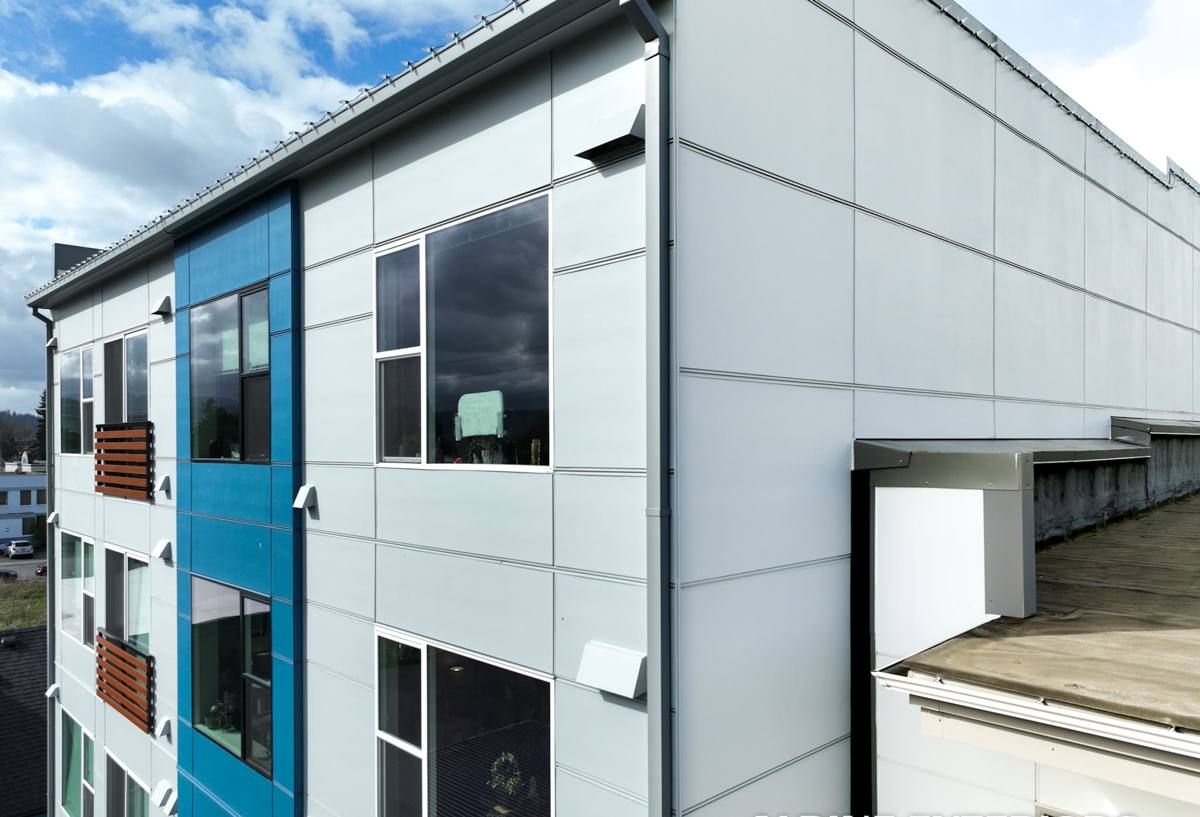
What This Climate Actually Does to a Window
It helps to understand the specific ways local conditions wear down a window system, because it changes what "good enough" looks like here compared to a drier climate.
Salt Air and Metal Components
Salt-laden moisture in the air accelerates corrosion on any exposed metal — hinges, cranks, screws, and lower-quality hardware finishes. Over a few years this shows up as stiff or sticking operation, discoloration around hardware, and eventually hardware that simply stops working smoothly. It's a slow process, but it's steady, and it's one of the first things we check on older windows during an inspection.
Driving Rain and Water Intrusion
Wind-driven rain doesn't fall straight down — it gets pushed sideways into any gap around a window frame. That means flashing details, sill pans, and sealant lines matter as much as the glass itself. A window can have excellent glass and still fail if the installation around it wasn't built to shed water that's coming in at an angle.
Moss Season and Prolonged Moisture
A long moss season means extended periods where wood trim, sills, and siding around a window stay damp instead of drying out quickly between storms. That prolonged moisture is what causes rot in untreated wood components and can trap condensation between panes if a window's seals have started to fail. It also means any wood-framed or wood-clad window needs a maintenance plan, not a "set it and forget it" attitude.
Signs Your South Hill Windows Are Underperforming
Homeowners often live with underperforming windows for years before deciding to act, mostly because the signs show up gradually. Here's what we look for and what you can check yourself:
- Visible fog or moisture between panes of double- or triple-glazed glass — a sign the seal has failed
- Noticeable cold draft near the frame edge, especially during driving rain or windstorms
- Condensation forming on the inside of the glass regularly, not just on the coldest mornings
- Wood sills or trim that feel soft, discolored, or show early rot near the bottom corners
- Hardware that's harder to turn or lock than it used to be, or shows rust staining
- Rooms near the window that are noticeably harder to heat or cool than the rest of the house
- Visible gaps or cracked, brittle caulking around the exterior frame
Any one of these on its own might not mean full replacement is necessary. But two or three together, especially on windows over 15-20 years old, usually mean the window is costing you more in energy loss and hidden water damage than a repair would fix.
What "Energy-Efficient" Actually Means for This Climate
The term gets used loosely, so it's worth being specific about what actually matters for a South Hill home.
Frame Material and Thermal Performance
The frame is often the weak point for heat loss, more so than the glass itself. Frame material affects both insulation value and how well the window holds up against damp, salt-tinged air over time.
Glazing and Gas Fill
Double-pane glass with a low-E coating and an inert gas fill (typically argon) between the panes is the baseline we recommend for this area. It reduces heat transfer in both directions — keeping warmth in during winter and reducing heat gain in summer — and the coating also cuts down on UV fading of interior furnishings.
U-Factor and Air Infiltration
U-factor measures how well a window resists heat flow — lower is better. Air infiltration ratings matter just as much here, since driving rain will find any gap that lets air through. A window with a great U-factor but a poor installation seal will still underperform in this climate.
Comparing Frame Materials for South Hill Conditions
There's no single "best" frame material for every home — it depends on your budget, your home's style, and how much maintenance you're willing to keep up with. Here's how the common options stack up against the conditions South Hill deals with:
| Frame Material | Moisture & Salt Air Resistance | Maintenance | Typical Lifespan |
|---|---|---|---|
| Vinyl | Very good — won't rot or corrode | Low — occasional cleaning | 20-30 years |
| Fiberglass | Excellent — very stable in wet, salty air | Low | 30-40+ years |
| Wood | Fair — needs protection from prolonged moisture | High — regular painting/sealing | Varies widely with upkeep |
| Wood-clad (wood interior, metal/vinyl exterior) | Good on the exterior face; interior wood still needs monitoring | Moderate | 25-35 years |
| Aluminum | Prone to corrosion in salt air unless well-finished; poor insulator unless thermally broken | Moderate | 20-30 years |
For most South Hill homes, we steer clients toward vinyl or fiberglass for the combination of thermal performance and low long-term maintenance in a damp, salt-influenced climate. Solid wood frames can look great, but we're honest that they demand a real maintenance commitment here — if you love the look of wood, a wood-clad option often gives you the appearance with less exposure to the moisture problem.
Our Window Replacement Process
A quality window installation is as much about the details around the frame as the window unit itself. Here's how we approach it on South Hill homes:
- On-site assessment. We check existing frames, sills, and surrounding wall assembly for hidden water damage or rot before quoting anything — no point installing a new window into a compromised opening.
- Product selection. We walk through frame material, glazing package, and hardware options based on your home's exposure to wind and rain, your budget, and how the window needs to match your home's existing style.
- Removal and opening prep. Old windows come out carefully, and we inspect the opening for framing damage, address any rot found, and prep a clean, dry surface.
- Flashing and sill pan installation. This is the step that matters most for driving-rain resistance — proper flashing directs water back out instead of letting it wick into the wall cavity.
- Window installation and shimming. The unit is set level, plumb, and square, then shimmed and fastened per manufacturer specification so it operates smoothly for years.
- Sealing and insulation. Gaps are insulated and the exterior is sealed with a sealant rated for our wet climate, not a generic caulk that will crack within a season or two.
- Final inspection and walkthrough. We test operation, check the seal, and walk you through any care specifics for the frame material you chose.
Why a Crew That Already Works South Hill Matters
Window installation quality varies a lot based on whether a crew actually understands the conditions they're building against. A contractor who mostly works in drier inland climates may not think twice about flashing details or hardware corrosion resistance — because in their usual market, it doesn't matter as much. In Whatcom County, and specifically in a community like South Hill dealing with salt air, driving rain, and a long moss season, those details are the difference between a window that performs for decades and one that needs attention again in five years.
We also know what "normal" looks like on homes in this area — what kind of wear is expected from age versus what signals a bigger moisture problem behind the wall. That local knowledge shortens the assessment process and helps us give you a straight answer about whether replacement makes sense now or whether a repair will hold for a while longer.
Keeping New Windows Performing Over Time
Even the best window benefits from a small amount of upkeep, especially in a climate with a long moss season and salt-influenced air.
- Rinse frames and hardware periodically to clear salt residue and organic buildup before it accumulates
- Check and refresh exterior caulking every few years, since even quality sealant has a service life
- Keep gutters and nearby drainage clear so water isn't sheeting directly down over window heads
- Lubricate hardware annually if it's exposed to the elements, to prevent stiffness from moisture and salt exposure
- Watch for early signs of trouble — sticking sashes, new drafts, or fogging glass — and address them before they become bigger repairs
Getting a Straight Answer for Your Home
Every South Hill home is a little different — orientation, exposure to prevailing wind and rain, age of the existing windows, and what's happening behind the trim all factor into what makes sense. We'd rather walk your home, look at what's actually going on, and give you an honest recommendation than push a one-size-fits-all package.
If you're noticing drafts, fogged glass, or just want to know whether your current windows are still doing their job, we're happy to take a look. Use the form below to request a free, no-pressure estimate.