 Sudden Valley Siding
 Roof Replacement Built for Silver Beach's Climate
Silver Beach sits in one of the wetter pockets of Whatcom County, and the roofs here take a longer, slower beating than roofs in drier parts of the state. It's not one big storm that wrecks a roof out here — it's months of standing moisture, moss creeping into every shaded valley and north-facing slope, and wind-driven rain that finds the smallest gap in flashing or underlayment. A roof replacement done right in this neighborhood accounts for all of that from the start, not as an afterthought once shingles start curling.
We work in Sudden Valley and the surrounding Silver Beach area regularly, which means we're not guessing at how a roof here ages — we're looking at the same tree cover, the same lake-effect humidity, and the same long wet season that every other roof on the street deals with.
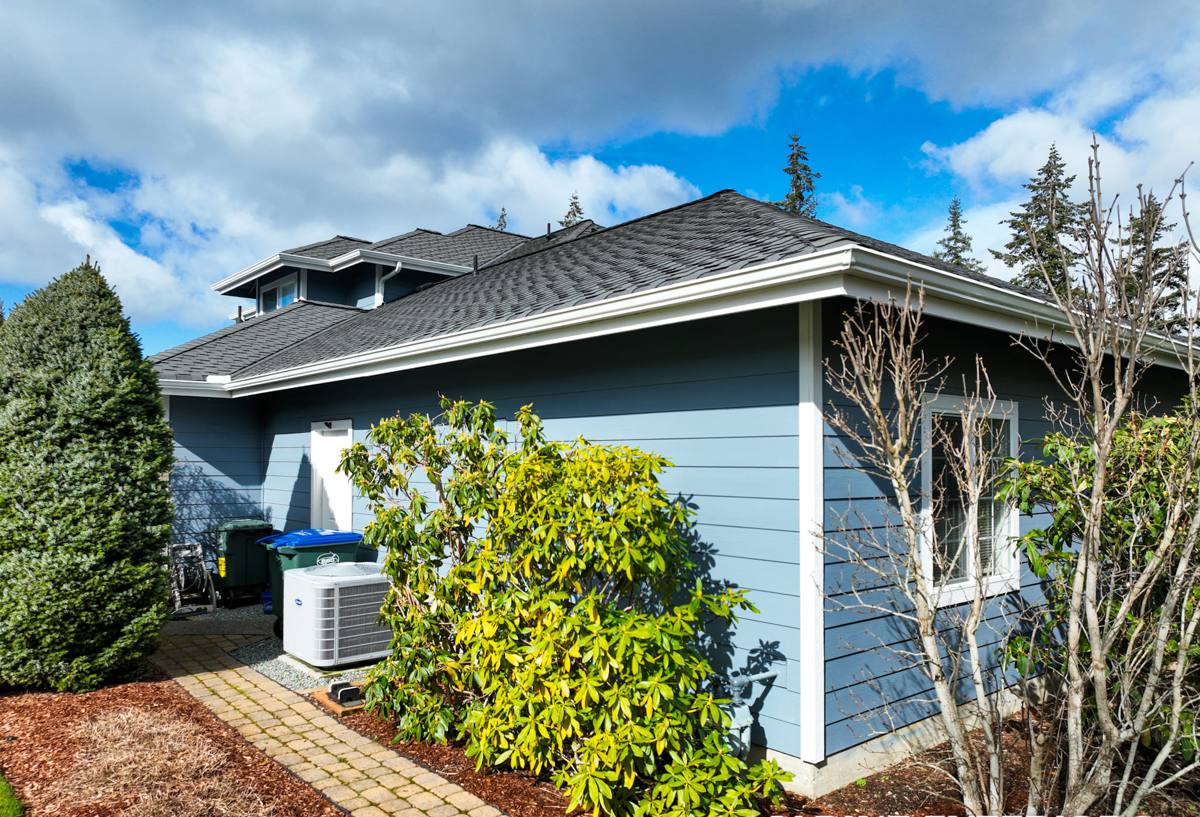
What Whatcom County Weather Does to a Roof Over Time
Moisture and Moss
Homes tucked under fir and cedar canopy — common throughout Sudden Valley and Silver Beach — stay damp longer after every rain because the tree cover blocks sun and airflow. That constant dampness is exactly what moss and algae need to take hold. Once moss gets a foothold on a roof, it holds water against the shingle surface, works its way under the tabs, and lifts them over time. Left alone through a full moss season, that lifting turns into granule loss, then leaks.
Wind-Driven Rain
Rain in this region rarely falls straight down. Wind pushes it sideways and up under eaves, at valleys, and around any roof penetration — vents, skylights, chimneys. A roofing system that only handles vertical rain well isn't enough here; the underlayment, flashing details, and ventilation all have to be built for wind-driven moisture specifically.
Temperature Swings and the Marine Layer
Whatcom County's marine-influenced climate means roofs cycle through damp, cool nights and milder days for most of the year, with the occasional freeze. That steady cycle of expansion and contraction is hard on aging shingles and on any sealant or flashing that was installed loosely. Materials that hold up fine in a drier, more stable climate can fail early here simply because the moisture cycle never really stops.
Signs a Silver Beach Home Needs a New Roof
Most roof failures out here give warning signs well before there's a leak inside the house. Worth checking for, especially before the next wet season sets in:
- Moss or dark algae streaking across shingles, especially on north-facing or shaded slopes
- Granules collecting in gutters or at the base of downspouts
- Shingles that are cupping, curling at the edges, or visibly cracked
- Soft or spongy spots when walking the roof, which usually means the deck underneath is wet
- Daylight visible through the attic roof boards, or damp insulation near the roofline
- Flashing around chimneys, skylights, or vent pipes that's rusted, lifted, or gapped
- A roof that's 20+ years old and has never had underlayment or ventilation upgraded
Any one of these on its own might just mean a repair. Several at once, or a roof that's simply reached the end of its material lifespan, usually means replacement is the more honest recommendation.
What a Correct Roof Replacement Involves
Tear-Off and Deck Inspection
We remove the old roofing down to the deck rather than layering over it. That's the only way to actually see the plywood or plank sheathing underneath — and in a moisture-heavy area like this, hidden deck rot is common enough that skipping this step is how homeowners end up with a roof that looks fine for two years and then fails. Any soft or delaminated sheathing gets replaced before anything new goes down.
Underlayment and Ice-and-Water Barrier
A synthetic underlayment goes down over the full deck, with self-adhering ice-and-water barrier at the eaves, valleys, and around every penetration — the exact spots where wind-driven rain gets pushed. This layer is what actually keeps a roof watertight if a shingle ever gets damaged or lifted; it's not optional in a climate like this.
Ventilation
Proper intake and exhaust ventilation keeps the attic dry and temperature-balanced, which slows moss growth from underneath and prevents condensation from soaking the deck from the inside. A lot of older Sudden Valley homes were built with minimal ventilation, and adding proper intake vents at the eaves paired with ridge or box venting is one of the highest-value upgrades we make during a replacement.
Flashing and Detail Work
Chimneys, skylights, sidewall intersections, and valleys are where most leaks actually start — not the open field of shingles. New step flashing, counter-flashing, and valley metal get installed rather than reused, because flashing that's been through even one damp season loses its seal integrity.
The Roofing Material Itself
Once the deck, underlayment, and flashing are right, the visible roofing layer is almost the easy part — but it still needs to be matched to how much shade, moss exposure, and wind the specific home sees.
Choosing Roofing Materials for This Area
There's no single "best" roofing material for every home in Silver Beach — it depends on tree cover, roof pitch, and budget. Here's how the common options actually perform under this climate's specific pressures:
| Material | Moss/Moisture Resistance | Typical Lifespan | Maintenance |
|---|---|---|---|
| Architectural asphalt shingle | Good with algae-resistant granules; needs periodic cleaning under heavy tree cover | 25–30 years | Moderate — occasional moss treatment |
| Standing seam metal | Excellent — sheds moisture fast, nothing for moss to grip | 40–50+ years | Low |
| Synthetic/composite shake | Very good; engineered to resist moisture absorption | 30–50 years | Low to moderate |
| Natural cedar shake | Fair — attractive but absorbs moisture and needs regular treatment in a wet, shaded lot | 20–30 years with upkeep | High |
For heavily shaded lots — common throughout Sudden Valley — we lean toward steering homeowners away from natural cedar unless they're committed to ongoing maintenance, simply because the moisture absorption and upkeep demands don't match how little sun those roofs see. That's a maintenance-and-moisture judgment call on our part, not a knock on the material itself; cedar performs fine in drier, more open settings.
Our Roof Replacement Process
- On-site inspection. We walk the roof and the attic, check the deck condition where accessible, and look at ventilation and flashing — not just the shingle surface.
- Written estimate. A clear scope and price, including what happens if we find deck damage once tear-off starts, so there are no surprise change orders.
- Material selection. We go over the options above against the specific home's shade, pitch, and budget.
- Tear-off and deck repair. Full removal of old roofing, replacement of any compromised sheathing.
- Underlayment, flashing, and ventilation installation. The layers that actually determine how the roof performs in year 10, not just year one.
- New roofing installation. Installed to manufacturer specification so warranty coverage stays intact.
- Cleanup and final walkthrough. Site cleared, magnetic sweep for nails, and a walkthrough so the homeowner sees exactly what was done.
Cost Factors for a Silver Beach Roof Replacement
Every roof is priced individually, but the same handful of factors move the number up or down on almost every project in this area:
| Factor | Why It Matters Here |
|---|---|
| Roof pitch and access | Steeper roofs and homes on slopes with limited driveway access take longer and need more safety equipment |
| Deck condition | Hidden rot from years of trapped moisture adds sheathing replacement cost that can't be quoted until tear-off |
| Tree cover and debris | Heavier moss/organic buildup means more prep work and sometimes additional cleaning before installation |
| Material choice | Asphalt, metal, and composite carry different material and labor costs, offset by different lifespans |
| Ventilation upgrades | Adding intake/exhaust venting where none existed is an upfront cost that pays off in fewer moisture problems later |
| Number of penetrations | Skylights, chimneys, and multiple vent stacks each need individual flashing work |
Broadly, a straightforward asphalt shingle replacement on an average residential roof in this region tends to run in the mid-to-high five figures, with metal or composite options running higher up front but stretching the replacement cycle out considerably longer. Exact numbers depend entirely on the roof in front of us.
Why a Crew That Already Works Silver Beach Matters
A roofing crew that only occasionally works in Whatcom County will size a roof the same way they'd size one in a drier region — because that's the baseline they're used to. A crew that works Sudden Valley and Silver Beach regularly already knows which slopes on which lots hold moss longest, which older homes in the area were built with undersized ventilation, and how much ice-and-water barrier coverage actually makes sense at the valleys and eaves given how this area's rain behaves. That local pattern recognition shows up in fewer callbacks and a roof that's actually built for the conditions it will sit in for the next few decades, not the conditions a spec sheet assumes.
It also means faster response when something needs a look — no long drive time built into every visit, and a crew that can speak specifically to how a neighbor's roof down the road has held up rather than generic manufacturer talking points.
Maintenance After the New Roof Goes On
A correctly installed roof still benefits from basic upkeep, especially under Sudden Valley's tree cover:
- Keep gutters clear so water isn't backing up under the eaves during heavy rain
- Have moss growth treated early, before it lifts shingle tabs, rather than waiting for a full cleaning
- Trim overhanging branches to cut down on shade, debris, and physical wear on the roofing surface
- Check attic ventilation isn't blocked by insulation or storage after any attic work
- Have flashing and penetrations glanced at every couple of years, since that's where problems start
None of this is heavy maintenance — it's the difference between a roof that reaches its full expected lifespan and one that starts having problems a decade early because moisture had time to work its way in.
If you're weighing repair versus replacement, or just want an honest read on how much life is left in a Silver Beach roof, we're happy to come take a look. There's a form below for a free, no-pressure estimate.