 Sudden Valley Siding
 Roofing in Silver Beach Faces a Different Kind of Wear
Homes along the Silver Beach area near Sudden Valley take a slower, quieter kind of beating than roofs in drier parts of the country. It's not one big storm that does the damage — it's the accumulation. Whatcom County sits in a marine climate where salt-tinged air, near-constant fall and winter rain, and a moss season that can stretch from October well into spring all work on a roof at the same time, year after year. A shingle roof built for a dry climate spec sheet doesn't hold up the same way here.
That's the gap we try to close. A correctly built asphalt shingle roof for this area isn't just "any roofer's" installation — it's one that accounts for how much water the roof will see, how long that water sits before it dries, and how much shade and tree cover it's working under. Get those three things right and a shingle roof will give you decades of service. Get them wrong and you'll be dealing with moss intrusion, soft decking, or granule loss well before the shingles are due for replacement.
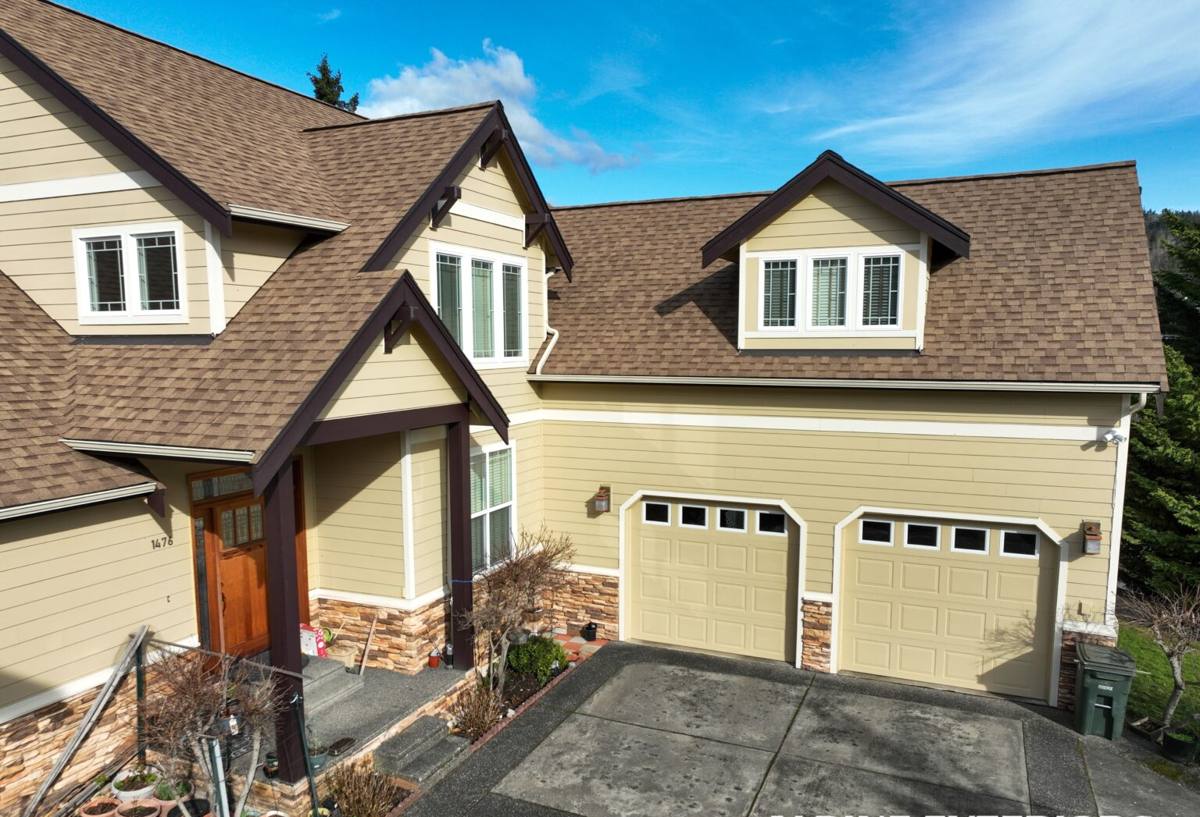
What a Correct Installation Actually Involves
Asphalt shingles look simple from the ground, but the parts you can't see are what determine whether a roof lasts 15 years or 30 in this climate. For a Silver Beach home, we pay particular attention to a few details that matter more here than they would in a drier region.
Underlayment and Water Barrier
In a climate with driving rain and wind-blown moisture, the underlayment is doing more work than most homeowners realize. We use a synthetic underlayment across the full roof deck and add self-adhered ice-and-water membrane at the vulnerable points — eaves, valleys, and around any roof penetrations — where wind-driven rain and ponding are most likely to find a way in.
Flashing at Every Transition
Chimneys, skylights, sidewalls, and roof-to-wall transitions are where the majority of leaks start on an otherwise sound shingle roof. Flashing has to be formed and layered correctly with the underlayment and shingle courses, not just caulked over. Caulk is a maintenance item, not a waterproofing strategy, and in a climate this wet, a roof that relies on sealant instead of proper flashing geometry will fail early.
Ventilation That Matches the Roof
A roof that can't breathe traps moisture in the attic, which shortens the life of the decking and the shingles from underneath — often before you see any sign of a problem from the outside. We balance intake at the eaves with exhaust at the ridge so the attic space stays dry through the wet months instead of accumulating condensation.
Choosing the Right Shingle for This Area
Not every asphalt shingle is built the same way, and the differences matter more in a climate that supports year-round moss and algae growth. Here's how the common options compare for a home in the Sudden Valley and Silver Beach area:
| Shingle Type | Typical Lifespan Here | How It Handles Moss/Algae | Best For |
|---|---|---|---|
| 3-Tab | 15–20 years | Lower resistance; shows streaking sooner | Budget-conscious re-roofs, secondary structures |
| Architectural (Dimensional) | 25–30 years | Thicker mat sheds water better; moderate resistance | Most primary homes in this climate |
| Algae-Resistant (Copper-Granule) | 25–30+ years | Copper-infused granules actively resist algae staining | Shaded lots, north-facing slopes, heavy tree cover |
| Impact-Rated | 25–30+ years | Similar to architectural; added resistance to debris strikes | Homes under mature tree canopy with frequent limb drop |
For most homes in this area, we recommend an algae-resistant architectural shingle. The upfront cost difference over a standard architectural shingle is modest, and it directly addresses the one thing that ages a roof's appearance fastest here — dark streaking and moss colonization on shaded slopes.
Our Process, Start to Finish
- Inspection and honest assessment. We get on the roof, check the decking, flashing, ventilation, and current shingle condition, and tell you plainly whether you need a repair or a full replacement.
- Written estimate. You get a clear scope of work and price before anything is scheduled — no surprises added mid-job.
- Tear-off and deck inspection. Old material comes off down to the deck so we can see and replace any soft or water-damaged sheathing, not cover it up.
- Underlayment and flashing installation. This is where the roof's actual waterproofing happens, and it's not a step we shortcut to save time.
- Shingle installation. Installed to manufacturer nailing specifications, which is what protects your warranty coverage.
- Ventilation check and correction. We confirm intake and exhaust airflow is balanced for the attic space.
- Cleanup and magnetic sweep. Job site and yard are cleared of debris and nails before we call it done.
- Final walkthrough. We go over the finished work with you and provide your warranty paperwork.
What Affects the Cost of a Roof Replacement
Every roof is priced on its own specifics, but these are the factors that move the number most for homes in this area:
| Factor | Why It Matters |
|---|---|
| Roof size and pitch | Steeper roofs take longer to work safely and use more material per square |
| Layers to remove | Tear-off of multiple old layers adds labor and disposal cost |
| Decking condition | Rot or soft sheathing found during tear-off requires replacement before shingles go on |
| Chimneys, skylights, valleys | Each penetration needs custom flashing work, which adds time |
| Access and tree cover | Tight driveways, steep lots, and overhanging limbs common in this area can slow staging and cleanup |
| Shingle grade chosen | Algae-resistant and impact-rated products cost more per square than standard architectural |
We walk through these with you at the estimate so the price makes sense, not just a bottom-line number with no explanation behind it.
Living With Moss, Algae, and Debris After the Job
Even a well-built roof in this climate benefits from a little seasonal attention. Moss doesn't mean the roof was installed wrong — it means the roof is doing exactly what roofs in this part of Whatcom County do when they sit under shade and take on months of rain. A few habits go a long way toward protecting the investment:
- Keep gutters and valleys clear of needles and leaf litter, especially heading into the wet season
- Have moss growth treated or gently removed before it builds up thick mats that hold moisture against the shingles
- Trim back branches that overhang the roofline to reduce shade and debris buildup
- Avoid pressure washing shingles directly — it strips granules and shortens shingle life
- Schedule a walk-through inspection every couple of years, or after any major windstorm
Repair or Replace? Signs to Watch For
Not every roofing problem means a full replacement. Here's a general checklist for figuring out which situation you're in before you call anyone:
- Isolated leak near a single flashing point or penetration — often repairable
- Thick moss coverage across most of the roof, especially on north-facing slopes — may still be salvageable with cleaning and treatment
- Granules collecting heavily in gutters and downspouts — a sign the shingles are aging past their protective life
- Shingles curling, cupping, or cracking across large sections — usually points toward replacement
- Soft or spongy spots when walked on — indicates decking damage, which needs to be addressed regardless of shingle age
- Roof is 20+ years old with multiple minor issues appearing at once — often more cost-effective to replace than keep patching
Why Local Experience in Silver Beach and Sudden Valley Matters
A roofing crew that only occasionally works this side of Whatcom County has to relearn the local conditions every time. A crew that works Silver Beach and the surrounding Sudden Valley area regularly already knows how the tree canopy shades certain roof faces longer, how steep and winding some of the access roads and driveways are, and how much moss buildup is normal versus a sign of a deeper problem. That familiarity shows up in fewer surprises during the job and a roof system that's actually specified for the conditions it has to survive, not a generic install.
It also matters for scheduling. Roofing work in this climate has a real weather window, and a crew that knows the local rain patterns plans tear-offs and dry-in timing accordingly, so your home isn't left exposed longer than it needs to be.
Get a Straight Answer About Your Roof
If your roof is showing its age, dealing with heavy moss, or you just want an honest opinion on whether repair or replacement makes more sense, we're happy to take a look. Fill out the form below for a free, no-pressure estimate on your Silver Beach home.