 Sudden Valley Siding
 Siding Repair in Barkley: Fixing the Cause, Not Just the Symptom
Barkley homeowners usually call about one specific thing: a section of siding that's cracked, a corner that's soft to the touch, a stain that keeps coming back no matter how many times it's cleaned. What they're often surprised to learn is that the visible damage is rarely the whole story. In Whatcom County's climate, siding failure is almost always a moisture story first and a cosmetic one second, and repairing it correctly means understanding how salt air, driving rain, and a long moss season worked together to get a wall to that point.
This page is specifically about siding repair for homes in and around Barkley near Sudden Valley — not a full replacement, not a different service. If your siding is generally sound but has isolated damage, deteriorating sections, or recurring moisture problems in specific spots, repair is often the right call, and doing it well takes the same discipline as a full install.
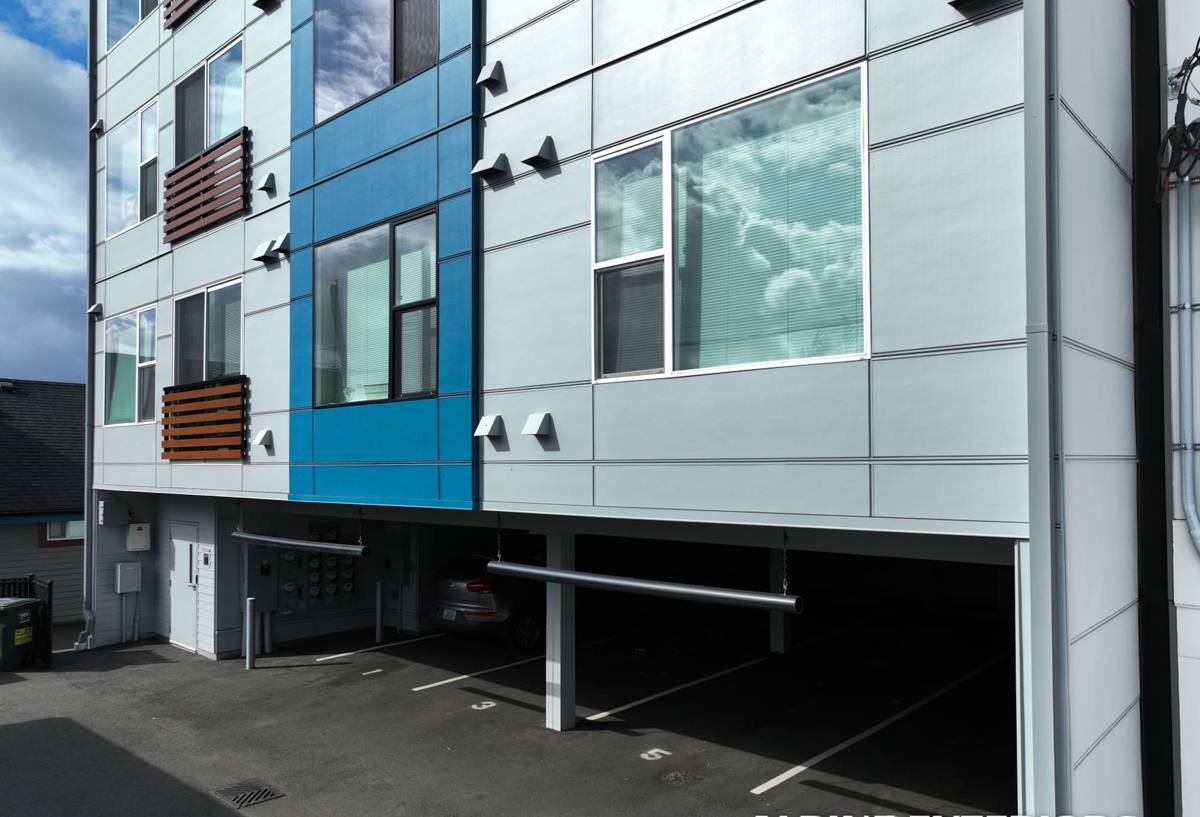
Why Barkley Siding Fails the Way It Does
Three regional factors show up over and over in the repair calls we see in this area, and they rarely act alone.
Salt Air
Homes with any exposure to the water carry salt-laden air across their exterior year-round. That air accelerates corrosion on exposed fasteners and hardware, and it keeps painted or coated surfaces damp longer than they'd stay in a drier inland setting. A fastener that rusts and loosens doesn't just look bad — it opens a path for water to get behind the cladding, which is where real damage starts.
Driving Rain
Rain in this part of Whatcom County frequently comes in at an angle rather than straight down, which means it gets pushed into laps, seams, and fastener points that a calmer climate's installation wouldn't have to account for as heavily. When the original installation didn't detail flashing and clearances tightly enough for that reality, wind-driven water finds the gap — often in the exact spot where a repair call eventually comes from.
Moss Season
Shaded walls, north-facing exposures, and anything near tree cover in the Barkley area stay damp for long stretches across fall, winter, and spring. That's ideal for moss to take hold, and moss against siding isn't just cosmetic — it holds moisture directly against the surface and, on wood-based or wood-look products, contributes to the swelling and softening that eventually becomes rot.
Repair work that only addresses what's visible — recaulking a crack, spot-painting a stain — without correcting the underlying flashing, clearance, or drainage issue tends to fail again within a season or two. That's the pattern we're called in to fix more often than any other.
What Correct Siding Repair Actually Involves
A repair done right in this climate isn't a patch job. It follows the same standards a full installation would, scoped down to the section that actually needs it.
- Removing damaged material fully rather than covering it, so any hidden rot or moisture intrusion behind it gets addressed instead of sealed in
- Inspecting and correcting the house wrap or weather-resistive barrier underneath the repaired section
- Re-flashing windows, doors, and penetrations in the repair area to current standards, not just matching whatever was there before
- Setting correct fastener type, spacing, and corrosion resistance for salt-air exposure
- Restoring proper clearance above grade, decks, and hardscape so the repaired section doesn't sit in the same damp conditions that caused the original failure
- Matching new material and finish closely enough that the repair doesn't stand out as an obvious patch
Skipping any of these steps might save time on a single visit, but it usually means the same wall is back on someone's repair list within a few years — and by then the damage has often spread beyond what the first repair covered.
Repair or Replace? How We Make That Call
Not every damaged section needs a full re-side, and we don't push replacement when repair will genuinely hold. The honest answer depends on how contained the damage is and what's causing it.
| Situation | Usually Points To |
|---|---|
| Isolated crack or impact damage on an otherwise sound wall | Targeted repair of the affected boards |
| Soft or spongy spots at one or two locations, moisture confirmed to be recent | Repair, once the moisture source is corrected |
| Recurring moss or staining limited to a specific shaded section | Repair paired with a drainage or clearance fix at that section |
| Rot or soft boards spreading across multiple walls or courses | Full replacement, since the underlying material is failing broadly |
| Original siding is near or past its expected service life overall | Full replacement, since repairs at that stage rarely keep pace with new problems surfacing |
| Siding is a moisture-sensitive product (vinyl, primed wood, engineered wood) showing widespread wear | Full replacement with fiber cement, since repairing that material in place just delays the same failure pattern |
We'll walk the property, look at what's actually happening at the repair site and nearby, and give a straight answer on which category a given problem falls into. If a repair will genuinely hold, that's what we'll recommend and price.
Signs a Barkley Home Needs a Siding Repair Call
- Cracked, split, or visibly warped boards in one or more sections
- Soft spots or noticeable give when pressed near trim, corners, or window edges
- Recurring green or black staining that returns shortly after cleaning
- Rust streaking below fasteners or exposed hardware
- Gaps opening up at seams, corners, or where siding meets trim
- A section that stays visibly damp longer than the rest of the wall after rain
- Paint or finish failing in one area while the rest of the exterior still looks sound
Any single item on this list doesn't necessarily mean extensive damage. But in a climate that keeps moisture in contact with a wall for long stretches, small problems tend to compound rather than stay put, so it's worth having someone look before the affected area grows.
Why We Repair Siding With James Hardie Fiber Cement, Not Substitutes
When a repair section needs new material, we use James Hardie fiber cement — the same product line we use on every full installation. We don't install vinyl, LP SmartSide, primed spruce, cedar, or other fiber cement brands, and that standard applies to repair work just as much as new installs.
The reason is straightforward: patching a damaged section with a moisture-sensitive material, even to match what was already there, means introducing the same failure risk into a spot that just proved vulnerable. James Hardie's fiber cement doesn't swell, rot, or feed moss, its ColorPlus factory finish is baked on rather than field-applied, and Hardie builds climate-specific HZ formulations suited to sustained damp exposure. Where an exact color or profile match to older, non-Hardie siding isn't possible, we'll walk homeowners through the realistic options — full-wall replacement in matching Hardie product, or a clearly planned transition — rather than mismatching materials just to minimize the current job.
What This Means for a Partial Repair
On homes with older cedar, vinyl, or other siding, a full re-side isn't always the right call for a single damaged section, but we're upfront that Hardie repair material won't disappear seamlessly into a different product. We'll give an honest read on how visible that will be before work starts, not after.
Our Process for a Barkley Siding Repair
- On-site assessment: We look at the damaged area and the wall around it, including what's happening behind the surface where possible, since visible damage often understates what's underneath.
- Honest repair-vs-replace recommendation: We tell you which category the problem falls into and why, using the same standard outlined above.
- Scope and estimate: A clear, written estimate covering material, labor, and what the repair specifically addresses — no vague line items.
- Removal and inspection: Damaged material comes off fully so we can check the barrier, framing, and flashing underneath before anything new goes on.
- Correction, not just replacement: Any flashing, clearance, or drainage issue that contributed to the original damage gets corrected as part of the repair, not left in place.
- Install and finish: New Hardie material installed to spec, with fastening and clearance set for this climate, and finish matched as closely as the situation allows.
- Walkthrough: We show you what was found, what was fixed, and what to watch for elsewhere on the property going forward.
Why Hiring a Crew That Already Works Barkley Matters
A repair crew that only occasionally works this part of Whatcom County can still do competent work, but there's a real advantage to one that already knows the pattern. We've seen how salt exposure, wind-driven rain, and shaded moss-prone walls tend to show up on homes in this specific area, which means we're not guessing at what caused a given failure — we've usually seen the same pattern before on a similar wall orientation nearby. That shows up in faster, more accurate diagnosis, and in repairs that account for the actual conditions the wall will keep facing rather than a generic assumption about siding damage.
It also matters for scheduling and follow-up. A local crew is positioned to come back for a warranty check or a follow-up look without the trip being a logistical hurdle, which is worth something when the whole point of a proper repair is making sure it actually holds.
What a Siding Repair Estimate Should Include
| Item | Why It Matters |
|---|---|
| Scope of removal | Confirms whether only the visible damage or the full affected area (including hidden moisture) is being addressed |
| Barrier and flashing correction | Determines whether the underlying cause is actually being fixed, not just the surface |
| Material specified | Confirms Hardie fiber cement and the correct HZ formulation are being used, not a substitute product |
| Fastener type and spacing | Affects how well the repair resists salt-air corrosion long-term |
| Finish and color match | Sets realistic expectations for how visible the repair will be against existing siding |
| Timeline and weather contingency | Whatcom County's rain windows can affect scheduling for tear-off and install |
If you're dealing with damaged, soft, or persistently stained siding on a Barkley-area home, we're glad to take a look and give you a straightforward read on what it actually needs. Reach out using the form below to schedule a free, no-pressure estimate.