 Sudden Valley Siding
 Why South Hill Siding Takes More Than a Standard Install
South Hill sits up in the terrain around Sudden Valley, which means the siding on these homes deals with a specific combination of stress most Whatcom County installers don't think through carefully: moisture that blows in sideways during winter storms, salt-laden air moving through the region, and long stretches of shade and dampness that keep exterior walls wet far longer than homes in drier parts of the state. Add elevation and tree cover into the mix, and you get siding that's rarely given a chance to fully dry out between rain events.
That combination is hard on almost every siding material in different ways. Wood trim swells and checks. Vinyl gets brittle in cold snaps and shows every wave in the substrate underneath. Caulk joints on lap siding open up faster than the manufacturer's warranty language ever admits. None of this is dramatic — it's slow, cumulative damage that shows up as soft trim, peeling paint, and dark streaking years before a homeowner expects to think about siding again.
What "Driving Rain" Actually Does to a Wall
Driving rain isn't just water hitting the siding face — it's water being pushed sideways and upward under laps, around fasteners, and into any gap in flashing or trim. On a South Hill lot with wind exposure, that means the water-resistive barrier behind the siding and the flashing details around windows and penetrations matter as much as the siding material itself. A siding job that looks great from the curb but skipped proper flashing will fail from the inside out.
What a Long Moss Season Means for Siding
Whatcom County's moss season runs long compared to most of the country, and moss doesn't just grow on roofs. It takes hold anywhere organic material and moisture sit against a surface for weeks at a time — shaded north walls, areas under overhangs, and anywhere siding stays damp. Moss and algae growth on a wall isn't just cosmetic; it holds moisture against the siding surface and, on materials that aren't dimensionally stable, can accelerate softening and paint failure underneath.
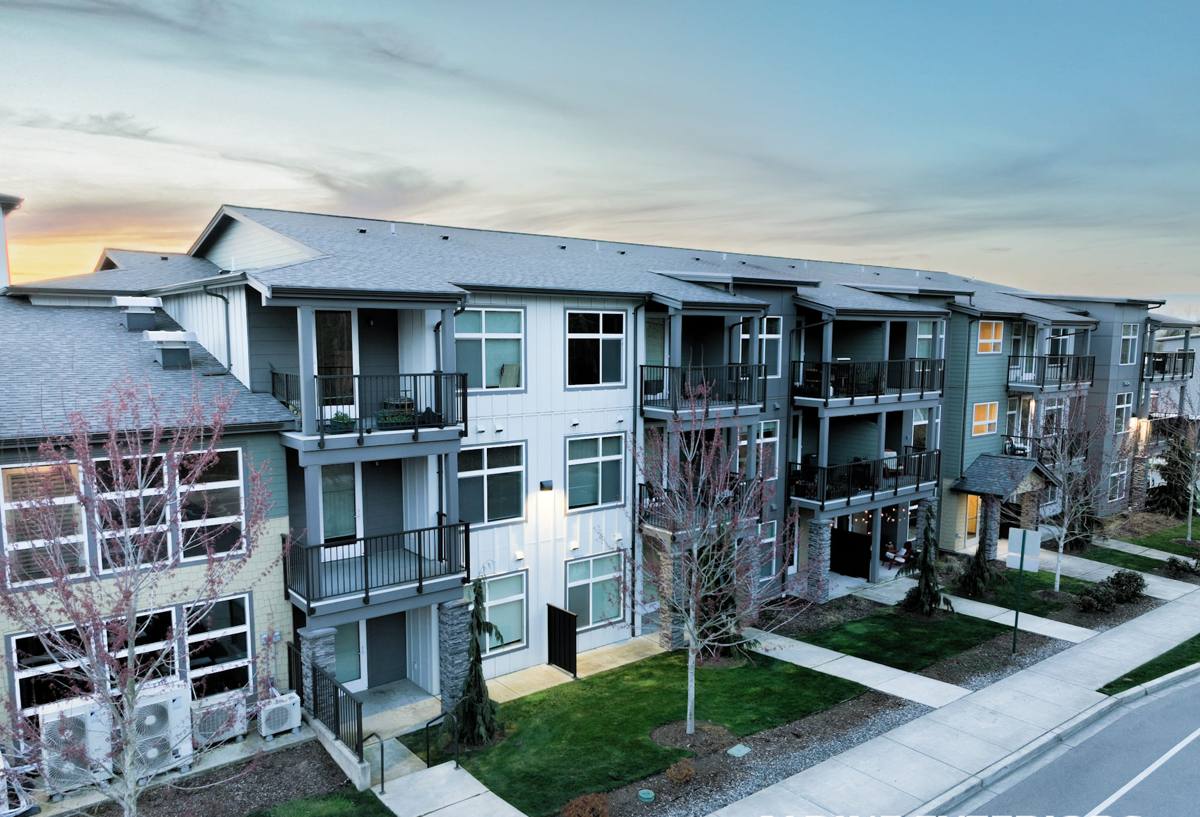
What Correct Siding Installation Involves
A siding replacement is really a system, not a single product. The siding panel or plank is the visible layer, but the parts underneath it determine whether the whole assembly holds up in a climate like this one.
- Water-resistive barrier: a continuous, correctly lapped house wrap or building paper behind the siding, with no gaps at seams or penetrations.
- Flashing at every opening: windows, doors, and any wall penetration need flashing that directs water out and away from the wall assembly, not just caulk covering the gap.
- Proper fastening: the right fastener type, spacing, and depth for the specific siding product — over- or under-driven fasteners are one of the most common causes of early siding failure.
- Correct clearances: siding held off decks, patios, and grade by the manufacturer-specified gap so it isn't sitting in standing water or snow.
- Caulking done sparingly and correctly: caulk should seal specific joints, not paper over gaps that should have been flashed instead.
Skip or shortcut any one of these and the siding material — no matter how good — is fighting an uphill battle against the climate described above.
Why We Install Only James Hardie Fiber Cement
We standardized on James Hardie fiber cement siding for every home we work on, including South Hill, and we don't install LP SmartSide, vinyl, Cemplank, Allura, primed spruce, or cedar. That's not a marketing position — it's a decision built around what holds up in this specific climate over decades, not just years.
Fiber cement is dimensionally stable in a way wood-based and vinyl products aren't. It doesn't swell and shrink significantly with moisture the way wood-based siding can, it doesn't soften at cut edges or fastener holes the way engineered wood products can if a detail is missed, and it doesn't become brittle in cold weather or visibly telegraph substrate waviness the way vinyl does. It's also non-combustible, which matters increasingly to insurers and homeowners in the Pacific Northwest. James Hardie's ColorPlus factory finish is baked on under controlled conditions, which gives a more consistent, longer-lasting finish than field-applied paint on any substrate, and it comes backed by a strong transferable warranty on both the substrate and the finish.
None of that means other products are without merit — vinyl is inexpensive and low-maintenance in the right climate, and cedar has a genuine appeal for homeowners who want a natural look and are willing to maintain it. We simply won't put those products on a South Hill home and stand behind them the way we can stand behind Hardie.
Choosing the Right Hardie Line for South Hill
James Hardie makes several product lines, and the right choice depends on the home's exposure, style, and the homeowner's priorities.
| Product | Best For | Notes for This Climate |
|---|---|---|
| HardiePlank Lap Siding | Most home styles, traditional lap look | Most common choice; wide range of profiles and ColorPlus colors |
| HardiePanel Vertical Siding | Modern designs, accent walls, gables | Works well paired with lap siding for dimension on multi-story homes |
| HardieShingle | Craftsman and cottage-style homes | Textured look without the moisture concerns of real wood shakes |
| HardieTrim | Corners, fascia, window and door trim | Pairs with any of the above; resists the trim rot common on older Northwest homes |
James Hardie also engineers its products by climate zone under the "HZ5" designation for the Pacific Northwest, which affects the moisture and freeze-thaw performance of the product specified for this region — one more reason product selection shouldn't be an afterthought.
Our Installation Process
1. On-Site Assessment
We start by walking the exterior, checking for existing moisture damage, soft trim, and problem areas — particularly shaded and wind-exposed walls, which tend to show the most wear on South Hill homes.
2. Tear-Off and Substrate Check
Old siding comes off and we inspect the sheathing underneath before anything new goes up. Hidden rot or moisture damage gets addressed before we move forward — installing new siding over a compromised substrate just hides the problem.
3. Water-Resistive Barrier and Flashing
New house wrap and flashing go in at every window, door, and penetration, correctly lapped to shed water downward and outward.
4. Hardie Installation to Manufacturer Spec
Panels and planks go up with the fastener type, spacing, and clearances James Hardie specifies — not generic siding practices. This is where a lot of installation problems on other jobs originate.
5. Trim, Caulking, and Paint Touch-Up
Trim details are finished, caulk is applied only where it belongs, and any factory-finish touch-up is done with Hardie's matched products.
6. Final Walkthrough
We walk the finished exterior with the homeowner before calling the job done.
Cost Factors for South Hill Homes
| Factor | Why It Matters Here |
|---|---|
| Home size and story count | More wall area and access difficulty on multi-story homes |
| Existing damage found at tear-off | South Hill's moisture exposure means hidden sheathing repair is more common than on drier sites |
| Product line and profile chosen | Lap vs. panel vs. shingle, plus trim complexity |
| Site access | Slopes, tree cover, and setback affect staging and labor time |
| Color | Standard ColorPlus colors vs. premium or custom options |
We give exact numbers only after seeing the home in person — anyone quoting a firm price over the phone for a job like this is guessing.
Signs Your Current Siding Is Already Struggling
- Dark streaking or persistent moss/algae growth on shaded walls
- Soft or spongy spots when you press on siding or trim
- Paint that's peeling, bubbling, or chalking heavily
- Visible warping, cupping, or gaps at seams and corners
- Caulk that's cracked or pulling away from joints
- Higher heating bills than neighboring homes of similar size
Any one of these on its own isn't necessarily urgent, but two or more together — especially on a wall that gets little sun — usually mean moisture is already getting past the siding.
Why Local Experience in South Hill Matters
Whatcom County has plenty of licensed siding contractors, but a lot of siding failure we see traces back to details that are only obvious if you've worked this specific terrain and climate before — where the wind-driven rain actually hits hardest on a given lot orientation, how much shade a wall gets across the seasons, and which details fail first when moss and moisture combine. A crew that's already installed siding on homes like these knows to spend extra attention on flashing and clearances rather than treating every wall the same way a drier-climate job would be treated.
That local pattern recognition doesn't replace manufacturer specs or good workmanship, but it does mean fewer surprises during the job and a better chance the siding performs the way it's supposed to for the next several decades.
If you're weighing a siding replacement on a South Hill home, we're happy to take a look and walk you through what we're seeing — no pressure, no obligation. Fill out the form below for a free estimate.