 Sudden Valley Siding
 Metal Roofing Built for Sehome's Weather
Homes in the Sehome area sit close enough to Bellingham Bay to catch salt-laden air off the water, and close enough to the hills and tree cover around them to stay damp and shaded for long stretches of the year. That combination is hard on a roof. Salt air accelerates corrosion on anything with exposed metal fasteners or unprotected edges. Driving rain, pushed sideways by wind off the bay, finds its way into laps and seams that would stay dry in a calmer climate. And the moss season here doesn't really end — it just slows down in the driest weeks of summer and comes roaring back the rest of the year.
A metal roof, installed correctly for this specific environment, handles all three of those pressures better than most alternatives. But "installed correctly for this environment" is doing a lot of work in that sentence. Metal roofing done generically — the same detailing you'd use in a dry inland climate — will underperform here. This page covers what a metal roof actually needs to hold up in Sehome, and what our process looks like when we build one.
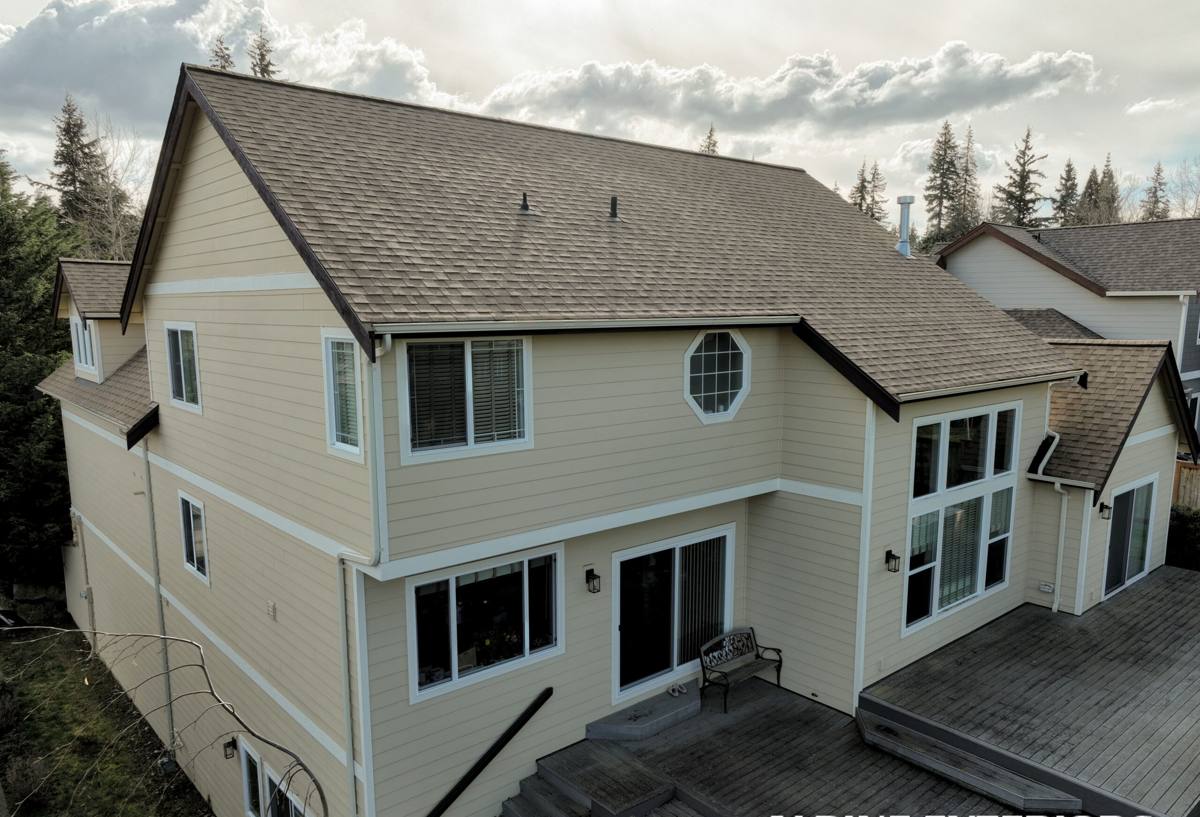
What Salt Air, Driving Rain, and Moss Actually Do to a Roof
Salt Air and Corrosion
Salt in the air doesn't just affect homes right on the waterfront. It travels on wind and settles on any exposed metal, and over years it can pit unprotected fasteners, degrade cheap coatings, and cause galvanic corrosion where two dissimilar metals touch — for example, the wrong screw in the wrong panel, or an aluminum gutter draining onto a steel roof edge with no separation. None of this shows up in year one. It shows up in year eight or ten, as rust streaks at fastener heads or failure at cut edges that were never properly sealed.
Wind-Driven Rain at the Seams
Rain that falls straight down is easy for any roof to shed. Rain that's being pushed sideways by wind off the bay behaves differently — it can work its way uphill under laps, around vent penetrations, and into fastener holes that rely on a compressed washer to stay sealed. Whatcom County gets enough of this weather that seam design and flashing detail matter more here than they would in a milder climate.
A Moss Season That Doesn't Really End
Shaded, north-facing, and tree-covered roof sections in and around Sehome stay damp long enough for moss and algae to establish themselves and keep growing through most of the year. On some roofing materials that growth holds moisture against the surface and works its way under the material. On a properly installed metal roof, moss has almost nothing to root into — but it can still build up in valleys, at flashing transitions, and in gutters, where trapped organic debris holds water against edges and fasteners.
Why Metal Is a Strong Fit for Sehome Homes
Metal roofing isn't the right call for every budget or every home, but for this climate specifically, here's what it brings to the table:
- Sheds wind-driven rain more reliably than lapped materials, when seams and flashings are detailed correctly
- Gives moss and algae almost no surface texture to grab onto, compared to shingle or shake roofing
- Handles freeze-thaw cycling without the granule loss or cracking that shortens the life of asphalt shingles
- Comes with factory finishes designed to resist coastal salt exposure, when the right coating and fastener system are specified
- Lasts multiple decades with basic upkeep, which matters on a property where you don't want to be back on the roof every few years
None of that means a metal roof is maintenance-free in this climate. It means the maintenance it does need is simpler and less frequent than what other materials require here.
Standing Seam vs. Exposed-Fastener: Choosing the Right System
"Metal roofing" covers more than one type of system, and the two most common options perform differently in a wet, salty, moss-prone climate like this one.
| System | How It's Fastened | Performance in Sehome's Climate | Typical Trade-Off |
|---|---|---|---|
| Standing seam | Hidden clips, no exposed fasteners on the field of the panel | Best resistance to wind-driven rain and salt corrosion at fastener points | Higher material and labor cost |
| Exposed-fastener panel | Screws driven through the panel face, with a gasketed washer | Good performance if fasteners and washers are rated for coastal exposure and replaced on schedule | Washers age and need periodic inspection or replacement over the life of the roof |
We'll walk you through both options honestly for your specific roof — pitch, budget, and how long you plan to own the home all factor into which one makes sense.
What a Correct Metal Roof Installation Actually Involves
A metal roof is only as good as what's underneath it and how the details are handled. On every Sehome installation, this is what we check and control for:
- A synthetic underlayment rated for the panel type, not a generic felt that degrades under prolonged moisture exposure
- Fasteners and clips specified for coastal salt exposure, not standard hardware
- Closed-cell foam closures or properly formed flashing at ridges and eaves to block wind-driven rain
- Correct panel overlap and seam direction relative to prevailing wind and water flow on your specific roof
- Isolation between dissimilar metals to prevent galvanic corrosion at gutters, flashing, and penetrations
- Adequate attic or roof-deck ventilation, since trapped moisture underneath the panels causes problems no matter how good the metal on top is
- Careful sealing at every penetration — vents, chimneys, skylights — since these are the most common source of leaks on any roof type
Our Process for Sehome Metal Roofing Projects
- On-site assessment. We inspect the existing roof, deck condition, ventilation, and any moss or moisture damage already present before quoting anything.
- System recommendation. Based on your roof's pitch, exposure to wind and salt air, and budget, we recommend standing seam or exposed-fastener panels — and explain why.
- Tear-off or overlay decision. In most cases we recommend a full tear-off so we can address deck condition and install proper underlayment, rather than covering up problems.
- Installation. Panels, flashing, and penetrations are installed to the detailing above, with attention to seam direction and coastal-rated fasteners.
- Final walkthrough. We review the finished roof with you, including what maintenance it will need and roughly when.
Living With a Metal Roof Here: Maintenance That Matters
A well-installed metal roof in Sehome needs far less attention than an asphalt roof, but "far less" isn't "none." The moss season in Whatcom County means gutters and valleys still collect organic debris even on a roof the moss itself can't grow on. Left alone, that debris holds moisture against edges and fasteners and undoes some of the advantage metal gives you.
- Clear gutters and valleys at least once or twice a year, more often under heavy tree cover
- Have fasteners and washers on exposed-fastener systems inspected periodically, since gaskets age faster in coastal, high-moisture conditions
- Rinse off heavy moss or algae buildup rather than scraping it, to avoid scratching factory coatings
- Check flashing at penetrations after major windstorms, which is when wind-driven rain does the most damage
What Affects the Cost of a Metal Roof
Costs vary by roof size, pitch, and complexity, but these are the main factors that move the number up or down on a typical Sehome home:
| Factor | Why It Matters |
|---|---|
| Panel system (standing seam vs. exposed-fastener) | Standing seam costs more but needs less fastener maintenance over time |
| Roof pitch and complexity | Steep or cut-up roofs with many valleys and penetrations take more labor and flashing detail |
| Tear-off vs. overlay | A full tear-off costs more up front but lets us fix deck or ventilation issues instead of covering them |
| Coating and fastener grade | Coastal-rated finishes and hardware cost more but hold up longer against salt air |
| Ventilation upgrades | Older homes sometimes need added ventilation to keep moisture from being trapped under the new roof |
We'll break down these factors for your specific roof during the estimate, so you know exactly what you're paying for and why.
Why a Crew That Already Works in Sehome Makes a Difference
A metal roof designed for a dry inland climate and one designed for a home exposed to Bellingham Bay's salt air and Whatcom County's driving rain are not the same job, even though the panels might look identical. A crew that regularly works in and around Sehome already knows which fastener grades hold up here, which flashing details actually stop wind-driven rain, and how much moss and gutter debris to expect from the tree cover typical of this area. That local experience shows up in fewer callbacks and a roof that performs the way it's supposed to for its full lifespan, not just in the first few dry summers.
If you're weighing a metal roof for your Sehome home, we're happy to take a look and give you a straightforward assessment — no pressure, no upsell. Request a free estimate using the form below and we'll walk the roof with you and talk through what actually makes sense for your home.