 Sudden Valley Siding
 Roofing in Cordata Isn't the Same Job as Roofing Somewhere Dry
Cordata sits in the north Bellingham area of Whatcom County, close enough to Bellingham Bay and the Salish Sea that marine air is part of daily life. That air carries salt, and salt is hard on the metal components of a roof — flashing, fasteners, vent caps, and gutter hardware all take more of a beating here than they would fifty miles inland. Add in a rainy season that stretches across most of the year and a moss season that can run even longer, and you have a climate that shortens the useful life of a roof that wasn't built for it. A roof replacement here isn't just about swapping old shingles for new ones. It's about choosing materials and details that hold up to this specific mix of salt air, driving rain, and moss.
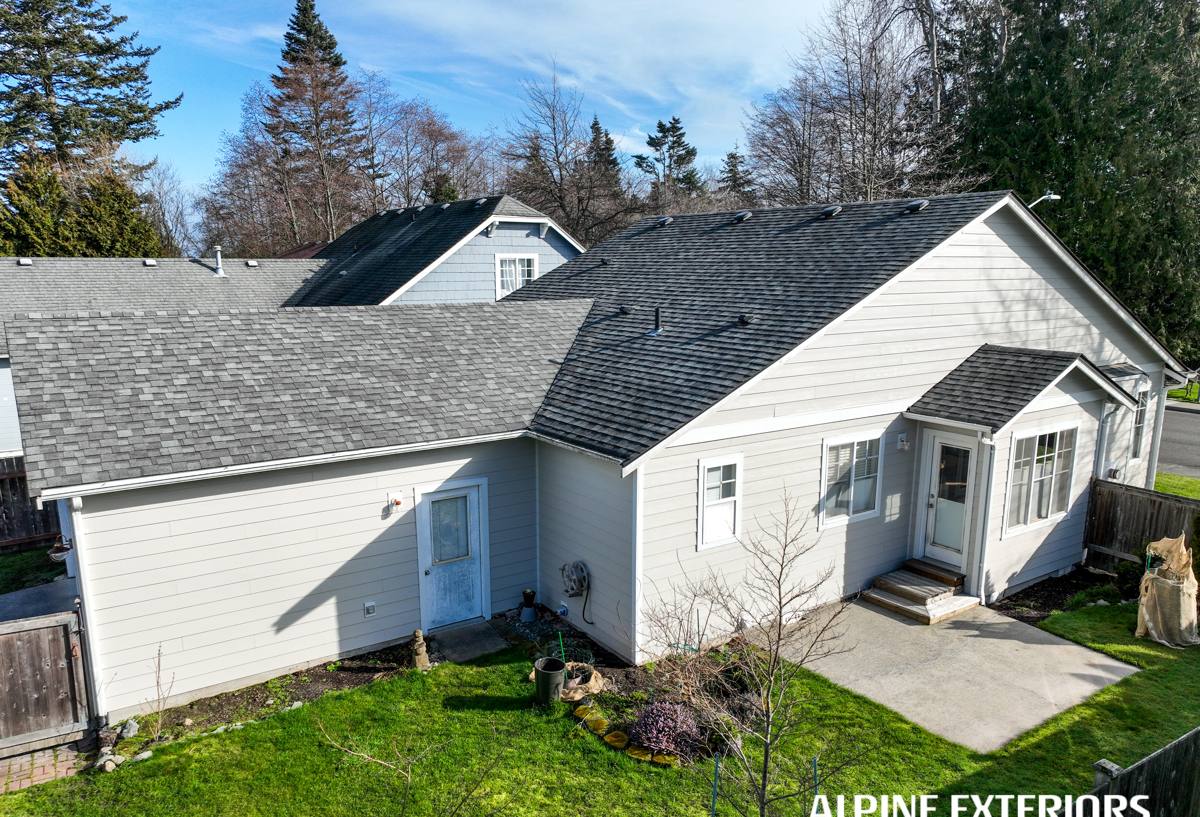
What This Climate Actually Does to a Roof
Salt Air and Corrosion
Salt-laden air accelerates rust on exposed fasteners, step flashing, and drip edge, especially on roofs that face open weather. Once corrosion starts at a fastener or a flashing seam, water finds its way underneath, and what looks like a cosmetic issue becomes a leak path.
Moss and Moisture Retention
Whatcom County's long wet season gives moss and algae plenty of time to establish on north-facing slopes and anywhere shade keeps a roof from drying out between rains. Moss doesn't just look bad — it holds moisture against the roofing material, works its way under shingle tabs, and lifts edges enough for wind-driven rain to get underneath.
Driving Rain and Wind
Storms moving through this part of Washington don't always drop rain straight down. Wind-driven rain pushes water sideways and upward under shingle edges, ridge caps, and flashing that would be fine in a calmer climate. This is where corner-cutting on underlayment and flashing shows up years later as a leak, even though the shingles themselves still look intact.
Signs a Cordata Roof Needs Replacement, Not Another Patch
Homeowners often ask us to look at a leak and end up learning the roof has several years of hidden wear beyond that one spot. These are the signs worth taking seriously before you spend more money on repairs to a roof that's past the point of patching:
- Granule loss heavy enough that you can see bare, shiny patches on asphalt shingles
- Shingles that are curling, cupping, or cracking, especially on south- and west-facing slopes
- Moss or algae growth that comes back within a season or two of cleaning
- Soft or spongy decking felt underfoot when walking the roof
- Daylight visible through the attic roof boards, or damp insulation below the roof deck
- Flashing around chimneys, skylights, or vents that's rusted, lifted, or caulked over as a stopgap
- A roof already past 20–25 years old, even if it "looks fine" from the ground
- Rising energy bills alongside visible attic moisture, which often points to failing ventilation and roofing together
What a Correct Roof Replacement Actually Involves
A roof replacement is only as good as what happens underneath the new material. Skipping steps to save a day of labor is where most premature failures start.
Full Tear-Off and Deck Inspection
We remove the old roofing down to the deck rather than layering over it. That's the only way to actually see the plywood or plank decking and replace any sections that have rotted or delaminated from years of trapped moisture — a common find on older Whatcom County homes.
Underlayment and Ice-and-Water Protection
Given how much wind-driven rain this area sees, we don't treat underlayment as an afterthought. Self-adhering ice-and-water membrane goes at eaves, valleys, and around every penetration — the places water is most likely to be pushed by wind rather than just falling straight down.
Flashing Done Right
New step flashing, counter-flashing, and drip edge in corrosion-resistant material, properly integrated with the underlayment rather than just caulked at the seams. This is the single most common source of "mystery leaks" on roofs that otherwise look fine.
Ventilation
Balanced intake and exhaust ventilation keeps the attic from trapping the moisture that this climate is constantly trying to push into the house. Poor ventilation also shortens shingle life from the underside, which is easy to miss during a visual-only inspection.
Choosing a Roofing Material for This Climate
There's no single "best" roofing material for every home — the right choice depends on your roof's slope, sun exposure, budget, and how much long-term maintenance you're willing to do. Here's how the common options compare for a Whatcom County home like the ones in and around Cordata:
| Material | Moss/Moisture Resistance | Typical Lifespan | Maintenance Burden | Relative Cost |
|---|---|---|---|---|
| Architectural asphalt shingle | Good with algae-resistant granules; needs periodic moss removal | 25–30 years | Moderate — occasional cleaning, watch shaded slopes | $ |
| Standing-seam metal | Excellent — sheds moss and moisture better than any shingle | 40–50+ years | Low, but coastal-area fasteners need corrosion-resistant hardware | $$$ |
| Synthetic/composite shingle | Very good; resists moisture absorption better than asphalt | 30–50 years | Low to moderate | $$ |
| Wood shake | Poor in this climate without aggressive upkeep | Varies widely; shortened by moss and moisture | High — regular treatment needed | $$ |
We install asphalt, metal, and composite roofing, and we'll walk you through the honest trade-offs for your specific roof rather than pushing whatever's easiest to sell. Wood shake can look great, but in a climate this wet it demands a maintenance commitment most homeowners underestimate, and we'll say so upfront rather than let you find out the hard way.
What Affects the Cost of a Roof Replacement Here
Every roof is different, so we don't quote sight-unseen, but the main cost drivers for a Cordata-area replacement are consistent:
- Roof size and complexity — square footage, plus the number of valleys, hips, and penetrations
- Deck condition — how much plywood or plank decking needs to be replaced once the old roofing is off
- Material choice — asphalt, metal, and composite carry different material and labor costs
- Pitch and access — steep or hard-to-access roofs take longer and require more safety setup
- Ventilation upgrades — adding or correcting intake/exhaust ventilation if the existing setup is inadequate
- Layers to remove — homes with more than one layer of old roofing require extra tear-off labor
We give a firm, itemized number after we've actually walked the roof — not a phone estimate that changes once the crew shows up.
How Our Process Works
- Free on-site inspection — we walk the roof and the attic, not just look from the driveway, and check for moss, flashing wear, and deck soundness.
- Written estimate — a clear breakdown of materials, labor, and timeline, with straight answers about trade-offs between material options.
- Scheduling around the weather — we plan tear-off days to minimize how long your home is exposed, which matters more here than in a drier climate.
- Tear-off and deck repair — full removal of the old roof and replacement of any compromised decking.
- Underlayment, flashing, and ventilation — the details that determine whether the roof actually performs in local weather.
- New roofing installed to manufacturer specification — so warranty coverage stays intact.
- Cleanup and magnetic sweep — yard, driveway, and landscaping cleared of debris and stray nails.
- Final walkthrough — we go over the finished roof with you before we consider the job done.
Why It Matters That We Already Work in Cordata
A crew that regularly works Cordata and the surrounding Whatcom County area already knows which slopes tend to hold moss longest, which older homes commonly have decking issues under the shingles, and how local permitting and disposal work — none of which a crew driving in from outside the area has any reason to know. That local familiarity translates into fewer surprises mid-project and a roof that's built with this specific climate in mind, not a generic install.
It also means we're not disappearing after the invoice is paid. If a question comes up two years down the road about moss return or a flashing detail, you're calling a crew that's still working in your neighborhood, not chasing down a company that only passed through once.
Protecting Your New Roof After Installation
A correctly installed roof still benefits from basic upkeep in this climate. Keep gutters clear so water isn't backing up under the eaves, especially during heavy fall rain. Have moss growth addressed early rather than letting it establish, since removal is far easier — and cheaper — before it takes hold. A quick visual check after major windstorms for lifted shingles or displaced flashing catches small issues before they become leaks. None of this is complicated, but skipping it is how a well-installed roof loses years off its expected lifespan.
If your roof is showing its age or you just want an honest opinion on whether repair or replacement makes sense, we're happy to take a look. The estimate is free, there's no pressure, and you'll get a straight answer either way — just fill out the form below to get started.