 Sudden Valley Siding
 Roof Repair Built for Lake Whatcom's Climate
Homes around Sudden Valley sit under heavy tree canopy on Lake Whatcom, which is a very different environment for a roof than an open subdivision a few miles away. The lake moderates temperatures but adds humidity, the surrounding forest drops needles and debris onto roofs year-round, and the driving rain that comes through Whatcom County in fall and winter finds every weak point in a roof system. Add a long moss season that can run from early fall through spring, and you have a set of conditions that ages roofs faster than the manufacturer's paperwork suggests.
We repair roofs in and around Sudden Valley on a regular basis, not as an occasional service call. That matters because roof problems here tend to be site-specific — shaded north slopes that never fully dry out, valleys that collect needle litter, and flashing details that were fine when installed but have since been undermined by years of moisture cycling. A repair crew that already knows these patterns diagnoses faster and fixes the actual problem instead of just patching the symptom.
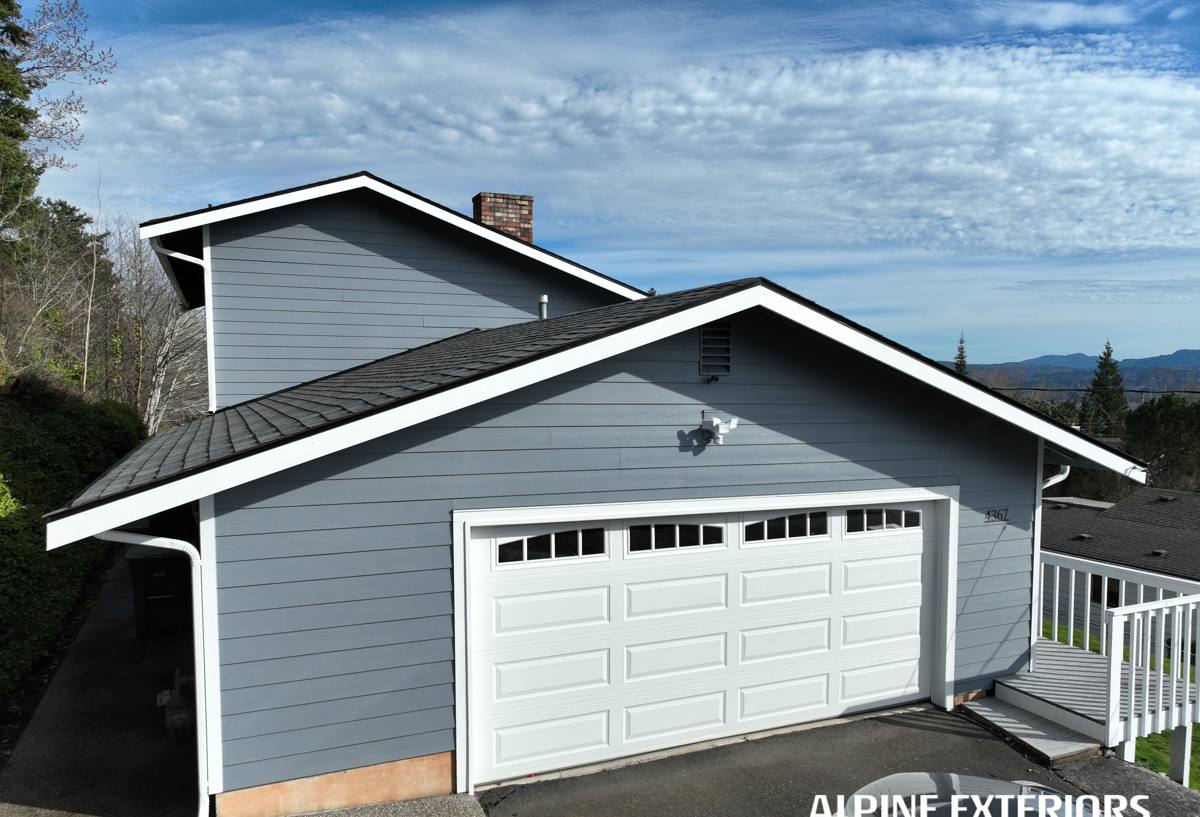
What "Roof Repair" Covers
Roof repair is targeted work on an otherwise sound roof — it is not a replacement, and it is not a quick tar-and-patch job either, if it is done right. On Lake Whatcom homes, the repair calls we get most often fall into a few categories:
- Active leaks — water showing up inside the house, in the attic, or staining a ceiling
- Moss and organic growth that has lifted or degraded shingles
- Failed or aging flashing at chimneys, skylights, sidewalls, and roof valleys
- Damaged or missing shingles from wind, falling branches, or age
- Clogged or damaged gutters and downspouts contributing to water intrusion at the roof edge
- Soft or rotted decking discovered under a small section of roofing
The honest answer to "can this be repaired or does it need replacing" depends on the roof's overall age and condition, not just the one visible problem. Part of our job on the first visit is telling you plainly which category your roof falls into.
Why Moss Season Changes the Calculus
Moss doesn't just look bad — it holds moisture against the shingle surface long after the rest of the roof has dried, which accelerates granule loss and, over time, opens the door to leaks at the edges of moss mats. In shaded areas around Sudden Valley, moss can re-establish within a season or two of removal if the underlying causes — tree overhang, poor airflow, lack of zinc or copper control strips — aren't addressed at the same time as the repair.
Common Trouble Spots on Sudden Valley Roofs
Every roof is different, but the lake and tree-cover combination around here produces a recognizable pattern of wear:
North- and East-Facing Slopes
These sections get the least direct sun and dry out slowest after Whatcom County's driving rain events. They're where we find the heaviest moss growth and the earliest granule loss.
Valleys and Roof Intersections
Valleys collect needles, cones, and leaf litter that dam water and force it under the shingle edges instead of down the roof. On tree-lined lots, valleys need more attention than a standard maintenance schedule assumes.
Flashing at Penetrations
Chimneys, plumbing vents, and skylights all rely on flashing, not the roofing material itself, to stay watertight. Flashing has a shorter practical service life than shingles in this climate, and it's a common source of leaks that homeowners mistake for a shingle problem.
Gutter and Edge Detail
Constant rainfall means gutters here work harder and clog faster with organic debris. A gutter that's backing up water at the roof edge will eventually push moisture up under the first course of shingles regardless of how good the roofing itself is.
Our Repair Process
- Inspection and diagnosis. We walk the roof (or use a ladder and camera where a walk isn't safe) and trace leaks back to their actual source, which is often not directly above the interior stain.
- Honest scope. We tell you what needs fixing now, what's worth watching, and if repair isn't the right call anymore, we say so before doing work that won't hold.
- Moss and debris clearing. Any repair area gets cleared of moss and organic buildup first — patching over moss just traps the moisture underneath.
- Repair the source, not just the symptom. That usually means replacing flashing, resetting or replacing shingles, and checking the decking underneath for soft spots before closing anything up.
- Verify water path. We check that gutters, valleys, and edge details are actually moving water off the roof, since a repair next to a still-clogged gutter will fail again.
- Cleanup. Old material, moss debris, and fasteners are removed from the property — nothing left in gutters or landscaping.
Repair Options and Trade-Offs
| Approach | Best For | Trade-Offs |
|---|---|---|
| Spot shingle replacement | Isolated wind or impact damage on an otherwise healthy roof | Color match can be slightly off on older roofs; doesn't address surrounding wear |
| Flashing replacement | Leaks at chimneys, skylights, or sidewalls | Requires removing adjacent shingles to tie in properly — a shortcut here just relocates the leak |
| Moss treatment and removal | Shaded, tree-covered slopes with heavy growth | Needs to be paired with airflow or overhang fixes or moss returns within a couple seasons |
| Valley repair or reline | Recurring leaks or debris damming in roof valleys | More labor-intensive than a flat-section repair; worth doing right the first time |
| Decking repair | Soft or rotted sheathing found during a repair | Adds cost mid-job, but skipping it means the new roofing has nothing solid to hold onto |
When Repair Makes Sense — and When It Doesn't
A repair is the right call when the roof's overall material is still within its useful life and the problem is localized — a section of moss, one bad flashing detail, storm damage to a limited area. It's the wrong call, and we'll tell you this directly, when the roofing material is broadly at the end of its life, when there are multiple leak sources across different sections, or when decking damage is extensive enough that patching one spot just delays the same conversation by a year or two. Sudden Valley's tree cover and moisture load mean roofs here can show their age unevenly — the shaded side looking rough while the sunny side still has years left — so a section-by-section read matters more than a single overall verdict.
What a Correct Repair Job Should Include
- A clear explanation of what failed and why, not just "we patched it"
- Moss and debris cleared from the repair area and immediate surroundings before any new material goes down
- Flashing replaced (not caulked over) where it's the actual point of failure
- A check of the decking underneath before it's covered back up
- Confirmation that gutters and water paths near the repair are clear and functioning
- Material that reasonably matches your existing roof where visible
- A straightforward answer on what to expect from the repair going forward, including if it's a stopgap versus a lasting fix
Why a Local Sudden Valley Crew Matters
Roof repair on Lake Whatcom properties comes with practical wrinkles that a crew unfamiliar with the area runs into every time: private road access into Sudden Valley, driveways and lots with steep grades or limited equipment staging, and homes tucked under mature trees that limit ladder placement and require extra care with debris and fall protection. A crew that already works this community has already solved those logistics and isn't learning the neighborhood on your dime.
Just as important is knowing what "normal" looks like for a roof out here versus a roof in a more open, sunnier part of Whatcom County. Moss regrowth patterns, the pace of flashing wear from the region's driving rain, and how tree debris behaves in valleys are all things that take repeated exposure to read accurately. That local pattern recognition is what keeps a repair from becoming a repeat service call.
Between-Repair Maintenance
A few habits go a long way toward stretching the time between repair calls on a Sudden Valley roof:
- Keep overhanging branches trimmed back to reduce shade, debris, and physical contact with the roof surface
- Clear gutters and valleys at least twice a year, more often under heavy tree cover
- Address small moss patches before they spread across a full slope
- Have flashing checked whenever gutters are serviced — it's easy to overlook and easy to inspect at the same time
- Don't ignore a small ceiling stain — it's almost always cheaper to chase down early than after a full season of rain has worked on it
If you're dealing with a leak, visible moss damage, or just want an honest read on what your roof needs before the next round of Whatcom County rain, we're glad to take a look. The estimate is free, there's no pressure to book anything on the spot, and you'll get a straight answer about repair versus replacement either way — just fill out the form below.