 Sudden Valley Siding
 Why Silver Beach Roofs Wear Differently Than Roofs Inland
Silver Beach sits close enough to open water and to the timbered slopes around Lake Whatcom that its roofs live a harder life than a roof twenty miles inland. Whatcom County's marine climate pushes salt-laden air off the Sound through the corridor, and that air doesn't just sit there — it settles into fasteners, flashing seams, and any exposed metal on a roof and starts working on it year-round. Add driving rain that comes sideways in a winter storm, and a moss season that can run eight or nine months out of twelve under the tree cover common to this part of Whatcom County, and you get a roofing environment that punishes shortcuts a lot faster than a dry-climate roof ever would.
We're not describing this to scare anyone into a premature roof replacement. Most roofs in Silver Beach do fine for their expected lifespan when they were installed correctly in the first place. The problems we get called out for are almost always tied to one of three things: underlayment that wasn't rated for sustained wet exposure, flashing details that were rushed, or ventilation that never accounted for how much moss and moisture this area actually sees. A correct installation solves for all three from day one.
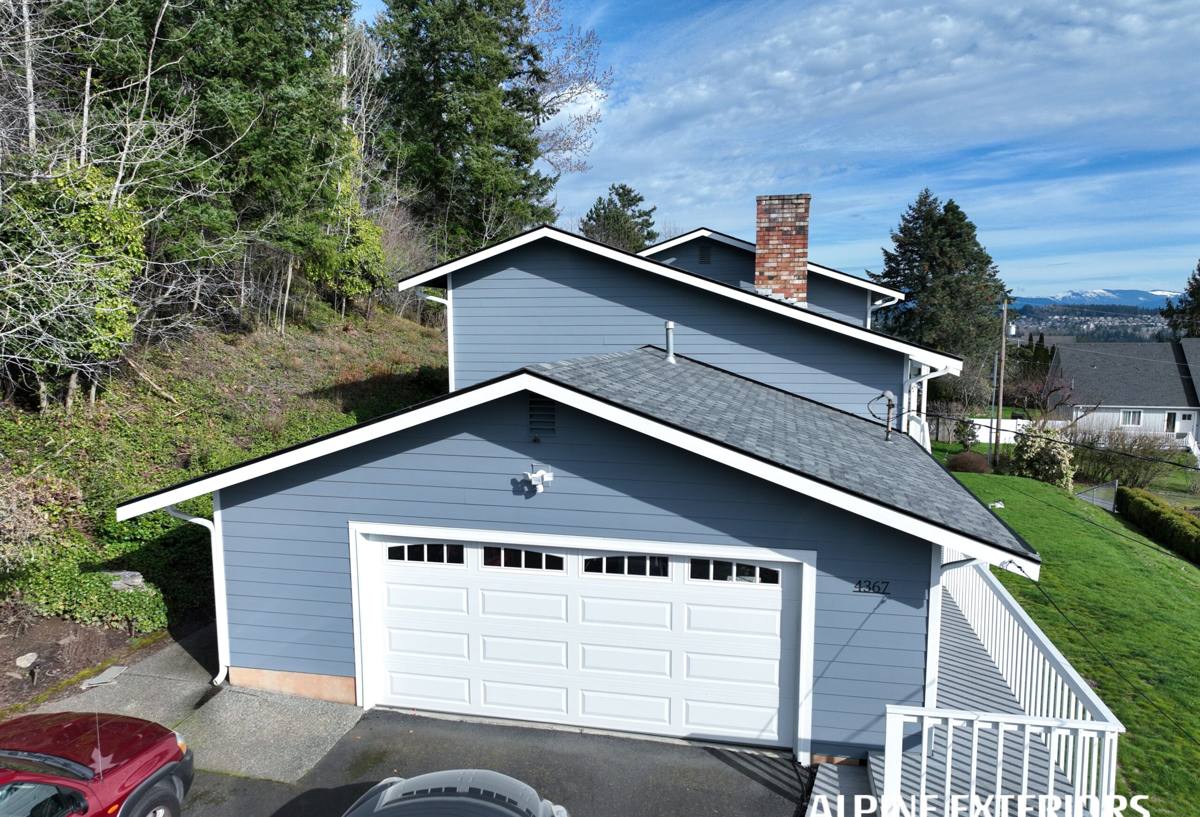
The Three Climate Factors That Should Drive Every Decision on the Roof
Salt Air and Fastener/Flashing Fatigue
Salt-influenced air accelerates corrosion on anything ferrous that isn't properly coated or isn't the right alloy to begin with. On a new install, that means we're deliberate about fastener material and flashing metal — plain galvanized in a marginal gauge is the kind of thing that looks fine at year three and starts showing rust bleed at year seven. It's a small cost difference at install time and a real difference in how the roof ages.
Driving Rain and Underlayment Performance
Wind-driven rain doesn't just fall on a roof, it gets pushed sideways and upward under shingle tabs, around vent penetrations, and along eave edges. A synthetic underlayment with good lap performance, plus ice-and-water shield in the vulnerable zones (eaves, valleys, around chimneys and skylights), is what actually keeps that rain out of the deck. Builder-grade felt alone is not enough for a roof that's going to see this much sustained moisture.
Moss Season and Roof Lifespan
Shade from surrounding tree cover plus persistent dampness is exactly the recipe moss needs. Moss isn't just cosmetic — it holds moisture against the shingle surface, lifts tabs as it grows, and can work its way under flashing over a few seasons. A new roof installed with moss-resistant materials and proper ventilation buys years of lower maintenance versus one installed without that consideration.
What a Correct New Roof Installation Actually Involves
"New roof" covers a lot of ground, and the parts that don't show up in a driveway photo are usually the parts that determine whether the roof lasts 15 years or 30. Here's what we consider non-negotiable on every installation:
Tear-Off and Deck Inspection
We remove the old roofing down to the deck rather than layering over it. That's the only way to actually see the sheathing — soft spots, delamination, or old leak staining don't show up until the old material is off. Any bad decking gets replaced before anything new goes down; installing a new roof over a compromised deck just guarantees a shorter life for the new material.
Underlayment and Flashing Details
This is where the climate factors above turn into installation decisions: synthetic underlayment across the field, ice-and-water shield at eaves and valleys, and new flashing at every penetration, wall intersection, and chimney rather than reusing old flashing. Reused flashing is one of the most common causes of "mystery leaks" on an otherwise new roof.
Ventilation
A roof that can't breathe traps moisture in the attic, which shortens the life of both the decking and the roofing material from underneath. We size and balance intake and exhaust ventilation to the specific roof, not a one-size-fits-all vent count.
Choosing a Roofing System for a Silver Beach Home
There isn't one "right" material for every house — it depends on the roof's pitch, how much shade it sits under, and what the homeowner wants to manage long term. Here's how the common options actually compare for this specific area:
| Roofing System | Typical Lifespan | Moss Resistance | Salt-Air Durability | Maintenance Burden |
|---|---|---|---|---|
| Architectural asphalt shingle | 25–30 years | Good with zinc/copper strips or algae-resistant granules | Good with quality flashing metal | Low to moderate |
| 3-tab asphalt shingle | 15–20 years | Fair — more prone to moss lift over time | Fair | Moderate |
| Standing-seam metal | 40–50+ years | Excellent — moss struggles to hold on smooth metal | Depends heavily on coating/alloy | Low |
| Composite/synthetic shake | 30–50 years | Good | Good | Low |
For most Silver Beach homes we install architectural asphalt shingle as the practical middle ground — it handles the rain and moss exposure well when detailed correctly, and it's the most cost-predictable option. Metal earns its higher upfront cost on steep, heavily shaded roofs where moss control is the main long-term concern.
Our Installation Process, Start to Finish
- On-site assessment — we walk the roof, check the attic for existing moisture or ventilation issues, and measure for material.
- Written estimate — a clear scope covering tear-off, decking allowance, underlayment, flashing, ventilation, and material, so there's no guessing later.
- Tear-off and deck inspection — old roofing removed, deck inspected and repaired where needed.
- Underlayment and ice-and-water shield installation — placed according to the vulnerable zones on that specific roof.
- New flashing — at every penetration, valley, and wall intersection.
- Roofing material installation — installed to manufacturer spec, not shortcut spacing.
- Ventilation balancing — intake and exhaust checked against attic square footage.
- Final walk-through — we go over the finished roof with the homeowner and clean the site thoroughly, including magnetic sweep for stray fasteners.
Why a Crew That Already Works This Area Matters
A roofing crew that's worked Silver Beach and the greater Sudden Valley area repeatedly knows things a crew coming from outside the county has to learn on the job — how tree cover on a given street affects moss buildup, which roof orientations catch the worst of the driving rain, and what Whatcom County permitting and inspection actually require before a single shingle goes down. If a property falls within an HOA or community association's design guidelines, as some do around Sudden Valley, a local crew is also more likely to already know what documentation or approval steps are expected before work starts, which avoids delays mid-project.
Local experience also shows up in scheduling. Crews familiar with this area's weather patterns plan tear-offs around the rain windows instead of gambling on a dry stretch that doesn't show up — an open roof deck during a driving-rain event is a problem nobody wants.
Signs a Silver Beach Home May Need a New Roof
- Granules collecting heavily in gutters or at downspout outlets
- Shingles curling, cracking, or visibly lifting at the tabs
- Moss or dark streaking covering more than a small patch of the roof surface
- Daylight visible through the roof deck from inside the attic
- Soft or spongy spots when walking the roof (a professional check, not a DIY one)
- Flashing that's rusted, separated, or was never properly sealed to begin with
- Interior ceiling stains or musty attic smell after heavy rain
- A roof already at or past its expected material lifespan
One or two of these on their own might just mean a repair. Several together usually mean the roof's underlying protection has been compromised and a full replacement is the more honest recommendation.
Keeping a New Roof Performing After Installation
A correctly installed roof still benefits from basic upkeep given this climate. Keeping gutters clear so water isn't backing up under the eave edge, having moss treated or removed before it spreads rather than after, and keeping overhanging branches trimmed back to reduce shade and debris all extend the life of the investment. None of this requires a maintenance contract — it just requires not ignoring the roof for years at a stretch, which is easy to do when it's not leaking yet.
Get a Straight Answer on Your Roof
If you're weighing a repair against a full new roof installation for a Silver Beach home, or you just want an honest read on how much life is left in what's up there now, we're happy to take a look. Fill out the form below for a free, no-pressure estimate — we'll tell you what we actually see, not what sells the biggest job.