 Sudden Valley Siding
 What Happy Valley's Climate Does to Siding
Homes in Happy Valley sit in one of the more demanding exterior environments in Whatcom County. You're dealing with three things at once, year-round: salt-laden air moving inland off the Sound, long stretches of driving rain that comes in sideways during winter storms, and a moss season that can run eight or nine months out of the year thanks to shade, humidity, and mild temperatures that never dry things out for long. Individually, any one of those is manageable. Together, they're the reason so many houses in this area show siding failure well before the product's rated lifespan.
Salt air is corrosive to exposed metal fasteners and trim flashing, and it accelerates the breakdown of anything that isn't engineered to shed moisture rather than absorb it. Driving rain finds every gap in a siding installation — a lap that's slightly under-lapped, a butt joint that wasn't flashed, a nail that missed the stud — and pushes water behind the cladding instead of off of it. And moss doesn't just look bad; sustained moss and algae growth holds moisture against the siding surface, which is exactly the condition that causes rot, delamination, and paint failure over time.
Why This Matters More in Happy Valley Than Other Neighborhoods
Tree cover and terrain around Happy Valley mean many homes get less direct sun and airflow across their siding than a house on an open, exposed lot would. Less drying time between rain events means moisture sits longer, moss establishes faster, and any weakness in the original installation gets exploited sooner. This is a neighborhood where the quality of the install — not just the quality of the material — determines how the siding performs ten and twenty years out.
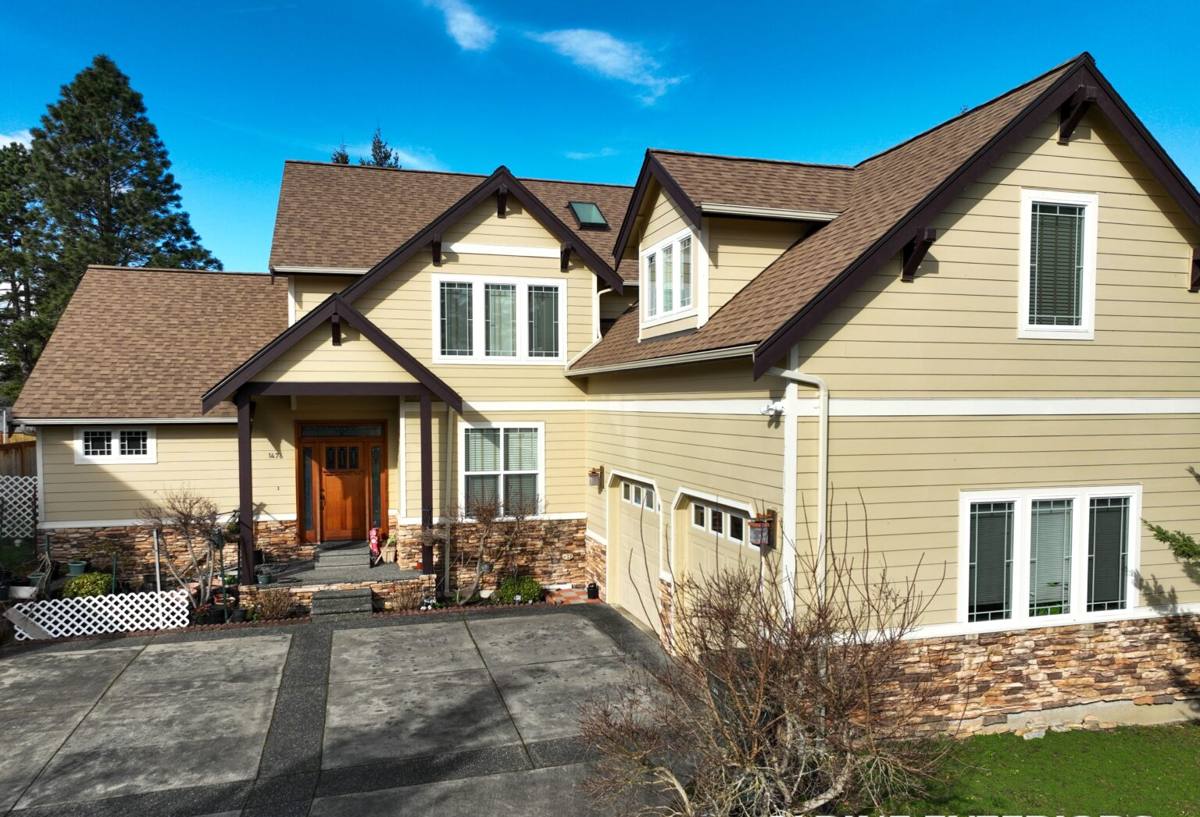
What a Correct Siding Installation Actually Involves
Siding installation isn't just cutting boards to length and nailing them to the wall. The parts of the job that actually determine whether a house stays dry are mostly invisible once the work is done — which is also why so many installations look fine on day one and start failing in year three or four.
The Weather-Resistive Barrier and Flashing
Behind every course of siding should be a continuous weather-resistive barrier, properly lapped shingle-style so water sheds downward and outward, never into a seam. Every window, door, and penetration needs flashing detailed to direct water out onto the surface of the barrier, not behind it. In a climate with as much driving rain as Whatcom County gets, this layer does more work than the siding itself.
Clearances, Fastening, and Manufacturer Spec
Siding needs proper clearance from grade, roofing, decks, and other trim so it isn't sitting in standing water or trapped moisture. Fastener type, spacing, and placement have to match the manufacturer's published specifications exactly — not "close enough" — because those specs are what the warranty is built on. Butt joints need to be caulked or flashed per spec, not just butted together and painted over.
Field Cuts and Sealed Edges
Every field cut exposes raw material at the cut edge. On fiber cement, that edge needs to be primed and sealed before installation, or it becomes the first place moisture gets in and the first place you'll see staining or swelling show up.
Why We Install Only James Hardie Fiber Cement
We made a decision a long time ago to install one siding system and install it correctly, rather than offer a menu of products and hope each one works out. For a climate like this one, James Hardie fiber cement is the product we stand behind.
Built for This Climate, Not a Generic Climate
Hardie's HZ5 product line is engineered specifically for climates with cold, wet winters — which describes Whatcom County well. Fiber cement itself is non-combustible and dimensionally stable, meaning it doesn't expand, contract, warp, or absorb water the way wood-based products can. That matters directly in a moss-and-moisture environment: a product that doesn't swell when it's damp is a product that keeps its seams tight and its paint intact.
ColorPlus Factory Finish
Hardie's ColorPlus finish is baked on at the factory under controlled conditions, which gives it better adhesion and UV resistance than a field-applied paint job managed on-site in variable weather. In a neighborhood with heavy shade and persistent moisture, a finish that resists mildew staining and holds its color without repainting every few years is worth the difference in material cost.
What We Don't Install, and Why
We don't install vinyl, LP SmartSide, primed wood, or cedar. Each of those products has legitimate uses and long track records elsewhere, but each also carries a trade-off — moisture sensitivity, maintenance burden, or performance that depends heavily on perfect installation and upkeep — that we're not willing to gamble on in a climate this wet. Standardizing on one product lets our crews master its details instead of switching specs from job to job, and it lets us back the work with a warranty that actually means something.
Our Installation Process for Happy Valley Homes
- Exterior assessment. We inspect existing siding, sheathing, and trim for hidden moisture damage before quoting anything — you shouldn't pay to re-side over a problem that's still there underneath.
- Moisture and rot check. Any soft sheathing, compromised flashing, or rot found during tear-off gets addressed and documented before new siding goes up, not covered over.
- Weather barrier and flashing install. New house wrap or building paper goes on lapped correctly, with window, door, and penetration flashing detailed to shed water outward.
- Hardie installation to manufacturer spec. Fastener pattern, clearances, joint treatment, and cut-edge sealing follow James Hardie's published installation guidelines, which is also what keeps the manufacturer's warranty valid.
- Trim, caulking, and finish detail. Corners, trim boards, and joints are finished and sealed so the whole system works together, not just the field boards.
- Final walkthrough. We go over the finished job with you before we consider it done.
Comparing Siding Options in a High-Moisture, High-Moss Climate
| Factor | James Hardie Fiber Cement | Vinyl | Wood / Engineered Wood |
|---|---|---|---|
| Moisture response | Dimensionally stable, doesn't swell or warp | Doesn't absorb water, but can warp/buckle with heat | Absorbs moisture if finish fails; prone to swelling |
| Moss/algae staining | Factory finish resists staining, cleans up well | Can stain and is harder to refinish | Stains and can trap moisture against the surface |
| Finish longevity | Factory-cured ColorPlus finish, long color retention | Color molded in, can fade/chalk | Field-applied paint, needs repainting on a cycle |
| Fire resistance | Non-combustible | Combustible | Combustible |
| Installation sensitivity | Moderate — spec-driven, warranty tied to correct install | Lower, but performance is limited regardless | High — details and upkeep matter a great deal |
What Drives the Cost of a Siding Installation
Every Happy Valley home is different, so we won't quote a number without seeing the house, but these are the factors that actually move the price:
- Tear-off and disposal. Removing existing siding, especially if it's layered over an older material, adds labor and disposal cost.
- Hidden repair work. Rotted sheathing or trim found during tear-off has to be replaced before new siding can go on correctly.
- Home size and complexity. Square footage, number of stories, and how much trim, corner, and window detail the house has all affect labor time.
- Siding profile and accessories. Lap width, trim style, and accent details are priced differently within the Hardie product line.
- Access and site conditions. Steep lots, mature landscaping, or tight setbacks common in this area can add setup time.
Signs Your Current Siding Is Already Failing
If you're seeing any of the following, it's worth having someone look before it turns into a bigger repair:
- Persistent moss or dark streaking that comes back shortly after cleaning
- Soft spots, bubbling, or visible swelling along seams or bottom edges
- Paint that's peeling or bubbling rather than just fading
- Gaps opening up at butt joints or around trim
- Visible warping or wave in the siding panels
- Musty smell or staining on interior walls that back up to exterior siding
Why Hiring a Crew That Already Works in Happy Valley Matters
A siding crew that regularly works Whatcom County homes already knows how this specific combination of salt air, rain exposure, and moss pressure behaves against a wall — and they've already made and corrected the mistakes that come from treating this like a drier, simpler climate. That experience shows up in the small decisions: how flashing gets detailed around a shaded window, how much clearance gets left at grade on a lot that doesn't drain quickly, where extra attention goes on the shaded side of the house where moss takes hold first. It's also worth asking any contractor for their manufacturer certification, proof of insurance, and how they handle warranty claims if something does go wrong down the line — those answers tell you more about the crew than a sales pitch will.
If your siding is showing its age, or you're planning ahead for a replacement rather than waiting for a failure, we're happy to take a look and give you a straightforward, no-pressure estimate — no obligation, just an honest read on what your home actually needs.