 Sudden Valley Siding
 Cordata Sits in a Climate That Is Hard on Siding
Cordata homes deal with a specific combination of weather that most siding products were never designed to handle for decades on end: salt-tinged air moving in off the water, long stretches of driving rain, and a moss season that can run from fall through spring. Any one of those on its own is manageable. Together, year after year, they find every weak point in a wall system — every gap in a caulk joint, every fastener that was driven at the wrong angle, every seam that wasn't flashed correctly the first time. This page is about one service, done right, in one part of Whatcom County: fiber cement siding installation for Cordata homes.
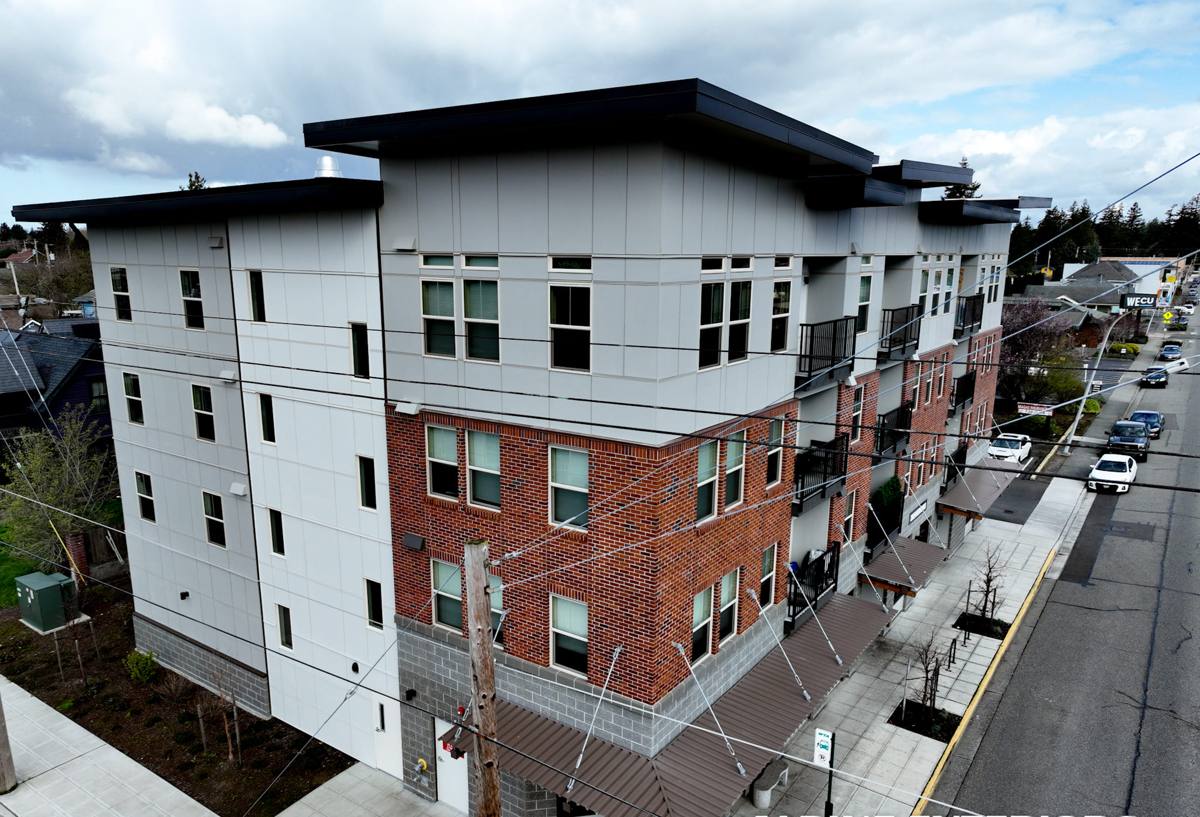
What Cordata Homes Actually Need From Their Siding
Moisture that has somewhere to go
The biggest threat to a house in this climate isn't rain hitting the siding — it's rain that gets behind the siding and has nowhere to escape. A correctly built wall assumes some moisture will get past the outer layer eventually, and gives it a drainage path (a gap behind the panel, a properly lapped weather-resistant barrier, flashing that directs water back out instead of into the sheathing). Siding that looks fine from the street can still be sitting on a wall that's rotting from the inside, and you often don't find out until trim boards go soft or paint starts bubbling.
Resistance to moss, algae, and general organic growth
Shade, moisture, and cool temperatures are exactly what moss and algae need to take hold, and Cordata gets all three for a good chunk of the year. Siding material matters here — some products give moss spores a rough, porous surface to grip and feed on, while others are dense and factory-finished enough that growth has a harder time establishing itself. Either way, no siding is maintenance-free in this climate; the question is how much upkeep it actually needs and how well it holds up between cleanings.
Tolerance for salt-influenced air and constant damp
Homes closer to the water deal with airborne salt that accelerates corrosion on fasteners, flashing, and any metal trim, and that also speeds up the breakdown of finishes that weren't built for it. Combined with the sheer number of wet days per year in this part of western Washington, siding here needs to be dimensionally stable — it shouldn't swell, cup, or warp every time it takes on moisture and then dries back out.
Why We Standardized on James Hardie Fiber Cement
We install James Hardie fiber cement siding exclusively. We don't carry vinyl, LP SmartSide, Cemplank, Allura, primed spruce, or cedar, and that's a deliberate call, not a lack of options. Fiber cement is cement, sand, and cellulose fiber pressed and cured into a plank — it doesn't feed organic growth the way wood-based products can, it doesn't soften or swell when it takes on water the way wood and some engineered wood products do, and it's non-combustible, which matters in any climate but is simply good practice everywhere. James Hardie also engineers its products by climate zone (its HardieZone system, with an HZ5 formulation built for colder, wetter regions like ours and a separate HZ10 formulation for hot, humid climates), which tells you the product was actually built with a place like Cordata in mind rather than a one-size-fits-all approach.
The factory-applied ColorPlus finish is part of that same logic. It's baked on and warrantied against fading and cracking, which matters when a house is going to sit through years of driving rain and low-angle winter sun. A field-painted finish depends entirely on prep, product, and application conditions on the day it's applied; a factory finish removes most of those variables.
What a Correct Fiber Cement Installation Actually Involves
Fiber cement is a forgiving material in the sense that it lasts a long time — but only if it goes on correctly. A lot of the failures we get called out to inspect on other contractors' work trace back to a handful of installation shortcuts, not the product itself. A proper job includes:
- A weather-resistant barrier installed and lapped correctly, with all penetrations (vents, pipes, hose bibs, light fixtures) flashed before siding ever goes up
- A drainage gap or rainscreen behind the siding so incidental moisture can escape instead of sitting against the sheathing
- Manufacturer-specified fastener type, spacing, and placement — not just "close enough," since improper fastening is one of the most common causes of buckling and callback repairs
- Factory-cut edges sealed and field-cut edges primed or sealed before installation, since raw cut edges are the most vulnerable point on any fiber cement plank
- Correct clearance from grade, roofline, and decks so siding never sits in standing water or constant splash-back
- Joints and seams treated the way the manufacturer specifies — caulked where called for, and left to breathe where they're not
None of this is exotic. It's just detail work that takes longer to do right than to do fast, which is exactly where corners get cut on a rushed job.
Our Process for Cordata Projects
1. Assessment
We start by looking at what's actually happening behind the existing siding, not just the surface. That means checking for soft sheathing, rot around windows and trim, and any signs that moisture has already been getting in — because siding replacement is the point where you can fix those problems while the wall is open, or you can cover them up and deal with them again in a few years.
2. Tear-off and substrate check
Old siding comes off, the sheathing gets inspected and any damaged sections are repaired or replaced, and we confirm the wall is actually ready for a new weather barrier before anything goes back on.
3. Weather barrier and drainage plane
House wrap or building paper goes on correctly lapped, flashing gets installed at every penetration and transition, and we build in the drainage gap the assembly needs to shed incidental moisture.
4. Installation to manufacturer spec
Hardie panels and trim go up following James Hardie's published fastening, clearance, and sealing requirements — the same details that keep the product's warranty valid and keep the wall performing the way it's supposed to for decades.
5. Trim, finish work, and walkthrough
Trim, corners, and any transitions get finished out, the site gets cleaned up, and we walk the exterior with the homeowner before calling the job done.
Fiber Cement vs. Other Siding Options
Every siding material has a niche where it makes sense. Here's how the options homeowners usually compare stack up against the conditions Cordata actually deals with:
| Material | Moisture behavior in this climate | Maintenance | Typical lifespan | Fire rating |
|---|---|---|---|---|
| Vinyl | Doesn't absorb water, but can warp or crack in temperature swings and gaps at seams let water track behind it | Low, but limited repair options once damaged | Shorter than fiber cement | Combustible |
| Cedar | Absorbs moisture, prone to rot and moss growth without diligent upkeep | High — regular staining/sealing | Variable, heavily maintenance-dependent | Combustible |
| Engineered wood (e.g. LP SmartSide) | Resin-treated but still wood-based; edges and cuts are the vulnerable point in wet climates | Moderate to high | Shorter than fiber cement in high-moisture climates | Combustible |
| James Hardie fiber cement | Dimensionally stable, doesn't swell or feed organic growth the way wood-based products can | Low — periodic washing | Long-term, backed by a strong transferable warranty | Non-combustible |
What Cordata Homeowners Should Do to Keep Fiber Cement Siding Performing
- Rinse siding down once or twice a year (a garden hose is usually enough) to keep moss spores and organic buildup from getting established, especially on shaded, north-facing walls
- Keep gutters clear so overflow doesn't run down the siding face or pool at the base of a wall
- Trim back vegetation and tree limbs that keep a section of wall shaded and damp longer than the rest of the house
- Check and re-caulk any joints, trim intersections, or penetrations that show gaps opening up over time
- Have any soft spots, cracking, or discoloration looked at promptly — small issues are inexpensive to fix and expensive to ignore in a wet climate
Why Local Experience in Cordata and Whatcom County Matters
A crew that already works this area knows the permitting process for the jurisdiction, knows what inspectors here actually look for, and has already seen how different wall assemblies in this part of the county hold up to a full wet season. That's not something you can shortcut by reading a spec sheet. It also means accountability — a company that installs siding in your neighborhood regularly has a reputation to protect there, and is going to be around to stand behind the work and the manufacturer's warranty if a question comes up years down the road.
Correct James Hardie installation also protects the manufacturer's warranty itself, which typically requires installation according to Hardie's written specifications. A crew unfamiliar with those specifics, or unfamiliar with how this climate behaves, is more likely to miss a detail that either shortens the siding's real-world lifespan or creates a warranty gap the homeowner doesn't find out about until it's needed.
If you're considering new siding for a Cordata home, we're happy to walk the exterior with you, point out anything we see, and put together a straightforward, no-pressure estimate — just fill out the form below to get started.