 Sudden Valley Siding
 Why Ferndale Windows Take More Punishment Than Most
Ferndale sits close enough to the water and the open lowlands of Whatcom County that its homes deal with a specific combination of stresses most inland Washington towns don't: salt-laden air, wind-driven rain that hits window assemblies sideways instead of straight down, and a long wet season that keeps moss and algae established on north-facing walls and trim for much of the year. None of that is dramatic on its own. What it does is slowly find every weak point in a window installation — a flashing lap installed backwards, a sill pan that wasn't sloped, a bead of caulk asked to do a job that should have been done with proper drainage. On a dry-climate home those shortcuts might go unnoticed for a decade. On a Ferndale home they show up as soft trim, fogged glass, and stained drywall in a fraction of that time.
That's the frame for everything below: this page isn't about windows in general. It's about what a correct window installation has to account for in this specific stretch of Whatcom County, and what we actually do differently because of it.
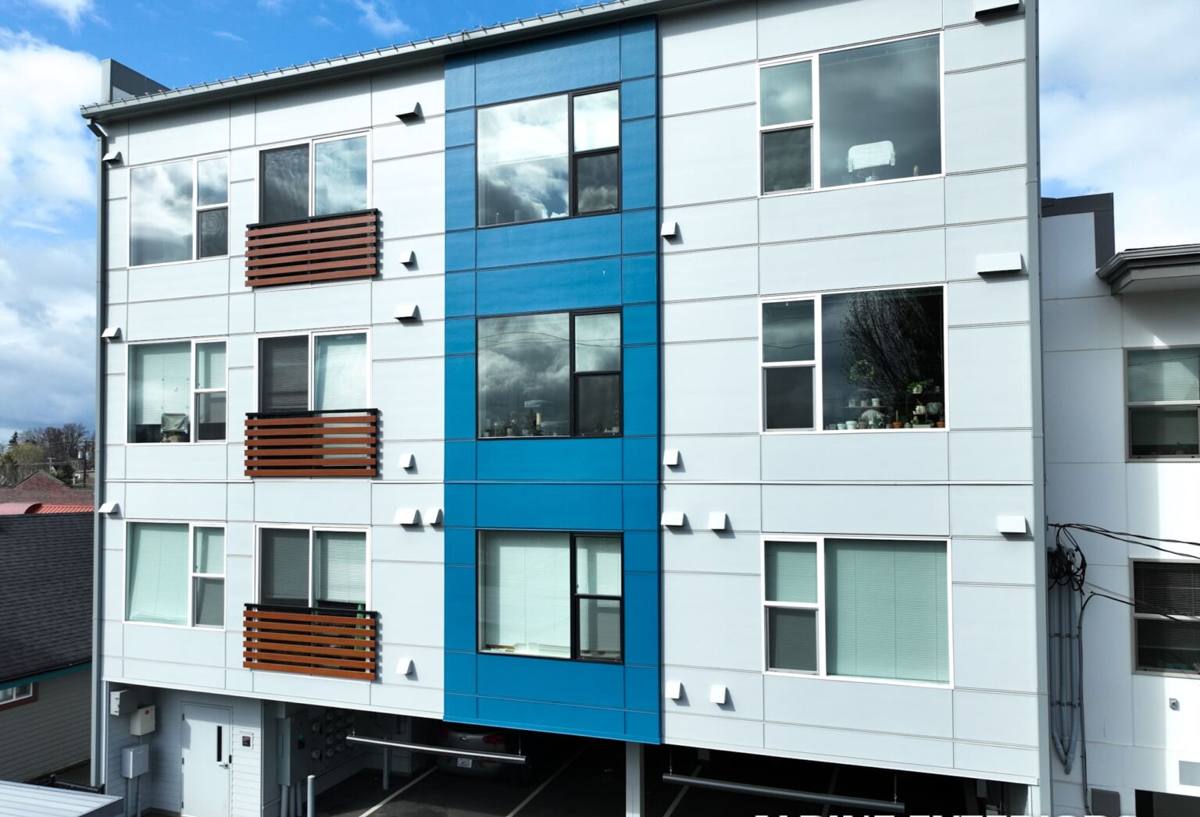
What "Correct" Window Installation Actually Involves
Window installation is often sold as a measure-and-swap job. In a climate like Ferndale's, the window unit itself is only part of the equation — the flashing, drainage, and air-sealing details around it matter just as much, and they're the parts that fail silently.
Flashing and Weather-Resistive Barrier Integration
Every opening needs flashing tape and building paper or house wrap layered in the correct shingle-lap order — head flashing over the wall covering, not under it, and side flashing that ties into the sill pan below. Reversed laps are one of the most common causes of hidden water intrusion, and they're invisible from the outside once trim goes back on. In a home that takes regular driving rain off the water, this detail is the difference between a window that sheds water and one that slowly feeds it into the wall cavity.
Sill Pan and Drainage Path
The sill pan is the small sloped tray at the bottom of the rough opening that catches any water that gets past the window itself and directs it back outside. A flat or missing sill pan turns the window opening into a bathtub during a hard rain event. We build a sloped, end-dammed pan on every install, whether the original opening had one or not.
Air Sealing and Insulation Detailing
The gap between the window frame and the rough opening needs a compressible, non-expanding seal — not gaps stuffed with excess spray foam, which can bow the frame and cause the sash to bind. Done right, this step also cuts drafts and street noise, which matters on windows facing open, wind-exposed sides of a property.
Choosing the Right Window for a Salt Air, High-Moisture Climate
Frame material and glass package both affect how a window holds up here. There's no single "best" answer for every home — it depends on exposure, budget, and how the rest of the house is finished — but the trade-offs are worth understanding before you pick.
| Frame Material | How It Handles Salt Air & Moisture | Maintenance |
|---|---|---|
| Vinyl | Doesn't corrode; performs well in coastal air; can discolor or become brittle over many years of UV and salt exposure | Low — occasional cleaning |
| Fiberglass | Very stable dimensionally, resists moisture and corrosion well, holds paint if refinishing is ever wanted | Low |
| Aluminum (uninsulated) | Conducts cold and can corrode over time in salt-influenced air; thermal-break versions perform better | Moderate |
| Wood-clad | Attractive interior wood face, but exposed or damaged cladding can let moisture reach the wood core, especially in wet climates | Higher — needs inspection and upkeep |
Glass packages matter as much as frame choice. Dual-pane with a low-E coating is the practical baseline for this climate — it manages heat loss and glare without a major cost jump. Triple-pane adds sound dampening and a slightly warmer interior glass surface, which reduces condensation risk on cold, humid mornings, but it's a heavier unit and adds cost that's worth weighing against your specific goals rather than assuming more panes always pays for itself.
Our Installation Process
- On-site assessment. We check existing flashing, sill condition, and framing for rot before quoting anything — a bad quote skips this step.
- Measure and order. Exact rough-opening measurements are taken; we don't estimate sizes off old permit drawings.
- Removal and opening prep. Old units come out carefully to protect interior and exterior finishes; any soft framing or sheathing found is flagged before proceeding, not covered up.
- Sill pan and flashing installation. Sloped sill pan, then flashing tape in correct shingle-lap order, tied into the existing weather-resistive barrier.
- Window set and shim. Unit is leveled, plumbed, and shimmed at the manufacturer's specified points — not just at the corners.
- Air seal and insulate. Low-expansion foam or backer rod, sized to avoid bowing the frame.
- Exterior trim and sealant. Trim reset or replaced, sealed with a sealant rated for the material and exposure.
- Interior finish and walkthrough. Interior trim finished, hardware checked, and the homeowner walked through operation and any care notes specific to the product installed.
Signs a Ferndale Home's Windows Need Attention
- Fog or moisture trapped between panes of double-glazed glass — the seal has failed and the unit needs replacement, not just cleaning
- Soft or discolored wood trim around the window, especially on north- or west-facing walls
- Visible moss or dark streaking on the sill or trim that keeps coming back within weeks of cleaning
- Drafts you can feel with a hand near the frame on a windy day
- Windows that are hard to open, don't latch fully, or have visibly sagging sashes
- Paint or finish that's peeling from the inside out — often a sign of moisture working its way through the frame
- A noticeable jump in heating costs without another clear cause
Cost Factors for Window Replacement in Ferndale
Every home is different, but the line items that actually move the price are consistent. Broad ranges depend heavily on window size, frame material, glass package, and whether framing repair is needed once the old unit comes out — we'll give you real numbers after a look at your specific windows, not a generic per-window rate that ignores your home's condition.
| Factor | Why It Affects Cost |
|---|---|
| Frame material (vinyl vs. fiberglass vs. wood-clad) | Material and manufacturing cost vary significantly between product lines |
| Glass package (dual vs. triple pane, coatings) | More glass layers and coatings add material and weight-handling cost |
| Framing or sheathing repair | Rot or moisture damage found during removal has to be repaired before the new unit goes in |
| Window size and opening count | Larger openings and more units mean more material and labor time |
| Access and height | Second-story or hard-to-reach openings take longer and may need additional equipment |
Why a Crew That Already Works Ferndale Matters
Window installation isn't a one-size-fits-all trade. A crew that regularly works this part of Whatcom County already knows what a wind-driven rain event does to a poorly flashed opening, what moss growth on north-facing trim tells you about drainage, and how salt-influenced air affects fastener and sealant choices over time. That local pattern recognition shows up in small decisions — which sealant to use, how much slope to build into a sill pan, where to expect hidden rot before a wall is even opened up — that a crew unfamiliar with the area's climate might not think to check.
It also matters for permitting and inspection timing, since local jurisdictions have their own process and expectations, and for scheduling around the reality that this region gets a genuinely long wet season where work has to be sequenced carefully to keep an open wall from taking on water overnight.
Caring for New Windows Through Ferndale's Wet Season
A correctly installed window still benefits from basic upkeep in this climate. Rinse frames and sills periodically to keep salt residue and organic buildup from settling into seals and hardware. Check weep holes at the base of the frame each fall to make sure they're clear — blocked weep holes are one of the most common causes of water pooling inside a sill that was otherwise installed correctly. And keep an eye on exterior caulking each year; sealant is a maintenance item, not a permanent fix, and catching a failed bead early is far cheaper than dealing with the water damage it eventually causes.
If your Ferndale home has windows showing any of the signs above, or you're planning ahead for a replacement, we're happy to take a look and walk you through what your home specifically needs — no pressure, no generic quote. Fill out the form below for a free estimate.