 Sudden Valley Siding
 Roofing in Ferndale Has Its Own Set of Problems
Ferndale sits close enough to the water that salt air is a real factor in how a roof ages, and far enough into Whatcom County that it still gets the long, wet winters that define this corner of Washington. That combination is harder on a roof than either factor alone. Salt-laden air accelerates corrosion on fasteners, flashing, and any exposed metal, while months of near-constant moisture keep roof surfaces damp long enough for moss, lichen, and algae to take hold and spread. A roof spec'd for a drier inland climate, or installed without attention to ventilation and metal quality, tends to show its age here faster than the homeowner expected.
When we install a new roof in Ferndale, we're not just following a generic install checklist. We're building a roof system meant to handle driving, wind-blown rain, a moss season that can run most of the year, and the slow corrosive effect of coastal air. That shapes material choices, underlayment strategy, ventilation, and even how we detail penetrations and edges.
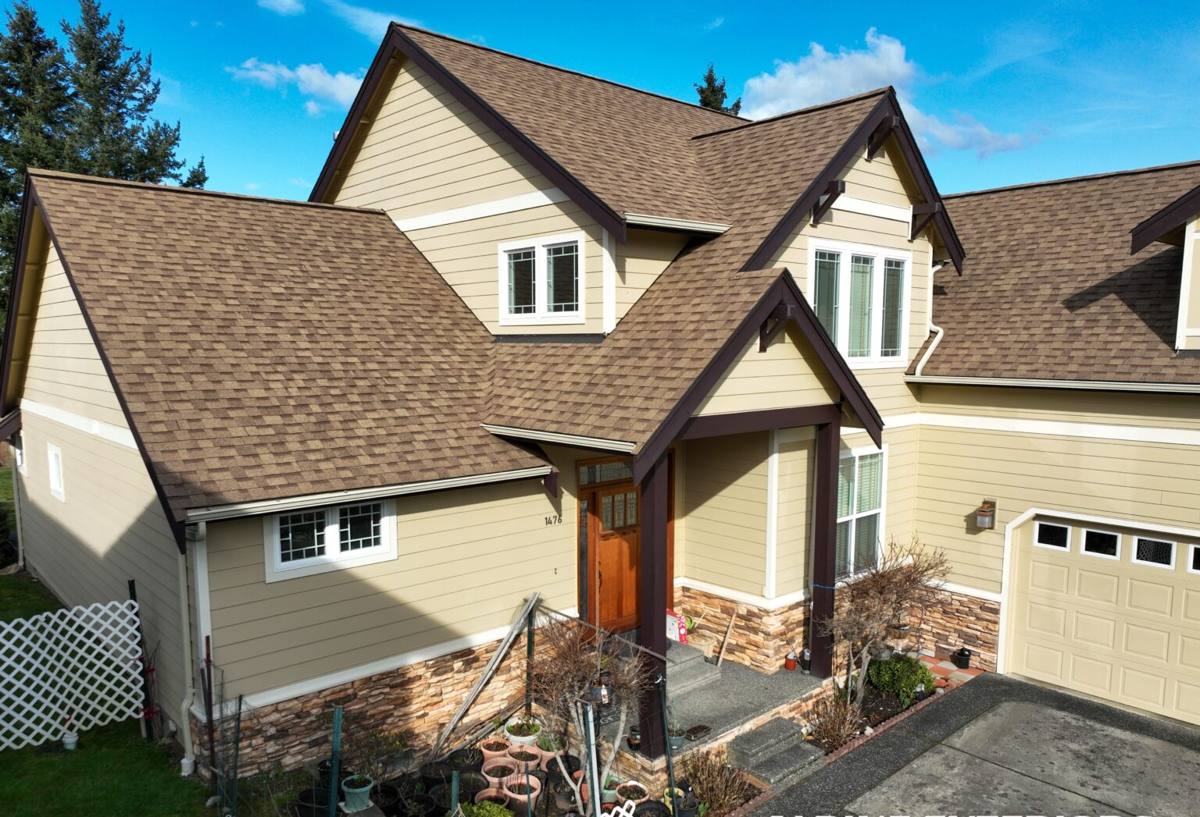
What Whatcom County Weather Does to an Under-Built Roof
Driving Rain and Wind-Driven Water
Rain here rarely falls straight down. Wind off the water pushes it sideways, which means water gets forced up under shingle tabs, around vents, and into any gap in the flashing that a calmer climate might tolerate. Standard nailing patterns and minimal underlayment are more likely to fail under these conditions than they would in a drier region.
Moss and Organic Growth
Shade, moisture, and mild temperatures are exactly what moss wants, and Ferndale roofs get all three for much of the year. Moss doesn't just look bad — it holds water against the roofing material, works its way under shingle edges, and lifts tabs over time, which opens the door to leaks. A roof without moss-resistant materials or without attention to airflow and sun exposure will need moss treatment far more often than one that's designed with this climate in mind.
Salt Air and Metal Corrosion
Fasteners, flashing, drip edge, and vent components that aren't rated for coastal exposure corrode faster near the water. Once a fastener starts to rust, it loses holding strength, and once flashing corrodes, it stops shedding water the way it's supposed to. This is a slower failure than a storm-blown-off shingle, but it's just as real, and it's often invisible until a leak shows up.
What a Correct New Roof Installation Actually Involves
A roof replacement done right in this climate isn't just stripping the old material and nailing down new shingles. Each layer of the system has a job to do, and skipping or shortcutting any one of them is where premature failures come from.
Tear-Off and Deck Inspection
We remove the existing roofing down to the deck so we can actually see what's underneath. Years of moisture exposure can lead to soft or delaminated sheathing, especially around old leak points, valleys, and eaves. Any damaged decking gets replaced before anything new goes down — covering over a compromised deck just hides the problem.
Underlayment Built for Wet Climates
We use synthetic or ice-and-water shield underlayment in the areas most exposed to wind-driven rain — eaves, valleys, and around penetrations — rather than relying on minimal felt coverage. This is the layer that protects the deck if wind ever forces water past the roofing surface itself, which happens more often here than homeowners realize.
Flashing and Metal Components
Given the salt air, we pay close attention to the quality of flashing, drip edge, and fasteners. Cutting corners here is one of the most common reasons a roof develops leaks well before the shingles themselves wear out. We detail flashing at every roof-wall intersection, chimney, skylight, and vent penetration rather than relying on caulk to make up for a poor mechanical seal.
Ventilation
Proper intake and exhaust ventilation keeps the attic and roof deck at a more consistent temperature and moisture level. In a climate this wet, poor ventilation doesn't just shorten shingle life — it also contributes to condensation issues inside the attic, which can lead to its own set of problems separate from the roof itself.
Final Roofing Layer
Whether it's architectural asphalt shingle or another material, the finish layer gets installed to manufacturer spec with attention to nailing pattern, exposure, and sealing — especially in the field conditions we actually work in here, not the ideal conditions a spec sheet assumes.
Material Considerations for This Climate
There's no single "best" roofing material for every home, but some choices hold up better than others against salt air, rain, and moss. The table below reflects trade-offs we talk through with Ferndale homeowners.
| Material | How It Handles This Climate | Maintenance Considerations |
|---|---|---|
| Architectural Asphalt Shingle | Solid performance when installed with proper underlayment and ventilation; algae-resistant granule options help with moss and staining | Periodic moss/debris removal; typical lifespan varies with exposure and upkeep |
| Metal Roofing | Sheds water and moss well due to smooth surface and steep-shed design; needs coastal-rated coatings and fasteners near salt air | Low ongoing maintenance if properly coated; fastener and seam checks over time |
| Cedar Shake | Traditional look but holds moisture longer, which speeds moss growth and organic staining in this climate | Higher maintenance burden — regular treatment and moss management needed |
| Composite/Synthetic Shingle | Resists moisture absorption and organic growth better than natural wood products | Generally low maintenance; material and installation quality matter more than material type alone |
We don't push one product on every home. What we do is walk through how each option actually performs under this specific mix of rain, shade, and salt exposure, and let the homeowner decide with real information instead of a sales pitch.
Our Process for a Ferndale Roof Replacement
- On-site inspection. We look at the current roof, attic ventilation, decking condition where visible, and any existing signs of moss, leaks, or flashing failure.
- Honest assessment. We tell you what's actually needed — full replacement, partial repair, or in some cases just better maintenance — rather than defaulting to the biggest job.
- Written estimate. Material options, scope, and pricing laid out clearly, with no vague allowances or hidden add-ons.
- Tear-off and deck check. Old roofing removed, deck inspected and repaired as needed before anything new is installed.
- Full system installation. Underlayment, flashing, ventilation, and finish roofing installed in sequence, each layer done to spec.
- Final walkthrough. We go over the completed roof with you, including care and maintenance specific to this climate.
Why It Matters to Hire a Crew That Already Works in Ferndale
A roofing crew that mostly works drier, inland regions doesn't think about salt air corrosion or moss-driven maintenance schedules the same way a crew working Whatcom County day to day does. That difference shows up in small decisions — the grade of fastener used, how much ice-and-water shield goes down at the eaves, how ventilation is balanced for a consistently damp attic. None of those choices are visible on install day, but they're exactly what determines whether a roof is still performing well in fifteen years or is already showing leaks in five.
We work in Sudden Valley and the surrounding Whatcom County communities, including Ferndale, regularly. That means we're not guessing at how a roof will hold up here — we're building to conditions we deal with on every job.
Signs a Ferndale Roof May Need Replacement Rather Than Repair
- Shingles that are cracked, curling, or missing granules across large areas rather than one isolated spot
- Persistent moss growth that returns quickly after cleaning, especially on north-facing or shaded slopes
- Visible sagging anywhere on the roof deck, which can indicate underlying structural or moisture damage
- Rusted or corroded flashing, vents, or fasteners, particularly on older metal components
- Daylight visible through the roof deck from inside the attic
- Water stains on interior ceilings that reappear after rain events, even after prior patch repairs
- A roof approaching or past the upper end of its expected service life for its material type
If a roof is showing one or two of these signs in isolation, a repair may still make sense. Multiple signs together, or repeated repairs to the same areas, usually point toward replacement being the more cost-effective long-term choice.
Cost Factors Homeowners Should Understand
Roof replacement pricing depends on more than just square footage. Roof pitch and complexity, the number of penetrations (chimneys, skylights, vents), current deck condition, material choice, and access all factor in. A steep or complex roofline takes longer and requires more safety equipment than a simple gable roof of the same size. Decking that needs replacement adds material and labor cost that can't be known for certain until tear-off. We lay these factors out during the estimate so there are no surprises once work begins, and we flag anything that could affect price — like suspected deck damage — before it becomes a change order you weren't expecting.
Get a Free, No-Pressure Estimate
If your roof in Ferndale is showing wear, dealing with recurring moss, or simply due for replacement, we're happy to take a look and give you a straight assessment — no pressure, no upsell. Use the form below to schedule a free estimate and we'll walk the roof with you and talk through what it actually needs.