 Sudden Valley Siding
 Metal Roofing in Ferndale: Built for What This Climate Actually Does to a Roof
Ferndale sits close enough to the water and to the Nooksack lowlands that roofs here take a different kind of beating than roofs twenty miles inland. Salt-laden air off the Strait works into fasteners and flashing year-round. Driving rain off Pacific storms doesn't just fall straight down here — wind pushes it sideways under laps and around penetrations. And the long, wet, mild winters that Whatcom County is known for give moss and moisture months at a time to work into anything that isn't detailed correctly. A roof that's merely "installed" survives a few seasons. A roof that's installed correctly for this specific environment lasts decades. Metal roofing, done right, is one of the best tools we have for that job — but "metal roofing" covers a lot of ground, and the details matter more here than in a drier climate.
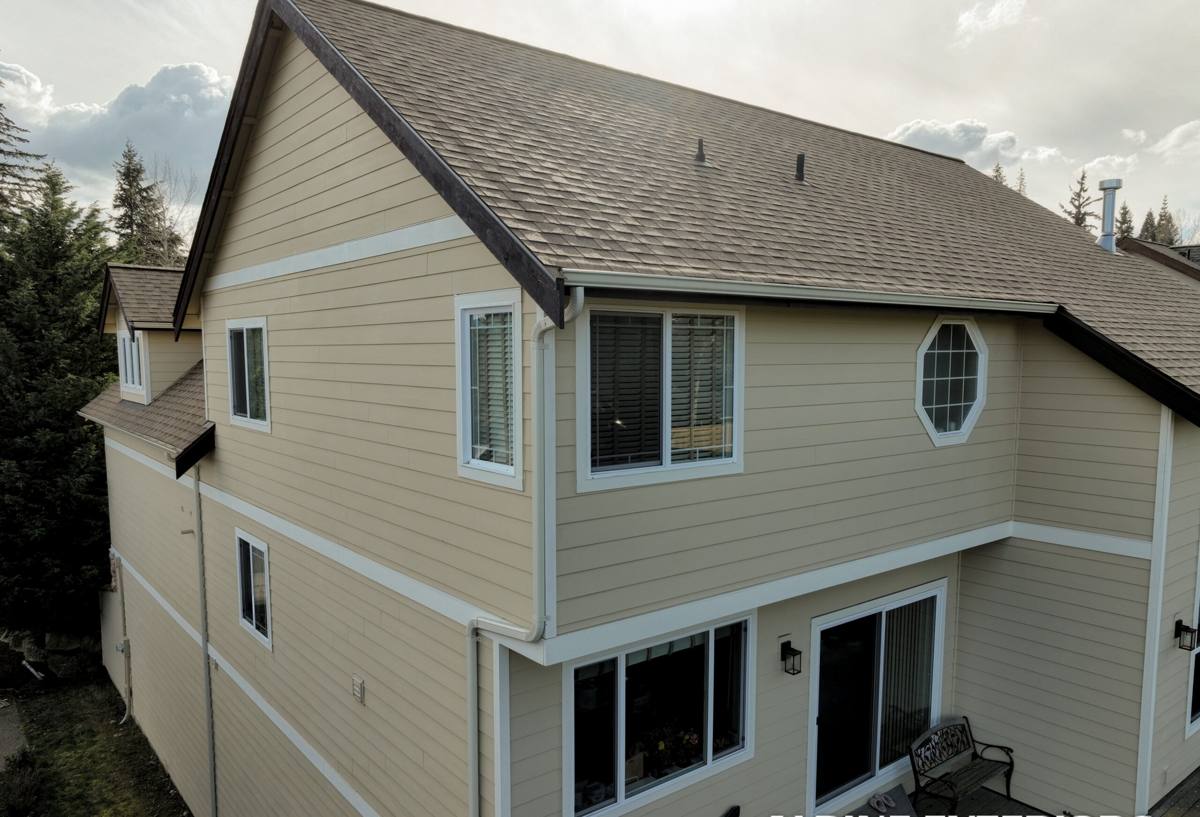
Why Metal Makes Sense for Ferndale Homes
Metal roofing isn't the right fit for every house or every budget, and we'll tell you that honestly during an estimate. But for Ferndale's conditions specifically, it solves a few problems that asphalt shingles struggle with:
- Moss resistance: Moss needs a rough, porous surface and standing moisture to get a foothold. Smooth metal panels give it far less to grab onto than shingle granules, and steep, well-designed metal roofs shed water fast enough that moss has a hard time establishing at all.
- Wind-driven rain performance: Properly lapped and fastened metal panels with correct underlayment handle sideways-driven rain better than roofing systems that rely on gravity and gap-filling granules alone.
- Longevity against salt exposure: Coated steel and aluminum panels, paired with the right fasteners and flashing metal, are built to resist the corrosion that salt air accelerates — but only if the metals are matched correctly (more on that below).
- Long service life without full-roof teardown: A correctly installed metal roof can outlast two or three shingle roof cycles, which matters if you'd rather deal with a roof once and move on.
What Ferndale's Salt Air Actually Does to a Roof System
Salt air isn't just a coastal-town talking point — it's a chemistry problem. Airborne salt accelerates galvanic corrosion, which happens when two dissimilar metals are in contact with each other in the presence of moisture. On a metal roof, that shows up as a fastener that rusts out years before the panel around it fails, or a flashing detail that streaks and stains because the wrong metal was used next to the wrong fastener.
Where This Goes Wrong on Poorly Planned Jobs
The most common mistake we see (and get called to fix) is mixing metals without accounting for galvanic reaction — steel screws against aluminum panels, or copper flashing draining onto a steel roof. In a dry inland climate that mismatch might take a decade to show up. Near the water in Ferndale, it can show up in a few years. Correct material matching isn't an upsell — it's the difference between a roof that ages evenly and one that fails at its weakest point first.
What a Correct Metal Roofing Job Involves
A metal roof is only as good as everything underneath and around it. Here's what we consider non-negotiable on a Ferndale installation:
Deck and Structure First
Before any metal goes down, the roof deck gets inspected for soft spots, rot, or prior water damage — common on older Whatcom County homes that have seen a lot of wet winters. Metal panels will telegraph an uneven or spongy deck, and they won't fix a structural problem underneath them.
Underlayment That Matches the Exposure
Given how much wind-driven rain this area sees, we don't treat underlayment as an afterthought. A high-quality synthetic or self-adhered underlayment at eaves, valleys, and penetrations gives the roof a real second line of defense if wind ever pushes water past the panel laps.
Fastener and Flashing Compatibility
Fasteners, flashing, and panel material need to be compatible with each other, not just individually rated. That means matching coated steel with the correct coated fasteners, or aluminum with aluminum-compatible hardware, and never letting incompatible metals drain onto one another.
Panel Seams and Laps Built for Sideways Rain
Panel overlap direction, seam type, and fastening pattern all get chosen with prevailing wind and rain direction in mind — not just a standard spec sheet layout. This is where a crew's local experience actually shows up in the finished product.
Ventilation
Metal roofs perform best with correct attic or roof-deck ventilation. Poor ventilation traps moisture, which undermines both the deck below and the finish of the panel above — especially in a climate this consistently damp.
Standing Seam vs. Screw-Down Metal: An Honest Comparison
Homeowners in Ferndale usually end up choosing between two general categories of metal roofing. Both can perform well here when installed correctly — the right choice depends on budget, roof pitch, and how long you want to go before any maintenance.
| Factor | Standing Seam | Screw-Down (Exposed Fastener) |
|---|---|---|
| Fastener exposure | Hidden clips, no exposed fasteners | Fasteners exposed through the panel face |
| Maintenance over time | Minimal — no fasteners to re-tighten or reseal | Gaskets and fasteners typically need inspection/replacement over the roof's life |
| Upfront cost | Higher material and labor cost | Lower upfront cost |
| Performance in driving rain | Excellent — seams are mechanically locked | Good, but exposed fasteners are the first thing to fail if not maintained |
| Best fit | Long-term, low-maintenance investment | Budget-conscious projects, outbuildings, secondary structures |
Given Ferndale's salt exposure and rain patterns, we generally steer full-house installations toward standing seam when budget allows, simply because it removes the exposed-fastener failure point that salt air is hardest on. Screw-down systems still have a legitimate place — garages, shops, and secondary roofs — as long as the fastener and gasket maintenance schedule is understood up front.
Our Process on a Ferndale Metal Roofing Project
- On-site assessment: We look at your current roof, deck condition, ventilation, and exposure — is the home more sheltered or more directly exposed to wind off the water?
- Material and system selection: Based on that assessment and your budget, we walk through standing seam vs. screw-down, panel gauge, and finish options — with straight talk about trade-offs, not a sales pitch.
- Tear-off or overlay evaluation: Depending on the existing roof's condition, a full tear-off is usually the right call for a metal system, since it lets us properly inspect and repair the deck.
- Installation: Deck repair, correct underlayment, compatible flashing and fasteners, and panel installation matched to wind and rain exposure for your specific site.
- Final walkthrough: We go over the finished roof, ventilation, and any maintenance notes specific to your system before we consider the job done.
Maintenance: What Metal Roofing Still Needs in This Climate
Metal roofing is lower-maintenance than shingles, not maintenance-free. In a climate with this much moss pressure and moisture, a few basics go a long way:
- Keep gutters and valleys clear of needles and debris — even on metal, standing debris holds moisture against seams and fasteners.
- Do a visual check after major windstorms for lifted flashing or panel edges, especially around chimneys and vents.
- On screw-down systems, have fastener gaskets inspected periodically — they're the component most likely to need attention over time.
- Avoid pressure washing directly into seams or fastener heads; a soft rinse is usually enough to keep moss from gaining a foothold.
Why It Matters Hiring a Crew That Already Works This Area
A lot of roofing problems in coastal Whatcom County aren't caused by bad materials — they're caused by details that were correct for a different climate. A crew used to installing in a dry inland region may not think twice about fastener compatibility, wind-lap direction, or underlayment coverage at valleys, because in their usual conditions those shortcuts don't get punished for years. In Ferndale, they get punished faster. Working this area regularly means we're not guessing at how a given panel system, flashing detail, or fastener choice will hold up against salt air and driving rain — we've seen what happens when those details are right, and what happens when they aren't.
Signs Your Current Roof Might Be a Good Candidate for a Metal Upgrade
| Sign | What It Usually Means |
|---|---|
| Recurring moss growth despite cleaning | Current roofing surface and pitch are giving moss an easy foothold |
| Granule loss or bald patches on shingles | Shingle roof is aging faster than expected, often from wind and moisture exposure |
| Rust streaking near existing metal flashing | Possible metal incompatibility already in progress |
| Leaks after wind-driven storms specifically | Underlayment or lap direction may not be matched to prevailing wind/rain |
| Approaching the end of shingle warranty life | A natural point to evaluate a longer-life system instead of a like-for-like replacement |
Get a Straight Answer for Your Roof
Every roof in Ferndale sits a little differently relative to wind, water, and tree cover, and that affects which metal system makes sense and how it should be detailed. If you'd like an honest, no-pressure look at your roof and what it would actually take to do it right, request a free estimate using the form below.