 Sudden Valley Siding
 Ferndale Windows Face a Different Climate Than the Rest of the Country
Ferndale sits close enough to Bellingham Bay and the Strait of Georgia that salt-laden air is a real factor in how exterior materials age here — not just a coastal-town talking point. Add Whatcom County's long wet season, months where moss and algae get a foothold on anything that stays damp, and driving rain that comes in sideways off the water during winter storms, and you have a climate that is genuinely harder on window frames, sills, and trim than most manufacturers' warranty language assumes.
Windows that were fine when a house was built in the 1980s or 90s are often the first thing to show their age in Ferndale. Aluminum frames pit and corrode. Wood sills rot from the bottom up where water sits after every rain. Old glazing seals fail and fog between the panes. None of that is a defect — it's just what 20-40 years of this specific climate does to a window that wasn't built or installed with it in mind.
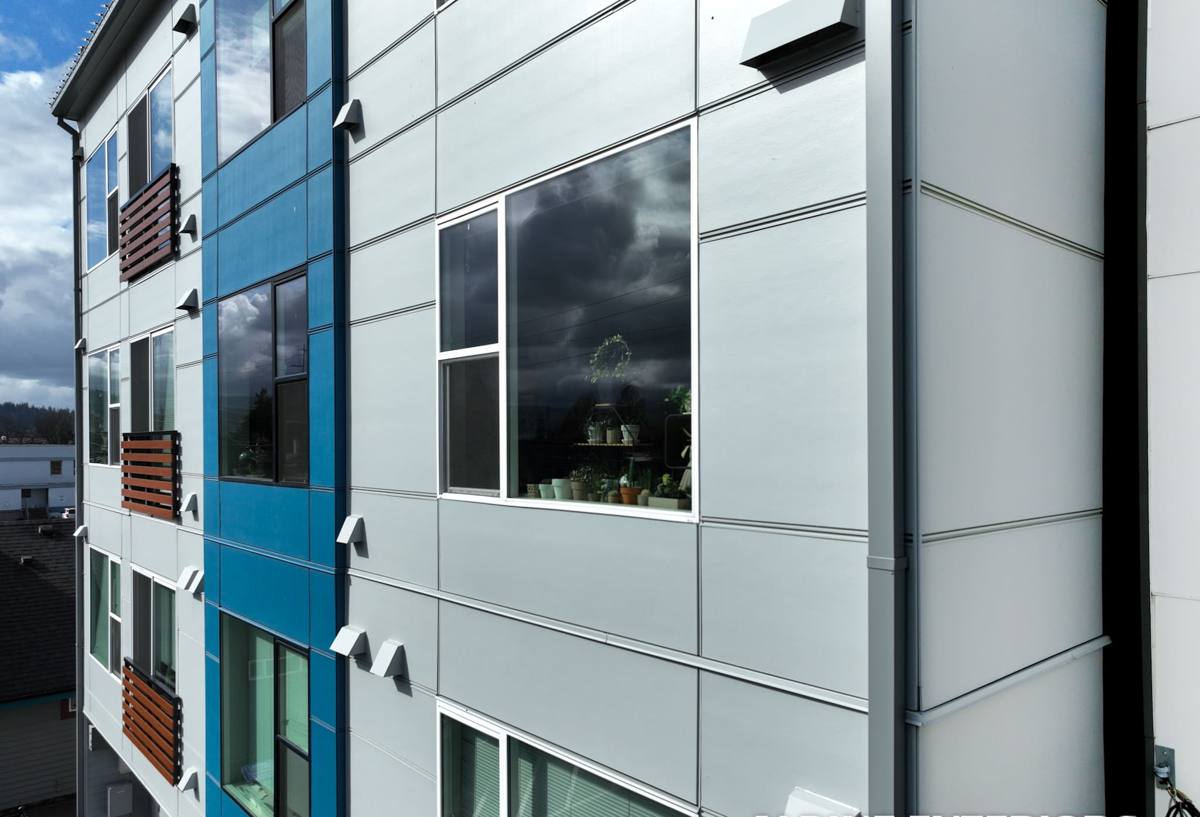
What "Custom" Actually Means for a Window Job
"Custom windows" doesn't mean fancy shapes or high-end trim packages, though we do that too. For most Ferndale homes it means the window is built to fit an opening that isn't a standard size — common in older homes, additions, and anything that's been remodeled over the years — instead of forcing a stock size into a rough opening with shims and extra trim to hide the gap.
When a Custom Size Is the Right Call
- Older Ferndale homes with openings built before modern window sizing standards existed
- Additions or remodels where the rough opening doesn't match anything off the shelf
- Replacing a picture window, bay, or odd-shaped opening that a standard catalog size won't match
- Matching window lines across a home so sightlines stay consistent from the street
- Upgrading from a smaller opening to bring in more light without reframing the whole wall
The trade-off is straightforward: custom sizing costs more and takes longer to order than a stock replacement window, because it's built to your exact rough opening rather than pulled off a shelf. For a lot of homes that difference is worth it — for others, a standard size with proper trim work gets the same result for less. We'll tell you honestly which situation you're in before you commit to either.
Where Window Installations Actually Fail in This Climate
Most window problems we get called out to fix in Ferndale aren't the window itself — they're the installation. A window is only as good as the flashing and sealing around it, and that's the part that's easy to rush and impossible to inspect once the siding's back on.
The Three Things That Have to Be Right
Flashing sequence. Water has to be directed out and down, never trapped behind the window or inside the wall cavity. In a climate with as much driving rain as Ferndale gets, a flashing detail that's "close enough" will eventually leak — it's a matter of when, not if.
Sill pan drainage. Every window needs a way for the small amount of water that inevitably gets past the exterior seal to drain back out, not pool on the sill or drip into the wall framing. This is the detail most often skipped on older installations because it takes extra time and most homeowners never see it.
Integration with the siding. The window and the siding around it have to work as one water-management system. If you're replacing siding and windows separately, or hiring different crews for each, the seam between them is exactly where problems show up down the road.
We won't install a window without redoing the flashing and sill pan properly, even on a straightforward swap. It adds a little time to the job. It's also the single biggest reason a window installation lasts 20+ years instead of leaking in year five.
Frame Material Options for a Salt-Air, High-Rain Climate
There's no single "best" window material — every option is a set of trade-offs. Here's how the common choices actually hold up in Ferndale's conditions, honestly:
| Frame Material | How It Handles Salt Air & Rain | Maintenance | General Cost Position |
|---|---|---|---|
| Vinyl | Doesn't corrode or rust; handles moisture well when properly flashed | Low — occasional cleaning | Lower |
| Fiberglass | Very stable in wet/coastal conditions, resists warping and corrosion | Low | Mid to higher |
| Wood (unclad) | Handsome, but rot-prone if seals fail or moss/moisture sits on sills | High — regular painting/sealing | Mid to higher |
| Wood-clad (vinyl or aluminum exterior) | Good moisture protection outside, wood look inside | Moderate | Higher |
| Aluminum | Prone to pitting and corrosion near salt air over time | Moderate to high long-term | Lower to mid |
We steer most Ferndale homeowners away from bare aluminum frames and unclad wood on the exterior — not because either is a bad product, but because they demand more upkeep than most people want to keep up with in a climate this wet. Vinyl and fiberglass consistently give the best combination of moisture performance and low maintenance for this area. If you want a wood interior look, clad options give you that without putting raw wood in the weather.
Glass Packages Worth Discussing
Double-pane, low-E glass is the standard baseline for this climate and handles Ferndale's temperature swings and condensation risk well. Triple-pane adds cost and weight for a modest efficiency gain — worth it for north-facing rooms or homes right along the water where wind exposure is higher, less necessary on a sheltered, south-facing wall. Argon or krypton gas fills and low-E coatings both help with condensation control, which matters more here than in a dry climate because of how much moisture is in the air for months at a stretch.
Our Custom Window Process, Start to Finish
- On-site assessment. We measure every opening, check the current flashing and sill condition, and look at how water currently moves around each window — not just whether the glass looks fogged.
- Honest scope and quote. We tell you which windows genuinely need custom sizing versus which can take a standard size, and what each option costs and takes to order.
- Removal done right. We check the wall sheathing and framing behind each old window as it comes out — this is often the only time anyone will ever see that part of the wall.
- Sill pan and flashing installed to sequence. Every window gets proper drainage and flashing layered correctly with the house wrap or siding, not caulked over and hoped for.
- Window set, shimmed, and sealed. Level, plumb, and square, with the right sealant for the exposure — not a one-size-fits-all caulk tube.
- Interior and exterior trim finished to match. Including tie-in to existing siding or trim so the new window doesn't look like an obvious patch.
- Walkthrough. We show you the finished work and explain what maintenance, if any, the specific frame material you chose will need going forward.
If You're Also Replacing Siding, Do the Windows at the Same Time
When siding and windows are replaced together, we can flash the window into the new water-resistive barrier and siding as one continuous system, which is the strongest, most leak-resistant setup available. Doing windows first and siding later — or the reverse, with two different contractors — almost always means redoing some flashing work when the second phase happens, because whoever comes second has to work around what's already there instead of building it right the first time. If your siding is aging out in the next few years and your windows are also due, it's worth planning both together, even if you stage the budget across two projects.
Signs Ferndale Homeowners Should Watch For
- Fogging or moisture between panes — a failed seal, not fixable, only replaceable
- Soft or discolored wood at the sill or trim, especially on north- and west-facing walls
- Moss or dark streaking building up on sills or trim faster than the rest of the siding
- Drafts or a noticeable temperature difference near the window in winter
- Difficulty opening, closing, or locking — often a sign the frame has shifted or swollen
- Visible corrosion or pitting on aluminum frames or hardware
- Paint peeling or bubbling on wood trim around the window, a sign moisture is trapped behind it
Any one of these is worth a look before it becomes a bigger repair. Water that gets behind a window doesn't stay contained to the window — it moves into the wall framing, and that's a much more expensive fix than the window itself.
Why It Matters That We Already Work in Ferndale
Window installation done right depends on understanding how a specific house sits relative to weather exposure — which walls take the worst of the driving rain, which corners collect moss fastest, how close a property is to enough salt air to matter for frame choice. That's knowledge that comes from working houses in this area repeatedly, not from a general contractor passing through once. A crew that's local to Whatcom County also isn't guessing at permitting requirements or scheduling around this region's wet-season working windows — we plan installations around Ferndale's weather patterns as a matter of course, not as an afterthought.
If you're dealing with drafty, foggy, or aging windows on a Ferndale home — or planning a siding project and want windows integrated into it correctly — we're happy to take a look and give you a straightforward, no-pressure estimate. Fill out the form below and we'll set up a time to assess your windows in person.